Results by title
2646 books match the query 'History & Criticism' and 189 start with c
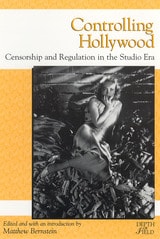
Controlling Hollywood
Censorship and Regulation in the Studio EraBernstein, Matthew
Rutgers University Press, 1999
Controlling Hollywood features ten innovative and accessible essays that examine some of the major turning points, crises, and contradictions affecting the making and showing of Hollywood movies from the 1910s through the early 1970s. The articles included here examine landmark legal cases; various self-regulating agencies and systems in the film industry (from the National Board of Review to the ratings system); and, external to Hollywood, the religious and social interest groups and government bodies that took a strong interest in film entertainment over the decades.
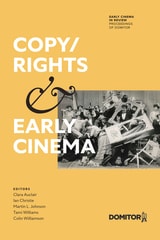
Copy/Rights and Early Cinema
Proceedings of the 17th International Domitor ConferenceEdited by Clara Auclair, Ian Christie, Martin L. Johnson, Tami Williams, and Colin Williamson
Lever Press, 2026
Histories of early cinema often focus on technological, social, and aesthetic developments in the medium. But cinema also posed legal challenges throughout the world and continues to do so in the era of digital media and AI. The methods used to establish and defend copyright varied across national contexts and changed over time, shaping how films were circulated and preserved. This edited volume includes essays based on conference papers given at the 17th Domitor conference and includes case studies from a range of national, historical, and cultural contexts.
The essays in this volume address an array of themes, including copyright and early intermediality, piracy and censorship, international distribution, infamy and defamation, and publicity, privacy, and rights to the image. Although these essays center the first decades of cinema, the rights they address continue to resonate today. Since intellectual property law is constantly struggling to stay abreast of technological innovation, this collection has special relevance in a new era of global production and digital technologies that is as momentous as the invention of cinema. Claiming, defining, and defending rights are returned to the spotlight as AI draws upon the past of cinema to shape its future.
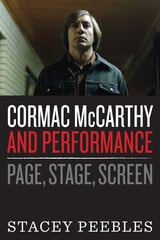
Cormac McCarthy and Performance
Page, Stage, ScreenBy Stacey Peebles
University of Texas Press, 2017
Cormac McCarthy is renowned as the author of popular and acclaimed novels such as Blood Meridian, All the Pretty Horses, and The Road. Throughout his career, however, McCarthy has also invested deeply in writing for film and theater, an engagement with other forms of storytelling that is often overlooked. He is the author of five screenplays and two plays, and he has been significantly involved with three of the seven film adaptations of his work. In this book, Stacey Peebles offers the first extensive overview of this relatively unknown aspect of McCarthy’s writing life, including the ways in which other artists have interpreted his work for the stage and screen.
Drawing on many primary sources in McCarthy’s recently opened archive, as well as interviews, Peebles covers the 1977 televised film The Gardener’s Son; McCarthy’s unpublished screenplays from the 1980s that became the foundation for his Border Trilogy novels and No Country for Old Men; various successful and unsuccessful productions of his two plays; and all seven film adaptations of his work, including John Hillcoat’s The Road (2009) and the Coen brothers’ Oscar-winning No Country for Old Men (2007). Emerging from this narrative is the central importance of tragedy—the rich and varied portrayals of violence and suffering and the human responses to them—in all of McCarthy’s work, but especially his writing for theater and film.
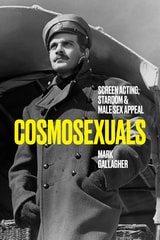
Cosmosexuals
Screen Acting, Stardom, and Male Sex AppealMark Gallagher
University of Texas Press, 2025
An examination of male screen sex appeal and the ways that race, ethnicity, and national origin combine with performance tools and film and television style to aid or inhibit actors’ circulation on an increasingly global stage.
Sex appeal is complicated, especially for screen actors. Looking good is not enough. Charisma and charm have to register when the camera rolls. And sexiness has to travel. Today’s heartthrobs are expected to raise temperatures all around the world.
Cosmosexuals theorizes male sex appeal as a form of capital in an age of international stardom. Screen scholar Mark Gallagher assembles a diverse cast—Idris Elba, Pedro Pascal, Simu Liu, Ryan Gosling, and more—analyzing how each actor uses his appearance, voice, and movement to perform in ways that viewers across cultural divides register as sexually appealing. Cosmosexuals also explores the intersection of global sex appeal and exoticism in historical and contemporary contexts—from the malleable racial identities of Omar Sharif and Conrad Veidt to Mads Mikkelsen’s “accented whiteness”—and assesses the barriers that confine nonwhite actors, in spite of their talent or celebrity. Far more than handsome faces and chiseled abs, male sex symbols emerge as laborers subject to disciplinary regimes steeped in patriarchy, racism, and structural inequity. As such, they have much to tell us about the economies of taste at work in the construction of screen masculinity and the terms of human desire.
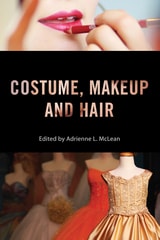
Costume, Makeup, and Hair
McLean, Adrienne L
Rutgers University Press, 2016
From the acclaimed Behind the Silver Screen series, Costume, Makeup, and Hair charts the development of these three crafts in the American film industry from the 1890s to the present. Each chapter examines a different era in film history, revealing how the arts of cinematic costume, makeup, and hair, have continually adapted to new conditions, making the transitions from stage to screen, from monochrome to color, and from analog to digital. Together, the book’s contributors give us a remarkable glimpse into how these crafts foster creative collaboration and improvisation, often fashioning striking looks and ingenious effects out of limited materials.
Costume, Makeup, and Hair not only considers these crafts in relation to a wide range of film genres, from sci-fi spectacles to period dramas, but also examines the role they have played in the larger marketplace for fashion and beauty products. Drawing on rare archival materials and lavish color illustrations, this volume provides readers with both a groundbreaking history of film industry labor and an appreciation of cinematic costume, makeup, and hairstyling as distinct art forms.
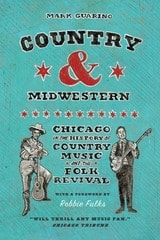
Country and Midwestern
Chicago in the History of Country Music and the Folk RevivalMark Guarino
University of Chicago Press, 2023
Chicago is revered as a musical breeding ground, having launched major figures like blues legend Muddy Waters, gospel soul icon Mavis Staples, hip-hop firebrand Kanye West, and the jazz-rock band that shares its name with the city. Far less known, however, is the vital role Chicago played in the rise of prewar country music, the folk revival of the 1950s and 1960s, and the contemporary offspring of those scenes.
In Country and Midwestern, veteran journalist Mark Guarino tells the epic century-long story of Chicago’s influence on sounds typically associated with regions further south. Drawing on hundreds of interviews and deep archival research, Guarino tells a forgotten story of music, migration, and the ways that rural culture infiltrated urban communities through the radio, the automobile, and the railroad. The Midwest’s biggest city was the place where rural transplants could reinvent themselves and shape their music for the new commercial possibilities the city offered. Years before Nashville emerged as the commercial and spiritual center of country music, major record labels made Chicago their home and recorded legendary figures like Bill Monroe, The Carter Family, and Gene Autry. The National Barn Dance—broadcast from the city’s South Loop starting in 1924—flourished for two decades as the premier country radio show before the Grand Ole Opry. Guarino chronicles the makeshift niche scenes like “Hillbilly Heaven” in Uptown, where thousands of relocated Southerners created their own hardscrabble honky-tonk subculture, as well as the 1960s rise of the Old Town School of Folk Music, which eventually brought national attention to local luminaries like John Prine and Steve Goodman. The story continues through the end of the twentieth century and into the present day, where artists like Jon Langford, The Handsome Family, and Wilco meld contemporary experimentation with country traditions.
Featuring a foreword from Grammy-nominated singer-songwriter Robbie Fulks and casting a cross-genre net that stretches from Bob Dylan to punk rock, Country and Midwestern rediscovers a history as sprawling as the Windy City—celebrating the creative spirit that modernized American folk idioms, the colorful characters who took them into new terrain, and the music itself, which is still kicking down doors even today.
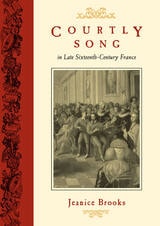
Courtly Song in Late Sixteenth-Century France
Jeanice Brooks
University of Chicago Press, 2001
Brooks concentrates on a period in which the court's importance in projecting the symbolic centrality of monarchy was growing rapidly and considers the role of the air in defining patronage hierarchies at court and in enhancing courtly visions of masculine and feminine virtue. Her study illuminates the court's relationship to the world beyond its own confines, represented first by Italy, then by the countryside. In addition to the 40 editions of airs de cour printed between 1559 and 1589, Brooks draws on memoirs, literary works, and iconographic evidence to present a rounded vision of French Renaissance culture.
The first book-length examination of the history of air de cour, this work also sheds important new light on a formative moment in French history.
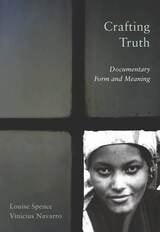
Crafting Truth
Documentary Form and MeaningSpence, Louise
Rutgers University Press, 2011
A documentary's sounds and images are always the product of selection and choice, and often underscore points the filmmaker wishes to make. Crafting Truth illuminates the ways these films tell their stories; how they use the camera, editing, sound, and performance; what rhetorical devices they employ; and what the theoretical, practical, and ethical implications of these choices are. Complex documentary concepts are presented through easily accessible language, images, and a discussion of a wide range of films and videos to encourage new ways of thinking about and seeing nonfiction film.
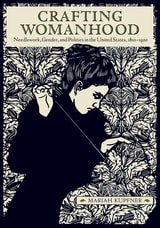
Crafting Womanhood
Needlework, Gender, and Politics in the United States, 1810-1920Mariah Kupfner
University of Delaware Press, 2027
Decorative needlework was a key medium through which American women constructed femininity and its relationship to public and political concerns in the nineteenth and early twentieth centuries. Through samplers, needlecases, lace coats, silk sofas, cotton scraps, banners, and other textile things, scholars can see the ways in which women and girls related to education, property-holding, slavery and freedom, labor, and women’s right to vote. Needlework’s durable association with “traditional” notions about womanhood made it a potent resource through which to make gender in expansive and meaningful ways that had profound public, political implications as educational opportunities for girls and women were expanding, and the antislavery and women's suffrage movements were growing. Indeed, needlework's very conventionality and relationship to the past made it a useful tool for crafting womanhood anew.
Crash
Cinema and the Politics of Speed and StasisKaren Beckman
Duke University Press, 2010
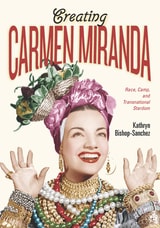
Creating Carmen Miranda
Race, Camp, and Transnational StardomKathryn Bishop-Sanchez
Vanderbilt University Press, 2016
This final performance in many ways exemplified the power of Carmen Miranda. The actress, singer, and dancer pursued a relentless mission to demonstrate the provocative theatrical force of her cultural roots in Brazil. Armed with bare-midriff dresses, platform shoes, and her iconic fruit-basket headdresses, Miranda stole the show in films like That Night in Rio and The Gang's All Here. For American film audiences, her life was an example of the exoticism of a mysterious, sensual South America. For Brazilian and Latin American audiences, she was an icon. For the gay community, she became a work of art personified and a symbol of courage and charisma.
In Creating Carmen Miranda, Kathryn Bishop-Sanchez takes the reader through the myriad methods Miranda consciously used to shape her performance of race, gender, and camp culture, all to further her journey down the road to becoming a legend.
Creating the Self in the Contemporary American Theatre
Robert J. Andreach
Southern Illinois University Press, 1998
Combining his skills as both a professional reviewer of theatre and a literary critic, Robert J. Andreach finds himself in a unique position to provide coherence to what most observers perceive as an unrelated welter of contemporary theatrical experiences. Exploring the theatre from the 1960s to the present, he shows the various ways in which the contemporary American theatre creates a personal, theatrical, and national self.
Andreach argues that the contemporary American theatre creates multiple selves that reflect and give voice to the many communities within our multicultural society. These selves are fragmented and enclaved, however, which makes necessary a counter movement that seeks, through interaction among the various parts, to heal the divisions within, between, and among them.
In his examination of the contemporary theatre, Andreach demonstrates that the plays and the performance art of the feminist, African-American, Hispanic-American, Asian-American, and Native American theatres are equal to the works created within the dominant Eurocentric culture.
He then turns to comparable works created within the culture of what performance artist Karen Finley calls the "one male god," works that reflect the breakup of an old order. He discusses the experimental theatre, which turns to the imagination to reveal the nature of the self, and concludes with an examination of recent American works, pointing out in each either the presence or absence of resolution within the divisions of self.
Creating the Viewer
Market Research and the Evolving Media EcosystemJustin Wyatt
University of Texas Press, 2024
A study of the largely hidden world of primary media market research and the different methods used to understand how the viewer is pictured in the industry.
The first book on the intersection between market research and media, Creating the Viewer takes a critical look at media companies’ studies of television viewers, the assumptions behind these studies, and the images of the viewer that are constructed through them. Justin Wyatt examines various types of market research, including talent testing, pilot testing, series maintenance, brand studies, and new show “ideation,” providing examples from a range of programming including news, sitcoms, reality shows, and dramas. He looks at brand studies for networks such as E!, and examines how the brands of individuals such as showrunner Ryan Murphy can be tested. Both an analytical and practical work, the book includes sample questionnaires and paths for study moderators and research analysts to follow. Drawn from over fifteen years of experience in research departments at various media companies, Creating the Viewer looks toward the future of media viewership, discussing how the concept of the viewer has changed in the age of streaming, how services such as Netflix view market research, and how viewers themselves can shift the industry through their media choices, behaviors, and activities.
Creative License
The Law and Culture of Digital SamplingKembrew McLeod and Peter DiCola
Duke University Press, 2011
Interviewees include David Byrne, Cee Lo Green, George Clinton, De La Soul, DJ Premier, DJ Qbert, Eclectic Method, El-P, Girl Talk, Matmos, Mix Master Mike, Negativland, Public Enemy, RZA, Clyde Stubblefield, T.S. Monk.
Creative Life
Music, Politics, People, and MachinesBob Ostertag
University of Illinois Press, 2008
Drawing on his intimate engagement with political conflict in Latin America and the Balkans, Ostertag identifies an art of "insurgent politics" that struggles to expand the parameters of the physical and social world. He also discusses his innovative collaborations with major modern performers, filmmakers, and artists around the world. Part memoir, part journalism, and part aesthetic manifesto, Creative Life is a dazzling set of writings from a musical artist who has worked on the cutting edge of new music for thirty years.
Creatures of the Air
Music, Atlantic Spirits, Breath, 1817–1913J. Q. Davies
University of Chicago Press, 2023
Often experienced as universal and incorporeal, music seems an innocent art form. The air, the very medium by which music constitutes itself, shares with music a claim to invisibility. In Creatures of the Air, J. Q. Davies interrogates these claims, tracing the history of music’s elemental media system in nineteenth-century Atlantic worlds. He posits that air is a poetic domain, and music is an art of that domain.
From West Central African ngombi harps to the European J. S. Bach revival, music expressed elemental truths in the nineteenth century. Creatures of the Air tells these truths through stories about suffocation and breathing, architecture and environmental design, climate strife, and racial turmoil. Contributing to elemental media studies, the energy humanities, and colonial histories, Davies shows how music, no longer just an innocent luxury, is implicated in the struggle for control over air as a precious natural resource. What emerges is a complex political ecology of the global nineteenth century and beyond.
Criminalization/Assimilation
Chinese/Americans and Chinatowns in Classical Hollywood FilmPhilippa Gates
Rutgers University Press, 2019
Crisis and Capitalism in Contemporary Argentine Cinema
Joanna Page
Duke University Press, 2009
Page focuses particularly on films associated with New Argentine Cinema, but she also discusses highly experimental films and genre movies that borrow from the conventions of crime thrillers, Westerns, and film noir. She analyzes films that have received wide international recognition alongside others that have rarely been shown outside Argentina. What unites all the films she examines is their attention to shifts in subjectivity provoked by political or economic conditions and events. Page emphasizes the paradoxes arising from the circulation of Argentine films within the same global economy they so often critique, and she argues that while Argentine cinema has been intent on narrating the collapse of the nation-state, it has also contributed to the nation’s reconstruction. She brings the films into dialogue with a broader range of issues in contemporary film criticism, including the role of national and transnational film studies, theories of subjectivity and spectatorship, and the relationship between private and public spheres.
Critical Approaches to the Films of Robert Rodriguez
By Frederick Luis Aldama
University of Texas Press, 2015
Frederick Aldama’s The Cinema of Robert Rodriguez (2014) was the first full-scale study of one of the most prolific and significant Latino directors making films today. In this companion volume, Aldama enlists a corps of experts to analyze a majority of Rodriguez’s feature films, from his first break-out success El Mariachi in 1992 to Machete in 2010. The essays explore the formal and thematic features present in his films from the perspectives of industry (context, convention, and distribution), the film blueprint (auditory and visual ingredients), and consumption (ideal and real audiences). The authors illuminate the manifold ways in which Rodriguez’s films operate internally (plot, character, and event) and externally (audience perception, thought, and feeling).
The volume is divided into three parts: “Matters of Mind and Media” includes essays that use psychoanalytic and cognitive psychology to shed light on how Rodriguez’s films complicate Latino identity, as well as how they succeed in remaking audiences’ preconceptions of the world. “Narrative Theory, Cognitive Science, and Sin City: A Case Study” offers tools and models of analysis for the study of Rodriguez’s film re-creation of a comic book (on which Frank Miller was credited as codirector). “Aesthetic and Ontological Border Crossings and Borderlands” considers how Rodriguez’s films innovatively critique fixed notions of Latino identity and experience, as well as open eyes to racial injustices. As a whole, the volume demonstrates how Rodriguez’s career offers critical insights into the filmmaking industry, the creative process, and the consuming and reception of contemporary film.
Critical Excess
Watch the Throne and the New Gilded AgeJ. Griffith Rollefson
University of Michigan Press, 2021
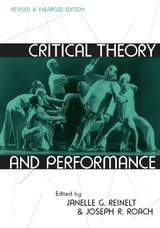
Critical Theory and Performance
Revised and Enlarged EditionJanelle G. Reinelt and Joseph R. Roach, Editors
University of Michigan Press, 2007
Critical Theory and Performance presents a broad range of critical and theoretical methods and applies them to contemporary and historical performance genres—from stage plays, dance-dramas, performance art, cabaret, stand-up comedy, and jazz to circus, street theater, and shamanistic ritual. As the first comprehensive introduction to critical theory’s rich and diverse contributions to the study of drama, theater, and performance, the book has been highly influential for more than a decade in providing fertile ground for academic investigations in the lively field of performance studies.
This updated and expanded edition presents nineteen new essays by the field’s leading scholars and practitioners as well as new critical introductions by editors Janelle G. Reinelt and Joseph R. Roach. Reflecting recent trends in performance studies, this revised edition now includes discussions of critical race theory, postcolonial studies, gender and sexualities, and mediatized cultures. The resulting volume is a unique and indispensable tool for critics, teachers, and students that paves the way for future scholarship.
Janelle G. Reinelt is Professor of Theatre and Performance at the University of Warwick. Reinelt and Roach
Joseph R. Roach is Charles C. and Dorathea S. Dilley Professor of Theater and English at Yale University.
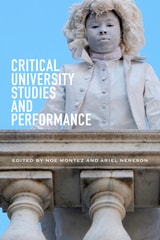
Critical University Studies and Performance
Edited by Noe Montez and Ariel Nereson
Vanderbilt University Press, 2026
Critical University Studies and Performance explores how we contend with issues of power, race, class, and gender in higher education, specifically as they relate to the complexities of theater and performance studies programs. In what ways might the fields of theater, performance, and dance studies, as they operate in institutions of higher education, support hegemonic logics as well as model reparative practices, given their perhaps unique disciplinary relationships to staging representation and their shared emphasis on embodiment as a practical and theoretical area of engagement?
Montez and Nereson bring together scholars with a diverse range of career experiences and embodied positions inside of higher learning in order to deepen the field’s theoretical inquiry using an ethnic studies framework. By participating in the interdisciplinary discourse of critical university studies, the volume aims to explore how to conduct ethical research that critiques the university while remaining mindful of our always contingent place within it. The contributors examine the ways the university commodifies minoritarian knowledge, tokenizes the arts, and reproduces inequality. This book offers strategic ways to build liberatory communities and revolutionary networks among students and faculty alike in order to envision futures within and beyond the academy.

Crossing Gender Boundaries
Fashion to Create, Disrupt and TranscendEdited by Andrew Reilly and Ben Barry
Intellect Books, 2020
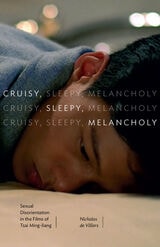
Cruisy, Sleepy, Melancholy
Sexual Disorientation in the Films of Tsai Ming-liangNicholas de Villiers
University of Minnesota Press, 2022
A brilliant approach to the queerness of one of Taiwan’s greatest auteurs
A critical figure in queer Sinophone cinema—and the first director ever commissioned to create a film for the permanent collection of the Louvre—Tsai Ming-liang is a major force in Taiwan cinema and global moving image art. Cruisy, Sleepy, Melancholy offers a fascinating, systematic method for analyzing the queerness of Tsai’s films.
Nicholas de Villiers argues that Tsai expands and revises the notion of queerness by engaging with the sexuality of characters who are migrants, tourists, diasporic, or otherwise displaced. Through their lack of fixed identities, these characters offer a clear challenge to the binary division between heterosexuality and homosexuality, as well as the Orientalist binary division of Asia versus the West. Ultimately, de Villiers explores how Tsai’s films help us understand queerness in terms of spatial, temporal, and sexual disorientation.
Conceiving of Tsai’s cinema as an intertextual network, Cruisy, Sleepy, Melancholy makes an important addition to scholarly work on Tsai in English. It draws on extensive interviews with the director, while also offering a complete reappraisal of Tsai’s body of work. Contributing to queer film theory and the aesthetics of displacement, Cruisy, Sleepy, Melancholy reveals striking connections between sexuality, space, and cinema.
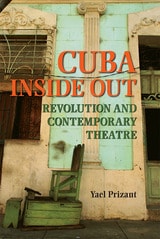
Cuba Inside Out
Revolution and Contemporary TheatreYael Prizant
Southern Illinois University Press, 2014
The collapse of the Soviet Union in 1989 drastically altered life in Cuba. Theatre artists were faced with new economic and social realities that changed their day-to-day experiences and ways of looking at the world beyond the island. The Cuban Revolution’s resistance to and intersections with globalization, modernity, emigration and privilege are central to the performances examined in this study. The first book-length study in English of Cuban and Cuban American plays, Cuba Inside Out provides a framework for understanding texts and performances that support, challenge, and transgress boundaries of exile and nationalism. Prizant reveals the intricacies of how revolution is staged theatrically, socially, and politically on the island and in the Cuban diaspora. This close examination of seven plays written since 1985 seeks to alter how U.S. audiences perceive Cuba, its circumstances, and its theatre.
Cuban Cinema
Michael Chanan
University of Minnesota Press, 2004
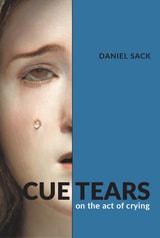
Cue Tears
On the Act of CryingDaniel Sack
University of Michigan Press, 2024
Across seven semi-autonomous essays, Cue Tears looks at the mechanisms of tear production, internal and external techniques that actors use to weep, and the effects of tears in performance situations on the stage, in the gallery, and in the classroom. The writing moves with a light touch between theory and criticism of a broad range of instances from literature, theater, performance art, visual art, and cinema, while also embracing a strong autobiographical and personal slant. Author Daniel Sack’s father was a biochemist who studied tears and collected his son’s tears for research during his childhood. These “reflex tears” were produced as a physical response to irritation—an eye stretched past the point of blinking, a cotton swab up the nose. This childhood occupation coincided with his first years taking acting classes, trying to learn how to cry “emotional tears” onstage through psychological stimulation and the recollection of memory. Cue Tears investigates these memories and methods, finding that tears both shore up and dissolve distinctions between truth and artifice, emotional and physical, private and public, sad and humorous.
Cult Television
Sara Gwenllian-Jones
University of Minnesota Press, 2004
Exploring the definition and appeal of cult TV from Emma Peel to Buffy
A television series is tagged with the label “cult” by the media, advertisers, and network executives when it is considered edgy or offbeat, when it appeals to nostalgia, or when it is considered emblematic of a particular subculture. By these criteria, almost any series could be described as cult. Yet certain programs exert an uncanny power over their fans, encouraging them to immerse themselves within a fictional world.
In Cult Television leading scholars examine such shows as The X-Files; The Avengers; Doctor Who, Babylon Five; Star Trek; Xena, Warrior Princess; and Buffy the Vampire Slayer to determine the defining characteristics of cult television and map the contours of this phenomenon within the larger scope of popular culture. Contributors: Karen Backstein; David A. Black, Seton Hall U; Mary Hammond, Open U; Nathan Hunt, U of Nottingham; Mark Jancovich; Petra Kuppers, Bryant College; Philippe Le Guern, U of Angers, France; Alan McKee; Toby Miller, New York U; Jeffrey Sconce, Northwestern U; Eva Vieth.
Cultural Struggles
Performance, Ethnography, PraxisDwight Conquergood
University of Michigan Press, 2013
The late Dwight Conquergood’s research has inspired an entire generation of scholars invested in performance as a meaningful paradigm to understand human interaction, especially between structures of power and the disenfranchised. Conquergood’s research laid the groundwork for others to engage issues of ethics in ethnographic research, performance as a meaningful paradigm for ethnography, and case studies that demonstrated the dissolution of theory/practice binaries.Cultural Struggles is the first gathering of Conquergood’s work in a single volume, tracing the evolution of one scholar’s thinking across a career of scholarship, teaching, and activism, and also the first collection of its kind to bring together theory, method, and complete case studies.
The collection begins with an illuminating introduction by E. Patrick Johnson and ends with commentary by other scholars (Micaela di Leonardo, Judith Hamera, Shannon Jackson, D. Soyini Madison, Lisa Merrill, Della Pollock, and Joseph Roach), engaging aspects of Conquergood’s work and providing insight into how that work has withstood the test of time, as scholars still draw on his research to inform their current interests and methods.
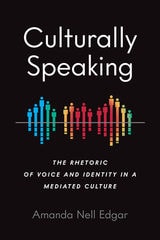
Culturally Speaking
The Rhetoric of Voice and Identity in a Mediated CultureAmanda Nell Edgar
The Ohio State University Press, 2019
Recent pieces by NPR, the BBC, and Forbes have called attention to the power of voice—positing that “your voice is the secret to getting hired” and that “voice can accelerate or hold back a career.” While it has become clearer that such things as pitch and intonation can be tied to assumptions about one’s gender, race/ethnicity, and class, studying voice as a socially constructed artifact carries with it unique challenges. In response, Culturally Speaking: The Rhetoric of Voice and Identity in a Mediated Culture presents an innovative approach to studying the spoken voice in media, showing how racial and gendered oppression bubble beneath the surface of American culture’s most recognized speaking voices, spreading invisible messages about which kinds of vocal identities are privileged and which kinds should be silenced.
Through her analysis of prominent voices in American culture—including Morgan Freeman, Tina Fey, Barack Obama, Adele, Dave Chappelle, Richard Pryor, and George Lopez—Amanda Nell Edgar argues that voices carry a residue of the particular cultural environments in which they are formed, and that these environments can be traced and analyzed to add a sonic dimension to our understanding of race and gender as rhetorically situated identities—pushing back against the often-unnoticed systems of sound-based discrimination.
Culture in the Anteroom
The Legacies of Siegfried KracauerEdited by Gerd Gemünden and Johannes von Moltke
University of Michigan Press, 2012
Culture in the Anteroom introduces an English-speaking readership to the full range of Siegfried Kracauer's work as novelist, architect, journalist, sociologist, historian, exile critic, and theorist of visual culture. This interdisciplinary anthology---including pieces from Miriam Bratu Hansen, Andreas Huyssen, Noah Isenberg, Lutz Koepnick, Eric Rentschler, and Heide Schlüpmann---brings together literary and film scholars, historians and art historians, sociologists, and architects to address the scope and current relevance of a body of work dedicated to investigating all aspects of modernism and modernity. The contributors approach Kracauer's writings from a variety of angles, some by placing them in dialogue with his contemporaries in Weimar Germany and the New York Intellectuals of the 1940s and '50s; others by exploring relatively unknown facets of Kracauer's oeuvre by considering his contributions to architectural history, the history of radio as well as other new media, and museum and exhibition culture.
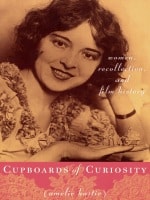
Cupboards of Curiosity
Women, Recollection, and Film HistoryAmelie Hastie
Duke University Press, 2007
Hastie pays particular attention to the actresses Colleen Moore and Louise Brooks and Hollywood’s first female director, Alice Guy-Blaché. From the beginning of her career, Moore worked intently to preserve a lasting place for herself as a Hollywood star, amassing collections of photos, souvenirs, and clippings as well as a dollhouse so elaborate that it drew extensive public attention. Brooks’s short essays reveal how she participated in the creation of her image as Lulu and later emerged as a critic of film stardom. The recovery of Blaché’s role in film history by feminist critics in the 1970s and 1980s was made possible by the existence of the director’s own autobiographical history. Broadening her analytical framework to include contemporary celebrities, Hastie turns to how-to manuals authored by female stars, from Zasu Pitts’s cookbook Candy Hits to Christy Turlington’s Living Yoga. She discusses how these assertions of celebrity expertise in realms seemingly unrelated to film and visual culture allow fans to prolong their experience of stardom.
Curating Deviance
Programming the Queer Film CanonMarc Francis
Duke University Press, 2026
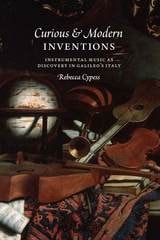
Curious and Modern Inventions
Instrumental Music as Discovery in Galileo's ItalyRebecca Cypess
University of Chicago Press, 2016
Rebecca Cypess shows that early modern thinkers were fascinated with instrumental technologies. The telescope, the clock, the pen, the lute—these were vital instruments for leading thinkers of the age, from Galileo Galilei to Giambattista Marino. No longer used merely to remake an object or repeat a process already known, instruments were increasingly seen as tools for open-ended inquiry that would lead to new knowledge. Engaging with themes from the history of science, literature, and the visual arts, this study reveals the intimate connections between instrumental music and the scientific and artisanal tools that served to mediate between individuals and the world around them.
Current Thought in Musicology
Edited by John W. Grubbs
University of Texas Press, 1976
Current Thought in Musicology covers a variety of topics, ranging from the Middle Ages to the present and touching on all the major disciplines of musicology: music history, theory and composition, music education, and performance. Taken together, the nine papers constitute a broad overview of the direction of music scholarship in the 1970s.
In “Tractatus Esthetico-Semioticus: Model of the Systems of Human Communication,” Charles Seeger presents a model of the situations in which the study of humanistic art may best be conducted. Charles Hamm writes in “The Ecstatic and the Didactic: A Pattern in American Music” of the pattern of conflicting points of view in music history and theory. American composer Elliott Carter, in his chapter titled “Music and the Time Screen,” presents a lucid explanation of his compositional process, including his concept of musical time. In “Instruments and Voices in the Fifteenth-Century Chanson,” Howard Mayer Brown suggests the nature of fifteenth-century performance, drawn from iconography and various musical sources. “Nottebohm Revisited,” by Lewis Lockwood, reexamines Beethoven’s sketchbooks, showing the extent to which performing editions of his work must be updated. Daniel Heartz’s article, “The Chanson in the Humanist Era,” is multidisciplinary and will interest a variety of scholars, including French historians and French literary historians. Gilbert Chase applies structuralism to musicological studies in his chapter, “Musicology, History, and Anthropology: Current Thoughts.” The concluding essays, “The Prospects for Research in Medieval Music in the 1970’s,” by Gilbert Reaney, and “The Library of the Mind: Observations on the Relationship between Musical Scholarship and Bibliography,” by Vincent Duckles, provide a unique view of the opportunities for further work in these areas.
The volume also includes an introduction by the editor, notes on the contributors, and an index. Current Thought in Musicology is the result of a symposium held at the University of Texas at Austin in 1971.
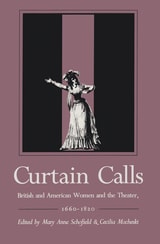
Curtain Calls
British and American Women and the Theater, 1660–1820Mary A. Schofield
Ohio University Press, 1991
“I here and there o’heard a Coxcomb cry,
Ah, rot—’tis a Woman’s Comedy.”
Thus Aphra Behn ushers in a new era for women in the British Theatre (Sir Patient Fancy, 1678). In the hundred years that were to follow—and exactly those years that Curtain Calls examines—women truly took the theater world by storm.
For each woman who chose a career in the theater world of the eighteenth century, there is a unique tale of struggle, insult, success, good or bad fortune, disaster, seduction, or fame. Whether acting, writing, reviewing, or stage managing, women played a major, if frequently unacknowledged, role in the history of the theater from the late seventeenth through the early nineteenth centuries. From Alpha Behn’s earliest plays through the glorious celebrity of Sara Siddons, women molded the taste of the age and carved out in the theater one of the few available opportunities for independence and renown.
Not all the women who tried succeeded, of course, and even the best faced opposition as they challenged the male stronghold of playwriting and theater managing. Curtain Calls maps the new territory as these pioneering women staked it for their own; it chronicles their lives, their triumphs, and their losses.
We begin with Aphra Behn, whose first play was staged in 1670, and conclude in the early decades of the nineteenth century with Inchbald and Siddons. The one hundred and fifty years encompassed by their lives contain the careers of dozens of lesser–known women, a network, as Dr. Johnson would have it, encompassing both talent and tribulation.
Contributors include: Edward Langhans, Linda R. Payne, Pat Rogers, Maureen e. Mulvihill, Deborah Payne, Betty Rizzo, Ellen Donkin, Frances M. Kavenik, Jessica Munns, nancy Cotton, Edna L. Steevs, Doreen Saar, Jean B. Kern, Katherine M. Rogers, Constance Clark, William J. Burling, Judith Phillips Stanton, Douglas Butler, Rose Zimbardo, and the editors.
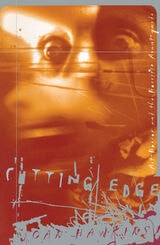
Cutting Edge
Art-Horror and the Horrific Avant-gardeJoan Hawkins
University of Minnesota Press, 2000
Explores what horror movies tell us about issues of taste.
Even before Jean-Luc Godard and other members of the French New Wave championed Hollywood B movies, aesthetes and cineasts relished the raw emotions of genre films. This contradiction has been particularly true of horror cinema, in which the same images and themes found in exploitation and splatter movies are also found in avant-garde and experimental films, blurring boundaries of taste and calling into question traditional distinctions between high and low culture.
In Cutting Edge, Joan Hawkins offers an original and provocative discussion of taste, trash aesthetics, and avant-garde culture of the 1960s and 1970s to reveal horror’s subversiveness as a genre. In her treatment of what she terms "art-horror" films, Hawkins examines home viewing, video collection catalogs, and fanzines for insights into what draws audiences to transgressive films. Cutting Edge provides the first extended political critique of Yoko Ono’s rarely seen Rape and shows how a film such as Franju’s Eyes without a Face can work simultaneously as an art, political, and splatter film. The rediscovery of Tod Browning’s Freaks as an art film, the "eurotrash" cinema of Jess Franco, camp cults like the one around Maria Montez, and the "cross-over" reception of Andy Warhol’s Frankenstein are all studied for what they reveal about cultural hierarchies. Looking at the low aspects of high culture and the high aspects of low culture, Hawkins scrutinizes the privilege habitually accorded "high" art-a tendency, she argues, that lets highbrow culture off the hook and removes it from the kinds of ethical and critical social discussions that have plagued horror and porn. Full of unexpected insights, Cutting Edge calls for a rethinking of high/low distinctions-and a reassigning of labels at the video store.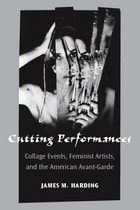
Cutting Performances
Collage Events, Feminist Artists, and the American Avant-GardeJames M. Harding
University of Michigan Press, 2012
"A thoughtful and engaging contribution to the field that will have a sustained and lasting impact on the way feminist performance is defined and understood, as well as on how feminist histories and historiographies continue to challenge and transform the larger field of performance."
---Charlotte Canning, The University of Texas at Austin
"Harding forcefully challenges and destabilizes the male-centered Eurocentric genealogy of the avant-garde, which he claims is an uncontested, linear, positivistic history, unproblematized by theory. Then he argues that this gendered biased version of the European avant-garde is carried over into American historiography . . . A forceful case for a revisionist history."
---Daniel Gerould, The City University of New York Graduate Center
Cutting Performances challenges four decades' worth of scholarship on the American avant-garde by offering a provocative reconceptualization of the history of avant-garde performance along feminist lines. Focusing on five women artists (Elsa von Freytag-Loringhoven, Gertrude Stein, Yoko Ono, Carolee Schneemann, and Valerie Solanas) whose performance aesthetics made prominent use of collage techniques, James M. Harding sheds light on the cultural history of the avant-garde and the role that experimental women artists played in that history. He investigates the prominent position that collage technique occupied within the artists' performance aesthetic, and the decisively feminist inflection that their work gives to collage as a mode of avant-garde expression. The radical juxtapositions in their works produce the powerful effects of making the familiar strange and establishing contexts from which new understandings may emerge.
Harding examines the performative dimensions of collage in experimental, feminist redefinitions of the literary, graphic, and theatrical arts, filling a void in a scholarly discourse that, while ostensibly about the vanguard, has lagged well behind other significant theoretical and historiographical currents. Cutting Performances not only challenges assumptions that have governed scholarship on the American avant-garde but also establishes a context to rethink the history of American avant-garde performance along feminist lines. It will appeal to audiences interested in theater history and performance studies as well as those interested in the cultural history of the avant-garde and the role that feminist experimental artists have played in it.
James M. Harding is Professor of English at the University of Mary Washington. His other books include Not the Other Avant-Garde: Transnational Foundations of Avant-Garde Performance (with John Rouse); Restaging the Sixties: Radical Theaters and Their Legacies (with Cindy Rosenthal); and Contours of the Theatrical Avant-Garde: Performance and Textuality.
Illustration: Carolee Schneemann in Eye Body-36 Transformative Actions (1963) Action for camera (Photograph by Erró). Reproduced by permission of Carolee Schneemann.
Cycles, Sequels, Spin-offs, Remakes, and Reboots
Multiplicities in Film and TelevisionEdited by Amanda Ann Klein and R. Barton Palmer
University of Texas Press, 2016
With sequels, prequels, remakes, spin-offs, or copies of successful films or franchises dominating film and television production, it sometimes seems as if Hollywood is incapable of making an original film or TV show. These textual pluralities or multiplicities—while loved by fans who flock to them in droves—tend to be dismissed by critics and scholars as markers of the death of high culture. Cycles, Sequels, Spin-offs, Remakes, and Reboots takes the opposite view, surveying a wide range of international media multiplicities for the first time to elucidate their importance for audiences, industrial practices, and popular culture.
The essays in this volume offer a broad picture of the ways in which cinema and television have used multiplicities to streamline the production process, and to capitalize on and exploit viewer interest in previously successful and/or sensational story properties. An impressive lineup of established and emerging scholars talk seriously about forms of multiplicity that are rarely discussed as such, including direct-to-DVD films made in Nigeria, cross-cultural Japanese horror remakes, YouTube fan-generated trailer mash-ups, and 1970s animal revenge films. They show how considering the particular bonds that tie texts to one another allows us to understand more about the audiences for these texts and why they crave a version of the same story (or character or subject) over and over again. These findings demonstrate that, far from being lowbrow art, multiplicities are actually doing important cultural work that is very worthy of serious study.