Results by title
8113 books match the query 'Literary Criticism' and 522 start with c
China's Battler Poetry
Writing Like There's No TomorrowBy Maghiel van Crevel
University of Westminster Press, 2026
Three hundred million Chinese have left the countryside for the cities since the 1980s, in a flood wave of labor migration that has fueled China’s rise. Known as ‘battlers,’ they belong to a new underclass who face exploitation, discrimination, and harrowing insecurity. And they write poetry.
Battler poetry speaks of being ground down in the factory workshop, of being forced into sex work, of being robbed of your youth. It has made its way into mass media and labor activism, and developed uneasy relations with the literary establishment. It aligns with writing elsewhere in the world that shows the power of poetry as an expression of sociopolitical identity.
Who are China’s battler poets? Where do they find the time and energy, after a 12-hour shift on the assembly line or on a courier moped in big-city traffic? What is their poetry like? Where is it published? Who reads it? What happens when it travels abroad? How has the Chinese state responded? What can battler poetry tell us about the nexus of aesthetics and social experience, in a world where inequality reigns?
China’s Battler Poetry tells the gripping story of an ‘unlikely’ genre. Building on textual and cultural analysis, ethnographic fieldwork, and the collection of underground source material, it sits at the interface of the humanities and social science. It is driven by a desire to understand poetry as both art and social practice, looking at its words through the lifeworlds of its authors and the other way around.
Chinese American Literature since the 1850s
Xiao-huang Yin
University of Illinois Press, 2000
The writings of immigrants from China and their descendants in the United States reflect the changes and continuity in the Chinese American experience. Xiao-huang Yin combines literary and historical scholarship to trace the origins and development of this extensive, neglected body of literature.
Chinese American Literature since the 1850s covers representative works from the 1850s to the present. Selections include journalism and autobiography by nineteenth-century Chinese authors; writings on the walls of Angel Island, the main Asian immigrant arrival point on the West Coast; writings of late-nineteenth and early-twentieth-century "cultivated Chinese," students and scholars who came to America to advance their educations; important writing by immigrants such as Chen Ruoxi, Yu Lihua, and Zhang Xiguo; and the works of more recent authors like Sui Sin Far, Jade Snow Wong, Frank Chin, Maxine Hong Kingston, and Amy Tan.
An essential introduction and guide to the field, Chinese American Literature since the 1850s enlarges the available body of literature and provides new insights into the Chinese American immigrant experience and the writing inspired by it.
Chinese Dreams
Pound, Brecht, Tel QuelEric Hayot
University of Michigan Press, 2011
China’s profound influence on the avant-garde in the 20th century was nowhere more apparent than in the work of Ezra Pound, Bertolt Brecht, and the writers associated with the Parisian literary journal Tel quel. Chinese Dreams explores the complex, intricate relationship between various “Chinas”—as texts—and the nation/culture known simply as “China”—their context—within the work of these writers. Eric Hayot calls into question the very means of representing otherness in the history of the West and ultimately asks if it might be possible to attend to the political meaning of imagining the other, while still enjoying the pleasures and possibilities of such dreaming. The latest edition of this critically acclaimed book includes a new preface by the author.
“Lucid and accessible . . . an important contribution to the field of East-West comparative studies, Asian studies, and modernism.”
—Comparative Literature Studies
“Instead of trying to decipher the indecipherable ‘China’ in Western literary texts and critical discourses, Hayot chose to show us why and how ‘China’ has remained, and will probably always be, an enchanting, ever-elusive dream. His approach is nuanced and refreshing, his analysis rigorous and illuminating.”
—Michelle Yeh, University of California, Davis
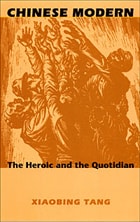
Chinese Modern
The Heroic and the QuotidianXiaobing Tang
Duke University Press, 2000
Tang uncovers crucial clues to modern Chinese literary and cultural practices through readings of Wu Jianren’s 1906 novel The Sea of Regret and works by canonical writers Lu Xun, Ding Ling, and Ba Jin. For the midcentury, he broadens his investigation by considering theatrical, cinematic, and visual materials in addition to literary texts. His reading of the 1963 play The Young Generation reveals the anxiety and terror underlying the exhilarating new socialist life portrayed on the stage. This play, enormously influential when it first appeared, illustrates the utopian vision of China’s lyrical age and its underlying discontents—both of which are critical for understanding late-twentieth-century China. Tang closes with an examination of post–Cultural Revolution nostalgia for the passion of the lyrical age.
Throughout Chinese Modern Tang suggests a historical and imaginative affinity between apparently separate literatures and cultures. He thus illuminates not only Chinese modernity but also the condition of modernity as a whole, particularly in light of the postmodern recognition that the market and commodity culture are both angel and devil.
This elegantly written volume will be invaluable to students of China, Asian studies, literary criticism, and cultural studies, as well as to readers who study modernity.

Chinese Modernism in the Era of Reforms
Cultural Fever, Avant-Garde Fiction, and the New Chinese CinemaXudong Zhang
Duke University Press, 1997
In examining the aesthetic and philosophical formulations of the New Era’s intellectual elites, Zhang first analyzes the intense cultural and intellectual debates, known as the “Great Cultural Discussion” or “Cultural Fever” that took place in Chinese urban centers in the mid- and late 1980s. Chinese literary modernism is then explored, specifically in relation to Deng Xiaoping’s sweeping reforms and with a focus on the changing literary sensibility and avant-garde writers such as Yu Hua, Ge Fei, and Su Tong. Lastly, Zhang looks at the the making of New Chinese Cinema and films such as Yellow Earth, Horse Thief, and King of the Children—films through which Fifth Generation filmmakers first developed a style independent from socialist realism. By tracing the origins and contemporary elaboration of the idea of Chinese modernism, Zhang identifies the discourse of modernism as one of the decisive formal articulations of the social dynamism and cultural possibilities of post-Mao China.
Capturing the historical experience and the cultural vision of China during a crucial decade in its emergence as a world power, Chinese Modernism in the Era of Reforms will interest students and scholars of modernism, Chinese literature and history, film studies, and cultural studies.
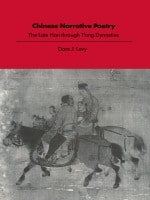
Chinese Narrative Poetry
The Late Han Through T'ang DynastiesDore J. Levy
Duke University Press, 1988
Drawing on both classical Chinese critical works and the most recent Western contributions to the theory of narrative, Levy shows how narrative elements developed out of the lyrical conventions of shih. In doing so, she accomplishes a double purpose, guiding the modern reader to an understanding of the nature of narrative in Chinese poetry and shedding light on the ways in which Chinese poets adapted the devises of lyric to the needs of a completely different expressive mode.
Students of Chinese literature will welcome this pathbreaking study, but Chinese Narrative Poetry will interest other scholars as well because it addresses questions of crucial importance for literary theory and comparative literature, particularly the central issue of the applicability of Western critical concepts to non-Western literature and culture.
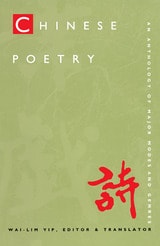
Chinese Poetry, 2nd ed., Revised
An Anthology of Major Modes and GenresWai-lim Yip, editor and translator
Duke University Press, 1997
Newly designed, the unique format of this volume will enhance its reputation as the definitive introduction to Chinese poetry, while its introductory essay on issues of Chinese aesthetics will continue to be an essential text on the problems of translating such works into English. Each poem is printed with the original Chinese characters in calligraphic form, coordinated with word-for-word annotations, and followed by an English translation. Correcting more than a century of distortion of the classical Chinese by translators unconcerned with the intricacies and aesthetics of the Chinese language, these masterful translations by Wai-lim Yip, a noted and honored translator and scholar, allow English readers to enter more easily into the dynamic of the original poems. Each section of the volume is introduced by a short essay on the mode or genre of poem about to be presented and is followed by a comprehensive bibliography.
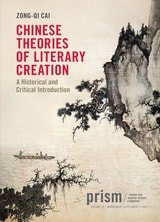
Chinese Theories of Literary Creation
A Historical and Critical IntroductionZong-qi Cai, issue editor
Duke University Press, 2024
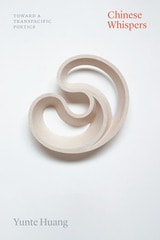
Chinese Whispers
Toward a Transpacific PoeticsYunte Huang
University of Chicago Press, 2022
In this new book, the noted critic and best-selling author Yunte Huang explores the dynamics of poetry and poetics in the age of globalization, particularly questions of translatability, universality, and risk in the transpacific context. “Chinese whispers” refers to an American children’s game dating to the years of the Cold War, a period in which everything Chinese, or even Chinese sounding, was suspect. Taking up various manifestations of the phrase in the twentieth and twenty-first centuries, Huang investigates how poetry, always to a significant degree untranslatable, complicates the transpacific production of meanings and values.
The book opens with the efforts of I. A. Richards, arguably the founder of Anglo-American academic literary criticism, to promote Basic English in China in the early twentieth century. It culminates by resituating Ernest Fenollosa’s famous essay “The Chinese Written Character as a Medium for Poetry,” exploring the ways in which Chinese has historically enriched but also entrapped the Western conception of language.
Chocolate and Other Writings on Male Homoeroticism
Pandey Bechan Sharma
Duke University Press, 2009
The stories depict male homoeroticism in quotidian situations: a man brings a lover to his disapproving friend’s house; a good-looking young man becomes the object of desire at his school. The love never ends well, but the depictions are not always unsympathetic. Although Ugra claimed that the stories were aimed at suppressing homosexuality by exposing it, Vanita highlights the ambivalence of his characterizations. Cosmopolitan, educated, and hedonistic, the Hindu and Muslim men he portrayed quote Hindi and Urdu poetry to express their love, and they justify same-sex desire by drawing on literature, philosophy, and world history. Vanita’s introduction includes anecdotal evidence that Chocolate was enthusiastically received by India’s homosexual communities.

Choosing Books for Children
A COMMONSENSE GUIDEBetsy Hearne with Deborah Stevenson
University of Illinois Press, 1999
If you have ever stood in the children's section of a bookstore or library wondering how to go about matching a book to the age, abilities, and interests of a particular child, Choosing Children's Books is for you. Renowned children's librarian and children's book review editor Betsy Hearne offers practical guidance on sorting through the bewildering array of picture books, pop-up books, books for beginning readers, young adult titles, classics, poetry, folktales, and factual books. Each chapter includes an annotated list of recommended titles.
A gold mine of commonsense, sound advice, this newly revised and completely updated edition of Betsy Hearne's classic guide is an indispensable tool for choosing books for children of all ages.
Newly available in paperback, this revised and updated third edition of Betsy Hearne's classic guide stands as the lodestar for navigating through the bewildering array of books for young readers. Hearne surveys everything from picture books, pop-up books, classics, and books for beginning readers to young adult titles, poetry, folktales, and factual books, with an annotated list of recommended titles accompanying each chapter. A gold mine of common sense and sound advice, her guide remains an indispensable tool for choosing books for children of all ages.
Choosing Not Choosing
Sharon Cameron
University of Chicago Press, 1992
Considering the poems in the context of the fascicles, Cameron argues that an essential refusal of choice pervades all aspects of Dickinson's poetry. Because Dickinson never chose whether she wanted her poems read as single lyrics or in sequence (nor is it clear where any fascicle text ends, or even how, in context, a poem is bounded), "not choosing" is a textual issue; it is also a formal issue because Dickinson refused to chose among poetic variants; it is a thematic issue; and, finally, it is a philosophical one, since what is produced by "not choosing" is a radical indifference to difference. Extending the readings of Dickinson offered in her earlier book Lyric Time, Cameron continues to enlarge our understanding of the work of this singular American poet.
Christ's Subversive Body
Practices of Religious Rhetoric in Culture and PoliticsOlga V. Solovieva; Foreword by Haun Saussy
Northwestern University Press, 2018
Solovieva’s survey includes the iconoclastic polemics of Epiphanius at the moment of struggles for supremacy between the Roman state and the Christian church, the mystical theologico-political alchemy of an anonymous treatise circulated at the Council of Constance, Lavater’s counter-Enlightenment visions of the afterlife expressd through physiognomy, Dostoevsky’s refashioning of ethical communities, Pier Paolo Pasolini’s attempts to provoke the “scandal” of Jesus’s mission once more in the modern world, and the elaboration of a political theology subordinating democratic dissent to the higher unity of a corporately conceived “unitary executive” in early twenty-first-century America.
Solovieva presents her findings not as an entry into theological or Christological debates but rather as a study in comparative discourse analysis. She demonstrates how these uses of Christ’s body are triggered by moments of epistemological, political, and representational crisis in the history of Western civilization.
Christian Felix Weiße the Translator
Cultural Transfer and Literary Entrepreneurship in the EnlightenmentTom Zille
University of London Press, 2021
Christian Humanism in Shakespeare
A Study in Religion and LiteratureLee Oser
Catholic University of America Press, 2022
Christian Origins and the Language of the Kingdom of God
Michael L. Humphries. Foreword by Burton L. Mack
Southern Illinois University Press, 1999
Traditionally, scholars have traced the origin of Christianity to a single source—the kingdom of God as represented in the message of the historical Jesus. Through a rhetorical critical analysis of one of the most important texts in early Christian literature (the Beelzebul controversy), Michael L. Humphries addresses the issue of Christian origins, demonstrating how the language of the kingdom of God is best understood according to its locative or taxonomic effect where the demarcation of social and cultural boundaries contributes to the emergence of this new social foundation.
The Beelzebul controversy exists in two versions— Q and Mark—and thereby allows the study to engage the import of the kingdom language at the point of juxtaposition between two distinct textual representations. This makes it possible to deal directly with the issue of the disparity of texts in the synoptic tradition. Humphries suggests that these two versions of the same controversy indicate two distinct social trajectories wherein the kingdom of God comes to mean something quite different in each case but that nevertheless they demonstrate a similarity in theoretical effect where the language contributes to the emergence of relatively distinct social formations.
Humphries establishes the Q and Markan versions of the Beelzebul controversy as relatively sophisticated compositions that are formally identified as elaborate chreiai (a literary form used in the teaching of rhetoric at the secondary and post-secondary level of GrecoRoman education) and that offer an excellent example of the rhetorical manipulation of language in the development of social and cultural identity.
Christianity and Comics
Stories We Tell about Heaven and HellBlair Davis
Rutgers University Press, 2024
Christianity and Comics presents an 80-year history of the various ways that the comics industry has drawn from biblical source material. It explores how some publishers specifically targeted Christian audiences with titles like Catholic Comics, books featuring heroic versions of Oral Roberts and Billy Graham, and special religious-themed editions of Archie. But it also considers how popular mainstream comics like Daredevil, The Sandman, Ghost Rider, and Batman are infused with Christian themes and imagery.
Comics scholar Blair Davis pays special attention to how the medium’s unique use of panels, word balloons, captions, and serialized storytelling have provided vehicles for telling familiar biblical tales in new ways. Spanning the Golden Age of comics to the present day, this book charts how comics have both reflected and influenced Americans’ changing attitudes towards religion.
Christina Rossetti and Illustration
A Publishing HistoryLorraine Janzen Kooistra
Ohio University Press, 2002
Readers do not always take into account how books that combine image and text make their meanings. But for the Pre-Raphaelite poet Christina Rossetti, such considerations were central.
Christina Rossetti and Illustration maps the production and reception of Rossetti’s illustrated poetry, devotional prose, and work for children, both in the author’s lifetime and in posthumous twentieth-century reprints.
Lorraine Janzen Kooistra’s reading of Rossetti’s illustrated works reveals for the first time the visual-verbal aesthetic that was fundamental to Rossetti’s poetics. Her exhaustive archival research brings to light new information on how Rossetti’s commitment to illustration and attitudes to copyright and control influenced her transactions with publishers and the books they produced. Janzen Kooistra also tracks the poet’s reception in the twentieth century through a complex web of illustrated books produced for a wide range of audiences.
Analyzing an impressive array of empirical data, Janzen Kooistra shows how Rossetti’s packaging for commodity consumption—by religious presses, publishers of academic editions and children’s picture books, and makers of erotica and collectibles—influenced the reception of her work and her place in literary history.

Christina Rossetti
The Poetry of EnduranceDolores Rosenblum
Southern Illinois University Press, 1987
Christina Rossetti was considered the ideal female poet of her time. Her poetry was devotional, moral, and spoke of frustrated affection.
Dolores Rosenblum presents a fresh reading of Rossetti’s works and places them in the context of her life. Rosenblum shows that what was ostensibly devotional, moral, and loveless, was actually what Luce Irigaray calls “mimetism,” a subtle parody and subversion of the male tradition of literature.
Only with the coming of feminist criticism can Rossetti be meaningfully re-evaluated. Rosenblum calls Rossetti’s works the “poetry of endurance,” stating that it is similar, and at times identical, to the female “sentimental” tradition in literature. Rossetti endured the constraints of the Victorian female artistic spirit by becoming a “watcher.” Within this self-accepted role, Rossetti was able to carefully and deliberately choose artistic self-protection. In her religious poetry, Rossetti transcended, by aesthetic renunciation, the alienation and immobilization forced upon her.
Rossetti’s poetry is full of paradox; it sings about silence, exposes the poet’s oblivion. From the repining Victorian poet, there emerged a “stone woman.” Rosenblum discusses this passively enduring female figure’s alienation from knowledge and power, and how the myth of self strengthened the lyric voice within her. Because she was a woman, she was denied the male use of the lyric “I.”
Rossetti’s work is unified, Rosenblum argues, because she was a deliberate poet, and by accepting the “burden of womanhood,” she played out what men only symbolized as female in their art. By her mimicry and revision of the male tradition of literature, Christina Rossetti engaged the patriarchal tradition in ways that make it usable for the female experience, and that provide a critique of male objectification of women in art.
Cicero, Catullus, and the Language of Social Performance
Brian A. Krostenko
University of Chicago Press, 2001
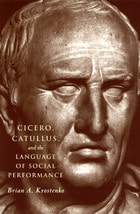
As Krostenko demonstrates, a key feature of this language is its capacity to express both approval and disdain—an artifact of its origins at a time when the "style" and "charm" of imported Greek cultural practices were greeted with both enthusiasm and hostility. Cicero played on that ambiguity, for example, by chastising lepidus ("fine") boys in the "Second Oration against Catiline" as degenerates, then arguing in his De Oratore that the successful speaker must have a certain charming lepos ("wit"). Catullus, in turn, exploited and inverted the political subtexts of this language for innovative poetic and erotic idioms.
Cigarettes Are Sublime
Richard Klein
Duke University Press, 1993
Cinders
Jacques Derrida
University of Minnesota Press, 2014
“More than fifteen years ago,” Jacques Derrida writes in the prologue to this remarkable and uniquely revealing book, “a phrase came to me, as though in spite of me. . . . It imposed itself upon me with the authority, so discreet and simple it was, of a judgment: ‘cinders there are’ (il y a là cendre). . . . I had to explain myself to it, respond to it—or for it.”
In Cinders Derrida ranges across his work from the previous twenty years and discerns a recurrent cluster of arguments and images, all involving in one way or another ashes and cinders. For Derrida, cinders or ashes—at once fragile and resilient—are “the better paradigm for what I call the trace—something that erases itself totally, radically, while presenting itself.”
In a style that is both highly condensed and elliptical, Cinders offers probing reflections on the relation of language to truth, writing, the voice, and the complex connections between the living and the dead. It also contains some of his most essential elaborations of his thinking on the feminine and on the legacy of the Holocaust (both a word—from the Greek hólos, “whole,” and kaustós, “burnt”—and a historical event that invokes ashes) in contemporary poetry and philosophy. In turning from the texts of other philosophers to his own, Cinders enables readers to follow the trajectory from Derrida’s early work on the trace, the gramma, and the voice to his later writings on life, death, time, and the spectral.
Among the most accessible of this renowned philosopher’s many writings, Cinders is an evocative and haunting work of poetic self-analysis that deepens our understanding of Derrida’s critical and philosophical vision.
Cinemachines
An Essay on Media and MethodGarrett Stewart
University of Chicago Press, 2020
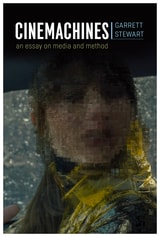
Engaging in fresh ways with revelatory special effects in the history of cinematic storytelling—from Buster Keaton’s breaching of the film screen in Sherlock Jr. to the pixel disintegration of a remotely projected hologram in Blade Runner 2049—Stewart’s book puts unprecedented emphasis on technique in moving image narrative. Complicating and revising the discourse on historical screen processes, Cinemachines will be crucial reading for anyone interested in the evolution of the movies from a celluloid to a digital medium.
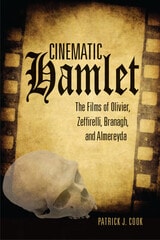
Cinematic Hamlet
The Films of Olivier, Zeffirelli, Branagh, and AlmereydaPatrick J. Cook
Ohio University Press, 2011
Hamlet has inspired four outstanding film adaptations that continue to delight a wide and varied audience and to offer provocative new interpretations of Shakespeare’s most popular play. Cinematic Hamlet contains the first scene-by-scene analysis of the methods used by Laurence Olivier, Franco Zeffirelli, Kenneth Branagh, and Michael Almereyda to translate Hamlet into highly distinctive and remarkably effective films.
Applying recent developments in neuroscience and psychology, Patrick J. Cook argues that film is a medium deploying an abundance of devices whose task it is to direct attention away from the film’s viewing processes and toward the object represented. Through careful analysis of each film’s devices, he explores the ways in which four brilliant directors rework the play into a radically different medium, engaging the viewer through powerful instinctive drives and creating audiovisual vehicles that support and complement Shakespeare’s words and story.
Cinematic Hamlet will prove to be indispensable for anyone wishing to understand how these films rework Shakespeare into the powerful medium of film.
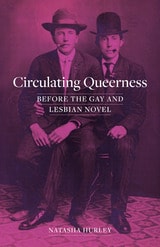
Circulating Queerness
Before the Gay and Lesbian NovelNatasha Hurley
University of Minnesota Press, 2018
A new history of the queer novel shows its role in constructing gay and lesbian lives
The gay and lesbian novel has long been a distinct literary genre with its own awards, shelving categories, bookstore spaces, and book reviews. But very little has been said about the remarkable history of its emergence in American literature, particularly the ways in which the novel about homosexuality did not just reflect but actively produced queer life.
Drawing on Mikhail Bakhtin’s insight that the history of society is connected to the history of language, author Natasha Hurley charts the messy, complex movement by which the queer novel produced the very frames that made it legible as a distinct literature and central to the imagination of queer worlds. Her vision of the queer novel's development revolves around the bold argument that literary circulation is the key ingredient that has made the gay and lesbian novel and its queer forebears available to its audiences.
Challenging the narrative that the gay and lesbian novel came into view in response to the emergence of homosexuality as a concept, Hurley posits a much longer history of this novelistic genre. In so doing, she revises our understanding of the history of sexuality, as well as of the processes of producing new concepts and the evolution of new categories of language.
Cisgender
Disorienting a CategoryPerry Zurn
Duke University Press, 2026
Citizen Critics
Literary Public SpheresRosa A. Eberly
University of Illinois Press, 2000
The condition of our public discussions about literary and cultural works has much to say about the state of our democracy. Classrooms, newspapers, magazines, Internet forums, and many other places grant citizens a place to hold public discourses—and claim a voice on national artistic matters.
Rosa A. Eberly looks at four censorship controversies where professionals asserted their authority to deny citizen critics a voice—and effectively removed discussion of literature from the public sphere. Eberly compares the outrage sparked by the publication of James Joyce's Ulysses and Henry Miller's Tropic of Cancer with the relative quiescence that greeted the much more violent and sexually explicit content of Bret Easton Ellis's American Psycho and Andrea Dworkin's Mercy. Through a close reading of letters to the editor, reviews, media coverage, and court cases, Eberly shows how literary critics and legal experts defused censorship debates—and undercut the authority of citizen critics—by shifting the focus from content to aesthetics and from social values to publicity.
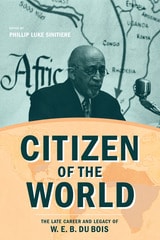
Citizen of the World
The Late Career and Legacy of W. E. B. Du BoisEdited by Phillip Luke Sinitiere
Northwestern University Press, 2019
From his birth in 1868 until his death in 1963, Du Bois sought the liberation of black people in the United States and across the world through intellectual and political labor. His tireless efforts documented and demonstrated connections between freedom for African-descended people abroad and black freedom at home.
In concert with growing scholarship on his twilight years, the essays in this volume assert the fundamental importance of considering Du Bois’s later decades not as a life in decline that descended into blind ideological allegiance to socialism and communism but as the life of a productive, generative intellectual who responded rationally, imaginatively, and radically to massive mid-century changes around the world, and who remained committed to freedom’s realization until his final hour.
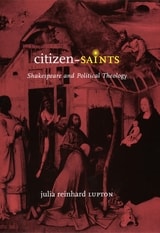
Citizen-Saints
Shakespeare and Political TheologyJulia Reinhard Lupton
University of Chicago Press, 2005
Among the many questions Julia Reinhard Lupton attempts to answer under the rubric of the citizen-saint are: how did states of emergency, acts of sovereign exception, and Messianic anticipations lead to new forms of religious and political law? What styles of universality were implied by the abject state of the pure creature, at sea in a creation abandoned by its creator? And how did circumcision operate as both a marker of ethnicity and a means of conversion and civic naturalization?
Written with clarity and grace, Citizen-Saints will be of enormous interest to students of English literature, religion, and early modern culture.
Citoyennes
Women and the Ideal of Citizenship in Eighteenth-Century FranceAnnie K. Smart
University of Delaware Press, 2012
Did women have a civic identity in eighteenth-century France? In Citoyennes: Women and the Ideal of Citizenship in Eighteenth-Century France, Annie Smart contends that they did. While previous scholarship has emphasized the ideal of domestic motherhood or the image of the republican mother, Smart argues persuasively that many pre-revolutionary and revolutionary texts created another ideal for women–the ideal of civic motherhood. Smart asserts that women were portrayed as possessing civic virtue, and as promoting the values and ideals of the public sphere.
Contemporary critics have theorized that the eighteenth-century ideal of the Republic intentionally excluded women from the public sphere. According to this perspective, a discourse of “Rousseauean” domestic motherhood stripped women of an active civic identity, and limited their role to breastfeeding and childcare. Eighteenth-century France marked thus the division between a male public sphere of political action and a female private sphere of the home.
Citoyennes challenges this position and offers an alternative model of female identity. This interdisciplinary study brings together a variety of genres to demonstrate convincingly that women were portrayed as civic individuals. Using foundational texts such as Jean-Jacques Rousseau’s Emile, or on Education (1762), revolutionary gouaches of Lesueur, and vaudeville plays of Year II of the Republic (1793/1794), this study brilliantly shows that in text and image, women were represented as devoted to both the public good and their families.
In addition, Citoyennes offers an innovative interpretation of the home. Through re-examining sphere theory, this study challenges the tendency to equate the home with private concerns, and shows that the home can function as a site for both private life and civic identity.
Citoyennes breaks new ground, for it both rectifies the ideal of domestic Rousseauean motherhood, and brings a fuller understanding to how female civic identity operated in important French texts and images.
Published by University of Delaware Press. Distributed worldwide by Rutgers University Press.
City Dog
EssaysW.S. Di Piero
Northwestern University Press, 2009
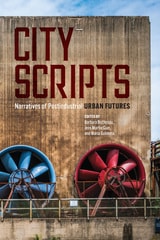
City Scripts
Narratives of Postindustrial Urban FuturesEdited by Barbara Buchenau, Jens Martin Gurr, and Maria Sulimma
The Ohio State University Press, 2023
Storytelling shapes how we view our cities, legitimizing histories, future plans, and understandings of the urban. City Scripts responds to calls by literary theorists to engage a new kind of narrative analysis that recalibrates close reading and interpretation to the multiple ways in which narratives “do things”—how they intervene in the world and take action in everyday life. A multidisciplinary cast of contributors approaches this new way of looking at cities through the stories people tell about them, looking especially at political activism and urban planning, which depend on the invention of plausible stories of connectedness and of a redemptive future.
The stakes are especially high in cities where economic, ecological, and social futures are delimited by histories of large-scale extraction and racialized industrial labor. Contributors thus focus on cities in postindustrial areas of Germany and the United States, examining how narratives about cities become scripts and how these scripts produce real-life results. This approach highlights how uses of narrative and scripting appeal to stakeholders in urban change. These actors continually deploy narrative, media, and performance, with consequences for urban futures worldwide.
Contributors:
Lieven Ameel, Juliane Borosch, Barbara Buchenau, Florian Deckers, Barbara Eckstein, Kornelia Freitag, Walter Grünzweig, Randi Gunzenhäuser, Jens Martin Gurr, Elisabeth Haefs, Chris Katzenberg, Johannes Maria Krickl, Renee M. Moreno, Hanna Rodewald, Julia Sattler, Maria Sulimma, James A. Throgmorton, Michael Wala, Katharina Wood
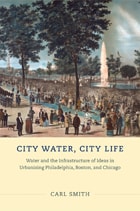
City Water, City Life
Water and the Infrastructure of Ideas in Urbanizing Philadelphia, Boston, and ChicagoCarl Smith
University of Chicago Press, 2013
City and Soul in Plato's Republic
G. R. F. Ferrari
University of Chicago Press, 2005
In addition to acknowledging familiar themes in the interpretation of the Republic—the sincerity of its utopianism, the justice of the philosopher's return to the Cave—Ferrari provocatively engages secondary literature by Leo Strauss, Bernard Williams, and Jonathan Lear. With admirable clarity and insight, Ferrari conveys the relation between the city and the soul and the choice between tyranny and philosophy. City and Soul in Plato's Republic will be of value to students of classics, philosophy, and political theory alike.
Civic Jazz
American Music and Kenneth Burke on the Art of Getting AlongGregory Clark
University of Chicago Press, 2015
Jazz music, Clark argues, demonstrates how this aesthetic rhetoric of identification can bind people together through their shared experience in a common project. While such shared experience does not demand agreement—indeed, it often has an air of competition—it does align people in practical effort and purpose. Similarly, Clark shows, Burke considered Americans inhabitants of a persistently rhetorical situation, in which each must choose constantly to identify with some and separate from others. Thought-provoking and path-breaking, Clark’s harmonic mashup of music and rhetoric will appeal to scholars across disciplines as diverse as political science, performance studies, musicology, and literary criticism.
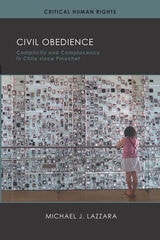
Civil Obedience
Complicity and Complacency in Chile since PinochetMichael J. Lazzara
University of Wisconsin Press, 2020
Michael J. Lazzara boldly argues that today's Chile is a product of both complicity and complacency. Combining historical analysis with deft literary, political, and cultural critique, he scrutinizes the post-Pinochet rationalizations made by politicians, artists, intellectuals, bystanders, former revolutionaries-turned-neoliberals, and common citizens. He looks beyond victims and perpetrators to unveil the ambiguous, ethically vexed realms of memory and experience that authoritarian regimes inevitably generate.
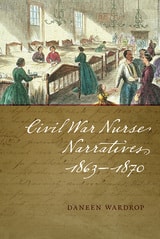
Civil War Nurse Narratives, 1863-1870
Daneen Wardrop
University of Iowa Press, 2015
As a subgenre of war literature, the Civil War nurse narrative offered realistic reportage of medical experiences and declined to engage with military strategies or Congressional politics. Instead, nurse narrators chronicled the details of attending wounded soldiers in the hospital, where a kind of microcosm of US democracy-in-progress emerged. As the war reshaped the social and political ideologies of the republic, nurses labored in a workplace that reflected cultural changes in ideas about gender, race, and class. Through interactions with surgeons and other officials they tested women’s rights convictions, and through interactions with formerly enslaved workers they wrestled with the need to live up to their own often abolitionist convictions and support social equality.
By putting these accounts in conversation with each other, Civil War Nurse Narratives productively explores a developing genre of war literature that has rarely been given its due and that offers refreshing insights into women’s contributions to the war effort. Taken together, these stories offer an impressive and important addition to the literary history of the Civil War.
Civilizing War
Imperial Politics and the Poetics of National RuptureNasser Mufti
Northwestern University Press, 2018
Honorable Mention for the 2019 Sonya Rudikoff Prize, awarded by the Northeast Victorian Studies Association
Civilizing War traces the historical transformation of civil war from a civil affair into an uncivil crisis. Civil war is today synonymous with the global refugee crisis, often serving as grounds for liberal-humanitarian intervention and nationalist protectionism.
In Civilizing War, Nasser Mufti situates this contemporary conjuncture in the long history of British imperialism, demonstrating how civil war has been and continues to be integral to the politics of empire. Through comparative readings of literature, criticism, historiography, and social analysis, Civilizing War shows how writers and intellectuals of Britain’s Anglophone empire articulated a “poetics of national rupture” that defined the metropolitan nation and its colonial others.
Mufti’s tour de force marshals a wealth of examples as diverse as Thomas Carlyle, Benjamin Disraeli, Friedrich Engels, Arthur Conan Doyle, Rudyard Kipling, Joseph Conrad, V. S. Naipaul, Nadine Gordimer, and Michael Ondaatje to examine the variety of forms this poetics takes—metaphors, figures, tropes, puns, and plot—all of which have played a central role in Britain’s civilizing mission and its afterlife. In doing so, Civilizing War shifts the terms of Edward Said’s influential Orientalism to suggest that imperialism was not only organized around the norms of civility but also around narratives of civil war.
Claiming a Tradition
Italian American Women WritersMary Jo Bona
Southern Illinois University Press, 1999
Bona discusses the novels in pairs according to their focus on Italian American life. She first examines the traditions of italianitá (a flavor of things Italian) that inform and enhance works of fiction. The novelists in that tradition were Mari Tomasi (Like Lesser Gods, 1949) and Marion Benasutti (No Steady Job for Papa, 1966).
Bona then turns to later novels that highlight the Italian American belief in the family's honor and reputation. Conflicts between generations, specifically between autocratic fathers and their children, are central to Octavia Waldo's 1961 A Cup of the Sun and Josephine Gattuso Hendin's 1988 The Right Thing to Do.
Even when writers choose to steer away from the familial focus, Bona notes, their developmental narratives trace the reintegration of characters suffering from a crisis of cultural identity. Relating the characters' struggles to their relationship to the family, Bona examines Diana Cavallo's 1961 A Bridge of Leaves and Dorothy Bryant's 1978 Miss Giardino.
Bona then discusses two innovative novels— Helen Barolini's 1979 Umbertina and Tina De Rosa's 1980 Paper Fish— both of which feature a granddaughter who invokes her grandmother, a godparent figure. Through Barolini's feminist and De Rosa's modernist perspectives, both novels present a young girl developing artistically.
Closing with a discussion of the contemporary terrain Italian American women traverse, Bona examines such topics as sexual identity when it meets cultural identity and the inclusion of italianitá when Italian American identity is not central to the story. Italian American women writers, she concludes, continue in the 1980s and 1990s to focus on the interplay between cultural identity and women's development.
Claims for Poetry
Donald Hall, Editor
University of Michigan Press, 1982

Clambake
A History and Celebration of an American TraditionKatherine D. Neustadt
University of Massachusetts Press, 1992
An appreciative examination of the New England clambake, Neustadt divides her study into three parts: historical (social, economic, political, regional, and cultural) influences on the clambake; a close focus on the Allen's Neck clambake as a cultural phenomenon in its own right; and a critical examination of the central elements of the clambaking tradition—food, ritual, and festival.
The author views the clambake as a unique American folk tradition with interesting connections and rich resonances with other aspects of American culture and history.

Claribel Alegría and Central American Literature
Critical EssaysSandra M. Boschetto-Sandoval
Ohio University Press, 1993
These essays examine the multifaceted work of the Central American author whom Latin American literary historians consider precursor of “cultural dialogism” in poetry and fiction. As poet, essayist, journalist, novelist, and writer of “quasi–testimonio,” Alegría’s multiple discourses transgress the boundaries between traditional and postmodern political theories and practices. Her work reveals an allegory of relation and negotiation between “intelligentsia” and subaltern peoples as well as the need for a more socially extensive literature, not exclusive of more elite “magical literatures.”
The essays in the fist section frame Alegría’s discourses within sociohistorical, political, and literary contexts in order to illuminate the author’s singular place in the literary and political history of Central America. The essays in the second section engage in a feminist dialogic in which the reader encounters various critical validations and valorizations of Alegría’s many female voices. The third section involves the reader in the pursuit of extratextual or extraliterary resonances in Alegría’s work.
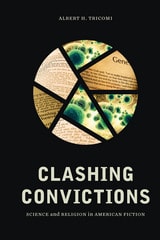
Clashing Convictions
Science and Religion in American FictionAlbert H. Tricomi
The Ohio State University Press, 2016
With chapters on James Lane Allen’s The Reign of Law, Harold Frederic’s The Damnation of Theron Ware, William Dean Howells’s The Leatherwood God, Sinclair Lewis’s Arrowsmith and Elmer Gantry, Jerome Lawrence and Robert E. Lee’s Inherit the Wind, and James Scott Bell’s The Darwin Conspiracy, Tricomi offers new readings emphasizing how this canon represents science and religion as in deep, if not irreconcilable, conflict. Tricomi’s sweeping study, with its emphasis on the twentieth century, thus reveals from several directions the processes of secularism even as it identifies the emergence of what some have come to describe as the current “postsecular” moment in America.
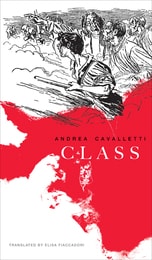
Class
Andrea Cavalletti
Seagull Books, 2019
Class, by Andrea Cavalletti, is a striking montage of diverse materials—Marx and Jules Verne, Benjamin and Gabriel Tarde. In it, Cavalletti asks whether the untimely concept of class is once again thinkable. Faced with new pogroms and state racism, he challenges us to imagine a movement that would unsettle and eventually destroy the crowd.
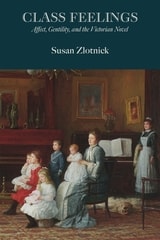
Class Feelings
Affect, Gentility, and the Victorian NovelSusan Zlotnick
Ohio University Press, 0
Drawing on new insights from affect theorists, Class Feelings reenergizes class as an analytic category. While the interest in gender, race, and sexuality as well as the increasingly global focus of nineteenth-century British literary studies have produced critically important new scholarship, class as a primary category of analysis has receded as a major topic of inquiry. This volume focuses on the work of three widely read Victorian novelists—Charles Dickens, Margaret Oliphant, and George Eliot—who were born into families best characterized as lower middle class and who shared structures of feeling common to upwardly mobile members of the mid-Victorian middle class. More particularly, Class Feelings charts class-specific emotions as they developed in relation to the practices of gentility, which had taken hold of the Anglophone world in the first half of the nineteenth century. Born in the 1810s and 1820s, all three novelists came of age during the early period of gentility’s reign and represented its practices within their novels. The self-consciousness associated with gentility—and particularly with its injunction against emotional display—left traces in the plots and characters of their novels and in the formal strategies the authors adopted. These formal features are attempts to manage the hard-to-control emotions linked to the lived experience of class, and they reveal a new way in which social class structures the nineteenth-century British novel. Middle-class gentility made fierce demands on individuals to discipline not only their bodies (through regular bathing, upright posture, moderate eating and drinking) but also their emotions. Outsiders to the increasingly elite social spheres they came to inhabit, Dickens, Oliphant, and Eliot represent in their novels the class emotions, such as shame, embarrassment, envy, anger, and pride, generated by inequalities and exclusions, but they also try to suppress those affective disturbances in the name of gentility. Nonetheless, class feelings churn throughout their texts, especially those written in the 1860s and 1870s, and those feelings are evident in the shame that haunts Dickens’s autobiographical writings, in the anger that bubbles up in Oliphant’s Carlingford tales, and in Eliot’s characteristic sensitivity. Bringing together affect theory, class studies, and Victorian literary criticism, Class Feelings demonstrates that social class is not only a material condition but also an emotional experience that fundamentally shapes literary form and cultural life.
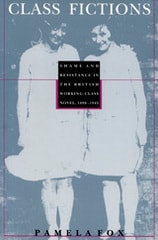
Class Fictions
Shame and Resistance in the British Working Class Novel, 1890–1945Pamela Fox
Duke University Press, 1994
With a focus on certain classics in the working-class literary "canon," such as The Ragged Trousered Philanthropists and Love on the Dole, as well as lesser-known texts by working-class women, Fox uncovers the anxieties that underlie representations of class and consciousness. Shame repeatedly emerges as a powerful counterforce in these works, continually unsettling the surface narrative of protest to reveal an ambivalent relation toward the working-class identities the novels apparently champion.
Class Fictions offers an equally rigorous analysis of cultural studies itself, which has historically sought to defend and value the radical difference of working-class culture. Fox also brings to her analysis a strong feminist perspective that devotes considerable attention to the often overlooked role of gender in working-class fiction. She demonstrates that working-class novels not only expose master narratives of middle-class culture that must be resisted, but that they also reveal to us a need to create counter narratives or formulas of working-class life. In doing so, this book provides a more subtle sense of the role of resistance in working class culture. While of interest to scholars of Victorian and working-class fiction, Pamela Fox’s argument has far-reaching implications for the way literary and cultural studies will be defined and practiced.
Classical Epic Tradition
John Kevin Newman
University of Wisconsin Press, 1986
The literary epic and critical theories about the epic tradition are traced from Aristotle and Callimachus through Apollonius, Virgil, and their successors such as Chaucer and Milton to Eisenstein, Tolstoy, and Thomas Mann. Newman's revisionist critique will challenge all scholars, students, and general readers of the classics, comparative literature, and western literary traditions.
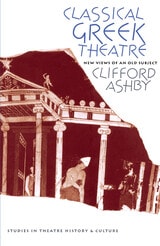
Classical Greek Theatre
New Views of an Old SubjectClifford Ashby
University of Iowa Press, 1998
Many dogmas regarding Greek theatre were established by researchers who lacked experience in the mounting of theatrical productions. In his wide-ranging and provocative study, Clifford Ashby, a theatre historian trained in the practical processes of play production as well as the methods of historical research, takes advantage of his understanding of technical elements to approach his ancient subject from a new perspective. In doing so he challenges many long-held views.
Archaeological and written sources relating to Greek classical theatre are diverse, scattered, and disconnected. Ashby's own (and memorable) fieldwork led him to more than one hundred theatre sites in Greece, southern Italy, Sicily, and Albania and as far into modern Turkey as Hellenic civilization had penetrated. From this extensive research, he draws a number of novel revisionist conclusions on the nature of classical theatre architecture and production.
The original orchestra shape, for example, was a rectangle or trapezoid rather than a circle. The altar sat along the edge of the orchestra, not at its middle. The scene house was originally designed for a performance event that did not use an up center door. The crane and ekkyklema were simple devices, while the periaktoi probably did not exist before the Renaissance. Greek theatres were not built with attention to Vitruvius' injunction against a southern orientation and were probably sun-sited on the basis of seasonal touring. The Greeks arrived at the theatre around mid-morning, not in the cold light of dawn. Only the three-actor rule emerges from this eclectic examination somewhat intact, but with the division of roles reconsidered upon the basis of the actors' performance needs. Ashby also proposes methods that can be employed in future studies of Greek theatre. Final chapters examine the three-actor production of Ion, how one should not approach theatre history, and a shining example of how one should.
Ashby's lengthy hands-on training and his knowledge of theatre history provide a broad understanding of the ways that theatre has operated through the ages as well as an ability to extrapolate from production techniques of other times and places.
Classical Rhetoric in English Poetry
Brian Vickers
Southern Illinois University Press, 1989
Back in print after 17 years, this is a concise history of rhetoric as it relates to structure, genre, and style, with special reference to English literature and literary criticism from Ancient Greece to the end of the 18th century.
The core of the book is a quite original argument that the figures of rhetoric were not mere mechanical devices, were not, as many believed, a "nuisance, a quite sterile appendage to rhetoric to which (unaccountably) teachers, pupils, and writers all over the world devoted much labor for over 2,000 years." Rather, Vickers demonstrates, rhetoric was a stylized representation of language and human feelings.
Vickers supplements his argument through analyses of the rhetorical and emotional structure of four Renaissance poems. He also defines 16 of the most common figures of rhetoric, citing examples from the classics, the Bible, and major English poets from Chaucer to Pope.
Classicism of the Twenties
Art, Music, and LiteratureTheodore Ziolkowski
University of Chicago Press, 2014
In Classicism of the Twenties, Theodore Ziolkowski offers a compelling account of that movement. Giving equal attention to music, art, and literature, and focusing in particular on the works of Stravinsky, Picasso, and T. S. Eliot, he shows how the turn to classicism manifested itself. In reaction both to the excesses of neoromanticism and early modernism and to the horrors of World War I—and with respectful detachment—artists, writers, and composers adapted themes and forms from the past and tried to imbue their own works with the values of simplicity and order that epitomized earlier classicisms.
By identifying elements common to all three arts, and carefully situating classicism within the broader sweep of modernist movements, Ziolkowski presents a refreshingly original view of the cultural life of the 1920s.