Results by title
4154 books match the query 'State & Local' and 290 start with c
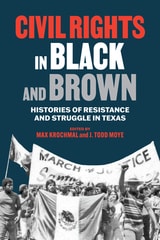
Civil Rights in Black and Brown
Histories of Resistance and Struggle in TexasEdited by Max Krochmal and J. Todd Moye
University of Texas Press, 2021
2022 Best Book Award, Oral History Association
Hundreds of stories of activists at the front lines of the intersecting African American and Mexican American liberation struggle
Not one but two civil rights movements flourished in mid-twentieth-century Texas, and they did so in intimate conversation with one another. Far from the gaze of the national media, African American and Mexican American activists combated the twin caste systems of Jim Crow and Juan Crow. These insurgents worked chiefly within their own racial groups, yet they also looked to each other for guidance and, at times, came together in solidarity. The movements sought more than integration and access: they demanded power and justice.
Civil Rights in Black and Brown draws on more than 500 oral history interviews newly collected across Texas, from the Panhandle to the Piney Woods and everywhere in between. The testimonies speak in detail to the structure of racism in small towns and huge metropolises—both the everyday grind of segregation and the haunting acts of racial violence that upheld Texas’s state-sanctioned systems of white supremacy. Through their memories of resistance and revolution, the activists reveal previously undocumented struggles for equity, as well as the links Black and Chicanx organizers forged in their efforts to achieve self-determination.
Civil War Alabama
Christopher Lyle McIlwain, Sr.
University of Alabama Press, 2016
The definitive study of Alabama's divided path through the Civil War.
Christopher McIlwain’s Civil War Alabama is a landmark book that sheds invigorating new light on the causes, the course, and the outcomes in Alabama of the nation’s greatest drama and trauma. Based on twenty years of exhaustive research that draws on a vast trove of primary sources such as letters, newspapers, and personal journals, Civil War Alabama presents compelling new explanations for how Alabama’s white citizens came to take up arms against the federal government.
A fledgling state at only forty years old, Alabama approached the 1860s with expanding populations of both whites and black slaves. They were locked together in a powerful yet fragile economic engine that produced and concentrated titanic wealth in the hands of a white elite. Perceiving themselves trapped between a mass of disenfranchised black slaves and the industrializing and increasingly abolitionist North, white Alabamians were led into secession and war by a charismatic cohort who claimed the imprimatur of biblical scripture, romanticized traditions of chivalry, and the military mantle of the American Revolution.
And yet, Alabama’s white citizens were not a monolith of one mind. McIlwain dispels the received wisdom of a white citizenry united behind a cadre of patriarchs and patriots. Providing a fresh and insightful synthesis of military events, economic factors such as inflation and shortages, politics and elections, the pivotal role of the legal profession, and the influence of the press, McIlwain’s Civil War Alabama illuminates the fissiparous state of white, antebellum Alabamians divided by class, geography, financial interests, and political loyalties.
Vital and compelling, Civil War Alabama will take its place among the definitive books about Alabama’s doomed Confederate experiment and legacy. Although he rigorously dismantles idealized myths about the South’s “Lost Cause,” McIlwain restores for contemporary readers the fervent struggles between Alabamians over their response to the epic crisis of their times.
Civil War Arkansas
Beyond Battles and LeadersAnne Bailey
University of Arkansas Press, 2000
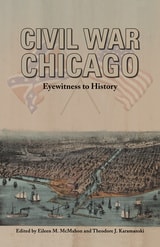
Civil War Chicago
Eyewitness to HistoryTheodore J. Karamanski
Ohio University Press, 2014
The American Civil War was a crucial event in the development of Chicago as the metropolis of the heartland. Not only did Chicagoans play an important role in the politics of the conflict, encouraging emancipation and promoting a “hard war” policy against Southern civilians, but they supported the troops materially through production of military supplies and foodstuffs as well as morally and spiritually through patriotic publications and songs. The Civil War transformed Chicago from a mere commercial center to an industrial power as well as the nation’s railroad hub and busiest port. The war also divided Chicago, however, between Lincoln supporters and Copperheads, whites and blacks, workers and owners, natives and newcomers.
The city played a key role in elevating Abraham Lincoln to the Republican presidential nomination in 1860, yet only four years later a Chicago politician’ s influence was key in declaring the war a failure and promoting a platform of peace with the Confederacy. Using seldom seen or newly uncovered sources, this book tells the story of the Civil War through the eyes of those who lived that history. Photographs throughout the book effectively convey the geography of events in this pivotal period of Chicago’s history, and the editors have provided a useful driving guide to Civil War sites in and around the city.
Civil War Weather in Virginia
Robert K. Krick
University of Alabama Press, 2007
Civil Wars, Civil Beings, and Civil Rights in Alabama's Black Belt
A History of Perry CountyBertis D. English, Foreword by Wayne Flynt
University of Alabama Press, 2020
Reconstruction politics and race relations between freed blacks and the white establishment in Perry County, Alabama
In his fascinating, in-depth study, Bertis D. English analyzes why Perry County, situated in the heart of a violence-prone subregion of Alabama, enjoyed more peaceful race relations and less bloodshed than several neighboring counties. Choosing an atypical locality as central to his study, English raises questions about factors affecting ethnic disturbances in the Black Belt and elsewhere in Alabama. He also uses Perry County, which he deems an anomalous county, to caution against the tendency of some scholars to make sweeping generalizations about entire regions and subregions.
English contends Perry County was a relatively tranquil place with a set of extremely influential African American businessmen, clergy, politicians, and other leaders during Reconstruction. Together with egalitarian or opportunistic white citizens, they headed a successful campaign for black agency and biracial cooperation that few counties in Alabama matched. English also illustrates how a significant number of educational institutions, a high density of African American residents, and an unusually organized and informed African American population were essential factors in forming Perry County’s character. He likewise traces the development of religion in Perry, the nineteenth-century Baptist capital of Alabama, and the emergence of civil rights in Perry, an underemphasized center of activism during the twentieth century.
This well-researched and comprehensive volume illuminates Perry County’s history from the various perspectives of its black, interracial, and white inhabitants, amplifying their own voices in a novel way. The narrative includes rich personal details about ordinary and affluent people, both free and unfree, creating a distinctive resource that will be useful to scholars as well as a reference that will serve the needs of students and general readers.
Civil Wars
Women and the Crisis of Southern NationalismGeorge C. Rable
University of Illinois Press, 1989
Winner of the 1989 Jefferson Davis Award of the Museum of the Confederacy, 1989. Winner of the Julia Cherry Spruill Prize of the Southern Association of Women Historians, 1991.

Claiming the Oriental Gateway
Prewar Seattle and Japanese AmericaAuthored by Shelley S. Lee
Temple University Press, 2012
In Claiming the Oriental Gateway, Shelley Sang-Hee Lee explores the various intersections of urbanization, ethnic identity, and internationalism in the experience of Japanese Americans in early twentieth-century Seattle. She examines the development and self-image of the city by documenting how U.S. expansion, Asian trans-Pacific migration, and internationalism were manifested locally—and how these forces affected residents’ relationships with one another and their surroundings.
Lee details the significant role Japanese Americans—both immigrants and U.S. born citizens—played in the social and civic life of the city as a means of becoming American. Seattle embraced the idea of cosmopolitanism and boosted its role as a cultural and commercial "Gateway to the Orient" at the same time as it limited the ways in which Asian Americans could participate in the public schools, local art production, civic celebrations, and sports. She also looks at how Japan encouraged the notion of the "gateway" in its participation in the Alaska-Yukon-Pacific Exposition and International Potlach.
Claiming the Oriental Gateway thus offers an illuminating study of the "Pacific Era" and trans-Pacific relations in the first four decades of the twentieth century.

Clash of Loyalties
A Border County in the Civil WarJOHN W. SHAFFER
West Virginia University Press, 2003
A border county in a border state, Barbour County, West Virginia felt the full terror and tragedy of the Civil War. The wounds of the Civil War cut most bitterly in the border states, that strip of America from Maryland to Kansas, where conflicting loyalties and traditions ripped apart communities, institutions, and families. Barbour County, in the mountainous Northwest of (West) Virginia, is a telling microcosm of the deep divisions which both caused the war and were caused by it. By examining and interpreting long-ignored documents of the times and the personal accounts of the people who were there, Clash of Loyalties offers a startling new view of America's most bitter hour. Nearly half of the military-age men in the county served in the armed forces, almost perfectly divided between the Union and the Confederacy. After West Virginia split with Virginia to rejoin the Union, Confederate soldiers from the regions could not safely visit their homes on furlough, or even send letters to their families. The county's two leading political figures, Samuel Woods and Spencer Dayton, became leaders of the fight for and against secession, dissolved their close personal friendship, and never spoke to one another again. The two factions launched campaigns of terror and intimidation, leading to the burning of several homes, the kidnapping of a sheriff, the murder of a pacifist minister, and the self-imposed exile of many of the county's influential families. The conflicting loyalties crossed nearly all social and economic lines; even the county's slave owners were evenly divided between Union and Confederate sympathies. With a meticulous examination of census and military records, geneologies, period newspapers, tax rolls, eyewitness accounts, and other relevant documents, Clash of Loyalties presents a compelling account of the passion and violence which tore apart Barbour County and the nation.

Class Acts
Young Men and the Rise of LifestyleMary Rizzo
University of Nevada Press, 2015
Mary Rizzo traces the development of the concept of lifestyle marketing, showing how marketers disconnected class identity from material reality, focusing instead on a person’s attitudes, opinions, and behaviors. The book includes discussions of the rebel of the 1950s, the hippie of the 1960s, the white suburban hip-hop fan of the 1980s, and the poverty chic of the 1990s. Class Acts illuminates how the concept of “lifestyle,” particularly as expressed through fashion, has disconnected social class from its material reality and diffused social critique into the opportunity to simply buy another identity. The book will appeal to scholars and other readers who are interested in American cultural history, youth culture, fashion, and style.
Class and Gender Politics in Progressive-Era Seattle
John C. Putman
University of Nevada Press, 2008

Classic Recipes from the University of Alabama's University Club
Alline P. Van Duzor, Foreword by Camille Maxwell Elebash
University of Alabama Press, 2010
250 Recipes from the University of Alabama’s famed University Club in Tuscaloosa
The historic mansion at the corner of University Boulevard and Queen City Avenue in Tuscaloosa, Alabama has been home to the University of Alabama University Club since 1944. In its early years, the Club took shape around the vision and culinary expertise of the formidable Atlantan Alline P. Van Duzor, still remembered in Tuscaloosa for her impeccable and exacting standards. This book reveals her most beloved recipes.
Commissioned in the early 1960s by a New York publisher, this collection of her gastronomic creations sold through more than eight printings, further spreading her reputation.
The more than 250 favorite Southern recipes in this now-classic cookbook are written in Van Duzor’s straight-forward style, using common fresh and store-bought ingredients. This new edition has been augmented by a guide to portions and food brand names, an index to the recipes, and an appendix of past presidents of the University Club Board.
Cookbook collectors, local history buffs, the university community, and happy cooks everywhere will welcome this reissue of a popular cookbook that has won decades of fans.
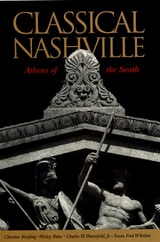
Classical Nashville
Athens of the SouthChristine M. Kreyling
Vanderbilt University Press, 1996
Nashville has been many things: frontier town, Civil War battleground, New South mecca, and Music City, U.S.A. It is headquarters for several religious denominations, and also the home of some of the largest insurance, healthcare, and publishing concerns in the country. Located culturally as well as geographically between North and South, East and West, Nashville is centered in a web of often-competing contradictions.
One binding image of civic identity, however, has been consistent through all of Nashville's history: the classical Greek and Roman ideals of education, art, and community participation that early on led to the city's sobriquet, "Athens of the West," and eventually, with the settling of the territory beyond the Mississippi River, the "Athens of the South."
Illustrated with nearly a hundred archival and contemporary photographs, Classical Nashville shows how Nashville earned that appellation through its adoption of classical metaphors in several areas: its educational and literary history, from the first academies through the establishment of the Fugitive movement at Vanderbilt; the classicism of the city's public architecture, including its Capitol and legislative buildings; the evolution of neoclassicism in homes and private buildings; and the history and current state of the Parthenon, the ultimate symbol of classical Nashville, replete with the awe-inspiring 42-foot statue of Athena by sculptor Alan LeQuire.
Perhaps Nashville author John Egerton best captures the essence of this modern city with its solid roots in the past. He places Nashville "somewhere between the 'Athens of the West' and 'Music City, U.S.A.,' between the grime of a railroad town and the glitz of Opryland, between Robert Penn Warren and Robert Altman." Nashville's classical identifications have always been forward-looking, rather than antiquarian: ambitious, democratic, entrepreneurial, and culturally substantive. Classical Nashville celebrates the continuation of classical ideals in present-day Nashville, ideals that serve not as monuments to a lost past, but as sources of energy, creativity, and imagination for the future of a city.
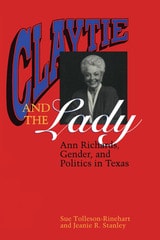
Claytie and the Lady
Ann Richards, Gender, and Politics in TexasBy Sue Tolleson-Rinehart and Jeanie R. Stanley
University of Texas Press, 1994
It was like a remake of The Cowboy and the Lady, except that this time they weren't friends. The 1990 Texas governor's race pitted Republican Clayton Williams, a politically conservative rancher and oil millionaire, against Democrat Ann Richards, an experienced progressive politician noted for her toughness and quick wit. Their differences offered voters a choice not only of policies and programs but also of stereotypes and myths of men's and women's proper roles.
Claytie and the Lady is the first in-depth look at how gender affected the 1990 governor's race. The authors' analysis reveals that Ann Richards' victory was a result of a unique combination of characteristics. She was simultaneously tough enough to convince voters that she could lead and feminine enough to put them at ease. At the same time, she remained committed to the progressive and women's issues that had won her the early support of feminists and progressives. The authors also show how Clayton Williams' appeal to the Texas cowboy myth backfired when he broke the cowboy code of chivalry to women.
The authors set their discussion within the historical context of twentieth-century Texas politics and the theoretical context of gender politics in order to pose a number of thought-provoking questions about the effects of women's participation in political life. Interviews with key players in the 1990 election, including Governor Ann Richards, add a lively and insightful counterpoint to the text.
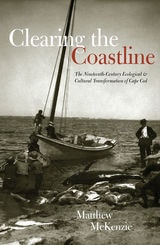
Clearing the Coastline
The Nineteenth-Century Ecological & Cultural Transformations of Cape CodMatthew McKenzie
University Press of New England, 2011
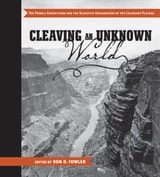
Cleaving an Unknown World
The Powell Expeditions and the Scientific Exploration of the Colorado PlateauDon D Fowler
University of Utah Press, 2011
In 2009 the University of Utah Press and the Utah State Historical Society co-published three volumes of long out-of-print journals, letters, and other documents from John Wesley Powell’s expeditions down the Colorado River. We are proud to announce the fourth and final volume. Cleaving an Unknown World collects Powell’s journal (Smithsonian Journal of History, 1968); Jack Hillers’s diary and photographs, previously published as Photographed All the Best Scenery, edited by Don D. Fowler (University of Utah Press, 1972); original maps from Francis Marion Bishop (Utah Historical Quarterly, 1969); Frederick S. Dellenbaugh’s letters (Utah Historical Quarterly, 1969); and John C. Sumner’s journal from the first Powell expedition (Utah Historical Quarterly, 1969). Roy Webb’s foreword provides the context for these disparate pieces.
This beautifully illustrated book features Hillers’s photographs—long regarded as a remarkable and unique record of the Colorado River and the Grand Canyon. Cleaving an Unknown World belongs in the library of any reader interested in the exploration of the American West.
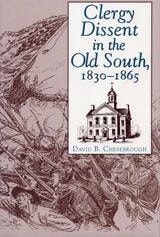
Clergy Dissent in the Old South, 1830 - 1865
David B. Chesebrough
Southern Illinois University Press, 1996
Emphasizing the courage required and the cost of dissent before and throughout the Civil War, David B. Chesebrough identifies dissenters among the southern clergy, tells their stories, and discusses the issues that caused these Christians to split from the majority
After an opening chapter in which he provides an overview of the role of the southern clergy in the antebellum and war years, Chesebrough turns to the South’s efforts to present a united proslavery front from 1830 to 1861. Clergy who could not support the "peculiar institution" kept silent, moved to the North, or suffered various consequences for their nonconformity.
Chesebrough then deals with the war years (1861–1865), when opposition to secession and the war was regarded as much more serious than opposition to slavery had been. Some members of the clergy who formally supported and justified slavery could not support secession and war. This was a dangerous stance, sometimes carrying a death sentence.
The final chapter, "The Creative Minority" stresses the important societal role of dissenters, who, history shows, often perceive events more clearly than the majority.
The dissenters Chesebrough discusses include John H. Aughey, a Presbyterian evangelist from Mississippi who was imprisoned and sentenced to death for his opposition to secession; William G. Brownlow, a Methodist cleric and newspaper publisher who, though he later became governor of Tennessee, was imprisoned and forced to leave the state because of his opposition to secession and the Civil War; John Gregg Fee, the founder of Berea College in Kentucky, who was denounced by his family and forced to leave the state because of his abolitionist views; and Melinda Rankin, a Presbyterian missionary worker in Brownsville, Texas, who was dismissed from her teaching responsibilities because of alleged northern sympathies.
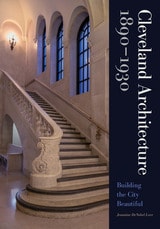
Cleveland Architecture 1890–1930
Building the City BeautifulJeannine deNobel Love
Michigan State University Press, 2020
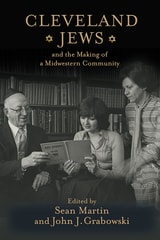
Cleveland Jews and the Making of a Midwestern Community
Sean Martin
Rutgers University Press, 2020
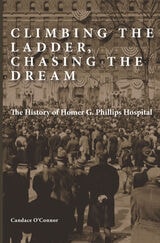
Climbing the Ladder, Chasing the Dream
The History of Homer G. Phillips HospitalCandace O’Connor
University of Missouri Press, 2022
When the beautiful, up-to-date hospital opened, it attracted more black residents than any other such program in the United States. Patients also flocked to the hospital, as did nursing students who found there excellent training, ready employment, and a boost into the middle class. For decades, the hospital thrived; by the 1950s, three-quarters of African-American babies in St. Louis were born at Homer G.
But the 1960s and 1970s brought less need for all-black hospitals, as faculty, residents, and patients were increasingly welcome in the many newly integrated institutions. Ever-tightening city budgets meant less money for the hospital, and in 1979, despite protests from the African-American community, HGPH closed. Years later, the venerated, long-vacant building came to life again as the Homer G. Phillips Senior Living Community.
Candace O’Connor draws upon contemporary newspaper articles, institutional records, and dozens of interviews with former staff members to create the first, full history of the Homer G. Phillips Hospital. She also brings new facts and insights into the life and mysterious murder (still an unsolved case) of the hospital’s namesake, a pioneering Black attorney and civil rights activist who led the effort to build the sorely needed medical facility in the Ville neighborhood.
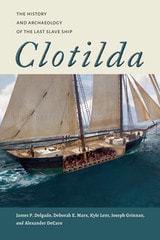
Clotilda
The History and Archaeology of the Last Slave ShipJames P. Delgado, Deborah E. Marx, Kyle Lent, Joseph Grinnan, and Alexander DeCaro
University of Alabama Press, 2023
Documents the maritime historical research and archaeological fieldwork used to identify the wreck of the notorious schooner Clotilda
Clotilda: The History and Archaeology of the Last Slave Ship is the first definitive work to examine the maritime historical and archaeological record of one of the most infamous ships in American history. Clotilda was owned by Alabama businessman Timothy Meaher, who, on a dare, equipped it to carry captured Africans from what is now Benin and bring them to Alabama in 1860—some fifty years after the import of captives to be enslaved was banned. To hide the evidence, Clotilda was set afire and sunk.
What remained was a substantially intact, submerged, and partially buried shipwreck located in a backwater of the Mobile River. The site of the wreck was an open secret to some people who knew Meaher, but its identity remained unknown for more than a century as various surveys through the years failed to locate the ship.
This volume, authored by the archaeological team who conducted a comprehensive, systematic survey of a forgotten “ship graveyard,” details the exhaustive forensic work that conclusively identified the wreck, as well as the stories and secrets that have emerged from the partly burned hulk. James P. Delgado and his coauthors discuss the various searches for Clotilda, sharing the forensic data and other analyses showing how those involved concluded that this wreck was indeed Clotilda. Additionally, they offer physical evidence not previously shared that situates the schooner and its voyage in a larger context of the slave trade.
Clotilda: The History and Archaeology of the Last Slave Ship serves as a nautical biography of the ship as well. After reviewing the maritime trade in and out of Mobile Bay, this account places Clotilda within the larger landscape of American and Gulf of Mexico schooners and chronicles its career before being used as a slave ship. All of its voyages had a link to slavery, and one may have been another smuggling voyage in violation of federal law. The authors have also painstakingly reconstructed Clotilda’s likely appearance and characteristics.
Clout City
The Rise and Fall of the Chicago Political MachineDominic A. Pacyga
University of Chicago Press, 2025
Unearths the religious and cultural roots of a powerful political machine that empowered some everyday Chicagoans but ruled all of the city for decades.
In politics, clout is essential. Too often, it determines whether insider access is granted or denied, favors are given or withheld, and payoffs are made or received. But Chicago clout, as we know it today, is even more potent than that—it’s the absolute currency of a social, cultural, and political order that is self-reinforcing and self-dealing. Or, at least, it was.
In Clout City, award-winning historian Dominic A. Pacyga reveals how cultural, ethnic, and religious forces created this distinctive system—and ultimately led to its collapse. Tracing clout’s origins in the Irish Catholic–dominated working-class neighborhood of Bridgeport, shaped by De La Salle Institute and home to the legendary Daley family, Pacyga shows how communal ties can be a force for good and also the deepest wellspring of corruption. He maps Chicago’s unique politics to its remarkable history, from the Great Fire of 1871 through its rise and decline as an industrial center to its emergence as a global city in the early twenty-first century. With deep research and firsthand experience from a lifetime in the city, Pacyga argues that Chicago’s politics is understood best as a mixture of cultural and religious influences and more worldly pursuits, exploring how both Jewish and Catholic communalism played central roles in the creation and sustenance of the Chicago machine.
Chicago’s politics today aren’t as defined by its distinctive brand of clout. But they are shaped by clout’s decline and the ghost of the machine. Pacyga’s tour of the city’s multilayered past is an indispensable guide to its present and future.
Clout City
The Rise and Fall of the Chicago Political MachineDominic A. Pacyga
University of Chicago Press, 2025
This is an auto-narrated audiobook version of this book.
Unearths the religious and cultural roots of a powerful political machine that empowered some everyday Chicagoans but ruled all of the city for decades.
In politics, clout is essential. Too often, it determines whether insider access is granted or denied, favors are given or withheld, and payoffs are made or received. But Chicago clout, as we know it today, is even more potent than that—it’s the absolute currency of a social, cultural, and political order that is self-reinforcing and self-dealing. Or, at least, it was.
In Clout City, award-winning historian Dominic A. Pacyga reveals how cultural, ethnic, and religious forces created this distinctive system—and ultimately led to its collapse. Tracing clout’s origins in the Irish Catholic–dominated working-class neighborhood of Bridgeport, shaped by De La Salle Institute and home to the legendary Daley family, Pacyga shows how communal ties can be a force for good and also the deepest wellspring of corruption. He maps Chicago’s unique politics to its remarkable history, from the Great Fire of 1871 through its rise and decline as an industrial center to its emergence as a global city in the early twenty-first century. With deep research and firsthand experience from a lifetime in the city, Pacyga argues that Chicago’s politics is understood best as a mixture of cultural and religious influences and more worldly pursuits, exploring how both Jewish and Catholic communalism played central roles in the creation and sustenance of the Chicago machine.
Chicago’s politics today aren’t as defined by its distinctive brand of clout. But they are shaped by clout’s decline and the ghost of the machine. Pacyga’s tour of the city’s multilayered past is an indispensable guide to its present and future.

Clowns to the Left of Me, Jokers to the Right
American Life in ColumnsMichael A. Smerconish
Temple University Press, 2020
Opinionated talk show host and columnist Michael Smerconish has been chronicling local, state, and national events for the Philadelphia Daily News and the Philadelphia Inquirer for more than 15 years. He has sounded off on topics as diverse as the hunt for Osama bin Laden and what the color of your Christmas lights says about you. In this collection of 100 of his most memorable columns, Smerconish reflects on American political life with his characteristic feistiness. A new Afterword for each column provides updates on both facts and feelings, indicating how the author has evolved over the years, moving from a reliable Republican voter to a political Independent.
Clowns to the Left of Me, Jokers to the Right covers the post-9/11 years, Barack Obama’s ascension, and the rise of Donald Trump. Smerconish describes meeting Ronald Reagan, having dinner with Fidel Castro, barbequing with the band YES in his backyard, spending the same night with Pete Rose and Ted Nugent, drinking champagne from the Stanley Cup, and conducting Bill Cosby’s only pretrial interview. He also writes about local Philadelphia culture, from Sid Mark to the Rizzo statue.
Smerconish’s outlook as expressed in these impassioned opinion pieces goes beyond “liberal” or “conservative.” His thought process continues to evolve and change, and as it does, he aims to provoke readers to do the same.
All author proceeds benefit the Children’s Crisis Treatment Center, a Philadelphia- based, private, nonprofit agency that provides behavioral health services to children and their families.
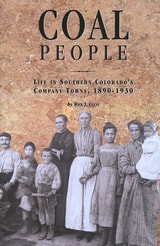
Coal People
Life in Southern Colorado's Company Towns, 1890-1930Rick J. Clyne
University Press of Colorado, 1999
Clyne reveals that a strong sense of community and tolerance existed in the camps, into which families journeyed from such far-flung locales as eastern and southern Europe to carve out a living. The shared immigrant experience—and the shared risks of mining—more often than not strengthened the bonds between both miners and families.
Coal People contains historic images of coal-town life culled from the collections of the Colorado Historical Society, as well as the author's own photographs of how several of these camps appear today.
Coal and Culture
Opera Houses in AppalachiaWilliam Faricy Condee
Ohio University Press, 2005
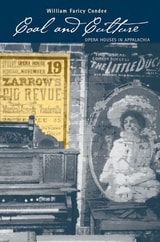
Opera houses were fixtures of Appalachian life from the end of the Civil War through the 1920s. Most towns and cities had at least one opera house during this golden age. Coal mining and railroads brought travelers, money, and change to the region. Many aspects of American life converged in the opera house.
Coal and Culture: Opera Houses in Appalachia is a critical appreciation of the opera house in the coal-mining region of Appalachia from the mid-1860s to the early 1930s. Author William Faricy Condee demonstrates that these were multipurpose facilities that were central to the life of their communities. In the era before radio, movies, television, and malls, these buildings were essential. They housed little, if any, opera, but were used for almost everything else, including traveling theater, concerts, religious events, lectures, commencements, boxing matches, benefits, union meetings, and—if the auditorium had a flat floor—skating and basketball.
The only book on opera houses that stresses their cultural context, Condee’s unique study will interest cultural geographers, scholars of Appalachian studies, and all those who appreciate the gaudy diversity of the American scene.
Coal in our Veins
A Personal JourneyErin Ann Thomas
Utah State University Press, 2012
In Coal in Our Veins, Erin Thomas employs historical research, autobiography, and journalism to intertwine the history of coal, her ancestors' lives mining coal, and the societal and environmental impacts of the United States' dependency on coal as an energy source. In the first part of her book, she visits Wales, native ground of British coal mining and of her emigrant ancestors. The Thomases' move to the coal region of Utah—where they witnessed the Winter Quarters and Castle Gate mine explosions, two of the worst mining disasters in American history—and the history of coal development in Utah form the second part.
Then Thomas investigates coal mining and communities in West Virginia, near her East Coast home, looking at the Sago Mine collapse and more widespread impacts of mining, including population displacement, mountain top removal, coal dust dispersal, and stream pollution, flooding, and decimation. The book's final part moves from Washington D.C.—and an examination of coal, CO2, and national energy policy—back to Utah, for a tour of a coal mine, and a consideration of the Crandall Canyon mine cave-in, back to Wales and the closing of the oldest operating deep mine in the world and then to a look at energy alternatives, especially wind power, in West Virginia and Pennsylvania.
Coalfield Jews
An Appalachian HistoryDeborah R. Weiner
University of Illinois Press, 2006
The stories of vibrant eastern European Jewish communities in the Appalachian coalfields
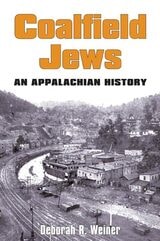
Coalfield Jews explores the intersection of two simultaneous historic events: central Appalachia’s transformative coal boom (1880s-1920), and the mass migration of eastern European Jews to America. Traveling to southern West Virginia, eastern Kentucky, and southwestern Virginia to investigate the coal boom’s opportunities, some Jewish immigrants found success as retailers and established numerous small but flourishing Jewish communities.
Deborah R. Weiner’s Coalfield Jews provides the first extended study of Jews in Appalachia, exploring where they settled, how they made their place within a surprisingly receptive dominant culture, how they competed with coal company stores, interacted with their non-Jewish neighbors, and maintained a strong Jewish identity deep in the heart of the Appalachian mountains. To tell this story, Weiner draws on a wide range of primary sources in social, cultural, religious, labor, economic, and regional history. She also includes moving personal statements, from oral histories as well as archival sources, to create a holistic portrayal of Jewish life that will challenge commonly held views of Appalachia as well as the American Jewish experience.
Cold War University
Madison and the New Left in the SixtiesMatthew Levin
University of Wisconsin Press, 2013
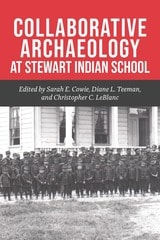
Collaborative Archaeology at Stewart Indian School
Sarah E. Cowie
University of Nevada Press, 2019
This edited volume addresses the theory, methods, and outcomes of collaborative archaeology conducted at the Stewart Indian School site and is a genuine collective effort between archaeologists, former students of the school, and other tribal members. With more than twenty contributing authors from the University of Nevada, Reno, Nevada Indian Commission, Washoe Tribal Historic Preservation Office, and members of Washoe, Paiute, and Shoshone tribes, this rich case study is strongly influenced by previous work in collaborative and Indigenous archaeologies. It elaborates on those efforts by applying concepts of governmentality (legal instruments and practices that constrain and enable decisions, in this case, regarding the management of historical populations and modern heritage resources) as well as social capital (valued relations with others, in this case, between Native and non-Native stakeholders).
As told through the trials, errors, shared experiences, sobering memories, and stunning accomplishments of a group of students, archaeologists, and tribal members, this rare gem humanizes archaeological method and theory and bolsters collaborative archaeological research.

Collared
Politics and Personalities in Oregon's Wolf CountryAimee Lyn Eaton
Oregon State University Press, 2013
Teeming with the tension and passion that accompany one of North America’s most controversial apex predators, Collared tracks the events that unfolded when wolves from the reintroduced population of the northern Rocky Mountains dispersed west across state lines into Oregon.
In a forthright and personal style, Aimee Lyn Eaton takes readers from meeting rooms in the state capitol to ranching communities in the rural northeast corner of the state. Using on-the-ground inquiry, field interviews, and in-depth research, she shares the story of how wolves returned to Oregon and the repercussions of their presence in the state.
Collared: Politics and Personalities in Oregon’s Wolf Country introduces readers to the biologists, ranchers, conservationists, state employees, and lawyers on the front lines, encouraging a deeper, multifaceted understanding of the controversial and storied presence of wolves in Oregon.
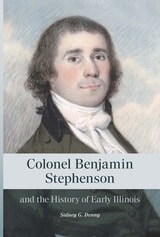
Colonel Benjamin Stephenson and the History of Early Illinois
Sidney G. Denny, with a foreword by Jason Stacy
Southern Illinois University Press, 2025
WINNER, Certificate of Excellence in “Scholarly Publications” from the Illinois State Historical Society’s 2026 Best of Illinois History Awards!
Rediscovering a forgotten Illinois founding father
In early 2024, the Director of the Colonel Benjamin Stephenson House in Edwardsville, Illinois, discovered an unpublished manuscript among the files of Sidney G. Denny, a longtime Friends of the Colonel Benjamin Stephenson House Board member who had passed away just months before. The manuscript compiled the materials from a decade’s worth of articles Denny had written for the House’s newsletter, the Spectator, on the history of the House, Benjamin Stephenson, and early Illinois—history that, without Denny, would have been lost to time.
Colonel Benjamin Stephenson, a founding father of both the city of Edwardsville and the state of Illinois, played a crucial role in the emergence of Illinois from a territory into the nation’s twenty-first state in 1818. Informed by a treasure trove of primary sources, Colonel Benjamin Stephenson and the History of Early Illinois traces Stephenson from his childhood in 18th-century Pennsylvania to his experiences on the Illinois frontier and, eventually, to his final residence, which is now a museum of his life and times in Edwardsville. The volume also provides a detailed chronicle that connects early Illinois history to the history of westward settlement and to the American Revolution itself.
Denny explores the rich history of Madison County and delves into the complexities of early Illinois and its pioneering leaders, weaving together the lives of various families to reveal the interconnected nature of early Illinois society. His meticulously researched work showcases how the impact of those early days is still visible today.
Colonel Greene and the Copper Skyrocket
The Spectacular Rise and Fall of William Cornell Greene: Copper King, Cattle Baron, and Promoter Extraordinary in Mexico, the American Southwest, and the New York Financial DistrictC. L. Sonnichsen
University of Arizona Press, 1974
"A solid account of a southwestern 'character' who has flitted in and out of frontier and economic history."—American Historical Review
"A creditable work on a fascinating individual. In delightful writing style he has reconstructed Greene's life, explaining the ambitions as well as the frailties of this extraordinary entrepreneur."—History
"A rewarding study of the later days of mining."—Arizona and the West
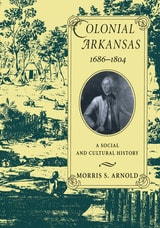
Colonial Arkansas, 1686-1804
A Social and Cultural HistoryMorris S. Arnold
University of Arkansas Press, 1993
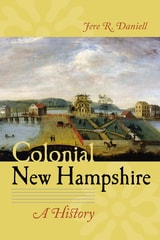
Colonial New Hampshire
A HistoryJere R. Daniell
University Press of New England, 2015
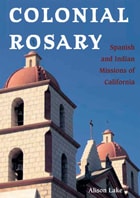
Colonial Rosary
The Spanish and Indian Missions of CaliforniaAlison Lake
Ohio University Press, 2006
California would be a different place today without the imprint of Spanish culture and the legacy of Indian civilization. The colonial Spanish missions that dot the coast and foothills between Sonoma and San Diego are relics of a past that transformed California’s landscape and its people.
In a spare and accessible style, Colonial Rosary looks at the complexity of California’s Indian civilization and the social effects of missionary control. While oppressive institutions lasted in California for almost eighty years under the tight reins of royal Spain, the Catholic Church, and the government of Mexico, letters and government documents reveal the missionaries’ genuine concern for the Indian communities they oversaw for their health, spiritual upbringing, and material needs.
With its balanced attention to the variety of sources on the mission period, Colonial Rosary illuminates ongoing debates over the role of the Franciscan missions in the settlement of California.
By sharing the missions’ stories of tragedy and triumph, author Alison Lake underlines the importance of preserving these vestiges of California’s prestatehood period. An illustrated tour of the missions as well as a sensitive record of their impact on California history and culture, Colonial Rosary brings the story of the Spanish missions of California alive.
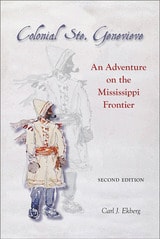
Colonial Ste. Genevieve
An Adventure on the Mississippi FrontierCarl J. Ekberg
Southern Illinois University Press, 1996
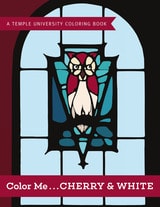
Color me...Cherry & White
A Temple University Coloring BookTemple University Press, 2018
The first ever Temple University adult coloring book, Color Me...Cherry & White contains more than twenty iconic Temple University landmarks. From the magnificent Baptist Temple with its ornate stained glass windows, to Hooter the Owl, the campus food trucks, and the SEPTA rail station, students, parents, and alumni—even future Owls—now have a personal campus canvas to color with markers, pencils or crayons.
The images in Color Me...Cherry & White were created from photographs from the University Photography Department and crafted into pages for amateur artists to beautify. The designs will stoke memories as well as provide stress relief as artists create their own impressions of the campus. Moreover, this keepsake will make the perfect gift and provide memories for the worldwide Temple community.
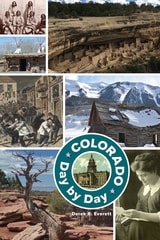
Colorado Day by Day
Derek Everett
University Press of Colorado, 2019
Colorado Day by Day is an engaging, this-day-in-history approach to the key figures and forces that have shaped Colorado from ancient times to the present. Historian Derek R. Everett presents a vignette for each day of the calendar year, exploring Colorado’s many facets through distilled tales of people, places, events, and trends.
Entries incorporate tales from each of the state’s sixty-four counties and feature both well-known and obscure cultural moments, including events in Native American, African American, Asian American, Hispano, and women’s history. Allowing the reader to explore the state’s heritage as individual threads or as part of the greater tapestry, Colorado Day by Day recovers much lost history and will be an entertaining and useful source of lore for anyone who enjoys or is curious about Colorado history.
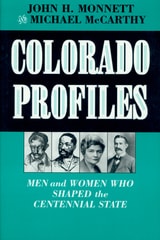
Colorado Profiles
Men and Women Who Shaped the Centennial StateJohn H. Monnett
University Press of Colorado, 1996
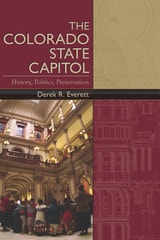
Colorado State Capitol
History, Politics, PreservationDerek Everett
University Press of Colorado, 2005
In one comprehensive volume historian Derek Everett traces the establishment, planning, construction, and history of Colorado's state capitol - including a discussion on the importance of restoring and preserving the building for current and future generations of Coloradoans.
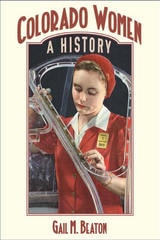
Colorado Women
A HistoryGail M. Beaton
University Press of Colorado, 2012
The experiences of Colorado women differed greatly across economic, ethnic, and racial backgrounds. Marital status, religious affiliation, and sexual orientation colored their worlds and others' perceptions and expectations of them. Each chapter addresses the everyday lives of women in a certain period, placing them in historical context, and is followed by vignettes on women's organizations and notable individuals of the time.
Native American, Hispanic, African American, Asian and Anglo women's stories hail from across the state--from the Eastern Plains to the Front Range to the Western Slope--and in their telling a more complete history of Colorado emerges. Colorado Women makes a significant contribution to the discussion of women's presence in Colorado that will be of interest to historians, students, and the general reader interested in Colorado, women's and western history.
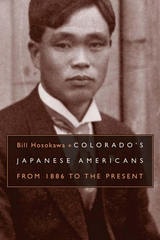
Colorado's Japanese Americans
From 1886 to the PresentBill Hosokawa
University Press of Colorado, 2005
Hosokawa traces personal histories, such as Bob Sakata's journey from internment in a relocation camp to his founding of a prosperous truck farm; the conviction of three sisters for assisting the escape of German POWs; and the years of initiative and determination behind Toshihiro Kizaki's ownership of Sushi Den, a beloved Denver eatery. In addition to personal stories, the author also relates the larger history of the interweave of cultures in Colorado, from the founding of the Navy's Japanese language school at the University of Colorado to the merging of predominantly white and Japanese American congregations at Arvada's Simpson United Methodist Church.
With the author's long view and sharp eye, Colorado's Japanese Americans creates a storied document of lasting legacy about the Issei and Nisei in Colorado.

Colorado
A HistoryDerek Everett
University Press of Colorado, 2026
From prehistoric seas to modern ski slopes, Colorado: A History explores the people, places, conflicts, environments, and ideas that have shaped the state—and the forces that continue to guide it today.
The choices that built Colorado brought both opportunity and devastating consequences. What looked like a triumph from one perspective often represented tragedy from another. Join Dr. Derek Everett on a sweeping journey through time, meeting the Natives and newcomers, the business owners and workers, and the communities and governments that transformed the landscape along the way. Drawing on the latest scholarship, Colorado: A History brings those competing stories together to reveal a state whose past is as complicated, surprising, and unfinished as its future.
Colorado
A History of the Centennial State, Fifth EditionCarl Abbott
University Press of Colorado, 2013
The fifth edition tells of conflicts, shifting alliances, and changing ways of life as Hispanic, European, and African American settlers flooded into a region that was already home to Native Americans. Providing a balanced treatment of the entire state’s history—from Grand Junction to Lamar and from Trinidad to Craig—the authors also reveal how Denver and its surrounding communities developed and gained influence.
While continuing to elucidate the significant impact of mining, agriculture, manufacturing, and tourism on Colorado, this edition broadens and focuses its coverage by consolidating material on Native Americans into one chapter and adding a new chapter on sports history. The authors also expand their discussion of the twentieth century with updated sections on the environment, economy, politics, and recent cultural conflicts. New illustrations, updated statistics, and an extensive bibliography including Internet resources enhance this edition.
Colorado
A History of the Centennial State, Fourth EditionCarl Abbott
University Press of Colorado, 2005
The new edition tells of conflicts, new alliances, and changing ways of life as Hispanic, European, and African American settlers flooded into a region that was already home to Native Americans. Providing balanced coverage of the entire state's history - from Grand Junction to Lamar and from Trinidad to Craig - the authors also reveal how Denver and its surrounding communities developed and gained influence.
While continuing to elucidate the significant impact of mining, agriculture, manufacturing, and tourism on Colorado, this new edition broadens its coverage. The authors expand their discussion of the twentieth century with several new chapters on the economy, politics, and cultural conflicts of recent years. In addition, they address changes in attitudes toward the natural environment as well as the contributions of women, Hispanics, African Americans, and Asian Americans to the state. Dozens of new illustrations, updated statistics, and an extensive bibliography of the most recent research on Colorado history enhance this edition.
Colorado
The Highest StateThomas J. Noel
University Press of Colorado, 1995
In each chapter of this book, you will find some questions, activities, and suggested reading to help you learn more of Colorado's story than we can present here. In these pages. you will discover a high, dry state with rugged natural beauty and an awesome history.
Colorado
The Highest State, Second EditionThomas J. Noel
University Press of Colorado, 2011
Each chapter is followed by questions, suggested activities, recommended reading, a "Did you know?" trivia section, and recommended websites, movies, and other multimedia that highlight the important concepts covered and lead the reader to more information. Additionally, the book is filled with photographs, making Colorado: The Highest State a fantastic text for middle and high school Colorado history courses.
Colored Amazons
Crime, Violence, and Black Women in the City of Brotherly Love, 1880–1910Kali N. Gross
Duke University Press, 2006
Gross draws on prison records, trial transcripts, news accounts, and rare mug shot photographs. Providing an overview of Philadelphia’s black women criminals, she describes the women’s work, housing, and leisure activities and their social position in relation to the city’s native-born whites, European immigrants, and elite and middle-class African Americans. She relates how news accounts exaggerated black female crime, trading in sensationalistic portraits of threatening “colored Amazons,” and she considers criminologists’ interpretations of the women’s criminal acts, interpretations largely based on notions of hereditary criminality. Ultimately, Gross contends that the history of black female criminals is in many ways a history of the rift between the political rhetoric of democracy and the legal and social realities of those marginalized by its shortcomings.
Columbus, Georgia, 1865
The Last True Battle of the Civil WarCharles A. Misulia
University of Alabama Press, 2010
Columbus, Georgia, 1865 is a comprehensive study of the Easter Sunday, April 16, 1865, conflict, which occurred in the dark of night and extended over a mile and half through a series of forts and earthworks and was finally decided in an encounter on a bridge a thousand feet in length. This volume offers the first complete account of this battle, examining and recounting in depth not only the composition and actions of the contending forces, which numbered some three thousand men on each side, but meticulously detailing the effect of the engagement on the city of Columbus and its environs.
Misulia’s study fills in an omission in the grand account of our cataclysmic national struggle and adds a significant chapter to the history of an important regional city. In addition, Misulia takes on the long-vexing question of which encounter should be recognized as the last battle of the Civil War and argues persuasively that Columbus, Georgia, qualifies for this distinction on a number of counts.