Results by title
3027 books match the query 'Sociology' and 240 start with c
Credit Where It's Due
Rethinking Financial CitizenshipFrederick F. Wherry
Russell Sage Foundation, 2019
Wherry, Seefeldt, and Alvarez tell the story of the Mission Asset Fund, a San Francisco-based organization that assists mostly low- and moderate-income people of color with building credit. The Mission Asset Fund facilitates zero-interest lending circles, which have been practiced by generations of immigrants, but have gone largely unrecognized by mainstream financial institutions. Participants decide how the circles are run and how they will use their loans, and the organization reports their clients’ lending activity to credit bureaus. As the authors show, this system not only helps clients build credit, but also allows them to manage debt with dignity, have some say in the creation of financial products, and reaffirm their sense of social membership. The authors delve into the history of racial wealth inequality in the U.S. to show that for many black and Latino households, credit invisibility is not simply a matter of individual choices or inadequate financial education. Rather, financial marginalization is the result of historical policies that enabled predatory lending, discriminatory banking and housing practices, and the rollback of regulatory protections for first-time homeowners.
To rectify these inequalities, the authors propose common sense regulations to protect consumers from abuse alongside new initiatives that provide seed capital for every child, create affordable short-term loans, and ensure that financial institutions treat low- and moderate-income clients with equal respect. By situating the successes of the Mission Asset Fund in the larger history of credit and debt, Credit Where It’s Due shows how to prioritize financial citizenship for all.
Crime, Punishment, and Mental Illness
Law and the Behavioral Sciences in ConflictErickson, Patricia
Rutgers University Press, 2008
In Crime, Punishment, and Mental Illness, Patricia E. Erickson and Steven K. Erickson explore how societal beliefs about free will and moral responsibility have shaped current policies and they identify the differences among the goals, ethos, and actions of the legal and health care systems. Drawing on high-profile cases, the authors provide a critical analysis of topics, including legal standards for competency, insanity versus mental illness, sex offenders, psychologically disturbed juveniles, the injury and death rates of mentally ill prisoners due to the inappropriate use of force, the high level of suicide, and the release of mentally ill individuals from jails and prisons who have received little or no treatment.
Criminalization/Assimilation
Chinese/Americans and Chinatowns in Classical Hollywood FilmPhilippa Gates
Rutgers University Press, 2019

Crisis and Control
Institutional Change in Financial Market RegulationEdited by Renate Mayntz
Campus Verlag, 2012
Critical Communication
A MemoirVincent Mosco
University of Westminster Press, 2025
This beautifully written and deeply personal book is an informative and fascinating read that will be of interest to anyone interested in Critical Media and Communication Studies and the Political Economy of Communication.
Critical Terms for the Study of Gender
Edited by Catharine R. Stimpson and Gilbert Herdt
University of Chicago Press, 2014
So write women’s studies pioneer Catharine R. Stimpson and anthropologist Gilbert Herdt in their introduction to Critical Terms for the Study of Gender, laying out the wide-ranging nature of this interdisciplinary and rapidly changing field. The sixth in the series of “Critical Terms” books, this volume provides an indispensable introduction to the study of gender through an exploration of key terms that are a part of everyday discourse in this vital subject.
Following Stimpson and Herdt’s careful account of the evolution of gender studies and its relation to women’s and sexuality studies, the twenty-one essays here cast an appropriately broad net, spanning the study of gender and sexuality across the humanities and social sciences. Written by a distinguished group of scholars, each essay presents students with a history of a given term—from bodies to utopia—and explains the conceptual baggage it carries and the kinds of critical work it can be made to do. The contributors offer incisive discussions of topics ranging from desire, identity, justice, and kinship to love, race, and religion that suggest new directions for the understanding of gender studies. The result is an essential reference addressed to students studying gender in very different disciplinary contexts.
Critical Theory and Authoritarian Populism
Jeremiah Morelock
University of Westminster Press, 2018
Critical Theory of Communication
New Readings of Lukács, Adorno, Marcuse, Honneth and Habermas in the Age of the InternetChristian Fuchs
University of Westminster Press, 2016
Critical Theory of Communication offers a vital set of new insights on how communication operates in the age of information, digital media and social media, arguing that we need to transcend the communication theory of Habermas by establishing a dialectical and cultural-materialist critical theory of communication.
It is the first title in a major new book series 'Critical Digital and Social Media Studies' published by the University of Westminster Press.
Criticism and Social Change
Frank Lentricchia
University of Chicago Press, 1984
"A profound meditation on relations obtaining among writing, political consciousness, and criticism—this last taken in its most general sense. It is written with passion and grace; it is shot through with learning, intimate knowledge of the critical tradition, and a deep (though by no means uncritical) understanding of the work (as well as social significance) of Kenneth Burke."—Hayden White

Crossing Great Divides
City and Country in Environmental and Political DisorderJohn D. Fairfield
Temple University Press, 2024
Conventional urban environmental reform has made modern city life possible, but it has done little to limit the despoliation of distant places. Nevertheless, the successes of urban environmental reform remind us of what is possible.
John Fairfield concludes with a case study of Phoenix, Arizona to demonstrate this dysfunctional relationship between city and country while developing a sympathetic critique of the Green New Deal. He suggests how we might bridge the “great divide” as we face the daunting challenges the twenty-first century is pressing upon us.

Crossing Ocean Parkway
Marianna De Marco Torgovnick
University of Chicago Press, 1994
Included are autobiographical moments interwoven with engrossing interpretations of American cultural icons from Dr. Dolittle to Lionel Trilling, The Godfather to Camille Paglia. Her experiences allow her to probe the cultural tensions in America caused by competing ideas of individuality and community, upward mobility and ethnic loyalty, acquisitiveness and spirituality.
Crossing Under the Hudson
The Story of the Holland and Lincoln TunnelsGillespie, Angus K
Rutgers University Press, 2011
Crossing Under the Hudson takes a fresh look at the planning and construction of two key links in the transportation infrastructure of New York and New Jersey--the Holland and Lincoln Tunnels. Writing in an accessible style that incorporates historical accounts with a lively and entertaining approach, Angus Kress Gillespie explores these two monumental works of civil engineering and the public who embraced them. He describes and analyzes the building of the tunnels, introduces readers to the people who worked there--then and now--and places the structures into a meaningful cultural context with the music, art, literature, and motion pictures that these tunnels, engineering marvels of their day, have inspired over the years.
Today, when new concerns about global terrorism may trump bouts of simple tunnel tension, Gillespie's Crossing Under the Hudson continues to cast a light at the end of the Holland and Lincoln Tunnels.

Crossing the Border
Research from the Mexican Migration ProjectJorge Durand
Russell Sage Foundation, 2004
Crossing the Class and Color Lines
From Public Housing to White SuburbiaLeonard S. Rubinowitz and James E. Rosenbaum
University of Chicago Press, 2000
"This book's history of Chicago public housing should be required reading for anyone interested in social policy in the United States."—Jens Ludwig, Social Service Review
"[The authors'] work is rightly cited as one of the important precedents in the field. . . . This is a remarkable, unassailable accomplishment and this book is an important record of their scholarly contribution."—John M. Goering, Ethnic and Racial Studies
Crucibles of Black Empowerment
Chicago's Neighborhood Politics from the New Deal to Harold WashingtonJeffrey Helgeson
University of Chicago Press, 2014
In Crucibles of Black Empowerment, Jeffrey Helgeson recounts the rise of African American political power and activism from the 1930s onward, revealing how it was achieved through community building. His book tells stories of the housewives who organized their neighbors, building tradesmen who used connections with federal officials to create opportunities in a deeply discriminatory employment sector, and the social workers, personnel managers, and journalists who carved out positions in the white-collar workforce. Looking closely at black liberal politics at the neighborhood level in Chicago, Helgeson explains how black Chicagoans built the networks that eventually would overthrow the city’s seemingly invincible political machine.

Cruel and Unusual
Punishment and U.S. CultureBrian Jarvis
Pluto Press, 2004
In the post-Vietnam era, the prison population has increased tenfold and the death penalty has enjoyed a renaissance. Few subjects in contemporary US society provoke as much controversy as punishment. In this context, Cruel and Unusual aims to offer the first comprehensive exploration of the history of punishment as it has been mediated in American culture.
Grounding his analysis in Marxist theory, psychoanalysis and Foucault’s influential work on discipline, Brian Jarvis examines a range of cultural texts, from seventeenth century execution sermons to twenty-first century prison films, to uncover the politics, economics and erotics of punishment.
This wide-ranging and interdisciplinary survey constructs a genealogy of cruelty through close reading of novels by Hawthorne and Melville, fictional accounts of the Rosenberg execution by Coover and Doctorow, slave narratives and prison writings by African Americans and the critically neglected genre of American prison films.
In the process, Cruel and Unusual unmasks a fundamental conflict between legends of liberty in the Land of the Free and the secret, silenced histories of sadomasochistic desire, punishment for profit and social control.

Cuban Miami
Robert M Levine
Rutgers University Press, 2000
For two centuries, Cuban exiles have found their way to the United States, especially to Florida. But since Castro's victory in 1959, Miami has seen almost one million Cubans arrive by sea and air. The impact on this area has been enormous. Miami---known as the "Exile Capital"---has a greater cultural affinity to Havana and the rest of Latin America than to Tallahassee, Florida's capital.
Cuban Miami is the first analytical, photographic record of Cuban migration to south Florida. Robert M. Levine and Moises Asis have interviewed members of every sector of the Cuban exile community, from the first pioneers to the mass waves in the early 1960s to those who arrived by raft during the late 1990s. In their wide-ranging investigation of Cuban-U.S. history, they touch upon all aspects of Cuban influence: politics, cuisine, music, assimilation, discrimination, and institution buildings. Miami has more Cuban food establishments than the nearby island does. The city has been fertile ground for germinating a unique synthesis of Cuban and Americans are the most prosperous immigrant group in the United States today, this success has come at a price---living in exile can exact a personal toll.
Cuban Miami is a feast for the eyes, including 180 photographs and original cartoons drawn for the book by Jose M. Varela, a well-known member of the Cuban-American community.
Cultivating Differences
Symbolic Boundaries and the Making of InequalityEdited by Michèle Lamont and Marcel Fournier
University of Chicago Press, 1992
In this pioneering collection of original essays, a group of leading scholars helps set the agenda for the sociology of culture by exploring the factors that push us to segregate and integrate and the institutional arrangements that shape classification systems. Each examines the power of culture to shape our everyday lives as clearly as does economics, and studies the dimensions along which boundaries are frequently drawn.
The essays cover four topic areas: the institutionalization of cultural categories, from morality to popular culture; the exclusionary effects of high culture, from musical tastes to the role of art museums; the role of ethnicity and gender in shaping symbolic boundaries; and the role of democracy in creating inclusion and exclusion.
The contributors are Jeffrey Alexander, Nicola Beisel, Randall Collins, Diana Crane, Paul DiMaggio, Cynthia Fuchs Epstein, Joseph Gusfield, John R. Hall, David Halle, Richard A. Peterson, Albert Simkus, Alan Wolfe, and Vera Zolberg.
Cultivating Knowledge
Biotechnology, Sustainability, and the Human Cost of Cotton Capitalism in IndiaAndrew Flachs
University of Arizona Press, 2019
In Cultivating Knowledge anthropologist Andrew Flachs shows how rural farmers come to plant genetically modified or certified organic cotton, sometimes during moments of agrarian crisis. Interweaving ethnographic detail, discussions of ecological knowledge, and deep history, Flachs uncovers the unintended consequences of new technologies, which offer great benefits to some—but at others’ expense. Flachs shows that farmers do not make simple cost-benefit analyses when evaluating new technologies and options. Their evaluation of development is a complex and shifting calculation of social meaning, performance, economics, and personal aspiration. Only by understanding this complicated nexus can we begin to understand sustainable agriculture.
By comparing the experiences of farmers engaged with these mutually exclusive visions for the future of agriculture, Cultivating Knowledge investigates the human responses to global agrarian change. It illuminates the local impact of global changes: the slow, persistent dangers of pesticides, inequalities in rural life, the aspirations of people who grow fibers sent around the world, the place of ecological knowledge in modern agriculture, and even the complex threat of suicide. It all begins with a seed.

Cultivating the City
The Long Struggle to Put Land to UseNate Ela
University of Chicago Press, 2027
A story of law and social policy in a place you might not expect: community gardens and urban farms.
Though Chicago is a city of legendary skyscrapers and dense apartment blocks, it is also a city of wide-open tracts of land. This surprising juxtaposition can be viewed as an opportunity, in that available land can become a food source for urban dwellers, especially those experiencing poverty or limited access to grocery stores. But most empty land in Chicago remains empty — why? In Cultivating the City, sociologist and legal scholar Nate Ela examines the history of Chicago’s urban farms and gardens, their promotion as a tool to support the poor and unemployed, and their repeated failure to take root as a permanent part of Chicago’s landscape.
Ela’s fresh take on contemporary urban agriculture features a new perspective on social policy and urban governance. For hundreds of years, social reformers have worked to address poverty and unemployment by letting people use land to grow food. Reformers experimented with the possibilities of property use, including deals to match gardeners with public or private land, proposals to let growers use land without owners’ permission, and the transformation of private land into municipal gardens. By exposing the dynamics of this longstanding but long-overlooked form of social policy in Chicago, Ela offers a new strategy for cultivating cities that are productive, resilient, and just.
Cults, Martyrs and Good Samaritans
Religion in Contemporary English Political DiscourseJames Crossley
Pluto Press, 2018
From the paternalistic Christianity used to justify ever-intensifying neoliberalism, to the ethnonationalist and protectionist Christianity of Theresa May and Brexit, to the socialist constructions of Christianity by Jeremy Corbyn and Momentum, Crossley guides us through the love affair between politics and Christianity.. Drawing on interviews with politicians, activists, revolutionaries, and voters on either side of Brexit, Crossley reveals how religion is linked to positions on issues of class, capitalism, and foreign policy, and how it can can often challenge dominant class interests, obfuscate potential causes of unrest, and even justify military intervention.
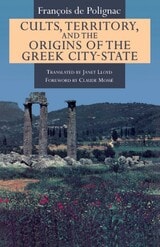
Cults, Territory, and the Origins of the Greek City-State
François de Polignac
University of Chicago Press, 1995
Combining archaeological and textual evidence, de Polignac argues that the eighth-century settlements that would become the city-states of classical Greece were defined as much by the boundaries of "civilized" space as by its urban centers. The city took shape through what de Polignac calls a "religious bipolarity," the cults operating both to organize social space and to articulate social relationships being not only at the heart of the inhabited area, but on the edges of the territory. Together with the urban cults, these sanctuaries "in the wild" identified the polis and its sphere of influence, giving rise to the concept of the state as a territorial unit distinct from its neighbors. Frontier sanctuaries were therefore often the focus of disputes between emerging communities. But in other instances, in particular in Greece's colonizing expeditions, these outer sanctuaries may have facilitated the relations between the indigenous populations and the settlers of the newly founded cities.
Featuring extensive revisions from the original French publication and an updated bibliography, this book is essential for anyone interested in the history and culture of ancient Greece.
Cultura y Corazón
A Decolonial Methodology for Community Engaged ResearchRosa D. Manzo, Lisceth Brazil-Cruz, Yvette G. Flores, and Hector Rivera-Lopez
University of Arizona Press, 2020
Cultura y Corazón presents case studies from the authors’ work within the fields of education and health. It offers key strategies to working in partnership with marginalized Latinx communities that are grounded in deep respect for the communities’ cultures and lived experiences. This book is intended for students, researchers, and practitioners who want to work with vulnerable populations through a community-based approach that truly respects and integrates culture, values, and funds of knowledge.
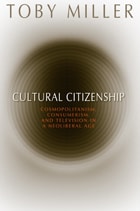
Cultural Citizenship
Cosmopolitanism, Consumerism, and Television in a Neoliberal AgeToby Miller
Temple University Press, 2006
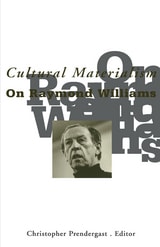
Cultural Materialism
On Raymond WilliamsChristopher Prendergast
University of Minnesota Press, 1995
"Raymond Williams was the last of the great European male revolutionary socialist intellectuals born before the end of the age of Europe (1492-1945)."-Cornel West
The work of Raymond Williams is of seminal importance in rethinking the idea of culture. He is widely regarded as one of the founding figures of international cultural studies. In tribute to his legacy, this edited volume is devoted to his theories of cultural materialism and is the most substantial and wide-ranging collection of essays on his work to be offered since his death in 1988. For all readers grappling with Williams's complex legacy, this volume is not to be missed.Contributors include Stanley Aronowitz, Graduate School, CUNY; John Brenkman, Baruch College, CUNY; Peter de Bolla, Cambridge University; Catherine Gallagher, University of California, Berkeley; Stephen Heath, University of California, Santa Cruz; John Higgins, University of Cape Town; Peter Hitchcock, Baruch College, CUNY; Cora Kaplan, Rutgers University; David Lloyd, University of California, Berkeley; Robert Miklitsch, Ohio University; Michael Moriarty, Cambridge University; Morag Shiach, Queen Mary and Westfield College, University of London; David Simpson, University of Colorado, Boulder; Gillian Skirrow; Kenneth Surin, Duke University; Paul Thomas, University of California, Berkeley; Gauri Viswanathan, Columbia University; and Cornel West, Harvard University.
Cultural Politics
edited by Marcy Darnovsky, Barbara Epstein and Richard Flacks
Temple University Press, 1995
Bridging the worlds of activism and academia-social movement theory informed with the real experiences of activists-this volume of accessible essays brings together insights from European New Social Movement theorists, U.S. scholars of social movements, and activists involved in social movements from the 1960s to the 1990s.
Contributors: Alice Echols, Barbara Epstein, Richard A. Cloward, Marcy Darnovsky, Jeffrey Escoffier, Ilene Rose Feinman, Richard Flacks, Cynthia Hamilton, Allen Hunter, L. A. Kauffman, Rebecca E. Klatch, Margit Mayer, Alberto Melucci, Bronislaw Misztal, Osha Neumann, Frances Fox Piven, Craig Reinarman, Roland Roth, Arlene Stein, Mindy Spatt, Andrew Szasz, Noél Sturgeon, Howard Winant.
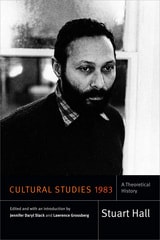
Cultural Studies 1983
A Theoretical HistoryStuart Hall
Duke University Press, 2016
Culture Builders
A Historical Anthropology of Middle Class LifeFrykman, Jonas
Rutgers University Press, 1987
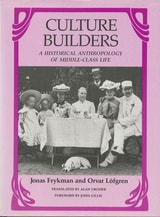
Culture Builders deals primarily with the ways in which ideas about the good and proper life are anchored in the trivialities and routines of everyday life: in the sharing of a meal, in holiday-making, and in the upbringing of children. The authors describe how the attitudes of the bourgeoisie toward. Time and time-keeping set them apart from the peasantry. Uses and perceptions of naturals increasingly divided the classes. For peasants, nature consisted of natural resources to be used. Fr the bourgeoisie, nature had only non-productive connotations. Another change was the growing importance of home over the community. Life became a romantic ideal, not an economic necessity. For the first time, parents became self-conscious about how to raise their children.
Frykman and Lögnen also show how the middle-class developed new perceptions of dirt, pollution, orderliness, health, sexuality, and bodily functions, and how they disdained the filth of peasant households. By stressing refinement, rationality, morality, and discipline, the middle classes were able to differentiate themselves not only from the peasants, but also from the degenerate aristocracy and the disordered and uncontolled emerging working class. The bourgeoisie viewed their own form of culture as the highest on the evolutionary ladder, and turned it into a national culture against which all other groups would be measured.
Culture Wars and Enduring American Dilemmas
Irene Taviss Thomson
University of Michigan Press, 2010
"Irene Taviss Thomson gives us a nuanced portrait of American social politics that helps explain both why we are drawn to the idea of a 'culture war' and why that misrepresents what is actually going on."
---Rhys H. Williams, Professor and Chair, Department of Sociology, Loyola University Chicago
"An important work showing---beneath surface conflict---a deep consensus on a number of ideals by social elites."
---John H. Evans, Department of Sociology, University of California, San Diego
The idea of a culture war, or wars, has existed in America since the 1960s---an underlying ideological schism in our country that is responsible for the polarizing debates on everything from the separation of church and state, to abortion, to gay marriage, to affirmative action. Irene Taviss Thomson explores this notion by analyzing hundreds of articles addressing hot-button issues over two decades from four magazines: National Review, Time, The New Republic, and The Nation, as well as a wide array of other writings and statements from a substantial number of public intellectuals.
What Thomson finds might surprise you: based on her research, there is no single cultural divide or cultural source that can account for the positions that have been adopted. While issues such as religion, homosexuality, sexual conduct, and abortion have figured prominently in public discussion, in fact there is no single thread that unifies responses to each of these cultural dilemmas for any of the writers.
Irene Taviss Thomson is Professor Emeritus of Sociology, having taught in the Department of Social Sciences and History at Fairleigh Dickinson University for more than 30 years. Previously, she taught in the Department of Sociology at Harvard University.
Culture and Power
The Sociology of Pierre BourdieuDavid Swartz
University of Chicago Press, 1997
David Swartz focuses on a central theme in Bourdieu's work—the complex relationship between culture and power—and explains that sociology for Bourdieu is a mode of political intervention. Swartz clarifies Bourdieu's difficult concepts, noting where they have been misinterpreted by critics and where they have fallen short in resolving important analytical issues. The book also shows how Bourdieu has synthesized his theory of practices and symbolic power from Durkheim, Marx, and Weber, and how his work was influenced by Sartre, Levi-Strauss, and Althusser.
Culture and Power is the first book to offer both a sympathetic and critical examination of Bourdieu's work and it will be invaluable to social scientists as well as to a broader audience in the humanities.
Culture and Resource Conflict
Why Meanings MatterDouglas L. Medin
Russell Sage Foundation, 2006
Culture and the Evolutionary Process
Robert Boyd and Peter J. Richerson
University of Chicago Press, 1985

Culture, Globalization and the World-System
Contemporary Conditions for the Representation of IdentityAnthony D. King
University of Minnesota Press, 1997
A foundational work in the study of the globalization of culture.
First published in 1991, Culture, Globalization and the World-System is one of the inaugural books discussing the increasing tendency of cultural practices to cross national boundaries. Now widely available in the United States for the first time and updated with a new preface, these influential essays by a distinguished group of scholars and cultural critics lay the groundwork for a vital and exciting new field of inquiry.
Culture, Globalization and the World-System views culture through different prisms and categories—including race, gender, ethnicity, class, and nation. The contributors consider how socially organized systems of meaning are produced and represented. Drawing from sociology, art history, film studies, and anthropology, these essays—many of them representing their authors’ only treatment of globalization—provide paradigms for understanding cultures and the representation of identity in “the world as a single place.” Contributors: Barbara Abou-El-Haj, SUNY, Binghamton; Janet Abu-Lughod, New School for Social Research; Stuart Hall, Open U, UK; Ulf Hannerz, U of Stockholm, Sweden; Roland Robertson, U of Pittsburgh; John Tagg, SUNY, Binghamton; Maureen Turim, U of Florida, Gainesville; Immanuel Wallerstein, SUNY, Binghamton; Janet Wolff, U of Rochester.
Cultures of Resistance
Collective Action and Rationality in the Anti-Terror AgeHeidi Reynolds-Stenson
Rutgers University Press, 2022
Cultures of Resistance provides new insight on a long-standing question: whether government efforts to repress social movements produce a chilling effect on dissent, or backfire and spur greater mobilization. In recent decades, the U.S. government’s repressive capacity has expanded dramatically, as the legal, technological, and bureaucratic tools wielded by agents of the state have become increasingly powerful. Today, more than ever, it is critical to understand how repression impacts the freedom to dissent and collectively express political grievances. Through analysis of activists’ rich and often deeply moving experiences of repression and resistance, the book uncovers key group processes that shape how individuals understand, experience, and weigh these risks of participating in collective action. Qualitative and quantitative analyses demonstrate that, following experiences of state repression, the achievement or breakdown of these group processes, not the type or severity of repression experienced, best explain why some individuals persist while others disengage. In doing so, the book bridges prevailing theoretical divides in social movement research by illuminating how individual rationality is collectively constructed, mediated, and obscured by protest group culture.
Curating the Commons
Socially Engaged Public ArtKatia Arfara
University of Michigan Press, 2025
By sharing critical insights, Arfara immerses the reader in the working processes of artists and collectives, showing how public art can address ecosocial concerns in aesthetic forms. Curating the Commons offers a grounded perspective on the making of cutting-edge, socially engaged public artworks and contributes to the larger effort to craft more-than-human narratives in response to global events.
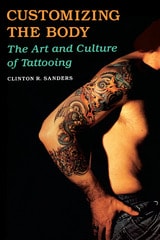
Customizing The Body
Clinton Sanders
Temple University Press, 1990

Customizing the Body
The Art and Culture of TattooingClinton Sanders
Temple University Press, 2008
Originally published in 1989, this ground-breaking ethnographic exploration of tattooing—and the art world surrounding it—covers the history, anthropology and sociology of body modification practices; the occupational experience of the tattooist; the process and social consequences of becoming a tattooed person; and the prospects of "serious" tattooing becoming an accepted art form. Curiously, despite the greater prevalence of tattoos and body modification in today’s society, there is still a stigma of deviance associated with people who get or ink tattoos.
Retaining the core of the original book, this revised and expanded edition offers a new preface by the author and a new chapter focusing on the changes that have occurred in the tattoo world. A section on the new scholarly literature that has emerged, as well as the new modes of body modification that have come into vogue are included along with a new gallery of photographs that shows some splendid examples of contemporary tattoo art. A directory of artists' websites invites readers to discover the range of work being done around the world—from “suits” (full body tattoos) to skulls.
Cyber-Proletariat
Global Labour in the Digital VortexNick Dyer-Witheford
Pluto Press, 2015
Cyber-Proletariat brings Marxist analysis to bear on a range of modern informational technologies. The result is a book indispensable to social theorists and hacktivists alike and essential reading for anyone who wants to understand how Silicon Valley shapes the way we live today.
Cycle of Segregation
Social Processes and Residential StratificationMaria Krysan
Russell Sage Foundation, 2017
Through original analyses of national-level surveys and in-depth interviews with residents of Chicago, Krysan and Crowder find that residential stratification is reinforced through the biases and blind spots that individuals exhibit in their searches for housing. People rely heavily on information from friends, family, and coworkers when choosing where to live. Because these social networks tend to be racially homogenous, people are likely to receive information primarily from members of their own racial group and move to neighborhoods that are also dominated by their group. Similarly, home-seekers who report wanting to stay close to family members can end up in segregated destinations because their relatives live in those neighborhoods. The authors suggest that even absent of family ties, people gravitate toward neighborhoods that are familiar to them through their past experiences, including where they have previously lived, and where they work, shop, and spend time. Because historical segregation has shaped so many of these experiences, even these seemingly race-neutral decisions help reinforce the cycle of residential stratification. As a result, segregation has declined much more slowly than many social scientists have expected.
To overcome this cycle, Krysan and Crowder advocate multi-level policy solutions that pair inclusionary zoning and affordable housing with education and public relations campaigns that emphasize neighborhood diversity and high-opportunity areas. They argue that together, such programs can expand the number of destinations available to low-income residents and help offset the negative images many people hold about certain neighborhoods or help introduce them to places they had never considered. Cycle of Segregation demonstrates why a nuanced understanding of everyday social processes is critical for interrupting entrenched patterns of residential segregation.
Cyclescapes of the Unequal City
Bicycle Infrastructure and Uneven DevelopmentJohn G. Stehlin
University of Minnesota Press, 2019
A critical look at the political economy of urban bicycle infrastructure in the United States
Not long ago, bicycling in the city was considered a radical statement or a last resort, and few cyclists braved the inhospitable streets of most American cities. Today, however, the urban cyclist represents progress and the urban “renaissance.” City leaders now undertake ambitious new bicycle infrastructure plans and bike share schemes to promote the environmental, social, and economic health of the city and its residents. Cyclescapes of the Unequal City contextualizes and critically examines this new wave of bicycling in American cities, exploring how bicycle infrastructure planning has become a key symbol of—and site of conflict over—uneven urban development.
John G. Stehlin traces bicycling’s rise in popularity as a key policy solution for American cities facing the environmental, economic, and social contradictions of the previous century of sprawl. Using in-depth case studies from San Francisco, Philadelphia, and Detroit, he argues that the mission of bicycle advocacy has converged with, and reshaped, the urban growth machine around a model of livable, environmentally friendly, and innovation-based urban capitalism. While advocates envision a more sustainable city for all, the deployment of bicycle infrastructure within the framework of the neoliberal city in many ways intensifies divisions along lines of race, class, and space.
Cyclescapes of the Unequal City speaks to a growing interest in bicycling as an urban economic and environmental strategy, its role in the politics of gentrification, and efforts to build more diverse coalitions of bicycle advocates. Grounding its analysis in both regional political economy and neighborhood-based ethnography, this book ultimately uses the bicycle as a lens to view major shifts in today’s American city.