Results by title
5550 books match the query 'Biography & Autobiography' and 288 start with c
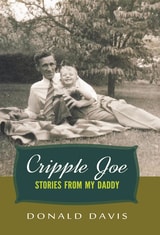
Cripple Joe
Stories from my DaddyDonald Davis
Parkhurst Brothers, Inc., 2016
"A million questions about him began to line themselves up in my mind." Davis writes. "Where did he go to high school? I did not know." Did he get any education behind that? What were his early jobs, and where did he live then? I was now only twenty-eight, my father was dead, and I had been to young and immature to know to ask t=for the stories that would have filled out his life for me."
The surprise of a lifetime came when he called home and his recently departed father picked up the phone: "Hello! This is Joe Davis. What can I do for you today?"
That case of mistaken identity changed Donald Davis's outlook on the value of family and the need for story gathering. In the twenty-two years until his father's second death, he rarely let an opportunity pass to collect and cherish the stories of his life.
Cripple Joe is the happy result.
Davis tells how his father and an African-American hospital orderly quietly broke down racial barriers in their small mountain town.
He tells how his father employed his humane brand of justice on an eager young chemist whose experiments veered into manufacturing gunpowder, on sons who nearly burned a barn, and on teenagers who organized a disastrous coed camping trip.
And best of all, he tells how Joe Davis--a man known as "Banker Joe" for his work in the loan department but to a select few as "Cripple Joe"--turned a gruesome accident into an opportunity that broadened his world and that of his son.
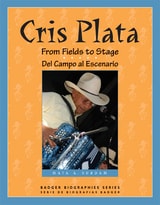
Cris Plata
From Fields to Stage // Del Campo al EscenarioMaia Surdam
Wisconsin Historical Society Press, 2014
This dual language book shares the Plata’s family story of migrant farming, music, and family amid the constant change and uncertainty of migrant life. While hardships—from poor working conditions and low wages to racial prejudice—were constant in Cris Plata’s upbringing, so too was the music that bonded and uplifted his family. After long days in the fields, Cris’s family spent their small amount of free time playing and singing songs from Mexico and South Texas. Cris learned to play the guitar, accordion, and mandolin, beginning to strum when he was just five years old. Today, he writes his own music, performs songs in English and Spanish, and records albums with his band, Cris Plata with Extra Hot.
Following Cris Plata’s journey from farm fields to musical stages, the story explores how a migrant, and the son of an immigrant, decided to make Wisconsin his home.
Cristi Puiu
Monica Filimon
University of Illinois Press, 2017
Critical Approaches to the Films of Robert Rodriguez
By Frederick Luis Aldama
University of Texas Press, 2015
Frederick Aldama’s The Cinema of Robert Rodriguez (2014) was the first full-scale study of one of the most prolific and significant Latino directors making films today. In this companion volume, Aldama enlists a corps of experts to analyze a majority of Rodriguez’s feature films, from his first break-out success El Mariachi in 1992 to Machete in 2010. The essays explore the formal and thematic features present in his films from the perspectives of industry (context, convention, and distribution), the film blueprint (auditory and visual ingredients), and consumption (ideal and real audiences). The authors illuminate the manifold ways in which Rodriguez’s films operate internally (plot, character, and event) and externally (audience perception, thought, and feeling).
The volume is divided into three parts: “Matters of Mind and Media” includes essays that use psychoanalytic and cognitive psychology to shed light on how Rodriguez’s films complicate Latino identity, as well as how they succeed in remaking audiences’ preconceptions of the world. “Narrative Theory, Cognitive Science, and Sin City: A Case Study” offers tools and models of analysis for the study of Rodriguez’s film re-creation of a comic book (on which Frank Miller was credited as codirector). “Aesthetic and Ontological Border Crossings and Borderlands” considers how Rodriguez’s films innovatively critique fixed notions of Latino identity and experience, as well as open eyes to racial injustices. As a whole, the volume demonstrates how Rodriguez’s career offers critical insights into the filmmaking industry, the creative process, and the consuming and reception of contemporary film.
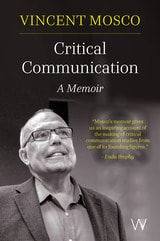
Critical Communication
A MemoirVincent Mosco
University of Westminster Press, 2025
This beautifully written and deeply personal book is an informative and fascinating read that will be of interest to anyone interested in Critical Media and Communication Studies and the Political Economy of Communication.
Critical Studies in Indian Grammarians I
The Theory of Homogeneity (Savar?ya)Madhav M. Deshpande
University of Michigan Press, 1975
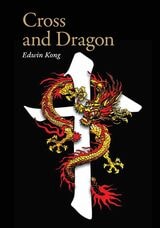
Cross and Dragon – Matteo Ricci and China
A Screenplay by Edwin KongEdwin Kong
Hong Kong University Press, 2025
Edwin Kong brings to life the extraordinary journey of Matteo Ricci, the Italian Jesuit whose daring mission to China reshaped the course of East-West relations. Sent by the Pope in the late sixteenth century to convert the Chinese Emperor, Ricci faced an impenetrable barrier—Ming Dynasty China was closed to foreigners. But armed with knowledge and an unmatched mastery of memory techniques, he found another way in.
Disguised as a Buddhist monk, Ricci captivated scholars, officials, and eventually the imperial court, introducing Western science while immersing himself in Chinese culture. His thirty-year odyssey from rural villages to the heart of the Forbidden City proved that engagement, rather than conquest, could bridge civilizations.
Told in the form of a screenplay, Cross and Dragon is a gripping historical drama with urgent contemporary resonance, exploring the power of faith and cultural exchange in the face of division.
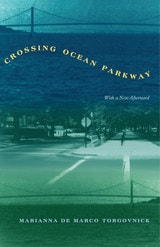
Crossing Ocean Parkway
Marianna De Marco Torgovnick
University of Chicago Press, 1994
Included are autobiographical moments interwoven with engrossing interpretations of American cultural icons from Dr. Dolittle to Lionel Trilling, The Godfather to Camille Paglia. Her experiences allow her to probe the cultural tensions in America caused by competing ideas of individuality and community, upward mobility and ethnic loyalty, acquisitiveness and spirituality.
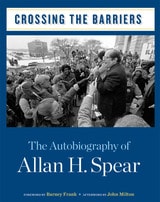
Crossing the Barriers
The Autobiography of Allan H. SpearAllan H. Spear
University of Minnesota Press, 2010
Spear's memoirs are fascinating and moving: in early chapters on his childhood and college years, he writes with great introspection about his growing self-awareness of being gay. Later he writes about his development as an intellectual, particularly as a white man fighting to win legitimacy for the study of African-American history and culture. During his time at the University of Minnesota, Spear became deeply involved with the Minnesota Democratic-Farmer-Labor Party (DFL) and the antiwar movement. At the same time, Spear became increasingly active in the emerging gay rights movement and began the process of coming out to his friends and colleagues.
After a failed run for the Minnesota House in 1968, Spear was elected to the Minnesota Senate in 1972 and served as Senate president from 1993-2000. In 1993, he was instrumental in the passage of the Minnesota Human Rights Act, which protected LGBT people from discrimination in housing, education, and employment-an achievement he considered one of the finest of his career. A skilled parliamentarian, he remained a progressive leader in the legislature until his retirement in 2000.
Spear passed away on October 11, 2008, leaving his memoir slightly incomplete. A stirring afterword by John Milton completes the story of Spear's life, chronicling the recognition of his accomplishments as a politician and activist during his final years.
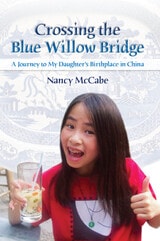
Crossing the Blue Willow Bridge
A Journey to My Daughter's Birthplace in ChinaNancy McCabe
University of Missouri Press, 2011
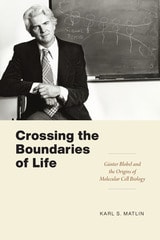
Crossing the Boundaries of Life
Günter Blobel and the Origins of Molecular Cell BiologyKarl S. Matlin
University of Chicago Press, 2022
The difficulty of reconciling chemical mechanisms with the functions of whole living systems has plagued biologists since the development of cell theory in the nineteenth century. As Karl S. Matlin argues in Crossing the Boundaries of Life, it is no coincidence that this longstanding knot of scientific inquiry was loosened most meaningfully by the work of a cell biologist, the Nobel laureate Günter Blobel. In 1975, using an experimental setup that did not contain any cells at all, Blobel was able to target newly made proteins to cell membrane vesicles, enabling him to theorize how proteins in the cell distribute spatially, an idea he called the signal hypothesis. Over the next twenty years, Blobel and other scientists were able to dissect this mechanism into its precise molecular details. For elaborating his signal concept into a process he termed membrane topogenesis—the idea that each protein in the cell is synthesized with an "address" that directs the protein to its correct destination within the cell—Blobel was awarded the Nobel Prize in Physiology or Medicine in 1999.
Matlin argues that Blobel’s investigative strategy and its subsequent application addressed a fundamental unresolved dilemma that had bedeviled biology from its very beginning—the relationship between structure and function—allowing biology to achieve mechanistic molecular explanations of biological phenomena. Crossing the Boundaries of Life thus uses Blobel’s research and life story to shed light on the importance of cell biology for twentieth-century science, illustrating how it propelled the development of adjacent disciplines like biochemistry and molecular biology.
Crossing the Divide
Representations of Deafness in BiographyRachel M. Hartig
Gallaudet University Press, 2006
This remarkable volume examines the process by which three deaf, French biographers from the 19th and 20th centuries attempted to cross the cultural divide between deaf and hearing worlds through their work. The very different approach taken by each writer sheds light on determining at what point an individual’s assimilation into society endanger his or her sense of personal identity.
Author Hartig begins by assessing the publications of Jean-Ferdinand Berthier (1803-1886). Berthier wrote about Auguste Bébian, Abbé de l’Epée, and Abbé Sicard, all of whom taught at the National Institute for the Deaf in Paris. Although Berthier presented compelling portraits of their entire lives, he paid special attention to their political and social activism, his main interest.
Yvonne Pitrois (1880-1937) pursued her particular interest in the lives of deaf-blind people. Her biography of Helen Keller focused on her subject’s destiny in conjunction with her unique relationship with Anne Sullivan. Corinne Rocheleau-Rouleau (1881-1963) recounted the historical circumstances that led French-Canadian pioneer women to leave France. The true value of her work resides in her portraits of these pioneer women: maternal women, warriors, religious women, with an emphasis on their lives and the choices they made.
Crossing the Divide reveals clearly the passion these biographers shared for narrating the lives of those they viewed as heroes of an emerging French deaf community. All three used the genre of biography not only as a means of external exploration but also as a way to plumb their innermost selves and to resolve ambivalence about their own deafness.
Crossing the River
Shalom Eilati
University of Alabama Press, 2009
A child’s journey through war, memory, and survival—told with haunting clarity and poetic grace.
Crossing the River is a personal memoir—and more. Against the backdrop of Lithuania’s occupation—first by the Red Army, next by the Germans, and then again by the Russians—it is a story reflected through the prism of a sharp-eyed young child, Shalom Eilati. His story starts in the occupied Kovno Ghetto and ends with his flight across the Soviet border, through Poland and Germany and finally, his arrival in Palestine.
The adult survivor, while recalling the terrorized child that he was and how he then perceived the adult world, also takes stock of his present life. Throughout the memoir, Eilati attempts to reconcile his present life as a husband, father, scientist, and writer, with the images, feelings, and thoughts from the past that have left an indelible mark on his life and that continue to haunt him.
Crossing the River
A Memoir of the American Left, the Cold War, and Life in East GermanyVictor Grossman
University of Massachusetts Press, 2003
What could possibly impel a relatively privileged twenty-four-year-old American-serving in the U.S. Army in Germany in 1952 to swim across the Danube River to what was then referred to as the Soviet Zone? How are we to understand his decision to forsake the land of his birth and build a new life in the still young German Democratic Republic? These are the questions at the core of this memoir by Victor Grossman, who was born Stephen Wechsler but changed his name after defecting to the GDR.
A child of the Depression, Grossman witnessed firsthand the dislocations wrought by the collapse of the U.S. economy during the 1930s. Widespread unemployment and poverty, CIO sit-down strikes, and the fight to save Republican Spain from fascism-all made an indelible impression as he grew up in an environment that nurtured a commitment to left-wing causes. He continued his involvement with communist activities as a student at Harvard in the late 1940s and after graduation, when he took jobs in two factories in Buffalo, New York, and tried to organize their workers.
Fleeing McCarthyite America and potential prosecution, Grossman worked in the GDR with other Western defectors and eventually became, as he notes, the “only person in the world to attend Harvard and Karl Marx universities.” Later, he was able to establish himself as a freelance journalist, lecturer, and author. Traveling throughout East Germany, he evaluated the failures as well as the successes of the GDR's “socialist experiment.” He also recorded his experiences, observations, and judgments of life in East Berlin after reunification, which failed to bring about the post-Communist paradise so many had expected.
Written with humor as well as candor, Crossing the River provides a rare look at the Cold War from the other side of the ideological divide.
Mark Solomon, a distinguished historian of the American left, provides a historical afterword that places Grossman's experiences in a larger Cold War context.
Crossing the Yard
Thirty Years as a Prison VolunteerRichard Shelton
University of Arizona Press, 2007
Richard Shelton was a young English professor in 1970 when a convict named Charles Schmid—a serial killer dubbed the “Pied Piper of Tucson” in national magazines—shared his brooding verse. But for Shelton, the novelty of meeting a death-row monster became a thirty-year commitment to helping prisoners express themselves. Shelton began organizing creative writing workshops behind bars, and in this gritty memoir he offers up a chronicle of reaching out to forgotten men and women—and of creativity blossoming in a repressive environment. He tells of published students such as Paul Ashley, Greg Forker, Ken Lamberton, and Jimmy Santiago Baca who have made names for themselves through their writing instead of their crimes. Shelton also recounts the bittersweet triumph of seeing work published by men who later met with agonizing deaths, and the despair of seeing the creative strides of inmates broken by politically motivated transfers to private prisons. And his memoir bristles with hard-edged experiences, ranging from inside knowledge of prison breaks to a workshop conducted while a riot raged outside a barricaded door. Reflecting on his decision to tutor Schmid, Shelton sees that the choice “has led me through bloody tragedies and terrible disappointments to a better understanding of what it means to be human.”
Crossing the Yard is a rare story of professional fulfillment—and a testament to the transformative power of writing.
Crossing
A MemoirDeirdre Nansen McCloskey
University of Chicago Press, 1999
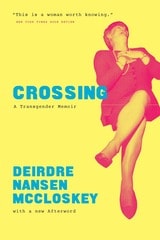
Crossing
A Transgender MemoirDeirdre Nansen McCloskey
University of Chicago Press, 2019
“I visited womanhood and stayed. It was not for the pleasures, though I discovered many I had not imagined, and many pains too. But calculating pleasures and pains was not the point. The point was who I am.”
Once a golden boy of conservative economics and a child of 1950s privilege, Deirdre McCloskey (formerly Donald) had wanted to change genders from the age of eleven. But it was a different time, one hostile to any sort of straying from the path—against gays, socialists, women with professions, men without hats, and so on—and certainly against gender transition. Finally, in 1995, at the age of fifty-three, it was time for McCloskey to cross the gender line.
Crossing is the story of McCloskey’s dramatic and poignant transformation from Donald to Dee to Deirdre. She chronicles the physical procedures and emotional evolution required and the legal and cultural roadblocks she faced in her journey to womanhood. By turns searing and humorous, this is the unflinching, unforgettable story of her transformation—what she lost, what she gained, and the women who lifted her up along the way.
Crowe on the Banjo
The Music Life of J.D. CroweMarty Godbey
University of Illinois Press, 2011
Crunching Gravel
A Wisconsin Boyhood in the ThirtiesRobert Louis Peters
University of Wisconsin Press, 1993
No nostalgic tale of the good old days, Robert Peters’s recollections of his adolescence vividly evoke the Depression on a hardscrabble farm near Eagle River: Dad driving the Vilas County Relief truck, Lars the Swede freezing to death on his porch, the embarassment of graduation in a suit from welfare. The hard efforts to put fish and potatoes and blueberries on the table are punctuated by occasional pleasures: the Memorial Day celebration, swimming at Perch Lake, the county fair with Mother’s prizes for jam and the exotic delights of the midway. Peters’s clear-eyed memoir reveals a poet’s eye for rich and stark detail even as a boy of twelve.
“Peters misses nothing, from the details of the town’s Fourth of July celebration to the cause and effect of a young cousin’s suicide to the calibrations of racism toward Indians that was so acceptable then. It is a fascinating, unsentimental look at a piece of our past.”—Margaret E. Guthrie, New York Times Book Review
“It’s unlikely that any other contemporary poet and scholar as distinguished has risen from quite so humble beginnings as Robert Peters. Born and raised by semiliterate parents on a subsistence farm in northeastern Wisconsin, Peters lived harrowingly close to the eventual stuff of his poetry—the dependency of humans on animal lives, the inexplicable and ordinary heroism and baseness of people facing extreme conditions, the urgency of physical desire. . . . Sterling childhood memoirs.”—Booklist
“Robert Peters has written a memoir exemplary because he insists on the specific, on the personal and the local. It is also enormously satisfying to read, and it is among the most authentic accounts of childhood and youth I know—a Wisconsin David Copperfield!”—Thom Gunn
Crusade for Justice
The Autobiography of Ida B. WellsIda B. Wells
University of Chicago Press, 1970
"No student of black history should overlook Crusade for Justice."—William M. Tuttle, Jr., Journal of American History
"Besides being the story of an incredibly courageous and outspoken black woman in the face of innumerable odds, the book is a valuable contribution to the social history of the United States and to the literature of the women's movement as well."—Elizabeth Kolmer, American Quarterly
"[Wells was] a sophisticated fighter whose prose was as thorough as her intellect."—Walter Goodman, New York Times
"An illuminating narrative of a zealous, race-conscious, civic- and church-minded black woman reformer, whose life story is a significant chapter in the history of Negro-White relations."—Thelma D. Perry, Negro History Bulletin
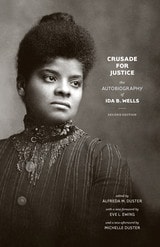
Crusade for Justice
The Autobiography of Ida B. Wells, Second EditionIda B. Wells
University of Chicago Press, 2020
Ida B. Wells is an American icon of truth telling. Born to slaves, she was a pioneer of investigative journalism, a crusader against lynching, and a tireless advocate for suffrage, both for women and for African Americans. She co-founded the NAACP, started the Alpha Suffrage Club in Chicago, and was a leader in the early civil rights movement, working alongside W. E. B. Du Bois, Madam C. J. Walker, Mary Church Terrell, Frederick Douglass, and Susan B. Anthony.
This engaging memoir, originally published 1970, relates Wells’s private life as a mother as well as her public activities as a teacher, lecturer, and journalist in her fight for equality and justice. This updated edition includes a new foreword by Eve L. Ewing, new images, and a new afterword by Ida B. Wells’s great-granddaughter, Michelle Duster.
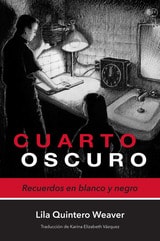
Cuarto oscuro
Recuerdos en blanco y negroLila Quintero Weaver, translated by Karina Elizabeth Vázquez
University of Alabama Press, 2018
Por medio de impresionantes ilustraciones, la autora ofrece una memoria cautivante y conmovedora de la infancia, las relaciones raciales, la etnicidad y la identidad en el sur de los Estados Unidos.
La novela gráfico de Lila Quintero-Weaver que obtuvo amplio reconocimiento crítico. Por medio de impresionantes ilustraciones, la autora ofrece una memoria cautivante y conmovedora de la infancia, las relaciones raciales, la etnicidad y la identidad en el sur de los Estados Unidos. Sus dibujos de estilo sutil, pero efectivo, refuerzan dramáticament una sentida narración.
En 1961, cuando la autora tenía cinco años, su familia salió de Buenos Aires, Argentina, para emigrar a los Estados Unidos y establecerse en Marion, un pueblo en el corazón del Black Belt de Alabama. En una región definida por la segregación racial, la familia Quintero, por su condición de clase media educada, se halló en una situación privilegiada para observar las tensiones que minaban la cultura y la sociedad en la que vivían.
Weaver salió de constancia de lo que signifacaba ser una niña latina en una le las regiones más racistas del sur de los Estados Unidos, tratando de entender tanto un país extranjero, como el horror de las relaciones raciales de nuestra nación. Excluida de las categorías raciales empleadas por entonces, la autora observó desde muy temprana edad las desigualdades de la cultura estadounidense, regida por un ideal de belleza femenina que privilegiaba a la mujer rubia y de ojos azules. A lo largo de su vida, Weaver ha luchado por encontrar su lugar en la sociedad norteamericana cuestionando la discriminación de su entorno. Cuarto oscuro contituye su legado visual y verbal sobre esa lucha.
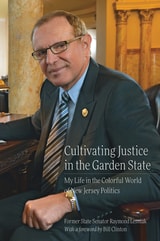
Cultivating Justice in the Garden State
My Life in the Colorful World of New Jersey PoliticsRaymond Lesniak
Rutgers University Press, 2022
He recounts the many causes he championed in his forty years as a state legislator, from the landmark Environmental Cleanup Responsibility Act to bills concerning animal protections, marriage equality, women’s reproductive rights, and the abolition of the death penalty. He also delves into his experiences on the national stage as a key advisor for Bill Clinton and Al Gore’s presidential campaigns. With refreshing candor, Lesniak describes both his greatest achievements and his moments of failure, including his unsuccessful 2017 gubernatorial run.
Cultivating Justice in the Garden State is both a gripping American success story and a must-read for anyone seeking to understand the inner workings of our political system. It offers an insider’s perspective on the past fifty years of New Jersey politics, while presenting a compelling message about what leaders and citizens can do to improve the state’s future.
Cultured Force
Makers and Defenders of the French Colonial EmpireBarnett Singer and John Langdon
University of Wisconsin Press, 2008
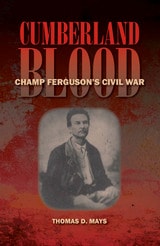
Cumberland Blood
Champ Ferguson's Civil WarThomas D. Mays
Southern Illinois University Press, 2008
By the end of the Civil War, Champ Ferguson had become a notorious criminal whose likeness covered the front pages of Harper’s Weekly, Leslie’s Illustrated, and other newspapers across the country. His crime? Using the war as an excuse to steal, plunder, and murder Union civilians and soldiers.
Cumberland Blood: Champ Ferguson’s Civil War offers insights into Ferguson's lawless brutality and a lesser-known aspect of the Civil War, the bitter guerrilla conflict in the Appalachian highlands, extending from the Carolinas through Tennessee, Kentucky, Virginia, and West Virginia. This compelling volume delves into the violent story of Champ Ferguson, who acted independently of the Confederate army in a personal war that eventually garnered the censure of Confederate officials.
Author Thomas D. Mays traces Ferguson's life in the Cumberland highlands of southern Kentucky, where—even before the Civil War began—he had a reputation as a vicious killer.
Ferguson, a rising slave owner, sided with the Confederacy while many of his neighbors and family members took up arms for the Union. For Ferguson and others in the highlands, the war would not be decided on the distant fields of Shiloh or Gettysburg: it would be local—and personal.
Cumberland Blood describes how Unionists drove Ferguson from his home in Kentucky into Tennessee, where he banded together with other like-minded Southerners to drive the Unionists from the region. Northern sympathizers responded, and a full-scale guerrilla war erupted along the border in 1862. Mays notes that Ferguson's status in the army was never clear, and he skillfully details how raiders picked up Ferguson's gang to work as guides and scouts. In 1864, Ferguson and his gang were incorporated into the Confederate army, but the rogue soldier continued operating as an outlaw, murdering captured Union prisoners after the Battle of Saltville, Virginia.
Cumberland Blood, enhanced by twenty-one illustrations, is an illuminating assessment of one of the Civil War's most ruthless men.
Ferguson's arrest, trial, and execution after the war captured the attention of the nation in
1865, but his story has been largely forgotten. Cumberland Blood: Champ Ferguson's Civil War returns the story of Ferguson's private civil war to its place in history.
Cupboards of Curiosity
Women, Recollection, and Film HistoryAmelie Hastie
Duke University Press, 2007
Hastie pays particular attention to the actresses Colleen Moore and Louise Brooks and Hollywood’s first female director, Alice Guy-Blaché. From the beginning of her career, Moore worked intently to preserve a lasting place for herself as a Hollywood star, amassing collections of photos, souvenirs, and clippings as well as a dollhouse so elaborate that it drew extensive public attention. Brooks’s short essays reveal how she participated in the creation of her image as Lulu and later emerged as a critic of film stardom. The recovery of Blaché’s role in film history by feminist critics in the 1970s and 1980s was made possible by the existence of the director’s own autobiographical history. Broadening her analytical framework to include contemporary celebrities, Hastie turns to how-to manuals authored by female stars, from Zasu Pitts’s cookbook Candy Hits to Christy Turlington’s Living Yoga. She discusses how these assertions of celebrity expertise in realms seemingly unrelated to film and visual culture allow fans to prolong their experience of stardom.
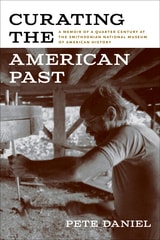
Curating the American Past
A Memoir of a Quarter Century at the Smithsonian National Museum of American HistoryPete Daniel
University of Arkansas Press, 2022
“As is well known, Pete is an outstanding storyteller, and this book is no exception."
—Claire Strom, Journal of Southern History
In addition to chronicling significant exhibit work at the Smithsonian National Museum of American History, Curating the American Past, captures the excitement inherent in researching and writing history and Pete Daniel’s efforts to prevent diluted celebratory stories from replacing the red meat of the American past.
In Curating the American Past, Pete Daniel reveals how curators collect objects, plan exhibits, and bring alive the country’s complex and exciting history. In vivid detail, Daniel recounts the exhilaration of innovative research, the joys of collaboration, and the rewards of mentoring new generations of historians. In a career distinguished by prize-winning publications and pathbreaking exhibitions, Daniel also confronted the challenges of serving as a public historian tasked with protecting a definitive American museum from the erosion of scholarly standards. Curating the American Past offers a wealth of museum wisdom, illuminating the crucial role that dedicated historians and curators serve within our most important repositories of cultural memory.
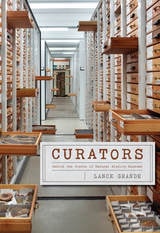
Curators
Behind the Scenes of Natural History MuseumsLance Grande
University of Chicago Press, 2017
At the heart of it all from the very start have been curators. Yet after three decades as a natural history curator, Lance Grande found that he still had to explain to people what he does. This book is the answer—and, oh, what an answer it is: lively, exciting, up-to-date, it offers a portrait of curators and their research like none we’ve seen, one that conveys the intellectual excitement and the educational and social value of curation. Grande uses the personal story of his own career—most of it spent at Chicago’s storied Field Museum—to structure his account as he explores the value of research and collections, the importance of public engagement, changing ecological and ethical considerations, and the impact of rapidly improving technology. Throughout, we are guided by Grande’s keen sense of mission, of a job where the why is always as important as the what.
This beautifully written and richly illustrated book is a clear-eyed but loving account of natural history museums, their curators, and their ever-expanding roles in the twenty-first century.
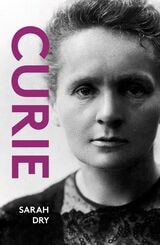
Curie
Sarah Dry
Haus Publishing, 2025
Marie Curie is most famous for her pioneering work in the field of radioactivity and for discovering two new elements, polonium and radium. Curie not only broke scientific barriers but defied the gender expectations of her time amidst a male-dominated scientific community.
This revised edition of Curie, with a new introduction from the author, debunks myths about Curie, rejecting the notion of her as cold and reserved and recasting her as the dynamic and lively woman she truly was. Sarah Dry illuminates Curie’s personal and professional struggles: the demands of motherhood, the public scrutiny she faced, the grief she suffered after the loss of her husband, and her exposure to radiation. Ultimately, Curie emerges as an astonishingly resilient figure whose contributions to science and courage during adversity make her an enduring example, and a woman whose powerful legacy continues to inspire today.
Curing Season
ArtifactsKristine Langley Mahler
West Virginia University Press, 2022
“A lovely and rapturous excavation and examination of the past, a lesson in writing oneself into history when it doesn’t offer you a space.” —Jenny Boully, author of Betwixt-and-Between: Essays on the Writing Life
After spending four years of adolescence in suburban North Carolina, Kristine Langley Mahler, even as an adult, is still buffeted by the cultural differences between her pioneer-like upbringing in Oregon and the settled southern traditions into which she could never assimilate. Collecting evidence of displacement—a graveyard in a mall parking lot, a suburban neighborhood of white kids bused to desegregate public schools in the 1990s, and the death of her best friend—Curing Season is an attempt to understand her failed grasp at belonging.
Mahler’s yearning for acceptance remains buried like a splinter, which she carefully tweezes out in the form of artifacts from her youth. But it isn’t until she encounters a book of local family histories that she takes inhabitation and truth apart, grafting and twisting and imprinting her history on theirs, until even she can no longer tell the difference between their truth and her own. Using inventive essay forms, Mahler pries apart the cracks of exclusion and experiments with the nature of belonging, memory, and place. Curing Season is a coming-of-age memoir for anyone who grew up anywhere but home.
Curiouser and Curiouser
EssaysNicholas Delbanco
The Ohio State University Press, 2017
Whether exploring the history of personal viewing in the business of museum-going, musing on the process of rewriting one’s earliest published work, or looking back on the twists and turns of a life that spans the greater part of the twentieth century and into the twenty-first, Delbanco’s Curiouser and Curiouser invites adventurous readers to follow him down the rabbit hole as he reflects on life as a student, an observer, a writer, a lover, a father, a teacher, and most importantly, a participant in the everyday experiences of human life.
Curly Lambeau
Building the Green Bay PackersStuart Stotts
Wisconsin Historical Society Press, 2007
When Earl "Curly" Lambeau was a young boy growing up in Green Bay in the early 1900s, he and his friends didn't have money for a football. Instead, they kicked around a salt sack filled with sand, leaves, and pebbles. That humble beginning produced a single-minded drive for the figure whose name now graces the Green Bay Packers' stadium.
This title in the Badger Biographies series charts the course of Curly Lambeau's career as a flamboyant player and coach, which paralleled the rise of professional football in this country. Lambeau revolutionized the way football is played by legitimizing passing in a game that had previously centered on running. His dedication to popularizing football in Green Bay and in the state helped build the Packer organization into the institution it has become. Yet, he was not without flaws, and this biography presents a full picture of a man whose ambitions complicated his legacy.
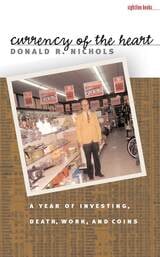
Currency of the Heart
A Year of Investing, Death, Work, and CoinsDonald Nichols
University of Iowa Press, 2002
Nichols uses money in myriad forms—a grandfather‘s silver dollar, stocks and bonds, salaries, pallets of coins at the U.S. Mint, on-the-job dealings with coin collectors—as touchstones for reflections on relationships, motives, and a career "like one of those moving walkways in airports." His father's health is measured, tested, and evaluated in part by the health of his finances; at the same time, the turmoil and mystery surrounding both money and relationships are reflected in this memorable story.
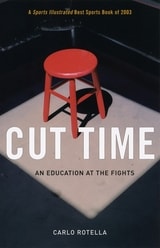
Cut Time
An Education at the FightsCarlo Rotella
University of Chicago Press, 2005
Tracing the consequences of hurt and craft, the two central facts of boxing, Rotella reveals moving resonances between the worlds inside and outside the ropes. The brief, disastrous fistic career of one of his students pinpoints the moment when adulthood arrives; the hard-won insight of a fellow fan shows Rotella how to reckon with a car crash. Mismatches, resilience, pride, pain, and aging—Rotella's lessons from the ring extend far beyond the sport. In Cut Time, Rotella achieves the near-impossible: he makes the fight world relevant to us, whether we're fans or not.
"Cut Time should be read not just by fight aficionados but also by fans of intelligent nonfiction writing. . . . An absorbing read."—Sports Illustrated
"Just when you think it's all been written, a good writer takes a shining new look at an old subject and breathes life into it. . . . Rotella has preserved the blow-by-blow and the grandeur of another age but has somehow expanded the ring to include his own generation's proclivities and sensibility."—Los Angeles Times
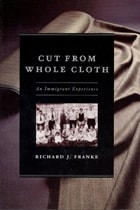
Cut from Whole Cloth
An Immigrant ExperienceRichard J. Franke
University of Chicago Press, 2004
Franke draws on extensive primary sources to create an engrossing narrative of his Catholic grandfather and Lutheran grandmother as they flee religious intolerance and economic adversity in Germany and immigrate to America in 1884. They settle in Springfield, Illinois, where they start a family and business and live out the American dream—with its attendant perils and promises—as their business evolves from a tailor's shop to a modern, thriving dry cleaner. Their story is one of strife, frustration, and success. Franke chronicles how they struggle to raise a family in a foreign culture with radically different values, as the old world morals that fuel their prosperity give rise to ancient family tensions that haunt each new generation.
By turns charming, wrenching, and poetic, Cut from Whole Cloth is an intensely personal yet timeless tale that will appeal to nearly every descendant of immigrants.
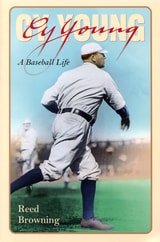
Cy Young
A Baseball LifeReed Browning
University of Massachusetts Press, 2000
He was the winner of 511 major league baseball games, nearly a hundred more than any other pitcher. He threw three no-hitters, including the first perfect game in the new American League. He was among the original twelve players inducted into baseball's Hall of Fame, and his name is now attached to the game's most prestigious pitching award. Yet for all his accomplishments, Cy Young remains to most baseball fans a legendary but little known figure.
In this book, Reed Browning re-creates the life of Denton True “Cyclone” Young and places his story in the context of a rapidly changing turn-of-the-century America. Born in rural Ohio, the son of a Civil War veteran, Young learned his trade at a time when only underhand pitching was permitted. When he began his professional career in 1890, pitchers wore no gloves and stood five feet closer to the batter than they do today. By the time he retired in 1911, the game of baseball had evolved into its modern form and claimed unquestioned status as America's “national pastime.”
As Browning shows, Young's extraordinary mastery of his craft owed much to his ability to adapt to the changing nature of the game. Endowed with an exceptional fastball, he gradually developed a wide array of deliveries and pitches—all of which he could throw with astonishing control. Yet his success can also be attributed, at least in part, to the rustic values of loyalty, hard work, and fair play that he embraced and embodied, and for which he became renowned among baseball fans of his day.
Cy Young
An American Baseball HeroScott H. Longert
Ohio University Press, 2020
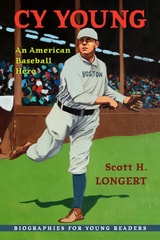
Cy Young was one of the hardest-throwing pitchers of all time. He recorded three no-hitters—including a perfect game—and accumulated more than 2,800 strikeouts on his way to the National Baseball Hall of Fame. Scott H. Longert uses Young’s life story to introduce middle-grade readers to the game, explaining balls, strikes, and outs in an easy-to-understand way. Longert narrates each season and each milestone game with an enthusiastic play-by-play that is sure to draw readers into the excitement on the field and in the crowd, fostering a better understanding of and a passion for baseball.
Baseball fans today know Cy Young’s name chiefly through the award given in his honor each year to the best pitcher in the National and the American Leagues. Denton True “Cyclone” Young won more than five hundred games over a career that spanned four decades, a record that no other major league pitcher has come close to matching. In addition to being the winningest pitcher in baseball history, he was also a kind, self-effacing, and generous man. Born into a farm family in rural Ohio, he never lost touch with the small-town values he grew up with.
Cybersonic Arts
Adventures in American New MusicGodon Mumma, Edited by Michelle Fillion
University of Illinois Press, 2015
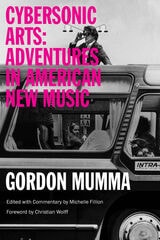
Musicologist Michelle Fillion curates a collection of Mumma's writings, presenting revised versions of his classic pieces as well as many unpublished works from every stage of his storied career. Here, through words and astonishing photos, is Mumma's chronicle of seminal events in the musical world of the twentieth century: his cofounding the Cooperative Studio for Electronic Music; his role in organizing the historic ONCE Festivals of Contemporary Music; performances with the Sonic Arts Union; and working alongside John Cage and David Tudor as a composer-musician with the Merce Cunningham Dance Company. In addition, Mumma describes his collaborations with composers, performers, dancers, and visual artists ranging from Robert Ashley and Pauline Oliveros to Marcel Duchamp and Robert Rauschenberg.
Candid and insightful, Cybersonic Arts is the eye-opening account of a broad artistic community by an active participant and observer.