Results by title
4030 books match the query 'Language Arts & Disciplines' and 283 start with c
Critical Information Literacy Applications for All Libraries
Edited by Julie N. Hornick and Lauren Kehoe
American Library Association, 2025
- learn practical approaches for integrating CIL into instruction and praxis regardless of their level of experience;
- gain tools to better engage with the complexities of today's information landscape and empower their communities to do the same;
- be introduced to the theoretical frameworks of CIL through chapters that take a historical look at critical race theory in academic library instruction, CIL and feminist critique, and the intersection of queer pedagogy and CIL;
- discover in-depth profiles of programs happening in various library types, from algorithmic literacy and a targeted wiki-edit-a-thon event to an outreach initiative targeting groups historically excluded from post-secondary education;
- receive guidance on introducing CIL concepts to their peers and coworkers through professional development programs, such as introducing CIL practices into K-12 school culture, a CIL skills instruction program developed by public librarians to serve the everyday needs of information consumers, and a zine-making exercise for practicing reflection that embodies CIL; and
- find ready-to-use lesson plans and outlines, with suggestions on tailoring them to a variety of library types.
Critical Library Leadership
Managing Self and Others in Today's Academic LibraryKristin Henrich
Assoc of College & Research Libraries, 2024
Critical Library Leadership: Managing Self and Others in Today’s Academic Library provides practical, library-specific, hands-on tools that help us shape our approach to leadership and ourselves as leaders. It gives practical strategies for dealing with stress and addressing feelings of insecurity alongside managing the organization from an equity perspective that places people at the forefront. Each section offers a mixture of theory and research, lived experience, and practice that captures many different techniques you can apply to your own journey and organizational context in both formal and informal ways.
Part I: Leader as Self
Section I: Care, Empathy, and Authenticity
Section II: Career Development
Part II: Leader as Role
Section III: Relationships with Others
Section IV: Management Practices
Critical Library Leadership offers a sense of recognition and of community, new ideas for personal and organizational practice, and a renewed appreciation for the immense amount of affective, emotional, and practical labor that is required of each of us as leaders.

Critical Library Pedagogy Handbook Volume One
Essays and Workbooks ActivitiesNicole Pagowsky
Assoc of College & Research Libraries, 2016
Critical Library Pedagogy Handbook Volume Two
Lesson PlansNicole Pagowsky
Assoc of College & Research Libraries, 2016
Critical Making in the Age of AI
Emily Johnson and Anastasia Salter
Amherst College Press, 2025
The book’s eight patterns are especially appropriate for those just beginning to explore digital scholarly methods, and one goal of Critical Making in the Age of AI is to provide structure for work that is both meaningful and achievable with limited resources and time. By centering critical making through a design-justice and feminist lens, the coauthors model how inclusive and expansive approaches to making in research and teaching are vital to shaping the humanities of the future.
Critical Perspectives on Academic Writing
The politics and Practices of Writing Development in UK Higher EducationEdited by Ayanna Prevatt-Goldstein and David Mallows
University College London, 2026
This volume addresses the most pressing issues in higher education today, such as inclusion, academic integrity, and generative AI.
This timely collection explores the politics and practices of academic writing development in UK higher education. The volume addresses issues of access, equity, and generative AI in the context of student writing, to consider what makes writing academic, why it matters, and how we can change the field for the better.
Critical Studies in Indian Grammarians I
The Theory of Homogeneity (Savar?ya)Madhav M. Deshpande
University of Michigan Press, 1975
Critical Transitions
Writing and the Question of TransferChris M Anson
University Press of Colorado, 2017
Contributors: Linda Adler-Kassner, Chris M. Anson, Stuart Blythe, Scott Chien-Hsiung Chiu, Irene Clark, Nicolette Mercer Clement, Stacey M. Cozart, Gita DasBender, Christiane Donahue, Dana Lynn Driscoll, Dana R. Ferris, Gwen Gorzelsky, Regina A. McManigell Grijalva, Carol Hayes, Hogan Hayes, Tine Wirenfeldt Jensen, Ed Jones, Ketevan Kupatadze, Jessie L. Moore, Joe Paszek, Donna Qualley, Liane Robertson, Paula Rosinski, Kara Taczak, Elizabeth Wardle, Carl Whithaus, Gitte Wichmann-Hansen, Kathleen Blake Yancey
Critical Understanding
The Powers and Limits of PluralismWayne C. Booth
University of Chicago Press, 1979
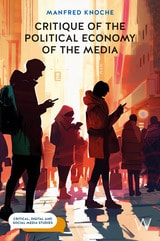
Critique of the Political Economy of the Media
Foundations and ApplicationsManfred Knoche
University of Westminster Press, 2025
It introduces a theoretical framework that engages with important themes including the crisis-ridden structural transformation of the media industry, media economics in the age of digital communications, media concentration, science communication and open access publishing, media technologies, the role of advertising in capitalism, and the contradictions of alternative media in capitalism.
Critiquing Communication Innovation
New Media in a Multipolar WorldRolien Hoyng
Michigan State University Press, 2022
Cross-Language Relations in Composition
Edited by Bruce Horner, Min-Zhan Lu, and Paul Kei Matsuda
Southern Illinois University Press, 2010
Cross-Language Relations in Composition brings together the foremost scholars in the fields of composition, second language writing, education, and literacy studies to address the limitations of the tacit English-only policy prevalent in composition pedagogy and research and to suggest changes for the benefit of writing students and instructors throughout the United States. Recognizing the growing linguistic diversity of students and faculty, the ongoing changes in the English language as a result of globalization, and the increasingly blurred categories of native, foreign, and second language English speakers, editors Bruce Horner, Min-Zhan Lu, and Paul Kei Matsuda have compiled a groundbreaking anthology of essays that contest the dominance of English monolingualism in the study and teaching of composition and encourage the pursuit of approaches that embrace multilingualism and cross-language writing as the norm for teaching and research.
The nine chapters comprising part 1 of the collection focus on the origins of the “English only” bias dominating U.S. composition classes and present alternative methods of teaching and research that challenge this monolingualism. In part 2, nine composition teachers and scholars representing a variety of theoretical, institutional, and professional perspectives propose new, compelling, and concrete ways to understand and teach composition to students of a “global,” plural English, a language evolving in a multilingual world.
Drawing on recent theoretical work on genre, complexity, performance and identity, as well as postcolonialism, Cross-Language Relations in Composition offers a radically new approach to composition teaching and research, one that will prove invaluable to all who teach writing in today’s multilingual college classroom.
Crossing Borders, Drawing Boundaries
The Rhetoric of Lines across AmericaBarbara Couture
Utah State University Press, 2016
With growing anxiety about American identity fueling debates about the nation’s borders, ethnicities, and languages, Crossing Borders, Drawing Boundaries provides a timely and important rhetorical exploration of divisionary bounds that divide an Us from a Them. The concept of “border” calls for attention, and the authors in this collection respond by describing it, challenging it, confounding it, and, at times, erasing it.
Motivating us to see anew the many lines that unite, divide, and define us, the essays in this volume highlight how discourse at borders and boundaries can create or thwart conditions for establishing identity and admitting difference. Each chapter analyzes how public discourse at the site of physical or metaphorical borders presents or confounds these conditions and, consequently, effective participation—a key criterion for a modern democracy. The settings are various, encompassing vast public spaces such as cities and areas within them; the rhetorical spaces of history books, museum displays, activist events, and media outlets; and the intimate settings of community and classroom conversations.
Crossing Borders, Drawing Boundaries shows how rich communication can be when diverse cultures intersect and create new opportunities for human connection, even while different populations, cultures, age groups, and political parties adopt irreconcilable positions. It will be of interest to scholars in rhetoric and literacy studies and students in rhetorical analysis and public discourse.
Contributors include Andrea Alden, Cori Brewster, Robert Brooke, Randolph Cauthen, Jennifer Clifton, Barbara Couture, Vanessa Cozza, Anita C. Hernández, Roberta J. Herter, Judy Holiday, Elenore Long, José A. Montelongo, Karen P. Peirce, Jonathan P. Rossing, Susan A. Schiller, Christopher Schroeder, Tricia C. Serviss, Mónica Torres, Kathryn Valentine, Victor Villanueva, and Patti Wojahn.
Crossing Divides
Exploring Translingual Writing Pedagogies and ProgramsBruce Horner
Utah State University Press, 2017
Translingualism perceives the boundaries between languages as unstable and permeable; this creates a complex challenge for writing pedagogy. Writers shift actively among rhetorical strategies from multiple languages, sometimes importing lexical or discoursal tropes from one language into another to introduce an effect, solve a problem, or construct an identity. How to accommodate this reality while answering the charge to teach the conventions of one language can be a vexing problem for teachers. Crossing Divides offers diverse perspectives from leading scholars on the design and implementation of translingual writing pedagogies and programs.
The volume is divided into four parts. Part 1 outlines methods of theorizing translinguality in writing and teaching. Part 2 offers three accounts of translingual approaches to the teaching of writing in private and public colleges and universities in China, Korea, and the United States. In Part 3, contributors from four US institutions describe the challenges and strategies involved in designing and implementing a writing curriculum with a translingual approach. Finally, in Part 4, three scholars respond to the case studies and arguments of the preceding chapters and suggest ways in which writing teachers, scholars, and program administrators can develop translingual approaches within their own pedagogical settings.
Illustrated with concrete examples of teachers’ and program directors’ efforts in a variety of settings, as well as nuanced responses to these initiatives from eminent scholars of language difference in writing, Crossing Divides offers groundbreaking insight into translingual writing theory, practice, and reflection.
Contributors: Sara Alvarez, Patricia Bizzell, Suresh Canagarajah, Dylan Dryer, Chris Gallagher, Juan Guerra, Asao B. Inoue, William Lalicker, Thomas Lavelle, Eunjeong Lee, Jerry Lee, Katie Malcolm, Kate Mangelsdorf, Paige Mitchell, Matt Noonan, Shakil Rabbi, Ann Shivers-McNair, Christine M. Tardy
Cruel Auteurism
Affective Digital Mediations toward Film-Compositionbonnie lenore kyburz
University Press of Colorado, 2019
Cultivating Civility
Practical Ways to Improve a Dysfunctional LibraryJo Henry
American Library Association, 2020
Like other workplaces, libraries can sometimes be stressful, with library workers bearing the brunt of such problems as uncivil patrons, poor communication, inadequate leadership, and toxic behaviors by fellow employees. But there’s hope. Following up their acclaimed examination of the dysfunctional library ("should be essential reading for library leaders" raves Journal of the Australian Library and Information Association), here the authors present a book of proactive solutions and guidance culled from their own research, including interviews with library administrators and staff. Sharing valuable insights that will stimulate thought and discussion towards the goal of a healthier and more harmonious workplace, this book
- addresses the subject from four viewpoints—individual, team, leader, and organization—focusing on solutions and practical steps in each area;
- shows how self-reflection and self-awareness can be key starting points for exploring workplace issues;
- offers numerous suggestions for wellness and self-care;
- provides tips for improving interpersonal communication and conversations in ways that prevent silos and span boundaries;
- sheds light on forming and sustaining cohesive library teams, then provides solutions for misaligned teams and dissenters;
- discusses why effectively conveying vision, role modeling, and demonstrating empathy are all crucial behaviors of library leaders;
- shares actions library leaders can take to engage employees in the change process;
- examines how organizational structures can either detract or contribute to a library’s success; and
- details types of training that can be utilized to minimize dysfunction, including training for bias, empathy, conflict management, and diversity.
Filled with beneficial advice on every page, this resource will help libraries be better workplaces for everyone.
Cultivating Ecologies for Digital Media Work
The Case of English StudiesCatherine C. Braun
Southern Illinois University Press, 2014
Braun’s in-depth study documents English professors and the challenges they face in both career and classroom as they attempt to gain appropriate value for digital teaching and creation within their field, departments, and institutions. Braun proposes that to move English studies into the future, three main questions must be addressed. First, what counts as a text? How should we approach the reading of texts? Finally, how should we approach the production of texts? In addition to reconsidering the nature of texts in English studies, she calls for crucial changes in higher-education institutional procedures themselves, including new methods of evaluating digital scholarship on an even playing field with other forms of work during the processes for promotion and tenure.
With insightful expertise, Braun analyzes how the new age of digital scholarship not only complements the traditional values of the English studies discipline but also offers constructive challenges to old ideas about texts, methods, and knowledge production. Cultivating Ecologies for Digital Media Work is the first volume to offer specific examination of the digital shift’s impact on English studies and provides the scaffold upon which productive conversations about the future of the field and digital pedagogy can be built.
Cultural China 2020
The Contemporary China Centre ReviewSéagh Kehoe and Gerda Wielander
University of Westminster Press, 2021
Cultural China is a unique annual publication for up-to-date, informed, and accessible commentary about Chinese and Sinophone languages, cultural practices, politics and production, and their critical analysis. It builds on the University of Westminster’s Contemporary China Centre Blog, providing additional reflective introductory pieces to contextualise each of the eight chapters.
The articles in this Review speak to the turbulent year that was 2020 as it unfolded across cultural China. Thematically, they range from celebrity culture, fashion and beauty, to religion and spirituality, via language politics, heritage, and music. Pieces on representations of China in Britain and the Westminster Chinese Visual Arts Project reflect our particular location and home. Many of the articles in this book focus on the People’s Republic of China, but they also draw attention to the multiple Chinese and Sinophone cultural practices that exist within, across, and beyond national borders.
The Review is distinctive in its cultural studies-based approach and contributes a much-needed critical perspective from the Humanities to the study of cultural China. It aims to promote interdisciplinary dialogue and debate about the social, cultural, political, and historical dynamics that inform life in cultural China today, offering academics, activists, practitioners, and politicians a key reference with which to situate current events in and relating to cultural China in a wider context.
Cultural China 2021
The Contemporary China Centre ReviewSéagh Kehoe and Gerda Wielander
University of Westminster Press, 2022
Cultural China is a unique annual publication for up-to-date, informed and accessible commentary about Chinese and Sinophone languages, cultural practices, politics and production, and their critical analysis. It builds on research and perspectives central to the Contemporary China Centre, based at the University of Westminster, and the Contemporary China Centre Blog.
The chapters in this Review speak to the challenging and eventful year that was 2021 as it unfolded across cultural China. Thematically, they range from health and medicine, environment, food, children and parenting via film, red culture and calls to action. Many of the contributions in this edited collection focus on the People’s Republic of China, but they also draw attention to the multiple Chinese and Sinophone cultural practices that exist within, across and beyond national borders.
The Review is distinctive in its cultural studies-based approach and contributes a much-needed critical perspective from the humanities to the study of cultural China. It aims to promote interdisciplinary dialogue and debate about the social, cultural, political and historical dynamics that inform life in cultural China today offering academics, activists, practitioners and politicians a key reference with which to situate current events in and relating to cultural China in a wider context.
Cultural Heritage and the Campus Community
Academic Libraries and Museums in CollaborationAlexia Hudson-Ward
Assoc of College & Research Libraries, 2022
Cultural Heritage and the Campus Community collects examples of successful academic library-museum collaborations and serves as critical knowledge for the cultural heritage sector. Authors from libraries and museums across the United States demonstrate how to develop and execute partnerships and bring forth new dimensions of transdisciplinary objects-based pedagogy, research, and learning centered on inclusive educational practices. Chapters explore visual thinking strategies and the Framework for Information Literacy in Higher Education in the undergraduate classroom; restoring Indigenous heritage through tribal partnerships; using object-based teaching to motivate student research; and much more.
The collaborative approaches highlighted here demonstrate the power of possibility when two collections-centric entities unite to enrich our collective understanding of materiality, instructional approaches, and the importance of provenance. Cultural Heritage and the Campus Community also illustrates why interrogating past practices and value assignments within academic library and museum collections is essential to advancing culturally relevant approaches to knowledge sharing in physical and digital spaces.
Cultural Humility
David A. Hurley, Sarah R. Kostelecky, and Lori Townsend
American Library Association, 2022
Cultural humility is emerging as a preferred approach to diversity, equity, and inclusion (DEI) efforts within librarianship. At a time when library workers are critically examining their professional practices, cultural humility offers a potentially transformative framework of compassionate accountability; it asks us to recognize the limits to our knowledge, reckon with our ongoing fallibility, educate ourselves about the power imbalances in our organizations, and commit to making change. This Special Report introduces the concept and outlines its core tenets. As relevant to those currently studying librarianship as it is to long-time professionals, and applicable across multiple settings including archives and museums, from this book readers will
- learn why cultural humility offers an ideal approach for navigating the spontaneous interpersonal interactions in libraries, whether between patrons and staff or amongst staff members themselves;
- understand how it intersects with cultural competence models and critical race theory;
- see the ways in which cultural humility’s awareness of and commitment to challenging inequitable structures of power can act as a powerful catalyst for community engagement;
- come to recognize how a culturally humble approach supports DEI work by acknowledging the need for mindfulness in day-to-day interactions;
- reflect upon cultural humility’s limitations and the criticisms that some have leveled against it; and
- take away concrete tools for undertaking and continuing such work with patience and hope.

Cultural Programming For Libraries
Deborah A. Robertson
American Library Association, 2005
Cultural Semantics
Keywords of Our TimeMartin Jay
University of Massachusetts Press, 1998
A selection of Martin Jay's recent writings on contemporary thought and culture, this is a book about ideas that matter—and about why ideas matter. Borrowing from Flaubert's notion of a dictionary of “received ideas” and Raymond Williams's explorations of the “keywords” of the modern age, Jay investigates some of the central concepts by which we currently organize our thoughts and lives. His topics range from “theory” and “experience” to the meaning of “multiculturalism” and the dynamics of cultural “subversion.” Among the thinkers he engages are Bataille and Foucault, Adorno and Lacoue-Labarthe, Walter Benjamin, Christa Wolf, and Jean-François Lyotard.
By looking closely at what “words do and perform,” Jay makes us aware of the extent to which the language we use mediates and shapes our experience. By helping to distance us from much that we now take for granted, he makes it difficult for us to remain comfortably certain about what we think we know.
Elegantly written and richly insightful, this is a work of cultural criticism and intellectual analysis of the first order.
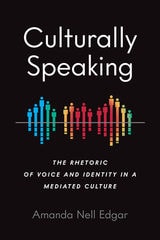
Culturally Speaking
The Rhetoric of Voice and Identity in a Mediated CultureAmanda Nell Edgar
The Ohio State University Press, 2019
Recent pieces by NPR, the BBC, and Forbes have called attention to the power of voice—positing that “your voice is the secret to getting hired” and that “voice can accelerate or hold back a career.” While it has become clearer that such things as pitch and intonation can be tied to assumptions about one’s gender, race/ethnicity, and class, studying voice as a socially constructed artifact carries with it unique challenges. In response, Culturally Speaking: The Rhetoric of Voice and Identity in a Mediated Culture presents an innovative approach to studying the spoken voice in media, showing how racial and gendered oppression bubble beneath the surface of American culture’s most recognized speaking voices, spreading invisible messages about which kinds of vocal identities are privileged and which kinds should be silenced.
Through her analysis of prominent voices in American culture—including Morgan Freeman, Tina Fey, Barack Obama, Adele, Dave Chappelle, Richard Pryor, and George Lopez—Amanda Nell Edgar argues that voices carry a residue of the particular cultural environments in which they are formed, and that these environments can be traced and analyzed to add a sonic dimension to our understanding of race and gender as rhetorically situated identities—pushing back against the often-unnoticed systems of sound-based discrimination.
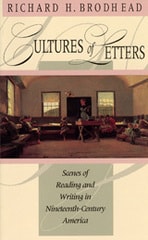
Cultures of Letters
Scenes of Reading and Writing in Nineteenth-Century AmericaRichard H. Brodhead
University of Chicago Press, 1993
Curating Research Data Volume One
Practical Strategies for Your Digital RepositoryLisa R. Johnston
Assoc of College & Research Libraries, 2017
Curating Research Data Volume Two
A Handbook of Current PracticeLisa R. Johnston
Assoc of College & Research Libraries, 2017
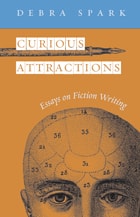
Curious Attractions
Essays on Fiction WritingDebra Spark
University of Michigan Press, 2005
While the book will have immediate appeal for students of writing, it will also be of interest to general readers for its in-depth reading of contemporary fiction and for its take on important issues of the day: Should writers try to be more uplifting? How is emotion best conveyed in fiction? Why are serious writers in North America wedded to the realist tradition?
When she was only twenty-three, Debra Spark's best-selling anthology 20 Under 30 introduced readers to some of today's best writers, including David Leavitt, Susan Minot, Lorrie Moore, Ann Patchett, and Mona Simpson. Almost twenty years later, Spark brings this same keen critical eye to Curious Attractions, discussing a broad range of authors from multiple genres and generations.
A collection of essays in the belles-lettres tradition, Curious Attractions offers lively and instructive discussions of craft flavored with autobiographical reflections and commentary on world events. Throughout, Spark's voice is warm, articulate, and engaging as it provides valuable insights to readers and writers alike.
Curriculum Materials Collections and Centers
Legacies from the Past, Visions of the FutureRita Kohrman
Assoc of College & Research Libraries, 2012
Curriculum Materials Collections and Centers
Legacies from the Past, Visions of the FutureRita Kohrman
Assoc of College & Research Libraries, 2012
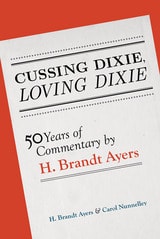
Cussing Dixie, Loving Dixie
Fifty Years of Commentary by H. Brandt AyersH. Brandt Ayers and Carol Nunnelley
University of Alabama Press, 2015
The decades-long ribbon of prose that spilled from Ayers’s pen captured the epochal milestones of our times, such as the 1965 March on Washington, the civil rights movement, the rise and decay of the New South movement, the South’s transformation from a bulwark of Democratic entropy to a heartland of irascible conservatism, and the election of the republic’s first black president.
Cussing Dixie, Loving Dixie: Fifty Years of Commentary by H. Brandt Ayers includes Ayers’s unforgettable descriptions of the political giants of Alabama’s turbulent twentieth century. Of George Wallace he wrote: “He lost his way in the swamp of racial politics, squandered his great talent for leadership, and, cruelly, has made his most devoted followers bear the consequences.” And Ayers memorably hymned Supreme Court justice Hugo Black as having “made of the Bill of Rights a trumpet which kept calling the nation back to its original purpose.”
Ayers was so known for his passionate crusade for a fair deal for “the plain people of both races” of Alabama that enemies dubbed his family’s newspaper “The Red Star.” A loyal son of Alabama who extolls Southern culture, Ayers unapologetically calls for Alabamians to cast off the moribund ideologies of the past. He jousts against obscurantism itself: “When fear and ignorance snuff out the brains of a man,” he thunders, “he is reduced to the level of a jungle predator—a flexed mass of instincts.”
Writing from a generous heart, Ayers enlivens and enlightens. Eschewing the hifalutin, his artful writing is both accessible to the people and admired by the learned. Far from provincial, his far-ranging eye landed often on global events, and he persuasively frames the state and region as an active front on which key national issues hang.
Ayers ranks among the most prolific and insightful chroniclers of twentieth- and twenty-first-century Alabama. Cussing Dixie, Loving Dixie: Fifty Years of Commentary by H. Brandt Ayers is a monument to his enduring legacy and relevance.
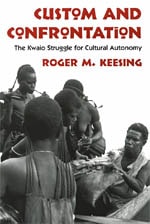
Custom and Confrontation
The Kwaio Struggle for Cultural AutonomyRoger M. Keesing
University of Chicago Press, 1992
"A major contribution to the ethnography and history of Malaita and Melanesia, and to the growing literature on cultural resistance. But above all, his humane and painful analysis of the meeting of peoples living in different worlds and constructing their agendas and moralities on incommensurate—and apparently equally arbitrary—principles, represents a major contribution and challenge to anthropological thought, addressing the basic issue of what it is to be human."—Fredrik Barth
Customer-Based Collection Development
An OverviewKarl Bridges
American Library Association, 2014