Results by title
342 books match the query '16th century' and 6 start with d
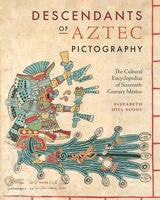
Descendants of Aztec Pictography
The Cultural Encyclopedias of Sixteenth-Century MexicoBy Elizabeth Hill Boone
University of Texas Press, 2021
In the aftermath of the sixteenth-century Spanish conquest of Mexico, Spanish friars and authorities partnered with indigenous rulers and savants to gather detailed information on Aztec history, religious beliefs, and culture. The pictorial books they created served the Spanish as aids to evangelization and governance, but their content came from the native intellectuals, painters, and writers who helped to create them. Examining the nine major surviving texts, preeminent Latin American art historian Elizabeth Hill Boone explores how indigenous artists and writers documented their ancestral culture.
Analyzing the texts as one distinct corpus, Boone shows how they combined European and indigenous traditions of documentation and considers questions of motive, authorship, and audience. For Spanish authorities, she shows, the books revealed Aztec ideology and practice, while for the indigenous community, they preserved venerated ways of pictorial expression as well as rhetorical and linguistic features of ancient discourses. The first comparative analysis of these encyclopedias, Descendants of Aztec Pictography analyzes how the painted compilations embraced artistic traditions from both sides of the Atlantic.
Digital Pedagogy in Early Modern Studies
Method and PraxisEdited by Andie Silva and Scott Schofield
Iter Press, 2023
This collection of essays focuses on teaching at the intersection of early modern literature, book history, and digital media. It considers how teaching different fields and methods of study can be enhanced and facilitated by digital technologies. The volume provides a snapshot of current thinking on digital pedagogy as practiced by leading scholars in the field and offers a series of models that may be adapted, personalized, and repurposed by future teachers seeking to bring digital methodologies to their classrooms. Supplementary materials for this title are available on the Iter Press website (iterpress.org): see under Books/Supplementary Materials.
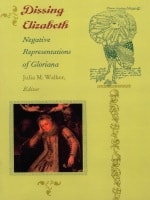
Dissing Elizabeth
Negative Representations of GlorianaJulia M. Walker, ed.
Duke University Press, 1998
As editor Julia M. Walker suggests, the breadth of dissent considered in this collection points to a dark side of the Cult of Elizabeth. Reevaluating neglected texts that had not previously been perceived as critical of the queen or worthy of critical appraisal, contributors consider dissent in a variety of forms, including artwork representing (and mocking) the queen, erotic and pornographic metaphors for Elizabeth in the popular press, sermons subtly critiquing her actions, and even the hostility encoded in her epitaph and in the placement of her tomb. Other chapters discuss gossip about Elizabeth, effigies of the queen, polemics against her marriage to the Duke of Alençon, common verbal slander, violence against emblems of her authority, and the criticism embedded in the riddles, satires, and literature of the period.
Dividing Time
The Invention of Historical Periods in Early Modern EuropeFrederic Clark
University of Chicago Press, 2027
A bold reconstruction of the origins of the “ancient, medieval, modern” trope used to define historical eras and the transitions between them.
We are used to dividing time, indicating the beginning or end of an era based on a year, a month, or even a specific day, after which (supposedly) “nothing was the same.” In this book, historian and classicist Frederic Clark looks at a particularly enduring form of dividing time—the tripartite distinction between antiquity, the Middle Ages, and modernity—in order to analyze the history of this division, how it has been constructed and deployed, and what its past and present implications are.
Clark argues that the study of the past has always depended on subdividing it into multiple parts, which tend to underpin any attempt to articulate a system of culture or value. After all, certain eras, ages, and epochs are celebrated as having ushered in a new, better time, whereas others are depicted as extended periods of decay and darkness. Clark provides an ingenious critique of the foundational assumptions underlying our narratives of periodization and the complex and messy process by which historical schemas develop, from the Renaissance through the early modern period to the Enlightenment and beyond. The result is an engaging and erudite tour through time and its many contested divisions, imagined and reimagined across history.
Drama, Play, and Game
English Festive Culture in the Medieval and Early Modern PeriodLawrence M. Clopper
University of Chicago Press, 2001
Drama, Play, and Game demonstrates that the theatrum repudiated by medieval clerics was not "theater" as we understand the term today. Clopper contends that critics have misrepresented Western stage history because they have assumed that theatrum designates a place where drama is performed. While theatrum was thought of as a site of spectacle during the Middle Ages, the term was more closely connected with immodest behavior and lurid forms of festive culture. Clerics were not opposed to liturgical representations in churches, but they strove ardently to suppress May games, ludi, festivals, and liturgical parodies. Medieval drama, then, stemmed from a more vernacular tradition than previously acknowledged-one developed by England's laity outside the boundaries of clerical rule.
Dystopias of Infamy
Insult and Collective Identity in Early Modern SpainJavier Irigoyen-García
Bucknell University Press, 2022