Results by title
60 books match the query '1918-1945' and 5 start with d

Dancing Fools and Weary Blues
The Great Escape of the TwentiesEdited by Lawrence R. Broer and John D. Walther
University of Wisconsin Press, 1990
The contributors have put aside stereotypes to offer a valuable critique of the American dream during a time of major crises. Dancing Fools and Weary Blues also presents its readers a picture of the continual redemption and revitalization of that dream, and reasserts its basic democratic values.
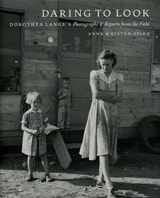
Daring to Look
Dorothea Lange's Photographs and Reports from the FieldAnne Whiston Spirn
University of Chicago Press, 2009
Daring to Look presents never-before-published photos and captions from Dorothea Lange’s fieldwork in California, the Pacific Northwest, and North Carolina during 1939. Lange’s images of squatter camps, benighted farmers, and stark landscapes are stunning, and her captions—which range from simple explanations of settings to historical notes and biographical sketches—add unexpected depth, bringing her subjects and their struggles unforgettably to life, often in their own words.
When Lange was dismissed from the Farm Security Administration at the end of 1939, these photos and field notes were consigned to archives, where they languished, rarely seen. With Daring to Look, Anne Whiston Spirn not only returns them to the public eye, but sets them in the context of Lange’s pioneering life, work, and struggle for critical recognition—firmly placing Lange in her rightful position at the forefront of American photography.
“A thoughtful and meticulously researched account of Lange’s career. . . . Spirn, a photographer herself, traces Lange’s path, visiting her locations and subjects in a fascinating series of ‘then and now’ shots.”—Publishers Weekly
“Dorothea Lange has long been regarded as one of the most brilliant photographic witnesses we have ever had to the peoples and landscapes of America, but until now no one has fully appreciated the richness with which she wove images together with words to convey her insights about this nation. We are lucky indeed that Anne Whiston Spirn, herself a gifted photographer and writer, has now recovered Lange’s field notes and woven them into a rich tapestry of texts and images to help us reflect anew on Lange’s extraordinary body of work.”—William Cronon, author of Nature’s Metropolis
Deconstructing the Monolith
The Microeconomics of the National Industrial Recovery ActJason E. Taylor
University of Chicago Press, 2019
The NIRA is generally viewed as a monolithic program, its dramatic and sweeping effects best measurable through a macroeconomic lens. In this pioneering book, however, Jason E. Taylor examines the act instead using microeconomic tools, probing the uneven implementation of the act’s codes and the radical heterogeneity of its impact across industries and time. Deconstructing the Monolith employs a mixture of archival and empirical research to enrich our understanding of how the program affected the behavior and well-being of workers and firms during the two years NIRA existed as well as in the period immediately following its demise.

Discussing Hitler
Advisers of U.S. Diplomacy in Central Europe, 1934-41Tibor Frank
Central European University Press, 2003
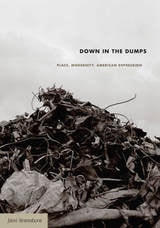
Down in the Dumps
Place, Modernity, American DepressionJani Scandura
Duke University Press, 2007
An interpretive bricolage that draws on an unlikely archive of 1930s detritus—office memos, scribbled manuscripts, scrapbooks, ruined photographs, newspaper clippings, glass eyes, incinerated stage sets, pulp novels, and junk washed ashore—Down in the Dumps escorts its readers through Reno’s divorce factory of the 1930s, where couples from across the United States came to quickly dissolve matrimonial bonds; Key West’s multilingual salvage economy and its status as the island that became the center of an ideological tug-of-war between the American New Deal government and a politically fraught Caribbean; post-Renaissance Harlem, in the process of memorializing, remembering, grieving, and rewriting a modernity that had already passed; and Studio-era Hollywood, Nathanael West’s “dump of dreams,” in which the introduction of sound in film and shifts in art direction began to transform how Americans understood place-making and even being itself. A coda on Alcatraz and the Pentagon brings the book into the present, exploring how American Depression comes to bear on post-9/11 America.