77 books match the query 'Adventurers & Explorers' and 4 start with d
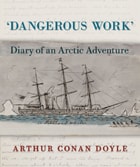
cover of Dangerous Work: Diary of an Arctic Adventure

Dangerous Work

Diary of an Arctic Adventure

Arthur Conan Doyle

University of Chicago Press, 2012

In 1880 a young medical student named Arthur Conan Doyle embarked upon the “first real outstanding adventure” of his life, taking a berth as ship’s surgeon on an Arctic whaler, the Hope. The voyage took him to unknown regions, showered him with dramatic and unexpected experiences, and plunged him into dangerous work on the ice floes of the Arctic seas. He tested himself, overcame the hardships, and, as he wrote later, “came of age at 80 degrees north latitude.”

Conan Doyle’s time in the Arctic provided powerful fuel for his growing ambitions as a writer. With a ghost story set in the Arctic wastes that he wrote shortly after his return, he established himself as a promising young writer. A subsequent magazine article laying out possible routes to the North Pole won him the respect of Arctic explorers. And he would call upon his shipboard experiences many times in the adventures of Sherlock Holmes, who was introduced in 1887’s A Study in Scarlet.
 
Out of sight for more than a century was a diary that Conan Doyle kept while aboard the whaler. Dangerous Work: Diary of an Arctic Adventure makes this account available for the first time in a beautiful facsimile edition that reproduces Conan Doyle’s notebook pages in his own elegant hand, accompanied by his copious illustrations. With humor and grace, Conan Doyle provides a vivid account of a long-vanished way of life at sea. His careful detailing of the experience of arctic whaling is equal parts fascinating and alarming, revealing the dark workings of the later days of the British whaling industry. In addition to the facsimile and annotated transcript of the diary, the volume contains photographs of the Hope, its captain, and a young Conan Doyle on deck with its officers; two nonfiction pieces by Doyle about his experiences; and two of his tales inspired by the journey.
 
To the end of his life, Conan Doyle would look back on this experience with awe: “You stand on the very brink of the unknown,” he declared, “and every duck that you shoot bears pebbles in its gizzard which come from a land which the maps know not. It was a strange and fascinating chapter of my life.” Only now can the legion of Conan Doyle fans read and enjoy that chapter.

A special limited, numbered edition of the clothbound book is also available. In addition, a text-only e-book edition is published as Dangerous Work: Diary of an Arctic Adventure, Text-only Edition.
[more]
cover of Dangerous Work: Diary of an Arctic Adventure, Text-only Edition

Dangerous Work

Diary of an Arctic Adventure, Text-only Edition

Arthur Conan Doyle

University of Chicago Press, 2012

This e-book features the complete text found in the print edition of Dangerous Work, without the illustrations or the facsimile reproductions of Conan Doyle's notebook pages.
In 1880 a young medical student named Arthur Conan Doyle embarked upon the “first real outstanding adventure” of his life, taking a berth as ship’s surgeon on an Arctic whaler, the Hope. The voyage took him to unknown regions, showered him with dramatic and unexpected experiences, and plunged him into dangerous work on the ice floes of the Arctic seas. He tested himself, overcame the hardships, and, as he wrote later, “came of age at 80 degrees north latitude.”
 
Conan Doyle’s time in the Arctic provided powerful fuel for his growing ambitions as a writer. With a ghost story set in the Arctic wastes that he wrote shortly after his return, he established himself as a promising young writer. A subsequent magazine article laying out possible routes to the North Pole won him the respect of Arctic explorers. And he would call upon his shipboard experiences many times in the adventures of Sherlock Holmes, who was introduced in 1887’s A Study in Scarlet.
 
Out of sight for more than a century was a diary that Conan Doyle kept while aboard the whaler. Dangerous Work: Diary of an Arctic Adventure makes this account available for the first time. With humor and grace, Conan Doyle provides a vivid account of a long-vanished way of life at sea. His careful detailing of the experience of arctic whaling is equal parts fascinating and alarming, revealing the dark workings of the later days of the British whaling industry. In addition to the transcript of the diary, the e-book contains two nonfiction pieces by Doyle about his experiences; and two of his tales inspired by the journey.
 
To the end of his life, Conan Doyle would look back on this experience with awe: “You stand on the very brink of the unknown,” he declared, “and every duck that you shoot bears pebbles in its gizzard which come from a land which the maps know not. It was a strange and fascinating chapter of my life.” Only now can the legion of Conan Doyle fans read and enjoy that chapter.
[more]
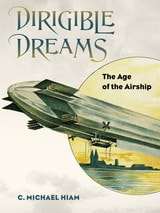
cover of Dirigible Dreams: The Age of the Airship

Dirigible Dreams

The Age of the Airship

C. Michael Hiam

University Press of New England, 2014
Here is the story of airships—manmade flying machines without wings—from their earliest beginnings to the modern era of blimps. In postcards and advertisements, the sleek, silver, cigar-shaped airships, or dirigibles, were the embodiment of futuristic visions of air travel. They immediately captivated the imaginations of people worldwide, but in less than fifty years dirigible became a byword for doomed futurism, an Icarian figure of industrial hubris. Dirigible Dreams looks back on this bygone era, when the future of exploration, commercial travel, and warfare largely involved the prospect of wingless flight. In Dirigible Dreams, C. Michael Hiam celebrates the legendary figures of this promising technology in the late nineteenth and early twentieth centuries—the pioneering aviator Alberto Santos-Dumont, the doomed polar explorers S. A. Andrée and Walter Wellman, and the great Prussian inventor and promoter Count Ferdinand von Zeppelin, among other pivotal figures—and recounts fascinating stories of exploration, transatlantic journeys, and floating armadas that rained death during World War I. While there were triumphs, such as the polar flight of the Norge, most of these tales are of disaster and woe, culminating in perhaps the most famous disaster of all time, the crash of the Hindenburg. This story of daring men and their flying machines, dreamers and adventurers who pushed modern technology to—and often beyond—its limitations, is an informative and exciting mix of history, technology, awe-inspiring exploits, and warfare that will captivate readers with its depiction of a lost golden age of air travel. Readable and authoritative, enlivened by colorful characters and nail-biting drama, Dirigible Dreams will appeal to a new generation of general readers and scholars interested in the origins of modern aviation.
[more]
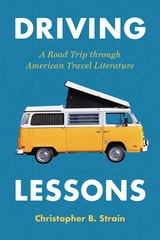
cover of Driving Lessons: A Road Trip through American Travel Literature

Driving Lessons

A Road Trip through American Travel Literature

Christopher B. Strain

University of Alabama Press, 2025

Weaves the author’s own four-month cross-country sojourn in a VW van with thoughts on travel narratives across the history of American literature

In Driving Lessons, Christopher B. Strain sets out on a quintessential American road trip, exploring not just the roads and byways of the country but the road trip’s place in American culture. Strain dives into the well of American travel writing, illuminating fascinating aspects of the road trip, such as how race, class, and gender shape the experiences of road trippers.

In the summer of 1998, amid a professional crisis of confidence, Strain settled on a plan to reconnect with both himself and the country he studies. He purchased a 1972 Volkswagen Westfalia van and set off on his own cross-country odyssey. In the weeks that followed, he ruminated on his own ongoing journey alongside great journeys from the past and how they reveal the heart of the traveler as well as the landscape of the nation.

Visiting archives and landmarks across the United States, Strain's journey became a parallel to the stories he studied—an opportunity to see and experience the cities, national parks, and monuments that define US history. Driving Lessons is a compelling blend of literary analysis and memoir, offering readers an insightful and heartfelt reflection on the enduring power of the American road trip.

[more]