Results by title
1116 books match the query 'Africa' and 24 start with d
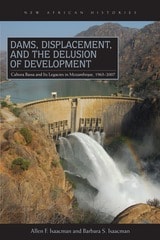
Dams, Displacement, and the Delusion of Development
Cahora Bassa and Its Legacies in Mozambique, 1965–2007Allen F. Isaacman
Ohio University Press, 2013
Cahora Bassa Dam on the Zambezi River, built in the early 1970s during the final years of Portuguese rule, was the last major infrastructure project constructed in Africa during the turbulent era of decolonization. Engineers and hydrologists praised the dam for its technical complexity and the skills required to construct what was then the world’s fifth-largest mega-dam. Portuguese colonial officials cited benefits they expected from the dam—from expansion of irrigated farming and European settlement, to improved transportation throughout the Zambezi River Valley, to reduced flooding in this area of unpredictable rainfall. “The project, however, actually resulted in cascading layers of human displacement, violence, and environmental destruction. Its electricity benefited few Mozambicans, even after the former guerrillas of FRELIMO (Frente de Libertação de Moçambique) came to power; instead, it fed industrialization in apartheid South Africa.” (Richard Roberts)
This in-depth study of the region examines the dominant developmentalist narrative that has surrounded the dam, chronicles the continual violence that has accompanied its existence, and gives voice to previously unheard narratives of forced labor, displacement, and historical and contemporary life in the dam’s shadow.
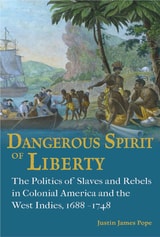
Dangerous Spirit of Liberty
The Politics of Slaves and Rebels in Early America and the West Indies, 1688-1748Justin James Pope
University of Missouri Press, 2024
Dangerous Spirit of Liberty's distinguishing feature is its focus on the role of communication in the development of a rebellious early eighteenth-century Atlantic. Most historians of slavery have presupposed that slave unrest was confined to small locales in the first half of the eighteenth century. In fact, slaves found ways to share news across provinces to great effect. Benefiting from research in the archives of Great Britain, Spain, Barbados, Bermuda, Jamaica, Antigua, the U.S. Virgin Islands, and the mainland United States, the book reveals new evidence of slave communication networks and shows how people of African ancestry shared rumors of emancipation and rebellion in this period. Slaves laboring in colonial commerce and working aboard ships helped foster an increasingly restive Black community. Banished slaves, convicted conspirators accused of plotting insurrection, carried their experiences with them in exile to neighboring colonies. By reconstructing the path of news, the book reveals rumors and reports that particularly resonated among slaves in the early eighteenth century.

Darfur Allegory
Rogaia Mustafa Abusharaf
University of Chicago Press, 2021
Elaborated in colonial times and enshrined in policy afterwards, such binary categories have been adopted by the media to explain the civil war in Darfur. The narratives that circulate internationally are thus highly fraught and cover over—to counterproductive effect—forms of Darfurian activism that have emerged in the conflict’s wake. Darfur Allegory marries the analytical precision of a committed anthropologist with an insider’s view of Sudanese politics at home and in the diaspora, laying bare the power of words to heal or perpetuate civil conflict.

Dark Voyage
An American Privateer's War on Britain's African Slave TradeChristian M. McBurney
Westholme Publishing, 2026
One privateer was given an extraordinary task: to sail across the Atlantic to attack British slave trading posts and ships on the coast of West Africa. Based on a little-known contemporary primary source, The Journal of the Good Ship Marlborough, the story of this remarkable voyage is told here for the first time and will have a major impact on our understanding of the Atlantic slave trade and the American Revolution. The voyage of the Marlborough was the brainchild of John Brown, a prominent Rhode Island merchant—and an investor in two slave trading voyages himself. The motivation was not altruistic. The officers and crew of the Marlborough wanted to advance the cause of independence from Britain through harming Britain’s economy, but they also desired to enrich themselves by selling the plunder they captured—including enslaved Africans.
The work of the Marlborough and other American privateers was so disruptive that it led to an unintended consequence: virtually halting the British slave trade. British slave merchants, alarmed at losing money from their ships being captured, invested in many fewer slave voyages. As a result tens of thousands of Africans were not forced onto slave ships, transported to the New World, and consigned to a lifetime of slavery or an early death.
In Dark Voyage: An American Privateer’s War on Britain’s African Slave Trade, veteran researcher and writer Christian McBurney recreates the harrowing voyage of the Marlborough, while placing it in the context of Atlantic World slavery. In Africa, Marlborough’s officers come across an array of African and European slave traders willing to assist them in attacking the British. This book is also the first study to detail the many captures American privateers made of British slave ships during the Revolutionary War.

Deberlinization
Refabulating the World, a Theory of PraxisEdited by Bonaventure Soh Bejeng Ndikung, Ibou Coulibaly Diop, and Franck Hermann Ekra
Diaphanes, 2025
In 1884, the Chancellor of the German Empire, Otto von Bismarck, convened a conference in Berlin to organize the division of the African continent among the industrial and military powers of the time. The result was a profound dismemberment of Africa’s original political structures, which, driven by nationalism and a barbaric ethos of rule, had a lasting impact on the continent’s political, socioeconomic, cultural, and spiritual development. One hundred and forty years after the Berlin Conference, it seems more than urgent to disentangle this complex of colonial appropriation, identify its after-effects, and question its epistemological legacy—all the more so as Europe searches for a new positioning in the changing geopolitical balance of power.
This multidisciplinary anthology takes up the idea of a transnational performative utopia to explore the possibilities of refabulating the world order and its future. Between creative action and resistance, memory and foresight, Deberlinization opens up perspectives on trans-African cohesion and outlines a new poetics of sovereignty.
Decolonization and Independence in Kenya, 1940–1993
B. A. Ogot
Ohio University Press, 1995
This is a sharply observed assessment of the history of the last half century by a distinguished group of historians of Kenya. At the same time the book is a courageous reflection in the dilemmas of African nationhood.
Professor B. A. Ogot says:
“The main purpose of the book is to show that decolonization does not only mean the transfer of alien power to sovereign nationhood; it must also entail the liberation of the worlds of spirit and culture, as well as economics and politics.
“The book also raises a more fundamental question, that is: How much independence is available to any state, national economy or culture in today’s world? It asks how far are Africa’s miseries linked to the colonial past and to the process of decolonization?
“In particular the book raises the basic question of how far Kenya is avoidably neo-colonial? And what does neo-colonial dependence mean? The book answers these questions by discussing the dynamic between the politics of decolonization, the social history of class formation and the economics of dependence. The book ends with a provocative epilogue discussing the transformation of the post-colonial state from a single-party to a multi-party system.”
Decolonizing Independence
Statecraft in Nigeria’s First Republic and Israeli InterventionsLynn Schler
Michigan State University Press, 2022

Dedan Kimathi on Trial
Colonial Justice and Popular Memory in Kenya’s Mau Mau RebellionJulie MacArthur
Ohio University Press, 2017
The transcript from this historic trial, long thought destroyed or hidden, unearths a piece of the British colonial archive at a critical point in the Mau Mau Rebellion. Its discovery and landmark publication unsettles an already contentious Kenyan history and its reverberations in the postcolonial present.
Perhaps no figure embodied the ambiguities, colonial fears, and collective imaginations of Kenya’s decolonization era more than Dedan Kimathi, the self-proclaimed field marshal of the rebel forces that took to the forests to fight colonial rule in the 1950s. Kimathi personified many of the contradictions that the Mau Mau Rebellion represented: rebel statesman, literate peasant, modern traditionalist. His capture and trial in 1956, and subsequent execution, for many marked the end of the rebellion and turned Kimathi into a patriotic martyr.
Here, the entire trial transcript is available for the first time. This critical edition also includes provocative contributions from leading Mau Mau scholars reflecting on the meaning of the rich documents offered here and the figure of Kimathi in a much wider field of historical and contemporary concerns. These include the nature of colonial justice; the moral arguments over rebellion, nationalism, and the end of empire; and the complexities of memory and memorialization in contemporary Kenya.
Contributors: David Anderson, Simon Gikandi, Nicholas Githuku, Lotte Hughes, and John Lonsdale. Introductory note by Willy Mutunga.
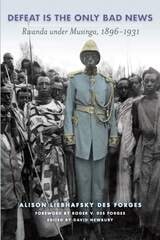
Defeat Is the Only Bad News
Rwanda under Musinga, 1896–1931Alison Des Forges
University of Wisconsin Press, 2011
A Rwandan proverb says “Defeat is the only bad news.” For Rwandans living under colonial rule, winning called not only for armed confrontation, but also for a battle of wits—and not only with foreigners, but also with each other. In Defeat Is the Only Bad News Alison Des Forges recounts the ambitions, strategies, and intrigues of an African royal court under Yuhi Musinga, the Rwandan ruler from 1896 to 1931. These were turbulent years for Rwanda, when first Germany and then Belgium pursued an aggressive plan of colonization there. At the time of the Europeans’ arrival, Rwanda was also engaged in a succession dispute after the death of one of its most famous kings. Against this backdrop, the Rwandan court became the stage for a drama of Shakespearean proportions, filled with deceit, shrewd calculation, ruthless betrayal, and sometimes murder.
Democracy and Development in Mali
R. James Bingen
Michigan State University Press, 2000
During the past twenty-five years, the scholarly research and applied development work of Michigan State University faculty and students in Mali represents the most significant combined, long-term, and continuing contribution of any group of university faculty in the United States or Europe to the study of Malian society, economy, and politics. The applied nature of much of this work has resulted in a significant number of working papers, reports, and conference presentations. This volume represents a coherent and connected set of essays from one American university with a widely known and highly respected role in African development. While the essays identify and review Mali's unique historical and contemporary path to democracy and development, they also contribute to the advancement of theoretical knowledge about African development.
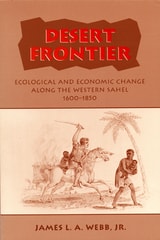
Desert Frontier
Ecological and Economic Change Along the Western Sahel, 1600-1850James L.A., Jr. Webb
University of Wisconsin Press, 1994
Desert Frontier is a study of the ecological and economic impact of a long-term trend toward increasing aridity along the southern edge of the western Sahara. Beginning in the early seventeenth century, this climatological trend forced the desert approximately 200–300 kilometers to the south, transforming ethnic identities and ways of life along the length of the Sahel. Based on extensive archival research and on Saharan oral data, Desert Frontier argues that the principal historical dynamics of the precolonial Sahel were determined by this pervasive ecological crisis, rather than by the dynamics of a European-dominated world system.
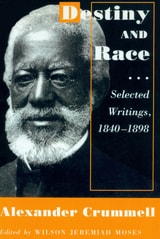
Destiny and Race
Selected Writings, 1840-1898Alexander Crummell
University of Massachusetts Press, 1992
A major reformer and intellectual, Alexander Crummell (1819–1898) was the first black American to graduate from Cambridge University. From 1858 to 1872, he lived in Liberia, where he worked as a farmer, educator, and Episcopal missionary. Returning to America, he established St. Luke’s Episcopal Church in Washington D.C., serving as its pastor until 1894. In 1897 he founded the American Negro Academy, which he intended as a challenge to the accommodationist philosophy of Booker T. Washington.
A prolific writer, Crummell produced pioneering works on black nationalism, black self-determination, and Pan Africanism that influenced W.E.B. Du Bois and other African-American leaders of the time. His surviving papers include over four hundred sermons and political essays and a voluminous correspondence.
Yet despite his importance to American and African-American history, Crummell is little known today, and there have been virtually no modern printings of his writing. This volume is intended to restore Crummell’s voice and to prompt a reevaluation of his work.

Developing Uganda
Hölger Bernt Hansen
Ohio University Press, 1998
Essays by the top scholars in the Weld span the breadth of the issue, from Uganda's growth out of poverty to development at the grass roots level. Developing Uganda replaces the myth and misinformation the last decade has witnessed with a realistic scrutiny by those who have studied it with care and caution.
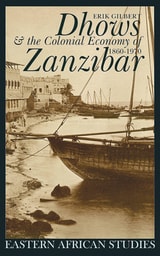
Dhows and the Colonial Economy of Zanzibar, 1860-1970
1860-1970Erik Gilbert
Ohio University Press, 2004
Conventional history assumes that the rise of the steamship trade killed off the Indian Ocean dhow trade in the twentieth century. Erik Gilbert argues that the dhow economy played a major role in shaping the economic and social life of colonial Zanzibar. Dhows, and the regional trade they fostered, allowed a class of indigenous entrepreneurs to thrive in Zanzibar. These entrepreneurs, whose economic interests stretched across continents and colonial boundaries, were able to thwart or shape many of the colonial state’s pet projects. Not only did steamships fail to drive out indigenous sailing craft, but in some cases dhows were able to drive the steamer out of specific market niches. In highlighting the role of East Africa’s commercial connections to the Middle East and India during the colonial period, Dhows and the Colonial Economy of Zanzibar, 1860-1970 makes a major contribution to African history as part of world history.
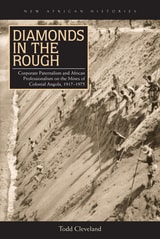
Diamonds in the Rough
Corporate Paternalism and African Professionalism on the Mines of Colonial Angola, 1917–1975Todd Cleveland
Ohio University Press, 2015
Diamonds in the Rough explores the lives of African laborers on Angola’s diamond mines from the commencement of operations in 1917 to the colony’s independence from Portugal in 1975. The mines were owned and operated by the Diamond Company of Angola, or Diamang, which enjoyed exclusive mining and labor concessions granted by the colonial government. Through these monopolies, the company became the most profitable enterprise in Portugal’s African empire. After a tumultuous initial period, the company’s mines and mining encampments experienced a remarkable degree of stability, in striking contrast to the labor unrest and ethnic conflicts that flared in other regions. Even during the Angolan war for independence (1961–75), Diamang’s zone of influence remained comparatively untroubled.
Todd Cleveland explains that this unparalleled level of quietude was a product of three factors: African workers’ high levels of social and occupational commitment, or “professionalism”; the extreme isolation of the mining installations; and efforts by Diamang to attract and retain scarce laborers through a calculated paternalism. The company’s offer of decent accommodations and recreational activities, as well as the presence of women and children, induced reciprocal behavior on the part of the miners, a professionalism that pervaded both the social and the workplace environments. This disparity between the harshness of the colonial labor regime elsewhere and the relatively agreeable conditions and attendant professionalism of employees at Diamang opens up new ways of thinking about how Africans in colonial contexts engaged with forced labor, mining capital, and ultimately, each other.
Digital and Social Media in Africa
Edited by Henri-Count Evans, Ruth Teer-Tomaselli, and Tinashe Mawere
University of Westminster Press, 2025
Further, the book examines the human rights challenges posed by state control and monitoring of digital and social media forms of communication. In the context of a digital surveillance state, it questions how digital and social media can possibly enhance the democratisation of both the communicative and political spaces.
The book focuses on questions of censorship and control of digital and social media in ‘supposedly’ democratic societies. It discusses regulation and how governments have imposed their state power by ‘switching off’ the internet and blocking social media sites under the guise of national security and order maintenance.
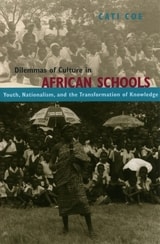
Dilemmas of Culture in African Schools
Youth, Nationalism, and the Transformation of KnowledgeCati Coe
University of Chicago Press, 2005
Coe identifies the state's limitations in teaching cultural knowledge and discusses how Ghanaians negotiate the tensions raised by the competing visions of modernity that nationalism and Christianity have created. She reveals how cultural curricula affect authority relations in local social organizations—between teachers and students, between Christians and national elite, and between children and elders—and raises several questions about educational processes, state-society relations, the production of knowledge, and the making of Ghana's citizenry.

Directory of World Cinema
AfricaEdited by Blandine Stefanson and Sheila Petty
Intellect Books, 2014
With a film industry divided by linguistic heritage, African directors do not have the luxury of producing comedies, thrillers, horror films, or even love stories, except perhaps as DVDs that do not travel far outside their country of production. Instead, African directors tend to cover serious sociopolitical ground, even under the cover of comedy, in the hopes of finding funds outside Africa. Contributors to this volume draw on filmic representations of the continent to consider the economic role of women, rural exodus, economic migration, refugees, and diasporas, culture, religion, and magic as well as representations of children, music, languages, and symbols.
A survey of national cinemas in one volume, DirectoryofWorldCinema: Africa is a necessary addition to the bookshelf of any cinephile and world traveler.
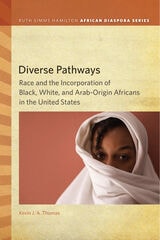
Diverse Pathways
Race and the Incorporation of Black, White, and Arab-Origin Africans in the United StatesKevin J. A. Thomas
Michigan State University Press, 2014

Dockside Reading
Hydrocolonialism and the Custom HouseIsabel Hofmeyr
Duke University Press, 2022
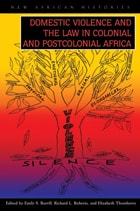
Domestic Violence and the Law in Colonial and Postcolonial Africa
Emily S. Burrill
Ohio University Press, 2010
Domestic Violence and the Law in Colonial and Postcolonial Africa reveals the ways in which domestic space and domestic relationships take on different meanings in African contexts that extend the boundaries of family obligation, kinship, and dependency. The term domestic violence encompasses kin-based violence, marriage-based violence, gender-based violence, as well as violence between patrons and clients who shared the same domestic space. As a lived experience and as a social and historical unit of analysis, domestic violence in colonial and postcolonial Africa is complex.
Using evidence drawn from Sub-saharan Africa, the chapters explore the range of domestic violence in Africa’s colonial past and its present, including taxation and the insertion of the household into the broader structure of colonial domination.
African histories of domestic violence demand that scholars and activists refine the terms and analyses and pay attention to the historical legacies of contemporary problems. This collection brings into conversation historical, anthropological, legal, and activist perspectives on domestic violence in Africa and fosters a deeper understanding of the problem of domestic violence, the limits of international human rights conventions, and local and regional efforts to address the issue.

Don't Whisper Too Much and Portrait of a Young Artiste from Bona Mbella
Ekotto, Frieda
Bucknell University Press, 2019
Published by Bucknell University Press. Distributed worldwide by Rutgers University Press.

Doris Lessing
The Alchemy of SurvivalCarey Kaplan
Ohio University Press, 1988
Long neglected by the academic world because of her rejection of belletristic values and resistance to convenient literary taxonomy, Doris Lessing has nonetheless built an international following of serious, dedicated readers. Acknowledging the difficulties posed by the multiple dimensions of Lessing’s work, Kaplan and Rose have gathered eleven essays that address her artistic, philosophical, political, and psychological complexity, and so provide a welcome introduction to the extraordinary depth and diversity of this important contemporary novelist.
Lessing has been described as an “alchemical” writer, in that her work is directed toward changing people’s lives and perceptions rather than simply recording experience. Accordingly, the contributors examine her various postures and tactics for the purpose of discovering how the alchemical elements inform her various personae. Frederick C. Stern discusses Lessing’s commitment to radical humanist thought, while Carey Kaplan examines how Lessing’s imperialist past has shaped her futuristic fiction. Elizabeth Abel offers a feminist interpretation of the pattern of brother-sister incest in Lessing’s work, showing how Lessing has established Antigone as a female alternative to the Oedipal myth of male incest. Particularly insightful is Eve Bertelsen’s report of her interview with Lessing, demonstrating how Lessing’s often evasive style of adversarial dialogue works in concert with her refusal to be conveniently pigeonholed by academic analysis.
For those readers new to her work, Doris Lessing: The Alchemy of Survival will serve as a useful introduction to Lessing’s concerns and techniques. Those who have long admired her writing will find in this collection new keys to understanding Lessing’s philosophical, political, and psychological complexity.

Doris Lessing
The Poetics of ChangeGayle Greene
University of Michigan Press, 1997
Doris Lessing has been a chronicler of our age for nearly half a century, and a study of her writing career does not yield easy generalizations. Difficult though she is to categorize, she is always concerned with change, with a search for "something new" against "the nightmare repetition" of history. The feminist quest she articulated in The Children of Violence and The Golden Notebook entered the culture with the force of a new myth: these books changed lives. The Golden Notebook--together with such works as The Second Sex and The Feminine Mystique--raised the consciousness of a generation of women readers and played a major part in making the second wave of feminism. It is the power of Lessing's novels to change people's lives, the effect she had raising the consciousness of a generation of women and the effect she continues to have on young readers, that is the subject of this book.
Gayle Greene employs an eclectic range of approaches (psychoanalytic, Marxist, biographical, historical, intertextual, formalist, feminist) to shed new light on Lessing's remarkable achievement. She sees Lessing as a feminist writer, not in offering strong female role models who climb top the top of existing social structures, but in envisioning, and indeed helping to bring about, a transformation of those structures. Lessing critiques Western values of individualism, competition, and materialism in terms similar to those developed by feminism; and, in getting us to view our culture from without, in teaching us to read cultural constructs as systems, her novels perform the deconstructing and demystifying work of feminism.