Results by title
314 books match the query 'African' and 11 start with d
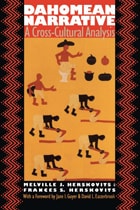
Dahomean Narrative
A Cross-Cultural AnalysisMelville J. Herskovits and Frances S. Herskovits
Northwestern University Press, 1998
Published as a companion piece to Northwestern University Press's West African Folktales, Dahomean Narrative provides the basic texts of material collected in the field, and shows how they were collected, analyzed, and theorized in the anthropological and folklore disciplinary traditions of Herskovits's day. The result is a wide-ranging collection, culled from an entire narrative tradition, that remains unique among anthropological publications.
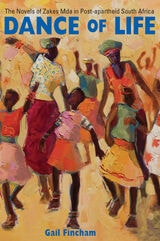
Dance of Life
The Novels of Zakes Mda in Post-apartheid South AfricaGail Fincham
Ohio University Press, 2012
In recent years, the work of Zakes Mda—novelist, painter, composer, theater director and filmmaker—has attracted worldwide critical attention. Gail Fincham’s book examines the five novels Mda has written since South Africa’s transition to democracy: Ways of Dying (1995), The Heart of Redness (2000), The Madonna of Excelsior (2002), The Whale Caller (2005), and Cion (2007). Dance of Life explores how refigured identity is rooted in Mda’s strongly painterly imagination that creates changed spaces in memory and culture. Through a combination of magic realism, African orature, and intertextuality with the Western canon, Mda rejects dualistic thinking of the past and the present, the human and the nonhuman, the living and the dead, the rural and the urban. He imbues his fictional characters with the power to orchestrate a reconfigured subjectivity that is simultaneously political, social, and aesthetic.
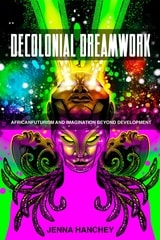
Decolonial Dreamwork
Africanfuturism and Imagination Beyond DevelopmentJenna Hanchey
The Ohio State University Press, 2027
Incorporates creative writing and analysis of contemporary African speculative fiction to center dreams as a tool for liberation.
In Decolonial Dreamwork, Jenna Hanchey centers dreaming, both waking and sleeping, to examine how Africanfuturism enables futures beyond the “reality” of what developmental imperatives deem possible. Engaging with the speculative fiction of Tade Thompson, Shingai Njeri Kagunda, Yvette Lisa Ndlovu, Tlotlo Tsamaase, Suyi Davies Okungbowa, Sofia Samatar, Moses Ose Utomi, and the Sauúti Collective, Hanchey demonstrates how these works provide a roadmap for decolonial dreaming—imagining beyond the conceptual limits Western paradigms impose. Connecting African and Indigenous thought, Decolonial Dreamwork shows how the labor of imagining beyond coloniality is nonlinear, embodied, emplaced, liquid, and reliant on multiplicities of stories.
As both a scholar and speculative fiction writer, Hanchey blends analysis with examples of her own creative work to demonstrate the importance of not only reading African speculative fiction but joining in and dreaming alongside it. Punctuated with exercises and prompts, Decolonial Dreamwork functions as a participatory workbook for liberation that will be as generative for classrooms and book clubs as it is for theory development. We can all tell stories, Hanchey exhorts readers, that break colonial realities and create space for better worlds.
Decolonizing Memory
Algeria and the Politics of TestimonyJill Jarvis
Duke University Press, 2021
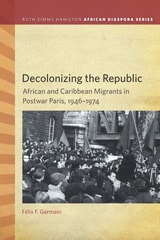
Decolonizing the Republic
African and Caribbean Migrants in Postwar Paris, 1946–1974Félix F. Germain
Michigan State University Press, 2016
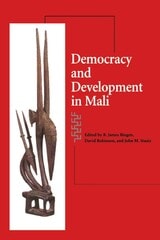
Democracy and Development in Mali
R. James Bingen
Michigan State University Press, 2000
During the past twenty-five years, the scholarly research and applied development work of Michigan State University faculty and students in Mali represents the most significant combined, long-term, and continuing contribution of any group of university faculty in the United States or Europe to the study of Malian society, economy, and politics. The applied nature of much of this work has resulted in a significant number of working papers, reports, and conference presentations. This volume represents a coherent and connected set of essays from one American university with a widely known and highly respected role in African development. While the essays identify and review Mali's unique historical and contemporary path to democracy and development, they also contribute to the advancement of theoretical knowledge about African development.
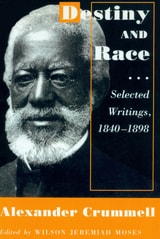
Destiny and Race
Selected Writings, 1840-1898Alexander Crummell
University of Massachusetts Press, 1992
A major reformer and intellectual, Alexander Crummell (1819–1898) was the first black American to graduate from Cambridge University. From 1858 to 1872, he lived in Liberia, where he worked as a farmer, educator, and Episcopal missionary. Returning to America, he established St. Luke’s Episcopal Church in Washington D.C., serving as its pastor until 1894. In 1897 he founded the American Negro Academy, which he intended as a challenge to the accommodationist philosophy of Booker T. Washington.
A prolific writer, Crummell produced pioneering works on black nationalism, black self-determination, and Pan Africanism that influenced W.E.B. Du Bois and other African-American leaders of the time. His surviving papers include over four hundred sermons and political essays and a voluminous correspondence.
Yet despite his importance to American and African-American history, Crummell is little known today, and there have been virtually no modern printings of his writing. This volume is intended to restore Crummell’s voice and to prompt a reevaluation of his work.
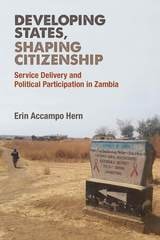
Developing States, Shaping Citizenship
Service Delivery and Political Participation in ZambiaErin Accampo Hern
University of Michigan Press, 2019
Erin Accampo Hern draws on original data from an original large-N survey, interviews, Afrobarometer data, and archival materials collected over 12 months in Zambia. The theory underlying this book’s framework is that of policy feedback, which argues that policies, once in place, influence the subsequent political participation of the affected population. This theory has predominantly been applied to advanced industrial democracies, and this book is the first explicit effort to adapt the theory to the developing country context.
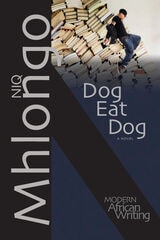
Dog Eat Dog
A NovelNiq Mhlongo
Ohio University Press, 2012

Domestications
American Empire, Literary Culture, and the Postcolonial LensHosam Aboul-Ela
Northwestern University Press, 2018
Domestications traces a genealogy of American global engagement with the Global South since World War II. Hosam Aboul-Ela reads American writers contrapuntally against intellectuals from the Global South in their common—yet ideologically divergent—concerns with hegemony, world domination, and uneven development. Using Edward Said’s Culture and Imperialism as a model, Aboul-Ela explores the nature of U.S. imperialism’s relationship to literary culture through an exploration of five key terms from the postcolonial bibliography: novel, idea, perspective, gender, and space.
Within this framework the book examines juxtapositions including that of Paul Bowles’s Morocco with North African intellectuals’ critique of Orientalism, the global treatment of Vietnamese liberation movements with the American narrative of personal trauma in the novels of Tim O’Brien and Hollywood film, and the war on terror’s philosophical idealism with Korean and post-Arab nationalist materialist archival fiction.
Domestications departs from other recent studies of world literature in its emphases not only on U.S. imperialism but also on intellectuals working in the Global South and writing in languages other than English and French. Although rooted in comparative literature, its readings address issues of key concern to scholars in American studies, postcolonial studies, literary theory, and Middle Eastern studies.

Don't Whisper Too Much and Portrait of a Young Artiste from Bona Mbella
Ekotto, Frieda
Bucknell University Press, 2019
Published by Bucknell University Press. Distributed worldwide by Rutgers University Press.