Results by title
702 books match the query 'America' and 24 start with d

Damsels and Divas
European Stardom in Silent HollywoodAgata Frymus
Rutgers University Press, 2020
Damsels and Divas investigates the meanings of Europeanness in Hollywood during the 1920s by charting professional trajectories of three movie stars: Pola Negri, Vilma Bánky and Jetta Goudal. It combines the investigation of American fan magazines with the analysis of studio documents, and the examination of the narratives of their films, to develop a thorough understanding of the ways in which Negri, Bánky and Goudal were understood within the realm of their contemporary American culture. This discussion places their star personae in the context of whiteness, femininity and Americanization. Every age has its heroines, and they reveal a lot about prevailing attitudes towards women in their respective eras. In the United States, where the stories of rags-to-riches were especially potent, stars could offer models of successful cultural integration.
Dark Side of the Light
Slavery and the French EnlightenmentLouis Sala-Molins
University of Minnesota Press, 2006
Translated into English for the first time, Dark Side of the Light scrutinizes Condorcet’s Reflections on NegroSlavery and the works of Montesquieu, Rousseau, and Diderot side by side with the Code Noir (the royal document that codified the rules of French Caribbean slavery) in order to uncover attempts to uphold the humanist project of the Enlightenment while simultaneously justifying slavery. Wielding the pen of both the ironist and the moralist, Sala-Molins demonstrates the flawed nature of these attempts and the reasons given for this denial of rights, from the imperatives of public order to the incomplete humanity of the slave (and thus the need for his progressive humanization through slavery), to the economic prosperity that depended on his labor. At the same time, Sala-Molins uses the techniques of literature to give equal weight to the perspective of the “barefooted, the starving, and the slaves” through expository prose and scenes between slave and philosopher, giving moral agency and flesh-and-blood dimensions to issues most often treated as abstractions.
Both an urgent critique and a measured analysis, Dark Side of the Light reveals the moral paradoxes of Enlightenment philosophies and their world-changing consequences.
Louis Sala-Molins is a moral and political philosopher and emeritus professor at the University of Toulouse. He is the author of many books, including Le Code Noir, ou Le calvaire de Canaan and L’Afrique aux Amériques.
John Conteh-Morgan is associate professor of French and Francophone, African-American, and African studies at Ohio State University. He is the author of Theatre and Drama in Francophone Africa: A Critical Introduction.
Dark Twins
Imposture and Identity in Mark Twain's AmericaSusan Gillman
University of Chicago Press, 1989
Gillman shows that laws regulating race classification, paternity, and rape cases underwrite Twain's critical exploration of racial and sexual difference in the writings of the 1890s and after, most strikingly in the little-known manuscripts that Gillman calls the "tales of transvestism." The "pseudoscience" of spiritualism and the "science" of psychology provide the cultural vocabularies essential to Twain's fantasy and science fiction writings of his last two decades. Twain stands forth finally as a representative man, not only a child of his culture, but also as one implicated in a continuing American anxiety about freedom, race, and identity.

Deaf Education in America
Voices of Children from Inclusion SettingsJanet Cerney
Gallaudet University Press, 2007
Deaf Education in America: Voices of Children from Inclusion Settings provides a detailed examination of the complex issues surrounding the integration of deaf students into the general classroom. Author Janet Cerney begins her comprehensive work by stressing to parents, educators, and policymakers the importance of learning the circumstances in which mainstreaming and inclusion can be successful for deaf students. This process requires stakeholders to identify and evaluate the perceived benefits and risks before making placement and implementation decisions. The influences of the quality of communication and the relationships built by and with the students are of paramount importance in leading to success.
In conjunction with these principles, this thorough study examines the theory and history behind inclusion, including the effects of the No Child Left Behind education act. Cerney incorporates this knowledge with interviews of the deaf students themselves as well as with their interpreters and teachers. To ensure complete candidness, the students were surveyed in their homes, and the interpreters and educators were questioned separately. Through these exchanges, Cerney could determine what worked well for the deaf students, what barriers interfered with their access to communication, and what support structures were needed to eliminate those barriers. As a result, Deaf Education in America offers concrete information on steps that can be taken to ensure success in an inclusion setting, results that reverberate through the voices of the deaf students.
Deaf Heritage
A Narrative History of Deaf AmericaJack R. Gannon
Gallaudet University Press, 2012
Now, Jack R. Gannon’s original groundbreaking volume on Deaf history and culture is available once again. In Deaf Heritage: A Narrative History of Deaf America, Gannon brought together for the first time the story of the Deaf experience in America from a Deaf perspective. Recognizing the need to document the multifaceted history of this unique minority with its distinctive visual culture, he painstakingly gathered as much material as he could on Deaf American life. The result is a 17-chapter montage of artifacts and information that forms an utterly fascinating record from the early nineteenth century to the time of its original publication in 1981.
Deaf Heritage tracks the development of the Deaf community both chronologically and by significant subjects. The initial chapter treats the critical topics of early attempts at deaf education, the impact of Deaf and Black deaf teachers, the establishment of schools for the deaf, and the founding of Gallaudet College. Individual chapters cover the 1880s through the 1970s, mixing milestones such as the birth of the National Association of the Deaf and the work of important figures, Deaf and hearing, with anecdotes about day-to-day deaf life. Other chapters single out important facets of Deaf culture: American Sign Language, Deaf Sports, Deaf artists, Deaf humor, and Deaf publications. The overall effect of this remarkable record, replete with archival photographs, tables, and lists of Deaf people’s accomplishments, reveals the growth of a vibrant legacy singular in American history.

Death and Dying in Colonial Spanish America
Edited by Martina Will de Chaparro and Miruna Achim
University of Arizona Press, 2011
The variety of sources uncovered in the authors’ original archival research suggests the wide diversity of topics and approaches they employ: Nahua annals, Spanish chronicles, Inquisition case records, documents on land disputes, sermons, images, and death registers. Geographically, the range of research focuses on the viceroyalties of New Spain, Peru, and New Granada.
The resulting records—both documentary and archaeological—offer us a variety of vantage points from which to view each of these cultural groups as they came into contact with others. Much less tied to modern national boundaries or old imperial ones, the many facets of the new historical research exploring the topic of death demonstrate that no attitudes or practices can be considered either “Western” or universal.
Decolonizing Native Histories
Collaboration, Knowledge, and Language in the AmericasFlorencia E. Mallon, ed.
Duke University Press, 2012
These wide-ranging case studies consider how language, the law, and the archive have historically served as instruments of colonialism and how they can be creatively transformed in constructing autonomy. The collection highlights points of commonality and solidarity across geographical, cultural, and linguistic boundaries and also reflects deep distinctions between North and South. Decolonizing Native Histories looks at Native histories and narratives in an internationally comparative context, with the hope that international collaboration and understanding of local histories will foster new possibilities for indigenous mobilization and an increasingly decolonized future.
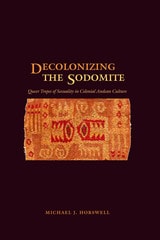
Decolonizing the Sodomite
Queer Tropes of Sexuality in Colonial Andean CultureBy Michael J. Horswell
University of Texas Press, 2006
Early Andean historiography reveals a subaltern history of indigenous gender and sexuality that saw masculinity and femininity not as essential absolutes. Third-gender ritualists, Ipas, mediated between the masculine and feminine spheres of culture in important ceremonies and were recorded in fragments of myths and transcribed oral accounts. Ritual performance by cross-dressed men symbolically created a third space of mediation that invoked the mythic androgyne of the pre-Hispanic Andes. The missionaries and civil authorities colonizing the Andes deemed these performances transgressive and sodomitical.
In this book, Michael J. Horswell examines alternative gender and sexuality in the colonial Andean world, and uses the concept of the third gender to reconsider some fundamental paradigms of Andean culture. By deconstructing what literary tropes of sexuality reveal about Andean pre-Hispanic and colonial indigenous culture, he provides an alternative history and interpretation of the much-maligned aboriginal subjects the Spanish often referred to as "sodomites." Horswell traces the origin of the dominant tropes of masculinist sexuality from canonical medieval texts to early modern Spanish secular and moralist literature produced in the context of material persecution of effeminates and sodomites in Spain. These values traveled to the Andes and were used as powerful rhetorical weapons in the struggle to justify the conquest of the Incas.
Democracy in America
Alexis de Tocqueville
University of Chicago Press, 2000
Alexis de Tocqueville (1805-59) came to America in 1831 to see what a great republic was like. What struck him most was the country's equality of conditions, its democracy. The book he wrote on his return to France, Democracy in America, is both the best ever written on democracy and the best ever written on America. It remains the most often quoted book about the United States, not only because it has something to interest and please everyone, but also because it has something to teach everyone.
Democracy in America
Alexis de Tocqueville
University of Chicago Press, 2000
This is an auto-narrated audiobook edition of this book.

Democracy in America?
What Has Gone Wrong and What We Can Do About ItBenjamin I. Page and Martin Gilens
University of Chicago Press, 2017
How did we get here? Through decades of dysfunctional government. In Democracy in America? veteran political observers Benjamin I. Page and Martin Gilens marshal an unprecedented array of evidence to show that while other countries have responded to a rapidly changing economy by helping people who’ve been left behind, the United States has failed to do so. Instead, we have actually exacerbated inequality, enriching corporations and the wealthy while leaving ordinary citizens to fend for themselves.
What’s the solution? More democracy. More opportunity for citizens to shape what their government does. To repair our democracy, Page and Gilens argue, we must change the way we choose candidates and conduct our elections, reform our governing institutions, and curb the power of money in politics. By doing so, we can reduce polarization and gridlock, address pressing challenges, and enact policies that truly reflect the interests of average Americans.
This book presents a damning indictment. But the situation is far from hopeless. With increased democratic participation as their guide, Page and Gilens lay out a set of proposals that would boost citizen participation, curb the power of money, and democratize the House and Senate. The only certainty is that inaction is not an option. Now is the time to act to restore and extend American democracy.

Democracy in America?
What Has Gone Wrong and What We Can Do About ItBenjamin I. Page and Martin Gilens
University of Chicago Press, 2020
What’s the solution? More democracy. More opportunities for citizens to shape what their government does. To repair our democracy, Page and Gilens argue, we must change the way we choose candidates and conduct our elections, reform our governing institutions, and curb the power of money in politics. By doing so, we can reduce polarization and gridlock, address pressing challenges, and enact policies that truly reflect the interests of average Americans.
Updated with new information, this book lays out a set of proposals that would boost citizen participation, curb the power of money, and democratize the House and Senate.
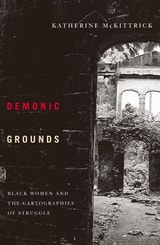
Demonic Grounds
Black Women And The Cartographies Of StruggleKatherine McKittrick
University of Minnesota Press, 2006
Demonic Grounds moves between past and present, archives and fiction, theory and everyday, to focus on places negotiated by black women during and after the transatlantic slave trade. Specifically, the author addresses the geographic implications of slave auction blocks, Harriet Jacobs’s attic, black Canada and New France, as well as the conceptual spaces of feminism and Sylvia Wynter’s philosophies.
Central to McKittrick’s argument are the ways in which black women are not passive recipients of their surroundings and how a sense of place relates to the struggle against domination. Ultimately, McKittrick argues, these complex black geographies are alterable and may provide the opportunity for social and cultural change.
Katherine McKittrick is assistant professor of women’s studies at Queen’s University.
Departing from Deviance
A History of Homosexual Rights and Emancipatory Science in AmericaHenry L. Minton
University of Chicago Press, 2001

Dimensions of the Americas
Art and Social Change in Latin America and the United StatesShifra M. Goldman
University of Chicago Press, 1994
Goldman's extensive introduction provides an up-to-date chronology of modern Latin American art; a history of "social art history" in the United States; and synopses of recent theoretical and historical writings by major scholars from Mexico, Cuba, Brazil, Peru, Uruguay, Chile, and the United States. In her essays, Goldman discusses a vast array of topics including: the influence of the Mexican muralists on the American continent; the political and artistic significance of poster art and printmaking in Cuba, Puerto Rico, and among Chicanos; the role of women artists such as Guatemalan painter Isabel Ruiz; and the increasingly important role of politics and multinational businesses in the art world of the 1970s and 1980s. She explores the reception of Latin American and Latino art in the United States, focusing on major historical exhibits as well as on exhibits by artists such as Chilean Alfredo Jaar and Argentinian Leandro Katz. Finally, she examines the significance of nationalist and ethnic themes in Latin American and Latino art.
Written in a straightforward style equally accessible to specialists, students, and general audiences, this book will become essential reading for anyone interested in understanding the importance of Latin American art and the complex dynamic shaping it.
Discoverers, Explorers, Settlers
The Diligent Writers of Early AmericaWayne Franklin
University of Chicago Press, 1979
Displacements and Diasporas
Asians in the AmericasAnderson, Wanni W.
Rutgers University Press, 2005
With an emphasis on anthropological and historical contexts, the essays show how the experiences of Asians across the Americas have been shaped by the social dynamics and politics of settlement locations as much as by transnational connections and the economic forces of globalization. Contributors bring new insights to the unique situations of Asian communities previously overlooked by scholars, such as Vietnamese Canadians and the Lao living in Rhode Island. Other topics include Chinese laborers and merchants in Latin America and the Caribbean, Japanese immigrants and their descendants in Brazil, Afro-Amerasians in America, and the politics of second-generation Indian American youth culture.
Together the essays provide a valuable comparative portrait of Asians across the Americas. Engaging issues of diaspora, transnational social practice and community building, gender, identity, institutionalized racism, and deterritoriality, this volume presents fresh perspectives on displacement, opening the topic up to a wider, more interdisciplinary terrain of inquiry and teaching.
Do the Americas Have a Common Literature?
Gustavo Pérez Firmat, ed.
Duke University Press, 1990
The essays here place the literature of the Americas in a hemispheric context by drawing on approaches derived from various schools of contemporary critical thought—Marxism, feminism, culture studies, semiotics, reception aesthetics, and poststructuralism. As part of their search for a distinctly New World literary idiom, the contributors engage not only the major North American and Spanish American writers, but also such “marginal” or “minor” literatures as Chicano, African American, Brazilian, and Québecois. In identifying areas of agreement and confluence, this work lays the groundwork for finding historical, ideological, and cultural homogeneity in the imaginative writing of the Americas.
Contributors. Lois Parkinson Zamora, David T. Haberly, José David Saldívar, Antonio Benítez-Rojo, José Piedra, Doris Sommer, Enrico Mario Santí, Eduardo González, John Irwin, Wendy B. Faris, René Prieto, Jonathan Monroe, Gustavo Pérez Firmat
Documenting Intimate Matters
Primary Sources for a History of Sexuality in AmericaEdited by Thomas A. Foster
University of Chicago Press, 2012
Domestic Intelligence
Monitoring Dissent in AmericaBy Richard E. Morgan
University of Texas Press, 1980
The 1970s revealed a number of infamous and sometimes illegal practices used by federal law enforcement agencies to monitor political dissent in the United States. In the aftermath of Watergate the revelation of serious abuses created distrust of virtually all domestic intelligence operations and led to vigorous efforts at reform.
Richard E. Morgan emphasizes the importance of guarding against an overreaction to the disclosures of the mid-1970s. While acknowledging the need for many of the recent reforms that seek to establish accountability, guarantee privacy, and protect dissent, he cautions against limitations on domestic intelligence gathering that could seriously hamper government's ability to prevent crime, particularly terrorism.
Domestic Intelligence has several major objectives: to trace the way in which government agencies became involved with domestic intelligence gathering; to review the controversies and abuses associated with these agencies, especially the FBI, the CIA, and the NSA; to discuss the constitutionality of domestic intelligence collection; to review intelligence reforms adopted; and to suggest additional reforms.
This volume is concerned with the tension between the need to protect privacy and political dissent and the need for the government to protect the community. Morgan concludes that intelligence operations aimed at anticipating criminal activity are necessary in a complex, highly vulnerable society, and that these operations can be conducted responsibly with proper guidelines and oversight mechanisms.
Domesticating Empire
Enlightenment in Spanish AmericaKaren Stolley
Vanderbilt University Press, 2013
Through the work of five authors--Jose de Oviedo y Banos, Juan Ignacio Molina, Felix de Azara, Catalina de Jesus Herrera, and Felix de Arrate--Domesticating Empire explores the Ibero-American Enlightenment as a project that reflects both key Enlightenment concerns and the particular preoccupations of Bourbon Spain and its territories in the Americas. At a crucial moment in Spain's imperial trajectory, these authors domesticate topics central to empire--conquest, Indians, nature, God, and gold--by making them familiar and utilitarian. As a result, their works later proved resistant to overarching schemes of Latin American literary history and have been largely forgotten. Nevertheless, eighteenth-century Ibero-American writing complicates narratives about both the Enlightenment and Latin American cultural identity.
Domination without Dominance
Inca-Spanish Encounters in Early Colonial PeruGonzalo Lamana
Duke University Press, 2008
Lamana’s redefinition of the order of things reveals that, contrary to the conquerors’ accounts, what the Spanairds achieved was a “domination without dominance.” This conclusion undermines common ideas of Spanish (and Western) superiority. It shows that casting order as a by-product of military action rests on a pervasive fallacy: the translation of military superiority into cultural superiority. In constant dialogue with critical thinking from different disciplines and traditions, Lamana illuminates how this new interpretation of the conquest of the Incas revises current understandings of Western colonialism and the emergence of still-current global configurations.
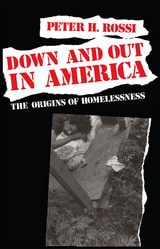
Down and Out in America
The Origins of HomelessnessPeter H. Rossi
University of Chicago Press, 1990
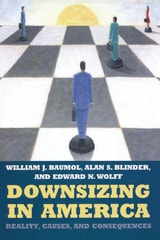
Downsizing in America
Reality, Causes, and ConsequencesWilliam J. Baumol
Russell Sage Foundation, 2003