Results by title
266 books match the query 'Anecdotes' and 11 start with d
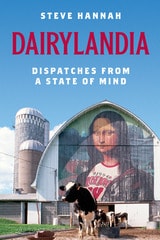
Dairylandia
Dispatches from a State of MindSteve Hannah
University of Wisconsin Press, 2022
Dairylandia recounts Steve Hannah’s burgeoning love for his adopted state through the writings of his long-lived column, “State of Mind.” He profiles the lives of the seemingly ordinary, yet quite (and quietly) extraordinary folks he met and befriended on his travels. From Norwegian farmers to rattlesnake hunters to a woman who kept her favorite dead bird in the freezer, Hannah was charmed and fascinated by practically everyone he met. These captivating vignettes are by turns humorous, tragic, and remarkable—and remind us of our shared humanity.
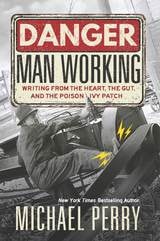
Danger, Man Working
Writing from the Heart, the Gut, and the Poison Ivy PatchArenas
Wisconsin Historical Society Press, 2017
"Every writer has advice for aspiring writers. Mine is predicated on formative years spent cleaning my father’s calf pens: Just keep shoveling until you’ve got a pile so big, someone has to notice. The fact that I cast my life’s work as slung manure simply proves that I recognize an apt metaphor when I accidentally stick it with a pitchfork. . . . Poetry was my first love, my gateway drug—still the poets are my favorites—but I quickly realized I lacked the chops or insights to survive on verse alone. But I wanted to write. Every day. And so I read everything I could about freelancing, and started shoveling."
The pieces gathered within this book draw on fifteen years of what Michael Perry calls "shovel time"—a writer going to work as the work is offered. The range of subjects is wide, from musky fishing, puking, and mountain-climbing Iraq War veterans to the frozen head of Ted Williams. Some assignments lead to self-examination of an alarming magnitude (as Perry notes, "It quickly becomes obvious that I am a self-absorbed hypochondriac forever resolving to do better nutritionally and fitness-wise but my follow-through is laughable.") But his favorites are those that allow him to turn the lens outward: "My greatest privilege," he says, "lies not in telling my own story; it lies in being trusted to tell the story of another."
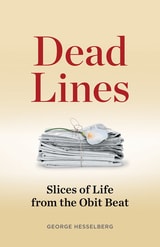
Dead Lines
Slices of Life from the Obit BeatGeorge Hesselberg
Wisconsin Historical Society Press, 2021
In more than forty years at the Wisconsin State Journal, Hesselberg frequently found himself writing about fatal accidents, crime investigations, and the deaths of the wealthy, famous, or notorious. But he was most drawn to the curious, the unknown, and the unsung—the deaths that normally wouldn’t make much of a splash, if any mention at all, in the news columns of a daily paper.
Digging deeper, he uncovered the extraordinary among the ordinary, memorializing the lives of a sword designer, a radio villain, a pioneering female detective, a homeless woman who spoke fluent French, a beloved classroom tarantula, and many more. Their stories are alternately amusing, sad, surprising, and profound. Together they speak to a shared human experience and inspire us to see the people around us with new eyes, valuing the lives while they are still being lived.
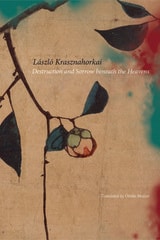
Destruction and Sorrow beneath the Heavens
ReportageLászló Krasznahorkai
Seagull Books, 2016
Known for his brilliantly dark fictional visions, László Krasznahorkai is one of the most respected European writers of his generation and the winner of the 2015 Man Booker International Prize. Here, he brings us on a journey through China at the dawn of the new millennium. On the precipice of its emergence as a global power, China is experiencing cataclysms of modernity as its harsh Maoist strictures meet the chaotic flux of globalism. What remains of the Middle Kingdom’s ancient cultural riches? And can a Westerner truly understand China’s past and present—or the murky waters where the two meet?
Destruction and Sorrow beneath the Heavens is both a travel memoir and the chronicle of a distinct intellectual shift as one of the most captivating contemporary writers and thinkers begins to engage with the cultures of Asia and the legacies of its interactions with Europe in a newly globalized society. Rendered in English by award-winning translator Ottilie Mulzet, Destruction and Sorrow beneath the Heavens is an important work, marking the emergence of Krasznahorkai as a truly global novelist.
Praise for Krasznahorkai
“The contemporary Hungarian master of the apocalypse.”—Susan Sontag
“Krasznahorkai delights in unorthodox description; no object is too insignificant for his worrying gaze. . . . He offers us stories that are relentlessly generative and defiantly irresolvable. They are haunting, pleasantly weird, and ultimately, bigger than the worlds they inhabit.”—New York Times
“Krasznahorkai is an expert with the complexity of human obsessions. Each of his books feel like an event, a revelation.”—Daily Beast
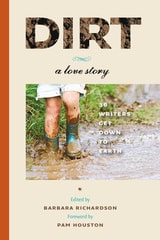
Dirt
A Love StoryEdited by Barbara Richardson
University Press of New England, 2015
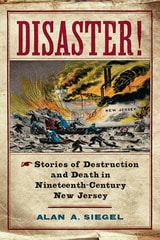
Disaster!
Stories of Destruction and Death in Nineteenth-Century New JerseySiegel, Alan A
Rutgers University Press, 2014
By every measure, Hurricane Sandy was a disaster of epic proportions. The deadliest storm to strike the East Coast since Hurricane Diane in 1955, Sandy killed thirty-seven people and caused more than $30 billion in damages in 2012 to New Jersey alone. But earlier centuries experienced their own catastrophes.
In Disaster!, Alan A. Siegel brings readers face-to-face with twenty-eight of the deadliest natural and human-caused calamities to strike New Jersey between 1821 and 1906, ranging from horrific transportation accidents to uncontrolled fires of a kind rarely seen today. As Siegel writes in his introduction, “None of the stories end well—there are dead and injured by the thousands as well as millions in property lost.” Accounts of these fires, steamboat explosions, shipwrecks, train wrecks, and storms are told in the words of the people who experienced the events firsthand, lending a sense of immediacy to each story.
Disasters bring out the worst as well as the best in people. Siegel focuses on the bravest individuals, including harbor pilot Thomas Freeborn who drowned while attempting to save fifty passengers and crew of a ship foundering on the Jersey Shore, and Warwicke Greene, a fourteen-year-old schoolboy who rescued the injured “like the hero of an epic poem” after a train wreck in the Hackensack Meadows. These and many other stories of forgotten acts of courage in the face of danger will make Disaster! an unforgettable read.
Discover the Hidden New Jersey
Roberts, Russell
Rutgers University Press, 1995
Did you know—
—that a New Jerseyan was the first president of the United States?
—that New Jersey was the site of the first organized college football game?
—that New Jersey was the location of one of the most devastating espionage attacks of World War I?
—that the heroics of a New Jersey woman saved thousands of people from dying of yellow fever?
These and other fascinating stores can be found in Discover the Hidden New Jersey, a treasury of New Jersey stories that celebrate the unique heritage and importance of the Garden State. Russell Roberts has scoured New Jersey, from High Point to Cape May, to bring readers a delightful potpourri of facts, essays, lists, photos, stories, and legends about New Jersey. Readers will learn how New Jersey used to be the center of the motion picture universe, the origin of the Jersey Devil and other popular tall tales, where Norman Mailer and Abbot & Costello were born, where Aaron Burr and Leo, the M-G-M lion, lie buried, and much more. Learn about the geology of New Jersey, find out about the state’s ever-changing weather, and hear about some of the best places to go for the day. All this and more is in Discover the Hidden New Jersey, the ultimate New Jersey book.
Disruptive Stories
Amplifying Voices from the Writing Center MarginsElizabeth Kleinfeld
Utah State University Press, 2024
While US tenure-track writing center administrators (WCAs) do not make up the majority of those who hold WCA positions in writing centers, they are more likely to be the storytellers of the writing center grand narrative. They publish more, present more conference papers, edit more journals, and participate more in organizational leadership. This collection complicates that narrative by adding marginalized voices and experiences in three thematic categories: structural marginalization, globalization and marginalization, and embodied marginalization.
Disruptive Stories spurs further conversations about ways to improve the review process in writing center scholarship so that it more accurately reflects the growing diversity of its administrators and practitioners.
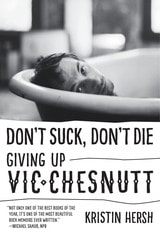
Don't Suck, Don't Die
Giving Up Vic ChesnuttBy Kristin Hersh, Foreword by Amanda Petrusich
University of Texas Press, 2015
“Friend, asshole, angel, mutant,” singer-songwriter Vic Chesnutt “came along and made us gross and broken people seem . . . I dunno, cooler, I guess.” A quadriplegic who could play only simple chords on his guitar, Chesnutt recorded seventeen critically acclaimed albums before his death in 2009, including About to Choke, North Star Deserter, and At the Cut. In 2006, NPR placed him in the top five of the ten best living songwriters, along with Bob Dylan, Tom Waits, Paul McCartney, and Bruce Springsteen. Chesnutt’s songs have also been covered by many prominent artists, including Madonna, the Smashing Pumpkins, R.E.M., Sparklehorse, Fugazi, and Neutral Milk Hotel.
Kristin Hersh toured with Chesnutt for nearly a decade and they became close friends, bonding over a love of songwriting and mutual struggles with mental health. In Don’t Suck, Don’t Die, she describes many seemingly small moments they shared, their free-ranging conversations, and his tragic death. More memoir than biography, Hersh’s book plumbs the sources of Chesnutt’s pain and creativity more deeply than any conventional account of his life and recordings ever could. Chesnutt was difficult to understand and frequently difficult to be with, but, as Hersh reveals him, he was also wickedly funny and painfully perceptive. This intimate memoir is essential reading for anyone interested in the music or the artist.
Dreaming the Mississippi
Katherine Fischer
University of Missouri Press, 2006
Drilled to Write
Becoming a Cadet Writer at a Senior Military Collegeby J. Michael Rifenburg
Utah State University Press, 2022
Drilled to Write offers a rich account of US Army cadets navigating the unique demands of Army writing at a senior military college. In this longitudinal case study, J. Michael Rifenburg follows one cadet, Logan Blackwell, for four years and traces how he conceptualizes Army writing and Army genres through immersion in military science classes, tactical exercises in the Appalachian Mountains, and specialized programs like Airborne School.
Drawing from research on rhetorical genre studies, writing transfer, and materiality, Drilled to Write speaks to scholars in writing studies committed to capturing how students understand their own writing development. Collectively, these chapters articulate four ways Blackwell leveraged resources through ROTC to become a cadet writer at this military college. Each chapter is dedicated to one year of his undergraduate experience with focus on curricular writing for his business management major and military science classes as well as his extracurricular writing, like his Ballroom Dance Club bylaws and a three-thousand-word short story.
In Drilled to Write, Rifenburg invites readers to see how cadets are positioned between civilian and military life—a curiously liminal space where they develop as writers. Using Army ROTC as an entry into genre theory and larger conversations about the role higher education plays in developing Army officers, he shows how writing students develop genre awareness and flexibility while forging a personal identity.