Results by title
167 books match the query 'Artists, Architects, Photographers' and 6 start with d

Dancing Ledge
Derek Jarman
University of Minnesota Press, 2010
From his sexual awakening in postwar England to life in the sixties and beyond, Derek Jarman tells his life story with the in-your-face immediacy that became his trademark style in both his films and writing. Accompanied by nearly one hundred photographs of Jarman, his friends, lovers, and inspirations, the candid accounts in Dancing Ledge provide intimate and incredibly vivid glimpses into this iconoclastic filmmaker's life and times.
[more]
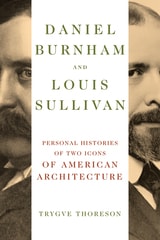
Daniel Burnham and Louis Sullivan
Personal Histories of Two Icons of American ArchitectureTrygve Thoreson
University of Illinois Press, 2026
Peers, foils, colleagues, and rivals—Daniel Burnham and Louis Sullivan’s impact on each other still expresses itself in architectural masterworks that anchor Chicago’s cityscape. Trygve Thoreson’s parallel biography places their lives and careers within a panoramic history of the late 1800s and early 1900s. Thoreson delves into their influences while bringing to life the social, intellectual, and cultural milieus of their time. Unearthing a wealth of personal details, Thoreson pays particular attention to the influences that formed Burnham and Sullivan and shaped not only their designs but their conception of themselves as artists. He also examines the confluence of historical forces that pulled the two men together and pushed them apart—a fruitful back-and-forth that built surprising links into their work and steered world architecture in bold new directions.
An engaging piece of nonfiction storytelling, Daniel Burnham and Louis Sullivan reveals new facets of the architects’ personal, intellectual, and artistic lives.
An engaging piece of nonfiction storytelling, Daniel Burnham and Louis Sullivan reveals new facets of the architects’ personal, intellectual, and artistic lives.
[more]
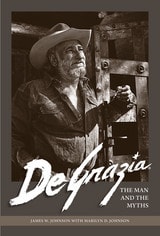
De Grazia
The Man and the MythsJames W. Johnson with Marilyn D. Johnson
University of Arizona Press, 2014
Artist Ted De Grazia (1909–1982) lived life with passion and verve, embracing risk and romance, becoming a legend in Arizona, and gaining international acclaim. De Grazia: The Man and the Myths is a biography that reveals the eccentric, colorful man behind the myths.
Born in Arizona Territory to Italian immigrant parents, De Grazia had a humble childhood as a copper miner’s son, which later influenced his famous persona. De Grazia often held forth at his gallery in Tucson’s Catalina foothills dressed in a pseudo-prospector’s getup of scraggly beard, jeans, flannel shirt, boots, and beat-up cowboy hat. Outrageous stories of womanizing, scores of children, and drinking binges created an eclectic image that fueled stories of mythic proportions, along with global sales of his colorful paintings inspired by the Southwest and Mexico. He made millions through his paintings and the licensing of his art for greeting cards and trinkets. Critics called his work kitsch or commercial, yet thousands of admirers continue to love it.
Calling De Grazia a complicated man doesn’t begin to explain him. He once described himself as “not saint nor devil, but both.” In this first comprehensive biography of De Grazia, authors James W. Johnson with Marilyn D. Johnson tell the story of a life remarkably lived.
[more]
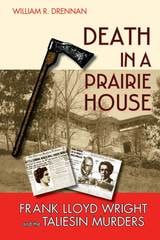
Death in a Prairie House
Frank Lloyd Wright and the Taliesin MurdersDrennan
University of Wisconsin Press, 2008
The most pivotal and yet least understood event of Frank Lloyd Wright’s celebrated life involves the brutal murders in 1914 of seven adults and children dear to the architect and the destruction by fire of Taliesin, his landmark residence, near Spring Green, Wisconsin. Unaccountably, the details of that shocking crime have been largely ignored by Wright’s legion of biographers—a historical and cultural gap that is finally addressed in William Drennan’s exhaustively researched Death in a Prairie House: Frank Lloyd Wright and the Taliesin Murders.
In response to the scandal generated by his open affair with the proto-feminist and free love advocate Mamah Borthwick Cheney, Wright had begun to build Taliesin as a refuge and "love cottage" for himself and his mistress (both married at the time to others).
Conceived as the apotheosis of Wright’s prairie house style, the original Taliesin would stand in all its isolated glory for only a few months before the bloody slayings that rocked the nation and reduced the structure itself to a smoking hull.
Supplying both a gripping mystery story and an authoritative portrait of the artist as a young man, Drennan wades through the myths surrounding Wright and the massacre, casting fresh light on the formulation of Wright’s architectural ideology and the cataclysmic effects that the Taliesin murders exerted on the fabled architect and on his subsequent designs.
Best Books for General Audiences, selected by the American Association of School Librarians, and Outstanding Book, selected by the Public Library Association
[more]
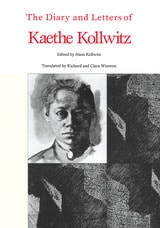
Diary and Letters of Kaethe Kollwitz
Kaethe Kollwitz
Northwestern University Press, 1988
One of the great German Expressionist artists, Kaethe Kollwitz wrote little of herself. But her diary, kept from 1900 to her death in 1945, and her brief essays and letters express, as well as explain, much of the spirit, wisdom, and internal struggle which was eventually transmuted into her art.
[more]
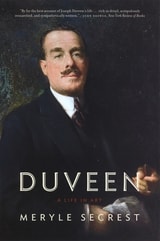
Duveen
A Life in ArtMeryle Secrest
University of Chicago Press, 2005
Anyone who has admired Gainsborough's Blue Boy of the Huntington Collection in California, or Rembrandt's Aristotle Contemplating the Bust of Homer at the Metropolitan Museum of Art in New York owes much of his or her pleasure to art dealer Joseph Duveen (1869–1939). Regarded as the most influential—or, in some circles, notorious—dealer of the twentieth century, Duveen established himself selling the European masterpieces of Titian, Botticelli, Giotto, and Vermeer to newly and lavishly wealthy American businessmen—J. P. Morgan, John D. Rockefeller, and Andrew Mellon, to name just a few. It is no exaggeration to say that Duveen was the driving force behind every important private art collection in the United States.
The first major biography of Duveen in more than fifty years and the first to make use of his enormous archive—only recently opened to the public—Meryle Secrest's Duveen traces the rapid ascent of the tirelessly enterprising dealer, from his humble beginnings running his father's business to knighthood and eventually apeerage. The eldest of eight sons of Jewish-Dutch immigrants, Duveen inherited an uncanny ability to spot a hidden treasure from his father, proprietor of a prosperous antiques business. After his father's death, Duveen moved the company into the riskier but lucrative market of paintings and quickly became one of the world's leading art dealers. The key to Duveen's success was his simple observation that while Europe had the art, America had the money; Duveen made his fortune by buying art from declining European aristocrats and selling them to the "squillionaires" in the United States.
"By far the best account of Joseph Duveen's life in a biography that is rich in detail, scrupulously researched, and sympathetically written. [Secrest's] inquiries into early-twentieth-century collecting whet our appetite for a more general history of the art market in the first half of the twentieth century."—John Brewer, New York Review of Books
[more]