Results by title
1272 books match the query 'Asia' and 32 start with d
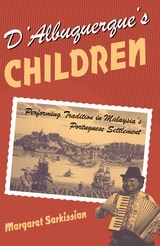
D'Albuquerque's Children
Performing Tradition in Malaysia's Portuguese SettlementMargaret Sarkissian
University of Chicago Press, 2000
Using historical and ethnographic data, Margaret Sarkissian reveals that this music and dance draws on an eclectic array of influences that span the Portuguese diaspora (one song conjures up images of Lucille Ball impersonating Carmen Miranda on "I Love Lucy"). Ironically, she shows, what began as a literate tradition in the 1950s has now become an oral one so deeply rooted in Settlement life that the younger generation, like the tourists, now see it as an unbroken heritage stretching back almost 500 years. A fascinating case of "orientalism in reverse," D'Albuquerque's Children illuminates the creative ways in which one community has adapted to life in a postcolonial world.

Daemons Are Forever
Contacts and Exchanges in the Eurasian PandemoniumDavid Gordon White
University of Chicago Press, 2021
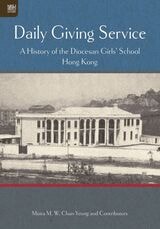
Daily Giving Service
A History of the Diocesan Girls’ SchoolMoira M. W. Chan-Yeung
Hong Kong University Press, 2022
The Diocesan Girls’ School is one of Hong Kong’s oldest girls’ schools, founded during British rule in 1860. As an alumna of the school’s Class of 1955, Professor Moira Chan-Yeung traces the history of her alma mater from its establishment through its development over the last 150 years in Daily Giving Service. Having grown alongside Hong Kong as it expanded from a small city to a global metropolitan center, Diocesan has become one of the most prominent girl’s schools in the city and serves a significant role in the history of education and growth in the region. With contributions from other alumni, this book recounts various aspects of school life throughout different eras, illustrating the connection between the socioeconomic development of Hong Kong and this cornerstone of regional education.

Daily Life and Demographics in Ancient Japan
William Wayne Farris
University of Michigan Press, 2009
Dalit Studies
Ramnarayan S. Rawat and K. Satyanarayana, editors
Duke University Press, 2016
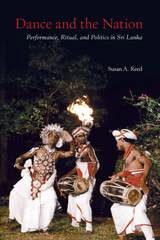
Dance and the Nation
Performance, Ritual, and Politics in Sri LankaSusan A. Reed
University of Wisconsin Press, 2010
As the national dance of Sri Lanka, Kandyan dance is identified with the majority Sinhala ethnic group and heavily supported by the state. Derived from the kohomba kankariya—an elaborate village ritual performed by men of the hereditary drummer caste—the dance was adopted by the state as a symbol of traditional Sinhala culture in the post-independence period. When state officials introduced the dance into the school curriculum, it was opened to individuals of all castes, and high-caste women have emerged as prominent teachers and performers. Reed’s evocative account traces the history and consequences of this transition from ritual to stage, situating the dance in relation to postcolonial nationalism and ethnic politics and emphasizing the voices and perspectives of the hereditary dancers and of women performers.
Although Kandyan dance is related to other south Asian dance forms, it is unique, distinguished by an elegant, energetic style, and lively displays of acrobatics and agility. The companion DVD includes unparalleled footage of this vibrant dance in ritual, stage, and training contexts, and features the most esteemed performers of the Kandyan region.
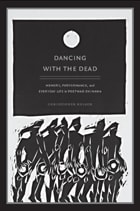
Dancing with the Dead
Memory, Performance, and Everyday Life in Postwar OkinawaChristopher T. Nelson
Duke University Press, 2008
Nelson analyzes the practices of specific performers, showing how memories are recalled, bodies remade, and actions rethought as Okinawans work through fragments of the past in order to reconstruct the fabric of everyday life. Artists such as the popular Okinawan actor and storyteller Fujiki Hayato weave together genres including Japanese stand-up comedy, Okinawan celebratory rituals, and ethnographic studies of war memory, encouraging their audiences to imagine other ways to live in the modern world. Nelson looks at the efforts of performers and activists to wrest the Okinawan past from romantic representations of idyllic rural life in the Japanese media and reactionary appropriations of traditional values by conservative politicians. In his consideration of eisā, the traditional dance for the dead, Nelson finds a practice that reaches beyond the expected boundaries of mourning and commemoration, as the living and the dead come together to create a moment in which a new world might be built from the ruins of the old.
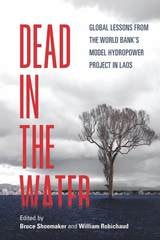
Dead in the Water
Global Lessons from the World Bank's Model Hydropower Project in LaosEdited by Bruce Shoemaker and William Robichaud; foreword by Yos Santasombat; afterword by Philip Hirsch
University of Wisconsin Press, 2019
In the 2000s, as the World Bank was reeling from revelations of past hydropower failures, it nonetheless promoted the enormous Nam Theun 2 project. NT2, the Bank believed, offered a new, wiser model of dam development that would alleviate poverty, protect the environment, engage locally affected people in a transparent fashion, and stimulate political transformation. This was a tall order. For the first time, this book shows in detail why, despite assertions of success from the World Bank and other agencies involved in the project, the dam's true story has been one of substantial loss for affected villagers and the regional environment. Nam Theun 2 is an important case study that illustrates much broader problems of global development policy.
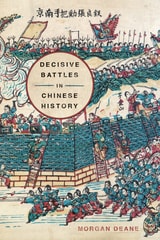
Decisive Battles in Chinese History
Morgan Deane
Westholme Publishing, 2024
“If you know the enemy and know yourself, you need not fear the result of a hundred battles. If you know yourself but not the enemy, for every victory gained you will also suffer a defeat. If you know neither the enemy nor yourself, you will succumb in every battle.”― Sun Tzu, The Art of War
The study of Chinese battles faces many hurdles that include different spelling systems, a haze of seemingly impenetrable names, places, and ideas, and different approaches to recording history. Early indigenous Chinese histories were written by Confucians with an antimilitary bias, and used rather laconic phrases to describe battles. These accounts were then transmitted to Jesuit missionaries who shared the Confucian disdain for martial matters. The modern discipline of history developed in the West during a time of particular Chinese weakness and political division, resulting in the lack of parallel material. Decisive Battles in Chinese History by Morgan Deane overcomes these obstacles to present the vast span of recorded Chinese history through key battles, from Maling, fought in 342 BC during the Warring States period, to Hengyang in 1944, which marked the end of major Japanese operations in China. Each of the twelve chapters highlights a significant conflict that selectively focuses on unique Chinese characteristics of the time, including belief systems, ruling ideology, the connection between technology and warfare, military theory, political events and rulers, and foreign policy, including China’s eventual interaction with the West. The book pushes back on a variety of ideas and stereotypes, ranging from the Chinese use of gunpowder, their supposedly weak reaction to the West, the viability of the Dynastic Cycle in studying history, the context of Chinese military theory, the exclusivity of martial and cultural spheres, and the uniqueness of Western imperialism. It also offers a groundbreaking reassessment of Mao Zedong’s leadership and his impact on the development of guerilla warfare. In a world filled with disturbing reports of conflict and potential warfare, Decisive Battles in Chinese History offers a unique addition to students, historians, and general readers wishing to better understand Chinese history.
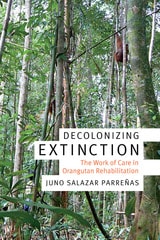
Decolonizing Extinction
The Work of Care in Orangutan RehabilitationJuno Salazar Parreñas
Duke University Press, 2018
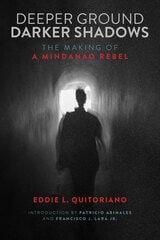
Deeper Ground, Darker Shadows
The Making of a Mindanao RebelEddie L. Quitoriano
University of Wisconsin Press, 2025
Quitoriano finds revolutionary life thrilling but dangerous, with secretly arranged meetings and drops, doctored passports, and hastily planned plastic surgery. He wrestles with the global implications of his work, experiences daily struggles to survive in always-changing political circumstances, and is profoundly human in his love and concern for the family he has left behind in the Philippines. What emerges is a view of international revolutionary movements that only an insider could write. Quitoriano provides an essential and unique missing piece of twentieth-century Philippine and leftist history.
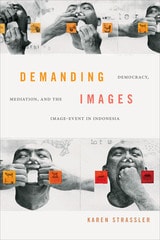
Demanding Images
Democracy, Mediation, and the Image-Event in IndonesiaKaren Strassler
Duke University Press, 2019
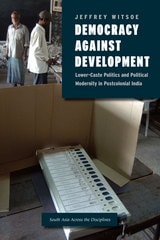
Democracy against Development
Lower-Caste Politics and Political Modernity in Postcolonial IndiaJeffrey Witsoe
University of Chicago Press, 2013
Witsoe looks at the history of colonialism in India and its role in both shaping modern caste identities and linking locally powerful caste groups to state institutions, which has effectively created a postcolonial patronage state. He then looks at the rise of lower-caste politics in one of India’s poorest and most populous states, Bihar, showing how this increase in democratic participation has radically threatened the patronage state by systematically weakening its institutions and disrupting its development projects. By depicting democracy and development as they truly are in India—in tension—Witsoe reveals crucial new empirical and theoretical insights about the long-term trajectory of democratization in the larger postcolonial world.
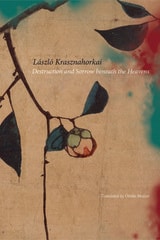
Destruction and Sorrow beneath the Heavens
ReportageLászló Krasznahorkai
Seagull Books, 2016
Known for his brilliantly dark fictional visions, László Krasznahorkai is one of the most respected European writers of his generation and the winner of the 2015 Man Booker International Prize. Here, he brings us on a journey through China at the dawn of the new millennium. On the precipice of its emergence as a global power, China is experiencing cataclysms of modernity as its harsh Maoist strictures meet the chaotic flux of globalism. What remains of the Middle Kingdom’s ancient cultural riches? And can a Westerner truly understand China’s past and present—or the murky waters where the two meet?
Destruction and Sorrow beneath the Heavens is both a travel memoir and the chronicle of a distinct intellectual shift as one of the most captivating contemporary writers and thinkers begins to engage with the cultures of Asia and the legacies of its interactions with Europe in a newly globalized society. Rendered in English by award-winning translator Ottilie Mulzet, Destruction and Sorrow beneath the Heavens is an important work, marking the emergence of Krasznahorkai as a truly global novelist.
Praise for Krasznahorkai
“The contemporary Hungarian master of the apocalypse.”—Susan Sontag
“Krasznahorkai delights in unorthodox description; no object is too insignificant for his worrying gaze. . . . He offers us stories that are relentlessly generative and defiantly irresolvable. They are haunting, pleasantly weird, and ultimately, bigger than the worlds they inhabit.”—New York Times
“Krasznahorkai is an expert with the complexity of human obsessions. Each of his books feel like an event, a revelation.”—Daily Beast
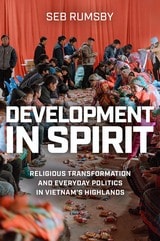
Development in Spirit
Religious Transformation and Everyday Politics in Vietnam’s HighlandsSeb Rumsby
University of Wisconsin Press, 2023
Following state-led market reforms in the 1980s, Vietnam experienced stunning economic transformation. But for the Hmong communities of the country’s north and central highlands, the benefits proved elusive. Instead, the Hmong people have pursued their own alternative paths to development. Rumsby shows how mass conversion to Christianity led to a case of “unplanned development” that put the Hmong on a trajectory of simultaneous integration into the market economy and resistance to state authority.
Many of the strategies community members employ are tied to the Christianization of everyday life. Religious actors play complex and often contradictory roles in facilitating networks of exchange, challenging or enforcing gender norms, promoting communalism and enforcing discipline, and shaping local ideas about progress. They are influenced by national and transnational religious networks, especially US-produced radio broadcasts by Hmong American Christians and local converts.
This compelling account provides fresh theoretical and empirical insights into the interplay of religion, neoliberal development, and marketization across the world.

Diaries from the House of Atonement
By Zengxin Yang, translated by Berlin Fang
Bridwell Press, 2026
Diaries from the House of Atonement offers a rare glimpse into the intellectual world of Yang Zengxin (1864–1928), the pragmatic ruler who maintained relative stability in Xinjiang from the fall of the Qing dynasty until his assassination in 1928.
Rather than recounting his administration, Yang's diaries explore Confucian and Daoist thought, personal cultivation, political philosophy, and China's uncertain future. They reveal the intellectual principles that may have shaped his approach to governance, including his reflections on moral order, cultural tradition, and religion.
The diaries also show Yang's understanding of the Bagua (八卦) and the I Ching, showing how classical Chinese philosophy could inform practical life and political thought. This translation introduces English-language readers to Yang not merely as a regional ruler, but as a reflective thinker whose writings illuminate the encounter between Chinese tradition, political crisis, religious thought, and the search for social order.
Diaspora's Homeland
Modern China in the Age of Global MigrationShelly Chan
Duke University Press, 2018
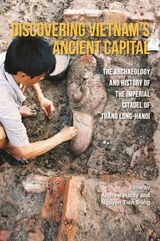
Discovering Vietnam’s Ancient Capital
The Archaeology and History of the Imperial Citadel of Thang Long-HanoiEdited by Andrew Hardy and Tien Ðông Nguyen
National University of Singapore Press, 2023
As Vietnam entered the twenty-first century it began to prepare for the 1000th anniversary of the founding of its capital Thang Long, now Hanoi. In the heart of the city, a rescue excavation was launched on land earmarked for the construction of a new National Assembly building. Archaeologists unearthed thirteen centuries of vestiges of the ancient city of Thang Long, yielding a richer record than anyone had dared to hope for. Construction plans were shelved, excavations widened, and at the city's millennial celebrations in 2010, UNESCO announced its inscription of the Imperial Citadel of Thang Long on its World Heritage List.
This archaeological discovery has two histories. The first, told here by the archaeologists involved, is the story of the dig, which brought to light the bricks, tiles, pillars, sculptures, and ceramics of countless ancient temples and palaces. The second is the history of the citadel itself, in its early years as an outpost of the Chinese empire, in its heyday as the Forbidden City of Vietnam’s emperors, and in its downgrading and eventual destruction at the hands of the Nguyen dynasty and French colonial rulers. Bringing together history, urban history, and a fascinating story of the interplay of influences from China and Southeast Asia, this is also a fascinating case of an Asian capital city coming to understand its history and deciding how to preserve its archaeological remains.
Displacements and Diasporas
Asians in the AmericasAnderson, Wanni W.
Rutgers University Press, 2005
With an emphasis on anthropological and historical contexts, the essays show how the experiences of Asians across the Americas have been shaped by the social dynamics and politics of settlement locations as much as by transnational connections and the economic forces of globalization. Contributors bring new insights to the unique situations of Asian communities previously overlooked by scholars, such as Vietnamese Canadians and the Lao living in Rhode Island. Other topics include Chinese laborers and merchants in Latin America and the Caribbean, Japanese immigrants and their descendants in Brazil, Afro-Amerasians in America, and the politics of second-generation Indian American youth culture.
Together the essays provide a valuable comparative portrait of Asians across the Americas. Engaging issues of diaspora, transnational social practice and community building, gender, identity, institutionalized racism, and deterritoriality, this volume presents fresh perspectives on displacement, opening the topic up to a wider, more interdisciplinary terrain of inquiry and teaching.
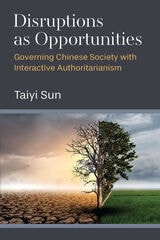
Disruptions as Opportunities
Governing Chinese Society with Interactive AuthoritarianismTaiyi Sun
University of Michigan Press, 2023
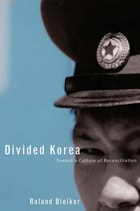
Divided Korea
Toward a Culture of ReconciliationRoland Bleiker
University of Minnesota Press, 2005
In 2002, North Korea precipitated a major international crisis when it revealed the existence of a secret nuclear weapons program and announced its withdrawal from the Nuclear Nonproliferation Treaty. Earlier in the year, George W. Bush had declared North Korea part of the “axis of evil,” and soon afterward his administration listed the country as a potential target of a preemptive nuclear strike. Pyongyang’s angry reaction ensured the complete deterioration of relations on the Korean peninsula, where only two years before the leaders of North and South Korea had come together in a historic summit meeting.
Few international conflicts are as volatile, protracted, or seemingly insoluble as the one in Korea, where mutual mistrust, hostile Cold War attitudes, and the possibility of a North Korean economic collapse threaten the security of the entire region. For Roland Bleiker, this persistently recurring pattern suggests profound structural problems within and between the two Koreas that have not been acknowledged until now. Expanding the discussion beyond geopolitics and ideology, Bleiker places peninsular tensions in the context of an ongoing struggle over competing forms of Korean identity. Divided Korea examines both domestic and international attitudes toward Korean identity, the legacy of war, and the possibilities for-and anxieties about-unification.
Divided Korea challenges the prevailing logic of confrontation and deterrence, embarking on a fundamental reassessment of both the roots of the conflict and the means to achieve a more stable political environment and, ultimately, peace. In order to realize a lasting solution, Bleiker concludes, the two Koreas and the international community must first show a willingness to accept difference and contemplate forgiveness as part of a broader reconciliation process.
Roland Bleiker is professor of international relations at the University of Queensland. From 1986 to 1988 he served as chief of office for the Swiss delegation to the Neutral Nations Supervisory Commission in Panmunjom.
Divorce Portals
The Postdivorce in Asian ContextsShalini Grover
Rutgers University Press, 2027
Across Asia and its global diasporas, marriage remains a dominant and public institution, and divorce generates widespread comment and concern. Breaking new ground, Divorce Portals reveals divorce to be generative of transformations in individual intimate lives and wider societies. Through compelling, sensitive ethnographic accounts inviting readers into the lives of people undergoing separation and divorce, chapters capture the antecedent-lives of uncoupling – the imaginary, anticipatory, and cautionary – and the afterlives of divorce, in the immediate aftermath and across life courses and generations. Chapters explore the vivid and bold new selves that divorcees are fashioning for themselves and highlight the intersecting inequalities that shape postdivorce predicaments, sometimes belying the hoped-for freedoms of divorce and remarriage. Together, chapters chart nascent and haltering accommodations of the single, repartnered, and queer. Across cases drawn from diverse geographic contexts, this book unlocks new, expansive, and accessible ways to think about divorce and its aftermath.
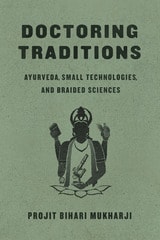
Doctoring Traditions
Ayurveda, Small Technologies, and Braided SciencesProjit Bihari Mukharji
University of Chicago Press, 2016
Rather, Mukharji reveals, what instigated those changes were a number of small technologies that were introduced in the period by Ayurvedic physicians, men who were simultaneously Victorian gentlemen and members of a particular Bengali caste. The introduction of these devices, including thermometers, watches, and microscopes, Mukharji shows, ultimately led to a dramatic reimagining of the body. By the 1930s, there emerged a new Ayurvedic body that was marked as distinct from a biomedical body. Despite the protestations of difference, this new Ayurvedic body was largely compatible with it. The more irreconcilable elements of the old Ayurvedic body were then rendered therapeutically indefensible and impossible to imagine in practice. The new Ayurvedic medicine was the product not of an embrace of Western approaches, but of a creative attempt to develop a viable alternative to the Western tradition by braiding together elements drawn from internally diverse traditions of the West and the East.
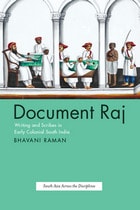
Document Raj
Writing and Scribes in Early Colonial South IndiaBhavani Raman
University of Chicago Press, 2012
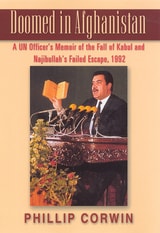
Doomed in Afghanistan
A U.N. Officer's Memoir of the Fall of Kabul and Najibullah's Failed Escape, 1992Corwin, Phillip
Rutgers University Press, 2002
To understand more deeply the tragic events of September 11, 2001, it is critical to know Afghanistan’s recent and turbulent past. Doomed inAfghanistan provides a first-hand account of how failed diplomacy led to an Islamic fundamentalist victory in a war-torn country, and subsequently, to a Taliban takeover and a home for Osama bin Laden’s Al Qaeda terrorist network.
In April of 1992, Phillip Corwin was part of a United Nations team in Afghanistan whose mission was to help ensure the transfer of power from the Soviet-installed communist regime of President Najibullah to an interim government (that would prepare for elections). Without the support of the Soviet Union, Najibullah’s regime crumbled, and he was convinced to resign in favor of a national unity government, with the understanding that he would be evacuated to a neutral country (India). Due to a series of miscalculations and machinations, the U.N.’s diplomatic mission failed. Kabul fell to groups of mujahiddin before Najibullah could be evacuated. The inability of the various mujahiddin factions to unite led to their eventual defeat by the Taliban, who four years later routed Najibullah from his safe haven at the U.N. compound, and executed him.
Corwin gives a vivid account of the seminal event of Najibullah’s failed evacuation and the frenzied negotiations that were unable to forestall the anarchy and chaos that followed.
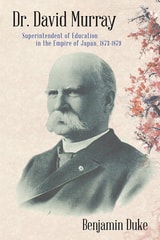
Dr. David Murray
Superintendent of Education in the Empire of Japan, 1873-1879Duke, Benjamin
Rutgers University Press, 2018
Benjamin Duke has compiled this comprehensive biography of David Murray to showcase Murray’s work, both in assisting around 100 samurai students in their studies at Rutgers, and in his unprecedented role in early Japanese-American relations. This fascinating story uncovers a little-known link between Rutgers University and Japan, and it is the only book to conclude that Rutgers made a greater contribution to the development of modern education in the early Meiji Era than any other non-Japanese college or university in the world.
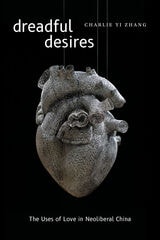
Dreadful Desires
The Uses of Love in Neoliberal ChinaCharlie Yi Zhang
Duke University Press, 2022
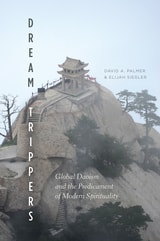
Dream Trippers
Global Daoism and the Predicament of Modern SpiritualityDavid A. Palmer and Elijah Siegler
University of Chicago Press, 2017
Dream Trippers draws on more than a decade of ethnographic work with Daoist monks and Western seekers to trace the spread of Westernized Daoism in contemporary China. David A. Palmer and Elijah Siegler take us into the daily life of the monastic community atop the mountain of Huashan and explore its relationship to the socialist state. They follow the international circuit of Daoist "energy tourism," which connects a number of sites throughout China, and examine the controversies around Western scholars who become practitioners and promoters of Daoism. Throughout are lively portrayals of encounters among the book’s various characters—Chinese hermits and monks, Western seekers, and scholar-practitioners—as they interact with each other in obtuse, often humorous, and yet sometimes enlightening and transformative ways. Dream Trippers untangles the anxieties, confusions, and ambiguities that arise as Chinese and American practitioners balance cosmological attunement and radical spiritual individualism in their search for authenticity in a globalized world.
Dreams of Flight
The Lives of Chinese Women Students in the WestFran Martin
Duke University Press, 2022
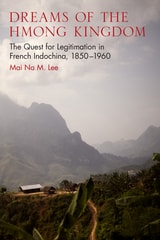
Dreams of the Hmong Kingdom
The Quest for Legitimation in French Indochina, 1850–1960Mai Na M. Lee
University of Wisconsin Press, 2015
In China, Vietnam, and Laos, the Hmong continuously negotiated with these states and with the French to maintain political autonomy in a world of shifting boundaries, emerging nation-states, and contentious nationalist movements and ideologies. Often divided by clan rivalries, the Hmong placed their hope in finding a leader who could unify them and recover their sovereignty. In a compelling analysis of Hmong society and leadership throughout the French colonial period, Mai Na M. Lee identifies two kinds of leaders—political brokers who allied strategically with Southeast Asian governments and with the French, and messianic resistance leaders who claimed the Mandate of Heaven. The continuous rise and fall of such leaders led to cycles of collaboration and rebellion. After World War II, the powerful Hmong Ly clan and their allies sided with the French and the new monarchy in Laos, but the rival Hmong Lo clan and their supporters allied with Communist coalitions.
Lee argues that the leadership struggles between Hmong clans destabilized French rule and hastened its demise. Martialing an impressive array of oral interviews conducted in the United States, France, and Southeast Asia, augmented with French archival documents, she demonstrates how, at the margins of empire, minorities such as the Hmong sway the direction of history.
Best books for public & secondary school libraries from university presses, American Library Association
Dumb Luck
A Novel by Vu Trong PhungPeter Zinoman, Editor
University of Michigan Press, 2002
Dumb Luck is the first translation of a major work by Vu Trong Phung, arguably the greatest Vietnamese writer of the twentieth century. The novel's clever plot, richly drawn characters and humorous tone and its preoccupation with sex, fashion and capitalism will appeal to a wide audience. It will appeal to students and scholars of Vietnam, comparative literature, colonial and postcolonial studies, and Southeast Asian civilization.
Vu Trong Phung died in Hanoi, in 1939 at the age of twenty-seven. He is the author of at least eight novels, seven plays, and several other works of fiction in addition to Dumb Luck.
Peter Zinoman is Associate Professor of Southeast Asian History, University of California, Berkeley. Nguyen Nguyet Cam is Vietnamese Language Instructor, University of California, Berkeley.
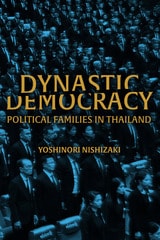
Dynastic Democracy
Political Families of ThailandYoshinori Nishizaki
University of Wisconsin Press, 2022
Drawing extensively on Thai-language primary sources, including assets documents and cremation volumes for deceased politicians and their kin, Nishizaki traces the intricate blood and marriage connections among Thailand’s political families. These families may fall into two categories: influential commoner families that have held parliamentary seats since 1932 and form the core of Thailand’s dynastic democracy; and upper-class families that are kin to or aligned ideologically with the royal family and have repeatedly challenged dynastic democracy through coups, constitutional changes, and other political maneuvers. Nishizaki’s exploration of dynastic democracy illustrates how democratic pluralism in Thailand has been consistently stifled, to the detriment of ordinary citizens. Dynastic Democracy fleshes out a widely acknowledged yet heretofore empirically unsubstantiated facet of Thai political history—that in Thai politics, family matters.