Results by title
95 books match the query 'Australia' and 8 start with d

Developing Dialogues
Indigenous and Ethnic Community Broadcasting in AustraliaSusan Forde, Kerrie Foxwell, and Michael Meadows
Intellect Books, 2009
The traditional audience/producer boundary has collapsed in indigenous and ethnic community broadcasting, and this is the first comprehensive study of this homegrown media sector. Based on firsthand research of radio and television audiences in Australia, the authors argue that community radio and television worldwide performs an essential service for indigenous and ethnic audiences, empowering them at various levels, fostering active citizenry, and enhancing democracy. Developing Dialogues offers international researchers a new perspective on Australian community broadcasting and presents evidence of global trends in the media industry.
Directory of World Cinema
Australia and New ZealandEdited by Ben Goldsmith and Geoff Lealand
Intellect Books, 2010
This addition to Intellect's Directory of World Cinema series turns the spotlight on Australia and New Zealand and offers an in-depth and exciting look at the cinema produced in these two countries since the turn of the twentieth century. Though the two nations share considerable cultural and economic connections, their film industries remain distinct, marked by differences of scale, level of government involvement and funding, and relations with other countries and national cinemas. Through essays about prominent genres and themes, profiles of directors, and comprehensive reviews of significant titles, this user-friendly guide explores the diversity and distinctiveness of films from Australia and New Zealand from Whale Rider to The Piano to Wolf Creek.
Directory of World Cinema
Australia and New Zealand 2Edited by Ben Goldsmith, Mark David Ryan and Geoff Lealand
Intellect Books, 2015
Disabling Pedagogy
Power, Politics, and Deaf EducationLinda Komesaroff
Gallaudet University Press, 2008
Traditionally, deaf education has been treated as the domain of special educators who strive to overcome the difficulties associated with hearing loss. Recently, the sociocultural view of deafness has prompted research and academic study of Deaf culture, sign language linguistics, and bilingual education. Linda Komesaroff exposes the power of the entrenched dominant groups and their influence on the politics of educational policy and practice in Disabling Pedagogy: Power, Politics, and Deaf Education.
Komesaroff suggests a reconstruction of deaf education based on educational and social theory. First, she establishes a deep and situated account of deaf education in Australia through interviews with teachers, Deaf leaders, parents, and other stakeholders. Komesaroff then documents a shift to bilingual education by one school community as part of her ethnographic study of language practices in deaf education. She also reports on the experiences of deaf students in teacher education. Her study provides an analytical account of legal cases and discrimination suits brought by deaf parents for lack of access to native sign language in the classroom. Komesaroff confronts the issue of cochlear implantation, locating it within the broader context of gene technology and bioethics, and advocates linguistic rights and self-determination for deaf people on the international level. Disabling Pedagogy concludes with a realistic assessment of the political challenge and the potential of the “Deaf Resurgence” movement to enfranchise deaf people in the politics of their own education.
Doctoral Dissertations on South Asia, 1966–1970
An Annotated Bibliography Covering North America, Europe, and AustraliaFrank Joseph Shulman
University of Michigan Press, 1971
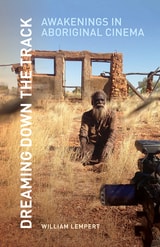
Dreaming Down the Track
Awakenings in Aboriginal CinemaWilliam Lempert
University of Minnesota Press, 2025
What can Aboriginal filmmaking reveal about Indigenous presence and futures?
The product of years of embedded fieldwork within Indigenous film crews in Northwestern Australia, Dreaming Down the Track delves deeply into Aboriginal cinema as a transformative community process. It follows the social lives of projects throughout their production cycles, from planning and editing to screening, broadcasting, and after-images. Across its narrative sweep, this ethnography engages the film career of Kukatja elder Mark Moora to demonstrate the impact of filmmaking on how Aboriginal futures are collectively imagined and called forth.
William Lempert highlights a series of awakenings through which Moora ultimately came to view cinema as a process for catalyzing his family’s return to their home country of Mangkayi. This biographical media journey paints an intimate portrait of the inspiring possibilities and sobering limitations of Indigenous envisioning within settler states. Lempert traces how Moora’s life and films convey a multiplicity of Aboriginal experiences across time and space, from colonial contact to contemporary life in communities like Balgo, including the continued governmental attempts to undermine them.
Amid ongoing negotiations to establish the first treaties between Indigenous nations and Australian states, Dreaming Down the Track illustrates what is at stake in how Aboriginal–State relations are represented and understood, both within communities and for the broader public. Lempert stays true to Moora’s insight that film can preserve community stories for generations to come, toward the aim of enacting sovereign futures.
Dreams of Flight
The Lives of Chinese Women Students in the WestFran Martin
Duke University Press, 2022

Dynamic Partisanship
How and Why Voter Loyalties ChangeKen Kollman and John E. Jackson
University of Chicago Press, 2021