Results by title
85 books match the query 'Black' and 4 start with d
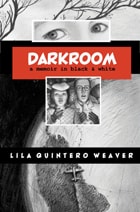
Darkroom
A Memoir in Black and WhiteLila Quintero Weaver
University of Alabama Press, 2012
A Latina girl’s journey through the shadows of the civil rights era.
Darkroom is a deeply moving graphic memoir that chronicles Lila Quintero Weaver’s experience growing up as an Argentine immigrant in 1960s Alabama during the height of the civil rights movement. Through striking black-and-white illustrations and heartfelt narrative, Weaver explores the complexities of race, identity, and belonging in a society divided by segregation. Neither Black nor White, her family occupies a unique position that offers a powerful lens on the struggles for justice and equality. This coming-of-age story blends personal history with pivotal social change, inviting readers to reflect on themes of immigration, cultural assimilation, and moral courage. Darkroom is both an intimate portrait and a universal tale of resilience, making it an essential read for those interested in civil rights, memoirs, and graphic storytelling.
Diverse Pathways
Race and the Incorporation of Black, White, and Arab-Origin Africans in the United StatesKevin J. A. Thomas
Michigan State University Press, 2014
Double Cross
Japanese Americans In Black And White ChicagoJacalyn D. Harden
University of Minnesota Press, 2003
Examines relations between peoples of color to offer a compelling new approach to understanding race in America
Since the Great Migration of the early twentieth century, Chicago has been a cauldron of race relations, symbolizing the tenacity of discrimination and segregation. But as in other cities with significant populations of Latinos and Asians, Arabs and Jews, this image belies complex racial dynamics. In Double Cross, Jacalyn D. Harden provides an essential rethinking of the ways we understand and talk about race, using an examination of the Japanese American community of Chicago’s Far North Side to form an innovative new framework for looking at race, identity, and political change.
The Japanese American community in Chicago rapidly expanded between 1940 and 1950 in the aftermath of wartime internment and government relocation programs. Harden tells their story through archival research and interviews with some of the first Japanese Americans who were relocated to Chicago in the 1940s, incorporating her own experiences as an African American scholar who has lived in Japan. The result is a compelling and surprising account of racial interactions, one that clarifies the complex interweaving between black and Asian lives and reclaims a lost history of solidarity between the two groups.Moving from the Great Migration to the “great relocation” to gentrification, Harden explores the shared history of civil rights struggles that firmly links Japanese and African Americans, most importantly the issue of reparations (for internment during World War II and slavery, respectively). She describes the efforts of Japanese Americans to “double-cross the color line” by building coalitions across race, age, and class boundaries, and their vexed position as sometimes “colored,” sometimes white (for example, the Japanese American soldier who was instructed to use the white washrooms at boot camp in Alabama during World War II, while thousands were being relocated to internment camps).Double Cross is a major contribution to our thought about race relations, challenging orthodoxy and shedding new light on the complex identities, conflicting interests, and external forces that have defined the concept of race in the United States.
Down on the Killing Floor
Black and White Workers in Chicago's Packinghouses, 1904-54Rick Halpern
University of Illinois Press, 1997