Results by title
79 books match the query 'Books' and 2 start with d
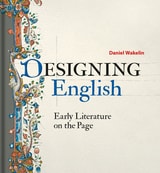
Designing English
Early Literature on the PageDaniel Wakelin
Bodleian Library Publishing, 2017
Working beyond the traditions established for Latin, scribes of English needed to be more inventive, using each book as an opportunity to redesign. Surveying eight centuries of graphic design in manuscripts and inscriptions, Designing English focuses on the craft, agency, and intentions of scribes, painters, and engravers from the Anglo-Saxon to the early Tudor periods. The book examines format, layout, and decoration, as well as bilingual manuscripts and oral recitations, weighing the balance of ingenuity and copying, imagination and practicality, behind early English book design. With over ninety illustrations, drawn especially from the holdings of the Bodleian Library, Designing English gives a comprehensive overview of English books and other material texts across the Middle Ages.

Dreaming in Books
The Making of the Bibliographic Imagination in the Romantic AgeAndrew Piper
University of Chicago Press, 2009
At the turn of the nineteenth century, publishing houses in London, New York, Paris, Stuttgart, and Berlin produced books in ever greater numbers. But it was not just the advent of mass printing that created the era’s “bookish” culture. According to Andrew Piper, romantic writing and romantic writers played a crucial role in adjusting readers to this increasingly international and overflowing literary environment. Learning how to use and to want books occurred through more than the technological, commercial, or legal conditions that made the growing proliferation of books possible; the making of such bibliographic fantasies was importantly a product of the symbolic operations contained within books as well.
Examining novels, critical editions, gift books, translations, and illustrated books, as well as the communities who made them, Dreaming in Books tells a wide-ranging story of the book’s identity at the turn of the nineteenth century. In so doing, it shows how many of the most pressing modern communicative concerns are not unique to the digital age but emerged with a particular sense of urgency during the bookish upheavals of the romantic era. In revisiting the book’s rise through the prism of romantic literature, Piper aims to revise our assumptions about romanticism, the medium of the printed book, and, ultimately, the future of the book in our so-called digital age.