Results by title
547 books match the query 'California' and 26 start with d

Dahlia's Iris
Secret Autobiography and FictionLeslie Scalapino
University of Alabama Press, 2003
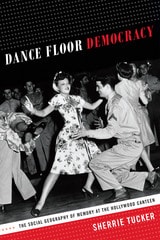
Dance Floor Democracy
The Social Geography of Memory at the Hollywood CanteenSherrie Tucker
Duke University Press, 2014
Dancing Ghosts
Native American And Christian Syncretism In Mary Austin's WorkMark T. Hoyer
University of Nevada Press, 1998
A significant and innovative contribution to Austin studies. How did an Illinois Methodist homesteader in the West come to create one of the most significant cosmological syntheses in American literature? In this study, Hoyer draws on his own knowledge of biblical religion and Native American cultures to explore Austin's creation of the "mythology of the American continent" she so valued. Austin lived in and wrote about "the land of little rain," semiarid and arid parts of California and Nevada that were home to the Northern Paiute, Shoshone, Interior Chumash, and Yokut peoples. Hoyer makes new and provocative connections between Austin and spiritual figures like Wovoka, the prophet of the Ghost Dance religion, and writers like Zitkala-sa and Mourning Dove, and he provides a particularly fine reading of Cogowea.
Daughters and Granddaughters of Farmworkers
Emerging from the Long Shadow of Farm LaborWells, Barbara
Rutgers University Press, 0
In Daughters and Granddaughters of Farmworkers, Barbara Wells examines the work and family lives of Mexican American women in a community near the U.S.-Mexican border in California’s Imperial County. Decades earlier, their Mexican parents and grandparents had made the momentous decision to migrate to the United States as farmworkers. This book explores how that decision has worked out for these second- and third-generation Mexican Americans.
Wells provides stories of the struggles, triumphs, and everyday experiences of these women. She analyzes their narratives on a broad canvas that includes the social structures that create the barriers, constraints, and opportunities that have shaped their lives. The women have constructed far more settled lives than the immigrant generation that followed the crops, but many struggle to provide adequately for their families.
These women aspire to achieve the middle-class lives of the American Dream. But upward mobility is an elusive goal. The realities of life in a rural, agricultural border community strictly limit social mobility for these descendants of immigrant farm laborers. Reliance on family networks is a vital strategy for meeting the economic challenges they encounter. Wells illustrates clearly the ways in which the “long shadow” of farm work continues to permeate the lives and prospects of these women and their families.

Dear Charles Dickens, Love, South LA
Literature, Place, and BelongingJacqueline Jean Barrios
University of Iowa Press, 2026
Jacqueline Jean Barrios confronts the cultural challenges that big canonical books pose to new generations of readers. Instead of erasing the differences between Dickens’s implied audiences and his current ones, Barrios demonstrates how youth can serve as the visionaries who bridge the gap. By placing literature in everyday surroundings, students at any school and in any location can learn from the embodied and the poetic and even question the universalism that masks unexamined reverence for the Western canon.

Death of the Moguls
The End of Classical HollywoodWheeler Winston Dixon
Rutgers University Press, 2012
Death of the Moguls is a detailed assessment of the last days of the “rulers of film.” Wheeler Winston Dixon examines the careers of such moguls as Harry Cohn at Columbia, Louis B. Mayer at MGM, Jack L. Warner at Warner Brothers, Adolph Zukor at Paramount, and Herbert J. Yates at Republic in the dying days of their once-mighty empires. He asserts that the sheer force of personality and business acumen displayed by these moguls made the studios successful; their deaths or departures hastened the studios’ collapse. Almost none had a plan for leadership succession; they simply couldn't imagine a world in which they didn’t reign supreme.
Covering 20th Century-Fox, Selznick International Pictures, Metro-Goldwyn-Mayer, Paramount Pictures, RKO Radio Pictures, Warner Brothers, Universal Pictures, Republic Pictures, Monogram Pictures and Columbia Pictures, Dixon briefly introduces the studios and their respective bosses in the late 1940s, just before the collapse, then chronicles the last productions from the studios and their eventual demise in the late 1950s and early 1960s. He details such game-changing factors as the de Havilland decision, which made actors free agents; the Consent Decree, which forced the studios to get rid of their theaters; how the moguls dealt with their collapsing empires in the television era; and the end of the conventional studio assembly line, where producers had rosters of directors, writers, and actors under their command.
Complemented by rare, behind-the-scenes stills, Death of the Moguls is a compelling narrative of the end of the studio system at each of the Hollywood majors as television, the de Havilland decision, and the Consent Decree forced studios to slash payrolls, make the shift to color, 3D, and CinemaScope in desperate last-ditch efforts to save their kingdoms. The aftermath for some was the final switch to television production and, in some cases, the distribution of independent film.
Deflecting Immigration
Networks, Markets, and Regulation in Los AngelesIvan Light
Russell Sage Foundation, 2006
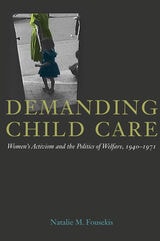
Demanding Child Care
Women's Activism and the Politics of Welfare, 1940-1971Natalie M. Fousekis
University of Illinois Press, 2013
During World War II, as women stepped in to fill jobs vacated by men in the armed services, the federal government established public child care centers in local communities for the first time. When the government announced plans to withdraw funding and terminate its child care services at the end of the war, women in California protested and lobbied to keep their centers open, even as these services rapidly vanished in other states.
Analyzing the informal networks of cross-class and cross-race reformers, policymakers, and educators, Demanding Child Care: Women's Activism and the Politics of Welfare, 1940–1971 traces the rapidly changing alliances among these groups. During the early stages of the childcare movement, feminists, Communists, and labor activists banded together, only to have these alliances dissolve by the 1950s as the movement welcomed new leadership composed of working-class mothers and early childhood educators. In the 1960s, when federal policymakers earmarked child care funds for children of women on welfare and children described as culturally deprived, it expanded child care services available to these groups but eventually eliminated public child care for the working poor.
Deftly exploring the possibilities for partnership as well as the limitations among these key parties, Fousekis helps to explain the barriers to a publically funded comprehensive child care program in the United States.
Democracy's Hidden Heroes
Fitting Policy to People and PlaceDavid C. Campbell
Temple University Press, 2024
David Campbell recounts compelling stories of the workarounds, sidesteps, informal agreements, and grantor–grantee negotiations that help policy initiatives succeed as intended. The settings include schools, human services departments, workforce development agencies, and community-based organizations. He explains why it is difficult, though necessary, to translate locally attuned implementation dynamics into accountability metrics for distant funders.
Drawing on 2,000 interviews, Democracy’s Hidden Heroes is the culmination of decades spent talking to people who must reconcile bureaucratic and community cultures. Campbell’s grounded approach and balanced perspective bring fresh insights to the analysis of policy implementation, public management, and results accountability, while offering both cautionary advice and a hopeful prognosis.
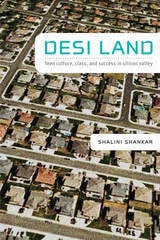
Desi Land
Teen Culture, Class, and Success in Silicon ValleyShalini Shankar
Duke University Press, 2008
Whether discussing instant messaging or arranged marriages, Desi bling or the pressures of the model minority myth, Shankar foregrounds the teens’ voices, perspectives, and stories. She investigates how Desi teens interact with dialogue and songs from Bollywood films as well as how they use their heritage language in ways that inform local meanings of ethnicity while they also connect to a broader South Asian diasporic consciousness. She analyzes how teens negotiate rules about dating and reconcile them with their longer-term desire to become adult members of their communities. In Desi Land Shankar not only shows how Desi teens of different socioeconomic backgrounds are differently able to succeed in Silicon Valley schools and economies but also how such variance affects meanings of race, class, and community for South Asian Americans.

Determined Survivors
Janice A. Smithers
Rutgers University Press, 1985
Community Life Among the Urban Elderly
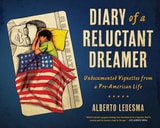
Diary of a Reluctant Dreamer
Undocumented Vignettes from a Pre-American LifeAlberto Ledesma
The Ohio State University Press, 2017
Exploring Ledesma’s experiences from immigrant to student to academic, Diary of a Reluctant Dreamer presents a humorous, gritty, and multilayered portrait of undocumented immigrant life in urban America. Ledesma’s vignettes about life in the midst of ongoing social trauma give voice to a generation that has long been silent about its struggles. Delving into the key moments of cultural transition throughout his childhood and adulthood—police at the back door waiting to deport his family, the ex-girlfriend who threatens to call INS and report him, and the interactions with law enforcement even after he is no longer undocumented—Ledesma, through his art and his words, provides a glimpse into the psychological and philosophical concerns of undocumented immigrant youth who struggle to pinpoint their identity and community.

Discretionary Justice
Looking Inside a Juvenile Drug CourtPaik, Leslie
Rutgers University Press, 2011
Juvenile drug courts are on the rise in the United States, as a result of a favorable political climate and justice officials' endorsement of the therapeutic jurisprudence movement--the concept of combining therapeutic care with correctional discipline. The goal is to divert nonviolent youth drug offenders into addiction treatment instead of long-term incarceration. Discretionary Justice overviews the system, taking readers behind the scenes of the juvenile drug court. Based on fifteen months of ethnographic fieldwork and interviews at a California court, Leslie Paik explores the staff's decision-making practices in assessing the youths' cases, concentrating on the way accountability and noncompliance are assessed. Using the concept of "workability," Paik demonstrates how compliance, and what is seen by staff as "noncompliance," are the constructed results of staff decisions, fluctuating budgets, and sometimes questionable drug test results.
While these courts largely focus on holding youths responsible for their actions, this book underscores the social factors that shape how staff members view progress in the court. Paik also emphasizes the perspectives of children and parents. Given the growing emphasis on individual responsibility in other settings, such as schools and public welfare agencies, Paik's findings are relevant outside the juvenile justice system.
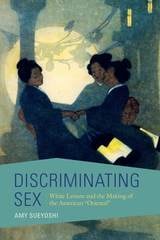
Discriminating Sex
White Leisure and the Making of the American "Oriental"Amy Sueyoshi
University of Illinois Press, 2018
Amy Sueyoshi draws on everything from newspapers to felony case files to oral histories in order to examine how whites' pursuit of gender and sexual fulfillment gave rise to racial caricatures. As she reveals, white reporters, writers, artists, and others conflated Chinese and Japanese, previously seen as two races, into one. There emerged the Oriental—a single pan-Asian American stereotype weighted with sexual and gender meaning. Sueyoshi bridges feminist, queer, and ethnic studies to show how the white quest to forge new frontiers in gender and sexual freedom reinforced—and spawned—racial inequality through the ever evolving Oriental.
Informed and fascinating, Discriminating Sex reconsiders the origins and expression of racial stereotyping in an American city.
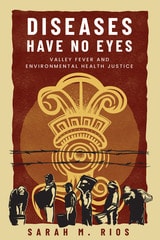
Diseases Have No Eyes
Valley Fever and Environmental Health JusticeSarah M. Rios
Temple University Press, 2026
Diseases Have No Eyes investigates how communities in Central Valley, California deal with Valley Fever, a painful illness caused by a soil fungus. The airborne disease’s symptoms can last from two months to a patient’s lifetime and may be fatal. Nearly a third of the national cases are reported in California, where those infected are disproportionately farmworkers and people incarcerated in the region. Poverty, pollution, and prison expose these groups to cumulative environmental and health risks that deny Valley Fever patients adequate medical treatment.
Sarah M. Rios examines how these populations face racial health disparities and develop strategies of care. She connects environmental justice activists as well as prison advocates and abolitionists who mobilize protests and issue calls to action to the past and ongoing efforts for medical autonomy and healthy communities. Diseases Have No Eyes emphasizes that vulnerable groups have developed an expertise and understanding of Valley Fever out of necessity. In the process, these community members offer an alternative public health response that extends beyond the individual body.
In the series Insubordinate Spaces
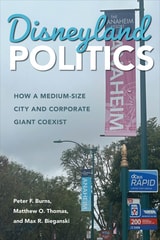
Disneyland Politics
How a Medium-Size City and Corporate Giant CoexistPeter F. Burns, Matthew O. Thomas, and Max R. Bieganski
Temple University Press, 2026
Disneyland Politics is a cogent examination of this urban power struggle, which has been playing out for 70 years. The authors show how the city was initially bound to the Disneyland Imperative, which placed the theme park above everything else in the city, including other economic development projects. However, starting in the 1990s, citizens pushed back against the corporation and its supporters, wanting a more balanced public policy agenda and ultimately loosening the stranglehold Disneyland had over the city’s political order.
Recounting the history of Disney’s power in action and the tension between democratic governance and reliance on private investment, Disneyland Politics illustrates how those who pursue alternative agendas attempt to get their way, and how the fight for a more balanced public policy agenda has changed local power dynamics to be less favorable to Disneyland over time.
In the series Urban Life, Landscape, and Policy

Divide & Conquer
Race, Gangs, Identity, and ConflictRobert D. Weide
Temple University Press, 2022
Hyper-criminalization and the normalization of violence was an integral aspect of Robert Weide’s formative years growing up in Los Angeles in the 1980s and 1990s, where Sureño, Crip, and Blood gangs maintained a precarious coexistence, often punctuated by racialized gang violence. His insider status informs Divide & Conquer, which considers how the capitalist economy, the race concept, and nationalist ideology have made gang members the instruments of their own oppression, resulting in racialized sectarian conflicts spanning generations between African American and Latino gangs in Los Angeles and California’s prisons.
While gang members may fail to appreciate the deeper historical and conceptual foundations of these conflicts, they rarely credit naked bigotry as the root cause. As Weide asserts, they divide themselves according to inherited groupist identities, thereby turning them against one another in protracted blood feuds across gang lines and racial lines.
Weide explores both the historical foundations and the conceptual and cultural boundaries and biases that divide gang members across racial lines, detailing case studies of specific racialized gang conflicts between Sureño, Crip, and Blood gangs. Weide employs mixed-methods research, having spent nearly a decade on ethnographic fieldwork and conducted over one hundred formal interviews with gang members and gang enforcement officers concerning taboo subjects like prison and gang politics, and transracial gang membership.
Divide & Conquer concludes with encouraging developments in recent years, as gang members themselves, on their own volition, have intervened to build solidarity and bring racialized gang conflicts between them to an end.
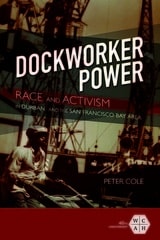
Dockworker Power
Race and Activism in Durban and the San Francisco Bay AreaPeter Cole
University of Illinois Press, 2018
Philip Taft Labor History Book Award, Labor and Working-Class History Association (LAWCHA) and the Cornell ILR School, 2019
A Black Perspectives Best Black History Book of 2018
Dockworkers have power. Often missed in commentary on today's globalizing economy, workers in the world's ports can harness their role, at a strategic choke point, to promote their labor rights and social justice causes. Peter Cole brings such overlooked experiences to light in an eye-opening comparative study of Durban, South Africa, and the San Francisco Bay Area, California. Path-breaking research reveals how unions effected lasting change in some of the most far-reaching struggles of modern times. First, dockworkers in each city drew on longstanding radical traditions to promote racial equality. Second, they persevered when a new technology--container ships--sent a shockwave of layoffs through the industry. Finally, their commitment to black internationalism and leftist politics sparked transnational work stoppages to protest apartheid and authoritarianism. Dockworker Power not only brings to light surprising parallels in the experiences of dockers half a world away from each other. It also offers a new perspective on how workers can change their conditions and world.
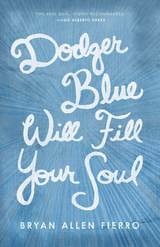
Dodger Blue Will Fill Your Soul
Bryan Allen Fierro
University of Arizona Press, 2016
In Dodger Blue Will Fill Your Soul, Bryan Allen Fierro brings to life the people and places that form the fragile heart of the East Los Angeles community. In the title story, a father’s love of Dodger baseball is matched only by the disconnect he must bridge with his young son. In another story, a young widower remembers his wedding day with his father-in-law. The boys and men in this collection challenge masculine stereotypes, while the girls and women defy gender roles. Hope and faith in their own community defines the characters, and propels them toward an awareness of their own personal responsibility to themselves and to their families, even as they eschew those closest to them in pursuit of a different future.
Dodger Blue Will Fill Your Soul is a tour de force—the first collection of an authentic new voice examining community with humor, hope, and brutal honesty.
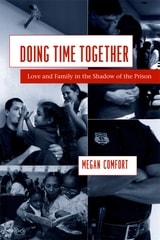
Doing Time Together
Love and Family in the Shadow of the PrisonMegan Comfort
University of Chicago Press, 2008
Megan Comfort spent years getting to know women visiting men at San Quentin State Prison, observing how their romantic relationships drew them into contact with the penitentiary. Tangling with the prison’s intrusive scrutiny and rigid rules turns these women into “quasi-inmates,” eroding the boundary between home and prison and altering their sense of intimacy, love, and justice. Yet Comfort also finds that with social welfare weakened, prisons are the most powerful public institutions available to women struggling to overcome untreated social ills and sustain relationships with marginalized men. As a result, they express great ambivalence about the prison and the control it exerts over their daily lives.
An illuminating analysis of women caught in the shadow of America’s massive prison system, Comfort’s book will be essential for anyone concerned with the consequences of our punitive culture.
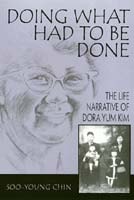
Doing What Had To Be Done
Soo-Young Chin
Temple University Press, 1999
Born in 1921, Dora, as she tells Chin her story, chronicles the shifting salience of gendered ethnic identity as she journeys through her life. Traveling through time and place, she moves from San Francisco's Chinatown -- where Koreans were a minority within a minority -- to suburban Dewey Boulevard where Dora and her family attempt to integrate into mainstream America, and where she becomes a social worker in the California State Department of Employment. As the Korean immigrant community grows in the late 1960s, Dora becomes deeply involved in community service. She remembers teaching English to senior citizens and preparing them for their naturalization exams, finding jobs for the younger Koreans, and founding a community center and meals program for seniors.
A detailed and inspiring lens through which to view Korean American history, Dora's life journey echoes the changing spaces of the American social landscape. And the grace and ease with which Dora just "does what has to be done" shows us the importance of everyday acts in making a difference.
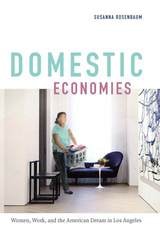
Domestic Economies
Women, Work, and the American Dream in Los AngelesSusanna Rosenbaum
Duke University Press, 2017
Down and Out in Los Angeles and Berlin
The Sociospatial Exclusion of Homeless PeopleJurgen von Mahs
Temple University Press, 2015
Drawing on fascinating ethnographic insights, von Mahs shows how homeless people in both cities face sociospatial exclusion-legal displacement for criminal activities, poor shelters in impoverished neighborhoods, as well as market barriers that restrict reintegration. Providing a necessary wake-up call, Down and Out in Los Angeles and Berlin addresses the critical public policy issues that can produce effective services to improve homeless people's chances for a lasting exit.

Dr. Eleanor's Book of Common Ants of California
Eleanor Spicer Rice, Alex Wild, and Rob Dunn
University of Chicago Press, 2017
No longer! In this witty, accessible, and beautifully illustrated guide, Eleanor Spicer Rice, Alex Wild, and Rob Dunn metamorphose creepy-crawly revulsion into myrmecological wonder. Emerging from Dunn’s ambitious citizen science project Your Wild Life (an initiative based at North Carolina State University) and the work of Brian Fisher with the California Academy of Sciences, Dr. Eleanor’s Book of Common Ants of California provides an eye-opening entomological overview of the natural history of California’s species most noted by project participants—and even offers tips on keeping ant farms in your home. Exploring species from the high noon and harvester ants to the honeypot and acrobat ants, and featuring Wild’s stunning photography, this guide will be a tremendous resource for teachers, students, and scientists alike. But more than this, it will transform the way Californians perceive the environment around them by deepening their understanding of its littlest inhabitants, inspiring everyone to find their inner naturalist, get outside, and crawl across the dirt—magnifying glass in hand.
Driven by Fear
Epidemics and Isolation in San Francisco's House of PestilenceGuenter B. Risse
University of Illinois Press, 2015
Filling a significant gap in contemporary scholarship, Driven by Fear looks at the past to offer critical lessons for our age of bioterror threats and emerging infectious diseases.
Drought, Water Law, and the Origins of California's Central Valley Project
Tim Stroshane
University of Nevada Press, 2016