Results by title
165 books match the query 'Caribbean Area' and 3 start with d

Dark Songs
Slave House and SynagogueLaurence Lieberman
University of Arkansas Press, 1996
Laurence Lieberman writes poems that successfully utilize techniques from every possible form of literature—including histories, travelogues, short stories, and epics. All the while, his lines maintain a deft balance of lyrical intensity, clear, methodical description, and the pure dialect of the characters living his poetry.
In Dark Songs: Slave House and Synagogue, Lieberman creates a narrative mosaic of the eastern Caribbean islands, ranging from St. Eustatius in the eighteenth century to the island of Grenada after the United States–led invasion in 1983. When he writes of African slaves, British governors, Dutch Jews, island guerillas, fallen Swiss nobility, and piratelike charter captains, the wealth of his details, the force, and often the truth behind his stories allow us to witness the whole human saga of the Caribbean.
With humor, absolute candor, and relentless observation, Lieberman has, as reviewer Samuel Maio says, “given is a new form of fiction in his poetry. He has created a singular art.”
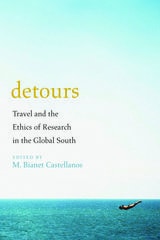
Detours
Travel and the Ethics of Research in the Global SouthEdited by M. Bianet Castellanos
University of Arizona Press, 2019
Influenced by the works of anthropologists Ruth Behar and Renato Rosaldo, the scholars and journalists in this volume consider how first encounters—those initial, awkward attempts to learn about a culture and a people—evolved into enduring and critical engagements. Contemplating the ethics and racial politics of traveling and doing research abroad, they call attention to the power and privilege that permit researchers to enter people’s lives, ask intimate questions, and publish those disclosures. Focusing on Latin America and the Caribbean, they ask, Why this place? What keeps us coming back? And what role do we play in producing narratives of inequality, uneven development, and global spectacle?
The book examines the “politics of return”—the experiences made possible by revisiting a field site over extended periods of time—of scholars and journalists who have spent decades working in and writing about Latin America and the Caribbean. Contributors aren’t telling a story of enlightenment and goodwill; they focus instead on the slippages and conundrums that marked them and raised questions of their own intentions and intellectual commitments.
Speaking from the intersection of race, class, and gender, the contributors explore the hubris and nostalgia that motivate returning again and again to a particular place. Through personal stories, they examine their changing ideas of Latin America and the Caribbean and how those places have shaped the people they’ve become, as writers, as teachers, and as activists.
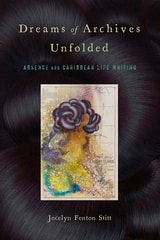
Dreams of Archives Unfolded
Absence and Caribbean Life WritingJocelyn Fenton Stitt
Rutgers University Press, 2021