501 books match the query 'Catholic Church' and 14 start with d
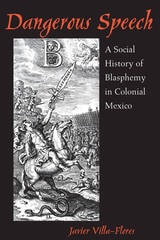
cover of Dangerous Speech: A Social History of Blasphemy in Colonial Mexico

Dangerous Speech

A Social History of Blasphemy in Colonial Mexico

Javier Villa-Flores

University of Arizona Press, 2006

Dangerous Speech is the first systematic treatment of blasphemous speech in colonial Mexico. This engaging social history examines the representation of blasphemy as a sin and a crime, and its repression by the Spanish Inquisition. The Spanish colonists viewed blasphemy not only as an insult against God but also as a dangerous misrepresentation of the deity, which could call down his wrath in a ruinous assault on the imperial enterprise.

Why then, asks Villa-Flores, did Spaniards dare to blaspheme? Having mined the period’s moral literature—philosophical works as well as royal decrees and Inquisition treatises and trial records in Spanish, Mexican, and U.S. archives and research libraries—Villa-Flores deftly interweaves images of daily life in colonial Mexico with vivid descriptions of human interactions to illustrate the complexity of a culture profoundly influenced by the Catholic Church. In entertaining and sometimes horrifying vignettes, the reader comes face to face with individuals who used language to assert or manipulate their identities within that repressive society.

Villa-Flores offers an innovative interpretation of the social uses of blasphemous speech by focusing on specific groups—conquistadors, Spanish settlers, Spanish women, and slaves of both genders—as a lens to examine race, class, and gender relations in colonial Mexico. He finds that multiple motivations led people to resort to blasphemy through a gamut of practices ranging from catharsis and gender self-fashioning to religious rejection and active resistance.

Dangerous Speech is a valuable resource for students and scholars of colonialism, the social history of language, Mexican history, and the changing relations of gender, class, and ethnicity in colonial Latin America.
[more]
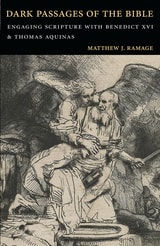
cover of Dark Passages of the Bible

Dark Passages of the Bible

Matthew J. Ramage

Catholic University of America Press, 2013
Following the lead of Pope Benedict XVI, in Dark Passages of the Bible Matthew Ramage weds the historical-critical approach with a theological reading of Scripture based in the patristic-medieval tradition. Whereas these two approaches are often viewed as mutually exclusive or even contradictory, Ramage insists that the two are mutually enriching and necessary for doing justice to the Bible’s most challenging texts.
[more]
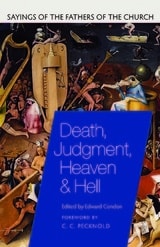
cover of Death, Judgement, Heaven, and Hell

Death, Judgement, Heaven, and Hell

Edward Condon

Catholic University of America Press, 2019
In this volume, canon lawyer and writer Edward Condon compiles a book full of wisdom and compelling insights. More than anything, the Fathers warn us that our life is short, and the reckoning for how we have lived it eternal. The urgency of the Church’s message, brought to life in the sayings of the Fathers, comes to remind us of our true calling and inheritance in baptism, and of the richness of the heavenly reward, which is not so much the fruit of our efforts on Earth but the fulfillment of God’s promise of love to us. The terror of hell is not the threat of the dictator, but a dire warning of the true scope of our freedom as children of God.
[more]
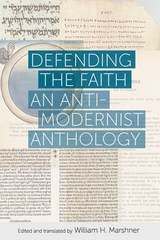
cover of Defending the Faith

Defending the Faith

William H. Marshner

Catholic University of America Press, 2016

At the dawn of the 20th Century, several writers who were to become famous under the title of "Modernists" were advancing a deep agenda for reform in the faith and praxis of the Roman Catholic Church. But their agenda met with serious and scholarly opposition from another group of writers, whose essays are here made available in English. They include the historian and university rector Pierre Battifol, the biblical exegete M.J. Lagrange, OP, the Jesuit historical theologians Eugène Portalié and Léonce de Grandmaison, and the philosophers Eugène Franon and Joannès Wehrlé. All welcomed the historico-critical methods of research, and far from thinking them fatal to orthodoxy (as the Modernists did), they thought the Church's faith would survive and be strengthened by rigorous scholarship. These thinkers, then, are the true predecessors of Pius XII (Divino afflante Spiritu) and Vatican II (Dei Verbum). At the same time, these men thought outside the boxes drawn by 19th Century Positivism (Loisy), anti-intellectualist pragmatism (LeRoy), and romantic mysticism (Tyrrell). Their concerns hold new significance in the light of John Paul II's 1990 encyclical Fides et Ratio. Reading these too-long forgotten writers, then, deepens in a new way one's understanding of the Catholic Church's decision to decline and even condemn the Modernists' agenda, whether one ultimately applauds that decision or deplores it.
[more]
cover of Defining Métis: Catholic Missionaries and the Idea of Civilization in Northwestern Saskatchewan, 1845–1898

Defining Métis

Catholic Missionaries and the Idea of Civilization in Northwestern Saskatchewan, 1845–1898

Timothy P. Foran

University of Manitoba Press, 2017
[more]
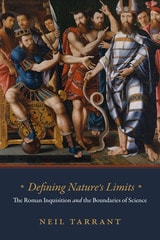
cover of Defining Nature's Limits: The Roman Inquisition and the Boundaries of Science

Defining Nature's Limits

The Roman Inquisition and the Boundaries of Science

Neil Tarrant

University of Chicago Press, 2022

A look at the history of censorship, science, and magic from the Middle Ages to the post-Reformation era.
 
Neil Tarrant challenges conventional thinking by looking at the longer history of censorship, considering a five-hundred-year continuity of goals and methods stretching from the late eleventh century to well into the sixteenth.
 
Unlike earlier studies, Defining Nature’s Limits engages the history of both learned and popular magic. Tarrant explains how the church developed a program that sought to codify what was proper belief through confession, inquisition, and punishment and prosecuted what they considered superstition or heresy that stretched beyond the boundaries of religion. These efforts were continued by the Roman Inquisition, established in 1542. Although it was designed primarily to combat Protestantism, from the outset the new institution investigated both practitioners of “illicit” magic and inquiries into natural philosophy, delegitimizing certain practices and thus shaping the development of early modern science. Describing the dynamics of censorship that continued well into the post-Reformation era, Defining Nature's Limits is revisionist history that will interest scholars of the history science, the history of magic, and the history of the church alike.
 
[more]
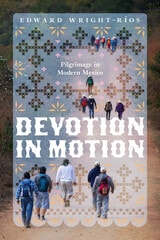
cover of Devotion in Motion: Pilgrimage in Modern Mexico

Devotion in Motion

Pilgrimage in Modern Mexico

Edward Wright-Ríos

University of Chicago Press, 2025

A study of contemporary pilgrimage through the elastic history of a shrine in Oaxaca, Mexico.
 
For many, pilgrimage conjures ideas about ancient traditions and somber journeys of self-discovery—an escape from modern life. In Devotion in Motion, Edward Wright-Ríos argues that we misunderstand pilgrimage (past and present) if we ignore its dynamic relationship with the rhythms of daily life and community.

Through the story of a centuries-old, ever-changing Catholic shrine to Our Lady of Juquila in Oaxaca, Mexico, Wright-Ríos reveals how tradition, innovation, marketing, and devotion coexist and interact in pilgrimage. Devotees, he shows, are not dissuaded by the embeddedness of the sacred site in the complexities, hierarchies, or conflicts of their lives. In fact, the truckers, accountants, and health-care workers we meet in this book actively seek new resources (including social media) to aid and share their devotion. Part microhistory, part ethnography, Devotion in Motion is a celebration of pilgrimage as a living experience in every generation.
[more]
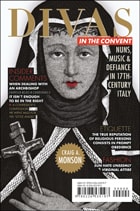
cover of Divas in the Convent: Nuns, Music, and Defiance in Seventeenth-Century Italy

Divas in the Convent

Nuns, Music, and Defiance in Seventeenth-Century Italy

Craig A. Monson

University of Chicago Press, 2012
When eight-year-old Lucrezia Orsina Vizzana (1590–1662) entered one of the preeminent convents in Bologna in 1598, she had no idea what cloistered life had in store for her. Thanks to clandestine instruction from a local maestro di cappella—and despite the church hierarchy’s vehement opposition to all convent music—Vizzana became the star of the convent, composing works so thoroughly modern and expressive that a recent critic described them as “historical treasures.” But at the very moment when Vizzana’s works appeared in 1623—she would be the only Bolognese nun ever to publish her music—extraordinary troubles beset her and her fellow nuns, as episcopal authorities arrived to investigate anonymous allegations of sisterly improprieties with male members of their order.
           
Craig A. Monson retells the story of Vizzana and the nuns of Santa Cristina to elucidate the role that music played in the lives of these cloistered women. Gifted singers, instrumentalists, and composers, these nuns used music not only to forge links with the community beyond convent walls, but also to challenge and circumvent ecclesiastical authority. Monson explains how the sisters of Santa Cristina—refusing to accept what the church hierarchy called God’s will and what the nuns perceived as a besmirching of their honor—fought back with words and music, and when these proved futile, with bricks, roof tiles, and stones. These women defied one Bolognese archbishop after another, cardinals in Rome, and even the pope himself, until threats of excommunication and abandonment by their families brought them to their knees twenty-five years later. By then, Santa Cristina’s imaginative but frail composer literally had been driven mad by the conflict.
           
Monson’s fascinating narrative relies heavily on the words of its various protagonists, on both sides of the cloister wall, who emerge vividly as imaginative, independent-minded, and not always sympathetic figures. In restoring the musically gifted Lucrezia Orsina Vizzana to history, Monson introduces readers to the full range of captivating characters who played their parts in seventeenth-century convent life.
 
[more]
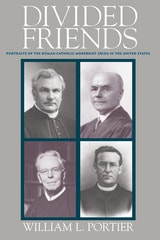
cover of Divided Friends

Divided Friends

William L. Portier

Catholic University of America Press, 2013
In two sets of intertwined biographical portraits, spanning two generations, Divided Friends dramatizes the theological issues of the modernist crisis, highlighting their personal dimensions and extensively reinterpreting their long-range effects. The four protagonists are Bishop Denis J. O?Connell, Josephite founder John R. Slattery, together with the Paulists William L. Sullivan and Joseph McSorley. Their lives span the decades from the Americanist crisis of the 1890s right up to the eve of Vatican II. In each set, one leaves the church and one stays. The two who leave come to see their former companions as fundamentally dishonest. Divided Friends entails a reinterpretation of the intellectual fallout from the modernist crisis and a reframing of the 20th century debate about Catholic intellectual life.
[more]
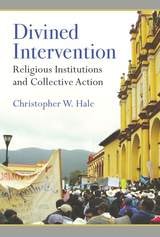
cover of Divined Intervention: Religious Institutions and Collective Action

Divined Intervention

Religious Institutions and Collective Action

Christopher W. Hale

University of Michigan Press, 2020

Divined Intervention provides an innovative institutionalist account for why religion enables political activism in some settings, but not others. Christopher W. Hale argues that decentralized religious institutions facilitate grassroots collective action, and he uses a multimethod approach to test this explanation against several theoretical alternatives. Utilizing nationally representative Mexican survey data, the book’s statistical analyses demonstrate that decentralization by the Catholic Church is positively associated with greater individual political activism across the country. Using case studies centered in the Mexican states of Chiapas, Yucatán, and Morelos, the author shows that religious decentralization encourages reciprocal cooperative interactions at a local level. This then increases the ability of religion to provide goods and services to its local adherents. These processes then prompt the growth of organizational capacities at the grassroots, enabling secular political activism.

Because this theoretical framework is grounded in human behavior, it shows how local institutions politically organize at the grassroots level. Divined Intervention also offers an improved understanding of religion’s relationship with political activism, a topic of ever-increasing significance as religion fuels political engagement across the globe. The book further synthesizes seemingly disparate approaches to the study of collective action into a cohesive framework. Finally, there is some debate as to the impact of ethnic diversity on the provision of public goods, and this study helps us understand how local institutional configurations can enable collective action across ethnic boundaries.
[more]
cover of Doctrinal Sermons on the Catechism of the Catholic Church

Doctrinal Sermons on the Catechism of the Catholic Church

Kenneth Baker

St. Augustine's Press, 2012
[more]
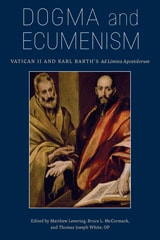
cover of Dogma and Ecumenism: Vatican II and Karl Barth's 'Ad Limina Apostolorum'

Dogma and Ecumenism

Vatican II and Karl Barth's 'Ad Limina Apostolorum'

Matthew Levering

Catholic University of America Press, 2020
The conversation of this book is structured around five major documents from the Second Vatican Council, each of which Barth commented upon in his short but penetrating response to the Council, published as Ad Limina Apostolorum. In the two opening essays, Thomas Joseph White reflects upon the contribution that this book seeks to make to contemporary ecumenism rooted in awareness of the value of dogmatic theology; and Matthew Levering explores the way in which Barth’s Ad Limina Apostolorum flows from his preconciliar dialogues with Catholic representatives of the nouvelle théologie and remain relevant to the issues facing Catholic theology today. The next two essays turn to Dei Verbum, the Dogmatic Constitution on Divine Revelation; here Katherine Sonderegger (Protestant) reflects on scripture and Lewis Ayres (Catholic) reflects on tradition. The next two essays address the Dogmatic Constitution on the Church, Lumen Gentium, which touches upon central differences of Catholic and Protestant self-understanding. Christoph Schwöbel (Protestant) analyzes visible ecclesial identity as conceived in a Protestant context, while Thomas Joseph White (Catholic) engages Barth’s Reformed criticisms of the Catholic notion of the Church. The next two essays take up Nostra Aetate: Bruce Lindley McCormack (Protestant) asks whether it is true to say that Muslims worship the same God as Christians, and Bruce D. Marshall (Catholic) explores the implications of the Council’s reflections on the Jewish people. The next two essays take up the Pastoral Constitution on the Church in the Modern World, Gaudium et Spes: John Bowlin (Protestant) makes use of the thought of Aquinas to consider the promise and perils of the document, while Francesca Aran Murphy (Catholic) engages critically with George Lindbeck’s analysis of the document. The next two essays explore Unitatis Redintegratio: Hans Boersma (Protestant) asks whether the ecumenical intention of the document is impaired by its insistence that the unity of the Church is already present in the Catholic Church, and Reinhard Hütter (Catholic) systematically addresses Barth’s questions regarding the document. The noted ecumenist and Catholic theologian Richard Schenk brings the volume to a close by reflecting on “true and false ecumenism” in the post-conciliar period.
[more]
cover of Dostoevsky and the Catholic Underground

Dostoevsky and the Catholic Underground

Elizabeth A. Blake

Northwestern University Press, 2019

While Dostoevsky’s relation to religion is well-trod ground, there exists no comprehensive study of Dostoevsky and Catholicism. Elizabeth Blake’s ambitious and learned Dostoevsky and the Catholic Underground fills this glaring omission in the scholarship. Previous commentators have traced a wide-ranging hostility in Dostoevsky’s understanding of Catholicism to his Slavophilism. Blake depicts a far more nuanced picture. Her close reading demonstrates that he is repelled and fascinated by Catholicism in all its medieval, Reformation, and modern manifestations. Dostoevsky saw in Catholicism not just an inspirational source for the Grand Inquisitor but a political force, an ideological wellspring, a unique mode of intellectual inquiry, and a source of cultural production. Blake’s insightful textual analysis is accompanied by an equally penetrating analysis of nineteenth-century European revolutionary history, from Paris to Siberia, that undoubtedly influenced the evolution of Dostoevsky’s thought.
[more]
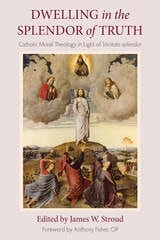
cover of Dwelling in the Splendor of Truth: Catholic Moral Theology in Light of <i>Veritatis splendor</i>

Dwelling in the Splendor of Truth

Catholic Moral Theology in Light of <i>Veritatis splendor</i>

James W. Stroud

Catholic University of America Press, 2026

On August 6, 1993, Pope John Paul II promulgated the long-awaited encyclical on moral theology entitled Veritatis splendor. In this landmark encyclical, directed principally toward bishops, Pope John Paul II sought a reset of the discipline of Catholic moral theology after the Second Vatican Council in response to the theological dissent that had called into question the foundations of Catholic morality. More than thirty years after the promulgation of Veritatis splendor, the essays in this edited volume consider the major themes and topics of this encyclical as it seeks to contribute to the revitalization of moral theology today. These themes and topics include: the rich young man and the renewal of moral theology, freedom, nature, and law, conscience, intrinsically evil acts, the state of revisionism, the moral object, martyrdom and morality, evangelization, the role of the moral theologian, and the role of scripture in moral theology. Contributors include: William C. Mattison, III, Irene Alexander, Matthew Levering, Matthew Dugandzic, James W. Stroud, Stephen L. Brock, Patrick Clark, Timothy P. O’Malley, Jana Marguerite Bennet, John Grabowski, with a foreword by Archbishop of Sydney Anthony Fisher, OP.
[more]