Results by title
99 books match the query 'Censorship' and 3 start with d
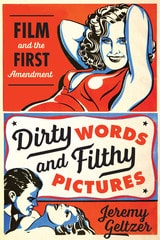
Dirty Words and Filthy Pictures
Film and the First AmendmentBy Jeremy Geltzer
University of Texas Press, 2015
From the earliest days of cinema, scandalous films such as The Kiss (1896) attracted audiences eager to see provocative images on screen. With controversial content, motion pictures challenged social norms and prevailing laws at the intersection of art and entertainment. Today, the First Amendment protects a wide range of free speech, but this wasn’t always the case. For the first fifty years, movies could be censored and banned by city and state officials charged with protecting the moral fabric of their communities. Once film was embraced under the First Amendment by the Supreme Court’s Miracle decision in 1952, new problems pushed notions of acceptable content even further.
Dirty Words & Filthy Pictures explores movies that changed the law and resulted in greater creative freedom for all. Relying on primary sources that include court decisions, contemporary periodicals, state censorship ordinances, and studio production codes, Jeremy Geltzer offers a comprehensive and fascinating history of cinema and free speech, from the earliest films of Thomas Edison to the impact of pornography and the Internet. With incisive case studies of risqué pictures, subversive foreign films, and banned B-movies, he reveals how the legal battles over film content changed long-held interpretations of the Constitution, expanded personal freedoms, and opened a new era of free speech. An important contribution to film studies and media law, Geltzer’s work presents the history of film and the First Amendment with an unprecedented level of detail.
Dockside Reading
Hydrocolonialism and the Custom HouseIsabel Hofmeyr
Duke University Press, 2022
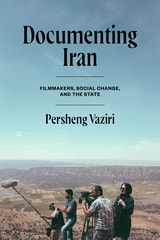
Documenting Iran
Filmmakers and Social ChangePersheng Vaziri
University of Texas Press, 2026
An ethnographic study of how Iranian documentary filmmakers navigate censorship and creativity to shape civic discourse.
Iranian filmmakers have overcome significant obstacles to create a distinctive, globally renowned cinema. Filmmaker and educator Persheng Vaziri explores how documentarians, in particular, have developed a dynamic and creative environment by negotiating limited resources and official constraints. Through their films, they share hard truths—and artful narratives—with fellow Iranians and viewers the world over.
Documenting Iran introduces key historical foundations of documentary filmmaking amid generations of political change—first under the shah and later the Islamic government—with a focus on contemporary filmmakers between 2000 and 2022. Drawing on interviews and ethnographic encounters, Vaziri describes the creative practices and pragmatic choices that provide documentarians relative independence from state censorship and other restrictions on artistic production. Relying on poetic aesthetics, observational filmmaking, international connections, and the accumulated knowledge of a tight-knit local community, filmmakers engage with controversial topics like women’s rights, marriage and divorce laws, environmental degradation, and encounters with Western culture. Documentarians have thus created an activist cinema both subtle and persuasive enough to challenge dogmatic rule and uphold progressive elements of Iranian society.