Results by title
208 books match the query 'Christian Church' and 5 start with d
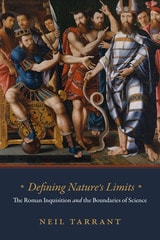
Defining Nature's Limits
The Roman Inquisition and the Boundaries of ScienceNeil Tarrant
University of Chicago Press, 2022
Neil Tarrant challenges conventional thinking by looking at the longer history of censorship, considering a five-hundred-year continuity of goals and methods stretching from the late eleventh century to well into the sixteenth.
Unlike earlier studies, Defining Nature’s Limits engages the history of both learned and popular magic. Tarrant explains how the church developed a program that sought to codify what was proper belief through confession, inquisition, and punishment and prosecuted what they considered superstition or heresy that stretched beyond the boundaries of religion. These efforts were continued by the Roman Inquisition, established in 1542. Although it was designed primarily to combat Protestantism, from the outset the new institution investigated both practitioners of “illicit” magic and inquiries into natural philosophy, delegitimizing certain practices and thus shaping the development of early modern science. Describing the dynamics of censorship that continued well into the post-Reformation era, Defining Nature's Limits is revisionist history that will interest scholars of the history science, the history of magic, and the history of the church alike.
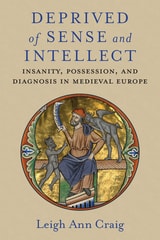
Deprived of Sense and Intellect
Insanity, Possession, and Diagnosis in Medieval EuropeLeigh Ann Craig
University of Michigan Press, 2026
While medieval communities assigned these tensions to a malfunction of consciousness in a single person, medieval miracle texts also reveal how the function and malfunction of consciousness was named and classified. In studying these texts, Leigh Ann Craig explores the terminology and rhetoric used to diagnose a loss of mind as either from natural causes or as an effect of demonic predation, tracing the use of Latin vocabulary in medical compendia, law, and theology. Deprived of Sense and Intellect finds that since diagnoses were difficult and frequently subject to doubt, they varied based on regional cultures of disability in northern and southern Europe, the influences on the development of community consensus in Latin Europe in the Middle Ages, and assumptions based on gender, material evidence, and self-diagnosis.
Didymus the Blind and the Alexandrian Christian Reception of Philo
Justin M. Rogers
SBL Press, 2017
Explore the Jewish traditions preserved in the commentaries of a largely neglected Alexandrian Christian exegete
Justin M. Rogers surveys commentaries on Genesis, Job, Psalms, Ecclesiastes, and Zechariah by Didymus the Blind (ca. 313–398 CE), who was regarded by his students as one of the greatest Christian exegetes of the fourth century. Rogers highlights Didymus’s Jewish sources, zeroing in on traditions of Philo of Alexandria, whose treatises were directly accessible to Didymus while he was authoring his exegetical works. Philonic material in Didymus is covered by extensive commentary, demonstrating that Philo was among the principle sources for the exegetical works of Didymus the Blind. Rogers also explores the mediating influence of the Alexandrian Christian tradition, focusing especially on the roles of Clement and Origen.
Features
- Fresh insights into the Alexandrian Christian reception of Philo
- A thorough discussion of Didymus’s exegetical method, particularly in the Commentary on Genesis
- Examination of the use and importance of Jewish and Christian sources in Late Antique Christian commentaries
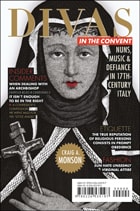
Divas in the Convent
Nuns, Music, and Defiance in Seventeenth-Century ItalyCraig A. Monson
University of Chicago Press, 2012
Documents from the Luciferians
In Defense of the Nicene CreedColin M. Whiting
SBL Press, 2019
Six important documents for scholars of early church history
This volume includes English translations of several documents concerning the Luciferians, a group of fourth-century Christians whose name derives from the bishop Lucifer of Cagliari. Documents include a confession of faith written for Emperor Theodosius I and a theological treatise written for his wife by Luciferian clergyman Faustinus, the first English translation of a Luciferian petition to Theodosius that focuses on the persecution the community has suffered, Theodosius’s imperial law in response to the Luciferians, two letters composed by Luciferians that purport to represent correspondence from the bishop Athanasius of Alexandria to Lucifer, and the priest Jerome’s Dialogus adversus Luciferianos. These texts highlight connections between developments in Christian theology and local Christian communities in the course of the fourth century.
Features:
- The first English translation of Faustinus’s Libellus precum
- An overview of the development of late antique theology and Christianity
- An introduction to Luciferian beliefs and the translated texts