Results by title
233 books match the query 'Cold War' and 5 start with d
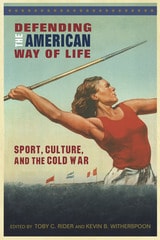
Defending the American Way of Life
Sport, Culture, and the Cold WarToby C. Rider
University of Arkansas Press, 2018
The Cold War was fought in every corner of society, including in the sport and entertainment industries. Recognizing the importance of culture in the battle for hearts and minds, the United States, like the Soviet Union, attempted to win the favor of citizens in nonaligned states through the soft power of sport. Athletes became de facto ambassadors of US interests, their wins and losses serving as emblems of broader efforts to shield American culture—both at home and abroad—against communism.
In Defending the American Way of Life, leading sport historians present new perspectives on high-profile issues in this era of sport history alongside research drawn from previously untapped archival sources to highlight the ways that sports influenced and were influenced by Cold War politics. Surveying the significance of sports in Cold War America through lenses of race, gender, diplomacy, cultural infiltration, anti-communist hysteria, doping, state intervention, and more, this collection illustrates how this conflict remains relevant to US sporting institutions, organizations, and ideologies today.
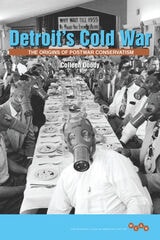
Detroit's Cold War
The Origins of Postwar ConservatismColleen Doody
University of Illinois Press, 2017
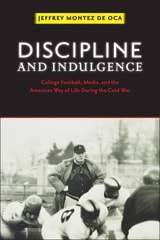
Discipline and Indulgence
College Football, Media, and the American Way of Life during the Cold WarMontez de Oca, Jeffrey
Rutgers University Press, 2013
The early Cold War (1947–1964) was a time of optimism in America. Flushed with confidence by the Second World War, many heralded the American Century and saw postwar affluence as proof that capitalism would solve want and poverty. Yet this period also filled people with anxiety. Beyond the specter of nuclear annihilation, the consumerism and affluence of capitalism’s success were seen as turning the sons of pioneers into couch potatoes.
In Discipline and Indulgence, Jeffrey Montez de Oca demonstrates how popular culture, especially college football, addressed capitalism’s contradictions by integrating men into the economy of the Cold War as workers, warriors, and consumers. In the dawning television age, college football provided a ritual and spectacle of the American way of life that anyone could participate in from the comfort of his own home. College football formed an ethical space of patriotic pageantry where men could produce themselves as citizens of the Cold War state. Based on a theoretically sophisticated analysis of Cold War media, Discipline and Indulgence assesses the period’s institutional linkage of sport, higher education, media, and militarism and finds the connections of contemporary sport media to today’s War on Terror.
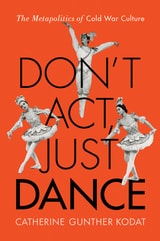
Don't Act, Just Dance
The Metapolitics of Cold War CultureCatherine Gunther Kodat
Rutgers University Press, 2014
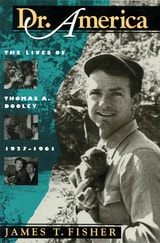
Dr. America
The Lives of Thomas A. Dooley, 1927-1961James T. Fisher
University of Massachusetts Press, 1997
This book chronicles the life of Tom Dooley, the American doctor whose much-publicized exploits in Vietnam and Laos during the 1950s helped lay the ideological groundwork for the U.S. military intervention a decade later. The scion of an upper-middle-class St. Louis family, Dooley was an enormously complex and fascinating individual. He was a devoutly religious Roman Catholic as well as a self-styled playboy socialite, a devoted physician to the poor and a tireless propagandist for the “Vietnam Lobby,” a shameless self-promoter and a closeted homosexual, a victim of Navy persecution and a beneficiary of CIA support. Dooley first gained notoriety as a young Navy doctor charged with overseeing the evacuation of Catholic refugees from North Vietnam in the wake of the 1954 Geneva Accords. His celebrity grew after his book Deliver Us from Evil, a fervently anticommunist account of his experiences, was serialized in Reader's Digest. By the end of the decade, as his name became associated (albeit mistakenly) with a ballad popularized by the Kingston Trio, he had achieved the status of “America's first pop star saint.” In addition to exposing the roots of the Vietnam War, Dooley's story illuminates a broad range of developments in post-World War II United States culture—from the “Americanization” of Catholicism to the rise of the mass media.