Results by title
440 books match the query 'Colonialism & Post-Colonialism' and 17 start with d
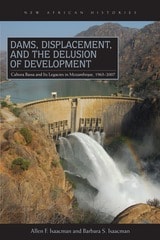
Dams, Displacement, and the Delusion of Development
Cahora Bassa and Its Legacies in Mozambique, 1965–2007Allen F. Isaacman
Ohio University Press, 2013
Cahora Bassa Dam on the Zambezi River, built in the early 1970s during the final years of Portuguese rule, was the last major infrastructure project constructed in Africa during the turbulent era of decolonization. Engineers and hydrologists praised the dam for its technical complexity and the skills required to construct what was then the world’s fifth-largest mega-dam. Portuguese colonial officials cited benefits they expected from the dam—from expansion of irrigated farming and European settlement, to improved transportation throughout the Zambezi River Valley, to reduced flooding in this area of unpredictable rainfall. “The project, however, actually resulted in cascading layers of human displacement, violence, and environmental destruction. Its electricity benefited few Mozambicans, even after the former guerrillas of FRELIMO (Frente de Libertação de Moçambique) came to power; instead, it fed industrialization in apartheid South Africa.” (Richard Roberts)
This in-depth study of the region examines the dominant developmentalist narrative that has surrounded the dam, chronicles the continual violence that has accompanied its existence, and gives voice to previously unheard narratives of forced labor, displacement, and historical and contemporary life in the dam’s shadow.
Dark Continents
Psychoanalysis and ColonialismRanjana Khanna
Duke University Press, 2003
bringing psychoanalysis, colonialism, and women together can become the starting point of a postcolonial feminist theory. Psychoanalysis brings to light, Khanna argues, how nation-statehood for the former colonies of Europe institutes the violence of European imperialist history. Far from rejecting psychoanalysis, Dark Continents reveals its importance as a reading practice that makes visible the psychical strife of colonial and
postcolonial modernity. Assessing the merits of various models of nationalism, psychoanalysis, and colonialism, it refashions colonial melancholy as a transnational feminist ethics.
Khanna traces the colonial backgrounds of psychoanalysis from its beginnings in the late nineteenth century up to the present. Illuminating Freud’s debt to the languages of archaeology and anthropology throughout his career, Khanna describes how Freud altered his theories of the ego as his own political status shifted from Habsburg loyalist to Nazi victim. Dark Continents explores how psychoanalytic theory was taken up in Europe and its colonies in the period of decolonization following World War II, focusing on its use by a range of writers including Jean-Paul Sartre, Simone de Beauvoir, Octave Mannoni, Aimé and Suzanne Césaire, René Ménil, Frantz Fanon, Albert Memmi, Wulf Sachs, and Ellen Hellman. Given the multiple gendered and colonial contexts of many of these writings, Khanna argues for the necessity of a postcolonial, feminist critique of
decolonization and postcoloniality.

De-blading the Knife
Writing Femicide in MudCristina Rivera Garza
Diaphanes, 2026

Deadly Refusals
Kurdish Decolonization in Times of CounterterrorismSerra M. Hakyemez
University of Minnesota Press, 2026
Revolutionary desire and decolonial struggle inside the heart of the carceral state
Deadly Refusals offers an intimate portrait of Kurdish decolonial struggle within the carceral and legal apparatuses of the Turkish state. Set in the counterterrorism courts and maximum-security prisons of Northern Kurdistan, Serra M. Hakyemez’s ethnography examines how prosecuted and imprisoned Kurds from different socioeconomic backgrounds organize in refusal of the criminalization and colonization of their political demands and desires. Through acts of self-criticism, revolutionary education, and comradely care, these prisoners articulate a political subjectivity that challenges the foundations of colonial power.
Based on more than seventeen years of ethnographic research—including interviews with former prisoners, lawyers, judges, and prosecutors; observations of more than one hundred court hearings; and analysis of prison memoirs, poetry, and legal archives—Deadly Refusals uncovers the mechanisms through which counterterrorism law reproduces the colonial state. Yet it is not solely a study of repression. Engaging psychoanalytic concepts of subject, desire, and ethics, Hakyemez illuminates how these carceral spaces also become sites of revolutionary responsibility. Here, refusal is not resignation but a political act in which the colonized self is killed—literally or figuratively—to make way for a larger collective subjectivity.
Using the interplay of comradeship and intimacy, political desire and ordinary pleasure, death and love, Deadly Refusals examines how Kurdish political prisoners forge multilayered relations of decolonization in an ongoing psychopolitical struggle. Hakyemez shows how both small gestures of withdrawal, restraint, and negation as well as radical acts like language protests, hunger strikes, and death protests become part of a shared struggle for alternative futures that state power cannot fully contain or comprehend.
Retail e-book files for this title are screen-reader friendly with images accompanied by short alt text and/or extended descriptions.
Decentralizing Knowledges
Essays on Distributed AgencyLeandro Rodriguez Medina and Sandra Harding, editor
Duke University Press, 2025
Contributors: Linda Martín Alcoff, Elías Barticevic, Johan Henrik Buljo, Ronald Cancino, Cristina Flores, Kim Fortun, Sandra Harding, Line Aimee Kalak, Duygu Kasdogan, Wiebke Keim, Aalok Khandekar, Daniel Lee Kleinman, Wen-Hua Kuo, John Law, Les Levidow, Leandro Rodriguez Medina, Angela Okune, Liv Østmo, Ari Sitas, Maka Suarez, Sharon Traweek, Hebe Vessuri

Decolonial Becoming
Immobility, Indigeneity, and Disability in Transpacific KoreaJeong Eun Annabel We
Duke University Press, 2027
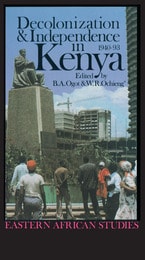
Decolonization and Independence in Kenya, 1940–1993
B. A. Ogot
Ohio University Press, 1995
This is a sharply observed assessment of the history of the last half century by a distinguished group of historians of Kenya. At the same time the book is a courageous reflection in the dilemmas of African nationhood.
Professor B. A. Ogot says:
“The main purpose of the book is to show that decolonization does not only mean the transfer of alien power to sovereign nationhood; it must also entail the liberation of the worlds of spirit and culture, as well as economics and politics.
“The book also raises a more fundamental question, that is: How much independence is available to any state, national economy or culture in today’s world? It asks how far are Africa’s miseries linked to the colonial past and to the process of decolonization?
“In particular the book raises the basic question of how far Kenya is avoidably neo-colonial? And what does neo-colonial dependence mean? The book answers these questions by discussing the dynamic between the politics of decolonization, the social history of class formation and the economics of dependence. The book ends with a provocative epilogue discussing the transformation of the post-colonial state from a single-party to a multi-party system.”
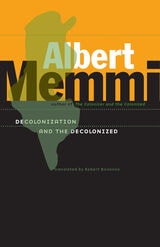
Decolonization and the Decolonized
Albert Memmi
University of Minnesota Press, 2006
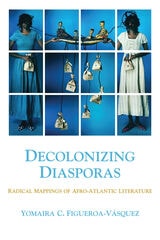
Decolonizing Diasporas
Radical Mappings of Afro-Atlantic LiteratureYomaira C. Figueroa-Vásquez
Northwestern University Press, 2021
Winner, MLA Prize in United States Latina and Latino and Chicana and Chicano Literary and Cultural Studies
Mapping literature from Spanish-speaking sub-Saharan African and Afro-Latinx Caribbean diasporas, Decolonizing Diasporas argues that the works of diasporic writers and artists from Equatorial Guinea, Puerto Rico, the Dominican Republic, and Cuba offer new worldviews that unsettle and dismantle the logics of colonial modernity. With women of color feminisms and decolonial theory as frameworks, Yomaira C. Figueroa-Vásquez juxtaposes Afro-Latinx and Afro-Hispanic diasporic artists, analyzing work by Nelly Rosario, Juan Tomás Ávila Laurel, Trifonia Melibea Obono, Donato Ndongo, Junot Díaz, Aracelis Girmay, Loida Maritza Pérez, Ernesto Quiñonez, Christina Olivares, Joaquín Mbomio Bacheng, Ibeyi, Daniel José Older, and María Magdalena Campos-Pons. Figueroa-Vásquez’s study reveals the thematic, conceptual, and liberatory tools these artists offer when read in relation to one another.
Decolonizing Diasporas examines how themes of intimacy, witnessing, dispossession, reparations, and futurities are remapped in these works by tracing interlocking structures of oppression, including public and intimate forms of domination, sexual and structural violence, sociopolitical and racial exclusion, and the haunting remnants of colonial intervention. Figueroa-Vásquez contends that these diasporic literatures reveal violence but also forms of resistance and the radical potential of Afro-futurities.
This study centers the cultural productions of peoples of African descent as Afro-diasporic imaginaries that subvert coloniality and offer new ways to approach questions of home, location, belonging, and justice.
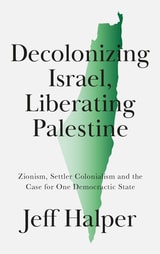
Decolonizing Israel, Liberating Palestine
Zionism, Settler Colonialism, and the Case for One Democratic StateJeff Halper
Pluto Press, 2021
For decades we have spoken of the 'Israel-Palestine conflict', but what if our understanding of the issue has been wrong all along? This book explores how the concept of settler colonialism provides a clearer understanding of the Zionist movement's project to establish a Jewish state in Palestine, displacing the Palestinian Arab population and marginalizing its cultural presence.
Jeff Halper argues that the only way out of a colonial situation is decolonization: the dismantling of Zionist structures of domination and control and their replacement by a single democratic state, in which Palestinians and Israeli Jews forge a new civil society and a shared political community.
To show how this can be done, Halper uses the 10-point program of the One Democratic State Campaign as a guide for thinking through the process of decolonization to its post-colonial conclusion. Halper's unflinching reframing will empower activists fighting for the rights of the Palestinians and democracy for all.
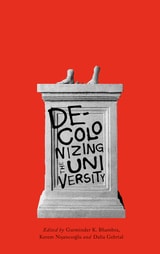
Decolonizing the University
Edited by Gurminder K. Bhambra, Kerem Nisancioglu and Dalia Gebrial
Pluto Press, 2018
In 2015, students at the University of Cape Town demanded the removal of a statue of Cecil Rhodes, the imperialist, racist business magnate, from their campus. Their battle cry, #RhodesMustFall, sparked an international movement calling for the decolonization of universities all over the world.
Today, as the movement develops beyond the picket line, how might it go on to radically transform the terms upon which universities exist? In this book, students, activists, and scholars discuss the possibilities and the pitfalls of doing decolonial work in the heart of the establishment. Subverting curricula, demanding diversity, and destroying old boundaries, this is a radical call for a new era of education. Chapters include:
*Rhodes Must Fall: Oxford and Movements for Change (Dalia Febrial)
*Race and the Neoliberal University ((John Holmwood)
*Black/Academia (Robbie Shilliam)
*The Challenge for Black Studies in the Neoliberal University (Kehinde Andrews)
*Open Initiatives for Decolonising the Curriculum (Pat Lockley)
*Decolonising Education: A Pedagogic Intervention (Carol Azumah Dennis)
*Understanding Eurocentrism as a Structural Problem of Undone Science (William Jamal Richardson)
As the book’s insightful Introduction states, "Taking colonialism as a global project as a starting point, it becomes difficult to turn away from the Western university as a key site through which colonialism—and colonial knowledge in particular—is produced, consecrated, institutionalized and naturalized." Offering resources for students and academics to challenge and resist colonialism inside and outside the classroom, Decolonizing the University provides the tools for radical change in educational disciplines, pedagogies, and institutions.

Dedan Kimathi on Trial
Colonial Justice and Popular Memory in Kenya’s Mau Mau RebellionJulie MacArthur
Ohio University Press, 2017
The transcript from this historic trial, long thought destroyed or hidden, unearths a piece of the British colonial archive at a critical point in the Mau Mau Rebellion. Its discovery and landmark publication unsettles an already contentious Kenyan history and its reverberations in the postcolonial present.
Perhaps no figure embodied the ambiguities, colonial fears, and collective imaginations of Kenya’s decolonization era more than Dedan Kimathi, the self-proclaimed field marshal of the rebel forces that took to the forests to fight colonial rule in the 1950s. Kimathi personified many of the contradictions that the Mau Mau Rebellion represented: rebel statesman, literate peasant, modern traditionalist. His capture and trial in 1956, and subsequent execution, for many marked the end of the rebellion and turned Kimathi into a patriotic martyr.
Here, the entire trial transcript is available for the first time. This critical edition also includes provocative contributions from leading Mau Mau scholars reflecting on the meaning of the rich documents offered here and the figure of Kimathi in a much wider field of historical and contemporary concerns. These include the nature of colonial justice; the moral arguments over rebellion, nationalism, and the end of empire; and the complexities of memory and memorialization in contemporary Kenya.
Contributors: David Anderson, Simon Gikandi, Nicholas Githuku, Lotte Hughes, and John Lonsdale. Introductory note by Willy Mutunga.

Demanding Justice and Security
Indigenous Women and Legal Pluralities in Latin AmericaSieder, Rachel
Rutgers University Press, 2017
Featuring chapters on Bolivia, Colombia, Ecuador, Guatemala, and Mexico, the contributors to Demanding Justice and Security include both leading researchers and community activists. From Kichwa women in Ecuador lobbying for the inclusion of specific clauses in the national constitution that guarantee their rights to equality and protection within indigenous community law, to Me’phaa women from Guerrero, Mexico, battling to secure justice within the Inter-American Court of Human Rights for violations committed in the context of militarizing their home state, this book is a must-have for anyone who wants to understand the struggle of indigenous women in Latin America.
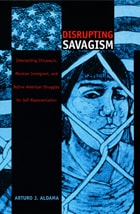
Disrupting Savagism
Intersecting Chicana/o, Mexican Immigrant, and Native American Struggles for Self-RepresentationArturo J. Aldama
Duke University Press, 2001
Arturo J. Aldama begins by presenting a genealogy of the term “savage,” looking in particular at the work of American ethnologist Lewis Henry Morgan and a sixteenth-century debate between Juan Ginés de Sepúlveda and Bartolomé de las Casas. Aldama then turns to more contemporary narratives, examining ethnography, fiction, autobiography, and film to illuminate the historical ideologies and ethnic perspectives that contributed to identity formation over the centuries. These works include anthropologist Manuel Gamio’s The Mexican Immigrant: His Life Story, Leslie Marmon Silko’s Ceremony, Gloria Anzaldúa’s Borderlands/La Frontera, and Miguel Arteta’s film Star Maps. By using these varied genres to investigate the complex politics of racialized, subaltern, feminist, and diasporic identities, Aldama reveals the unique epistemic logic of hybrid and mestiza/o cultural productions.
The transcultural perspective of Disrupting Savagism will interest scholars of feminist postcolonial processes in the United States, as well as students of Latin American, Native American, and literary studies.
Documentary History of the Ratification of the Constitution, Volume 23
Ratification of the Constitution by the States: New York, No. 5Edited by John P. Kaminski and Gaspare J. Saladino; Senior Associate Editor: Richard Leffler; Associate Editor: Charles H. Schoenleber; Assistant Editor: Margaret A. Hogan
Wisconsin Historical Society Press, 2009
Documentary History of the Ratification of the Constitution, Volume 24
Ratification of the Constitution by the States: Rhode Island, No. 1Kaminski
Wisconsin Historical Society Press, 2011
This is the first of three volumes documenting Rhode Island's public and private debates about the Constitution. This documentary series is a research tool of remarkable power, an unrivaled reference work for historical and legal scholars, librarians, and students of the Constitution. The volumes are encyclopedic, consisting of manuscript and printed documents-contemporary newspapers, broadsides, and pamphlets-compiled from hundreds of sources, copiously annotated, thoroughly indexed, and often accompanied by microfiche supplements. Pulitzer Prize-winning historian Michael Kammen has noted that The Documentary History of the Ratification of the Constitution series "will be of enduring value centuries hence" and described it as "one of the most interesting documentary publications we have ever had." The American Bar Association Journal has stated, "Each new volume now fills another vital part of the mosaic of national history."
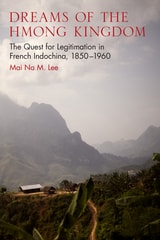
Dreams of the Hmong Kingdom
The Quest for Legitimation in French Indochina, 1850–1960Mai Na M. Lee
University of Wisconsin Press, 2015
In China, Vietnam, and Laos, the Hmong continuously negotiated with these states and with the French to maintain political autonomy in a world of shifting boundaries, emerging nation-states, and contentious nationalist movements and ideologies. Often divided by clan rivalries, the Hmong placed their hope in finding a leader who could unify them and recover their sovereignty. In a compelling analysis of Hmong society and leadership throughout the French colonial period, Mai Na M. Lee identifies two kinds of leaders—political brokers who allied strategically with Southeast Asian governments and with the French, and messianic resistance leaders who claimed the Mandate of Heaven. The continuous rise and fall of such leaders led to cycles of collaboration and rebellion. After World War II, the powerful Hmong Ly clan and their allies sided with the French and the new monarchy in Laos, but the rival Hmong Lo clan and their supporters allied with Communist coalitions.
Lee argues that the leadership struggles between Hmong clans destabilized French rule and hastened its demise. Martialing an impressive array of oral interviews conducted in the United States, France, and Southeast Asia, augmented with French archival documents, she demonstrates how, at the margins of empire, minorities such as the Hmong sway the direction of history.
Best books for public & secondary school libraries from university presses, American Library Association