Results by title
66 books match the query 'Constitutions' and 5 start with d
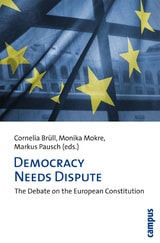
Democracy Needs Dispute
The Debate on the European ConstitutionEdited by Cornelia Brüll, Monika Mokre, and Markus Pausch
Campus Verlag, 2009
In 2005 hopes for closer European integration were dealt a potentially fatal blow when French and Dutch voters rejected the proposed new European Union constitution. Going beyond the instant analysis of journalists, which placed blame for the failed vote on the two nations’ internal politics, Democracy Needs Dispute examines a collection of media accounts of European policy debates to argue that the problem with the EU is its relative lack of vibrant political conflict. Democracy Needs Dispute offers both up-to-date analysis and a rich theoretical understanding of the problems facing further efforts at European integration.
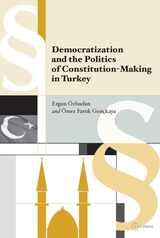
Democratization and the Politics of Constitution-Making in Turkey
Ömer Faruk Gençkaya
Central European University Press, 2009
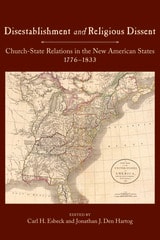
Disestablishment and Religious Dissent
Church-State Relations in the New American States, 1776-1833Edited by Carl H. Esbeck and Jonathan J. Den Hartog
University of Missouri Press, 2026
traditions of church-state relations rooted in the colony’s peoples, their country of origin, and religion.
This definitive volume, comprising twenty-one original essays by eminent historians and political scientists, is a comprehensive state-by-state account of disestablishment in the original thirteen states, as well as a look at similar events in the soon-to-be-admitted states of Vermont, Tennessee, and Kentucky. Also considered are disestablishment in Ohio (the first state admitted from the Northwest Territory), Louisiana and Missouri (the first states admitted from the Louisiana Purchase), and Florida (wrestled from Spain under U.S. pressure). The volume makes a unique scholarly contribution by recounting in detail the process of disestablishment in each of the colonies, as well as religion’s constitutional and legal place in the new states of the federal republic.
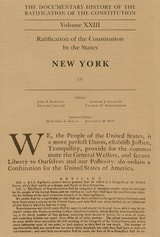
Documentary History of the Ratification of the Constitution, Volume 23
Ratification of the Constitution by the States: New York, No. 5Edited by John P. Kaminski and Gaspare J. Saladino; Senior Associate Editor: Richard Leffler; Associate Editor: Charles H. Schoenleber; Assistant Editor: Margaret A. Hogan
Wisconsin Historical Society Press, 2009
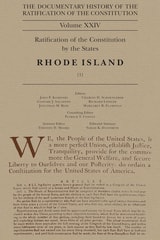
Documentary History of the Ratification of the Constitution, Volume 24
Ratification of the Constitution by the States: Rhode Island, No. 1Kaminski
Wisconsin Historical Society Press, 2011
This is the first of three volumes documenting Rhode Island's public and private debates about the Constitution. This documentary series is a research tool of remarkable power, an unrivaled reference work for historical and legal scholars, librarians, and students of the Constitution. The volumes are encyclopedic, consisting of manuscript and printed documents-contemporary newspapers, broadsides, and pamphlets-compiled from hundreds of sources, copiously annotated, thoroughly indexed, and often accompanied by microfiche supplements. Pulitzer Prize-winning historian Michael Kammen has noted that The Documentary History of the Ratification of the Constitution series "will be of enduring value centuries hence" and described it as "one of the most interesting documentary publications we have ever had." The American Bar Association Journal has stated, "Each new volume now fills another vital part of the mosaic of national history."