Results by title
54 books match the query 'Contemporary (1945-)' and 2 start with d
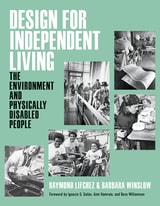
Design for Independent Living
The Environment and Physically Disabled PeopleRaymond Lifchez
University of Minnesota Press, 2027
A new edition of the classic and innovative resource that relies on personal lived experience to guide accessible design
In 1979, University of California architecture professors Raymond Lifchez and Barbara Winslow published this account of ongoing collaborations with members of a robust disability community in Berkeley, California. In the first attempt by architects to know disabled people and to design from their perspective, they employed an empathetic approach that differed from typical accessible design guidelines.
Instead of presenting architectural designs to resolve existing barriers, Design for Independent Living turns to disabled people to tell their own stories through interviews and photographs of their own homes, workplaces, and lives in public. The disabled informants of the project were members of the Independent Living movement—the activists who shaped the disability rights movement in the late twentieth century in the United States—and their contributions demonstrate the necessity of liberating design from ableist, restrictive ways of thinking about personal and public life.
Now with a new foreword by three scholars of design and disability history, Design for Independent Living is an indispensable resource for architecture and design experts who seek a socially informed practice that looks to the people most affected by design to understand its potentials and its shortcomings.
Retail e-book files for this title are screen-reader friendly with images accompanied by short alt text and/or extended descriptions.
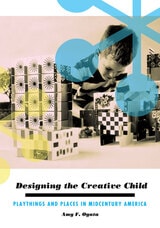
Designing the Creative Child
Playthings and Places in Midcentury AmericaAmy F. Ogata
University of Minnesota Press, 2013
The postwar American stereotypes of suburban sameness, traditional gender roles, and educational conservatism have masked an alternate self-image tailor-made for the Cold War. The creative child, an idealized future citizen, was the darling of baby boom parents, psychologists, marketers, and designers who saw in the next generation promise that appeared to answer the most pressing worries of the age.
Designing the Creative Child reveals how a postwar cult of childhood creativity developed and continues to this day. Exploring how the idea of children as imaginative and naturally creative was constructed, disseminated, and consumed in the United States after World War II, Amy F. Ogata argues that educational toys, playgrounds, small middle-class houses, new schools, and children’s museums were designed to cultivate imagination in a growing cohort of baby boom children. Enthusiasm for encouraging creativity in children countered Cold War fears of failing competitiveness and the postwar critique of social conformity, making creativity an emblem of national revitalization.
Ogata describes how a historically rooted belief in children’s capacity for independent thinking was transformed from an elite concern of the interwar years to a fully consumable and aspirational ideal that persists today. From building blocks to Gumby, playhouses to Playskool trains, Creative Playthings to the Eames House of Cards, Crayola fingerpaint to children’s museums, material goods and spaces shaped a popular understanding of creativity, and Designing the Creative Child demonstrates how this notion has been woven into the fabric of American culture.