Results by title
115 books match the query 'Criminal Law' and 9 start with d
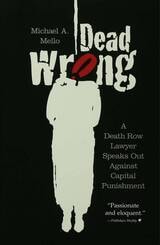
Dead Wrong
A Death Row Lawyer Speaks Out Against Capital PunishmentMichael A. Mello
University of Wisconsin Press, 1999
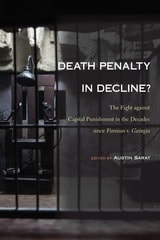
Death Penalty in Decline?
The Fight against Capital Punishment in the Decades since Furman v. GeorgiaAustin Sarat
Temple University Press, 2024
At a time when the United States is undertaking an unprecedented national reconsideration of the death penalty, Death Penalty in Decline? seeks to evaluate how abolitionists might succeed today.
Contributors: John Bessler, Corinna Barrett Lain, James R. Martel, Linda Ross Meyer, Carol S. Steiker, Jordan M. Steiker, and the editor

Deathwork
Defending The CondemnedMichael Mello
University of Minnesota Press, 2002
A gripping exposé of what lawyers face when they defend prisoners in capital cases.
Legal cases are stories, and some of the most compelling-and the most disturbing-are those that take place on death row: the innocent man executed, juveniles and the mentally ill condemned to die, a smoking electric chair, a napping defense attorney, a senile hit man. These are the stories in which Michael Mello, as a capital public defender, played a crucial role, and they are the cases that make up Deathwork, a moment-by-moment, behind-the-scenes look at the life and work of a death row lawyer and his clients.
Part memoir, part legal casebook, Deathwork offers a gritty, often anguishing picture of what Supreme Court Justice Harry Blackmun called the American legal "machinery of death." The stories Mello tells raise questions about legal issues-from prosecutorial misconduct to the racial inequities of sentencing, from the rules of evidence to the rights of the mentally ill-that here take on a life-and-death urgency. They describe in detail how constitutional issues are raised postconviction, and how those issues are adjudicated by the courts and in accordance with bizarre claims of objectivity. And they show, with a painful immediacy and authenticity, what it is like to live and work under an impending death sentence, the adrenaline rush of the stay or unexpected success, the inconsolable sadness upon the execution of the sick, the afflicted, the innocent.As DNA reversals, last-minute confessions, and revelations of corruption are bringing capital punishment to the forefront of public debate nationwide, this firsthand account of the legalities and realities of the death penalty is as relevant as it is enthralling, as edifying as it is impossible to ignore.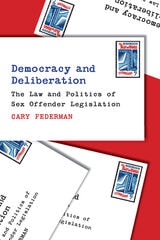
Democracy and Deliberation
The Law and Politics of Sex Offender LegislationCary Federman
University of Michigan Press, 2021
Sex offender laws include residency restrictions, registration and notification requirements, and post-conviction civil commitment. These laws and regulations impose serious restrictions on the movements of convicted sex offenders. This is controversial because these laws and regulations occur after the sex offender has completed his time in prison. These laws and regulations are intended to have both a deterrent and therapeutic effect. Residency restrictions seek to prevent sex offenders from re-committing their crimes and civil commitment provides psychological services while incarcerated in a forensic facility. Most works on this subject are deeply critical of these laws.
Cary Federman takes a more sympathetic approach to sex offender legislation. He focuses on the deliberative intentions of legislators, exploring the limits of judicial review and the rights of interested parties to influence lawmaking. Leaders of these interested parties are usually the parents of children who have been sexually violated and murdered. Critics of sex offender legislation tend to focus on the convicted parties, arguing that their rights have been violated. The Law and Politics of Sex Offender Legislation asserts that these laws are expressions of the deliberative intentions of lawmakers concerned about public safety—they are thus constitutional, if not always wise.

Dilemma of Duties
The Conflicted Role of Juvenile DefendersAnne M. Corbin
Southern Illinois University Press, 2018
In Dilemma of Duties, Corbin outlines patterns of role conflict that defenders experience, details its impact on counselors and clients in the juvenile justice system, and addresses the powerful influence of the juvenile court culture and the lack of resources for defenders. Tasked with guiding these children, counselors frequently must contend with and manage their clients’ general distrust of adults as they attempt to serve as their voices to the court.
Understanding how juvenile defenders define their role and experience role conflict provides valuable insights into our juvenile justice system, especially its role in upholding due process rights. Such knowledge points to the importance of the training and practices of juvenile court functionaries and the efficacy, credibility, and legitimacy of the juvenile justice system itself.

Disorder in the Court
Morality, Myth, and the Insanity DefenseAndrea L. Alden
University of Alabama Press, 2018
The first book-length rhetorical history and analysis of the legal and moral questions behind the insanity defense.
The insanity defense is considered one of the most controversial, most misunderstood, and least straightforward subjects in the American legal system. Disorder in the Court: Morality, Myth, and the Insanity Defense traces the US legal standards for the insanity defense as they have evolved from 1843, when they were first codified in England, to 1984, when the US government attempted to revise them through the Insanity Defense Reform Act. Throughout this period “insanity” existed primarily as a legal term rather than a medical one; yet the testimony of psychiatric experts is required in cases in which an insanity defense is raised.
The adjudication of such cases by courtroom practice is caught between two different but overlapping discourses, the legal and the medical, both of which have historically sought to assert and maintain firm disciplinary boundaries. Both expert and lay audiences have struggled to understand and apply commonplace definitions of sanity, and the portrayal of the insanity defense in popular culture has only served to further frustrate such understandings.
Andrea L. Alden argues that the problems with understanding the insanity defense are, at their foundation, rhetorical. The legal concept of what constitutes insanity and, therefore, an abdication of responsibility for one’s actions does not map neatly onto the mental health professions’ understandings of mental illness and how that affects an individual’s ability to understand or control his or her actions. Additionally, there are multiple layers of persuasion involved in any effort to convince a judge, jury—or a public, for that matter—that a defendant is or is not responsible for his or her actions at a particular moment in time.
Alden examines landmark court cases such as the trial of Daniel McNaughtan, Durham v. United States, and the trial of John Hinckley Jr. that signal the major shifts in the legal definitions of the insanity defense. Combining archival, textual, and rhetorical analysis, Alden offers a close reading of texts including trial transcripts, appellate court opinions, and relevant medical literature from the time period. She contextualizes these analyses through popular texts—for example, newspaper articles and editorials—showing that while all societies have maintained some version of mental illness as a mitigating factor in their penal systems, the insanity defense has always been fraught with controversy.
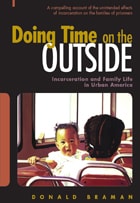
Doing Time on the Outside
Incarceration and Family Life in Urban AmericaDonald Braman
University of Michigan Press, 2004
-Katherine S. Newman
"Doing Time on the Outside brings to life in a compelling way the human drama, and tragedy, of our incarceration policies. Donald Braman documents the profound economic and social consequences of the American policy of massive imprisonment of young African American males. He shows us the link between the broad-scale policy changes of recent decades and the isolation and stigma that these bring to family members who have a loved one in prison. If we want to understand fully the impact of current criminal justice policies, this book should be required reading."
-Mark Mauer, Assistant Director, The Sentencing Project
"Through compelling stories and thoughtful analysis, this book describes how our nation's punishment policies have caused incalculable damage to the fabric of family and community life. Anyone concerned about the future of urban America should read this book."
-Jeremy Travis, The Urban Institute
In the tradition of Elijah Anderson's Code of the Street and Katherine Newman's No Shame in My Game, this startling new ethnography by Donald Braman uncovers the other side of the incarceration saga: the little-told story of the effects of imprisonment on the prisoners' families.
Since 1970 the incarceration rate in the United States has more than tripled, and in many cities-urban centers such as Washington, D.C.-it has increased over five-fold. Today, one out of every ten adult black men in the District is in prison and three out of every four can expect to spend some time behind bars. But the numbers don't reveal what it's like for the children, wives, and parents of prisoners, or the subtle and not-so-subtle effects mass incarceration is having on life in the inner city.
Author Donald Braman shows that those doing time on the inside are having a ripple effect on the outside-reaching deep into the family and community life of urban America. Braman gives us the personal stories of what happens to the families and communities that prisoners are taken from and return to. Carefully documenting the effects of incarceration on the material and emotional lives of families, this groundbreaking ethnography reveals how criminal justice policies are furthering rather than abating the problem of social disorder. Braman also delivers a number of genuinely new arguments.
Among these is the compelling assertion that incarceration is holding offenders unaccountable to victims, communities, and families. The author gives the first detailed account of incarceration's corrosive effect on social capital in the inner city and describes in poignant detail how the stigma of prison pits family and community members against one another. Drawing on a series of powerful family portraits supported by extensive empirical data, Braman shines a light on the darker side of a system that is failing the very families and communities it seeks to protect.

Drinkers, Drivers, and Bartenders
Balancing Private Choices and Public AccountabilityFrank A. Sloan, Emily M. Stout, Kathryn Whetten-Goldstein, and Lan Liang
University of Chicago Press, 2000
Extraordinary in scope and exacting in detail, Drinkers, Drivers, and Bartenders: Balancing Private Choices and Public Accountability links alcohol problems, deterrence, and serving practices in a way no other work has been able to do and is certain to become a crucial reference point for researchers and policymakers alike.

Drunk Driving
An American DilemmaJames B. Jacobs
University of Chicago Press, 1989