Results by title
100 books match the query 'Criminal justice, Administration of' and 5 start with d

DOWN ON PARCHMAN FARM
THE GREAT PRISON IN THE MISSISSIPPI DELTAWILLIAM BANKS TAYLOR
The Ohio State University Press, 1999
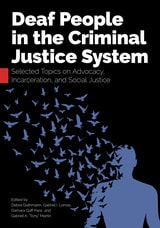
Deaf People in the Criminal Justice System
Selected Topics on Advocacy, Incarceration, and Social JusticeDebra Guthmann
Gallaudet University Press, 2021
The contributors address issues such as accessibility needs; gaps regarding data collection and the need for more research; additional training for attorneys, court personnel, and prison staff; the need for more qualified sign language interpreters, including Certified Deaf Interpreters who provide services in court, prison, and juvenile facilities; substance use disorders; the school to prison nexus; and the need for advocacy. Students in training programs, researchers, attorneys, mental health professionals, sign language interpreters, family members, and advocates will be empowered by this much-needed resource to improve the experiences and outcomes for deaf people in the criminal justice system.
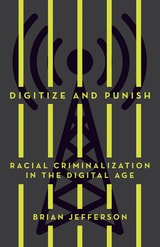
Digitize and Punish
Racial Criminalization in the Digital AgeBrian Jefferson
University of Minnesota Press, 2020
Tracing the rise of digital computing in policing and punishment and its harmful impact on criminalized communities of color
The U.S. Bureau of Justice Statistics estimates that law enforcement agencies have access to more than 100 million names stored in criminal history databases. In some cities, 80 percent of the black male population is registered in these databases. Digitize and Punish explores the long history of digital computing and criminal justice, revealing how big tech, computer scientists, university researchers, and state actors have digitized carceral governance over the past forty years—with devastating impact on poor communities of color.
Providing a comprehensive study of the use of digital technology in American criminal justice, Brian Jefferson shows how the technology has expanded the wars on crime and drugs, enabling our current state of mass incarceration and further entrenching the nation’s racialized policing and punishment. After examining how the criminal justice system conceptualized the benefits of computers to surveil criminalized populations, Jefferson focuses on New York City and Chicago to provide a grounded account of the deployment of digital computing in urban police departments.
By highlighting the intersection of policing and punishment with big data and web technology—resulting in the development of the criminal justice system’s latest tool, crime data centers—Digitize and Punish makes clear the extent to which digital technologies have transformed and intensified the nature of carceral power.
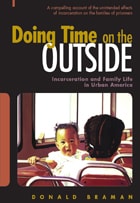
Doing Time on the Outside
Incarceration and Family Life in Urban AmericaDonald Braman
University of Michigan Press, 2004
-Katherine S. Newman
"Doing Time on the Outside brings to life in a compelling way the human drama, and tragedy, of our incarceration policies. Donald Braman documents the profound economic and social consequences of the American policy of massive imprisonment of young African American males. He shows us the link between the broad-scale policy changes of recent decades and the isolation and stigma that these bring to family members who have a loved one in prison. If we want to understand fully the impact of current criminal justice policies, this book should be required reading."
-Mark Mauer, Assistant Director, The Sentencing Project
"Through compelling stories and thoughtful analysis, this book describes how our nation's punishment policies have caused incalculable damage to the fabric of family and community life. Anyone concerned about the future of urban America should read this book."
-Jeremy Travis, The Urban Institute
In the tradition of Elijah Anderson's Code of the Street and Katherine Newman's No Shame in My Game, this startling new ethnography by Donald Braman uncovers the other side of the incarceration saga: the little-told story of the effects of imprisonment on the prisoners' families.
Since 1970 the incarceration rate in the United States has more than tripled, and in many cities-urban centers such as Washington, D.C.-it has increased over five-fold. Today, one out of every ten adult black men in the District is in prison and three out of every four can expect to spend some time behind bars. But the numbers don't reveal what it's like for the children, wives, and parents of prisoners, or the subtle and not-so-subtle effects mass incarceration is having on life in the inner city.
Author Donald Braman shows that those doing time on the inside are having a ripple effect on the outside-reaching deep into the family and community life of urban America. Braman gives us the personal stories of what happens to the families and communities that prisoners are taken from and return to. Carefully documenting the effects of incarceration on the material and emotional lives of families, this groundbreaking ethnography reveals how criminal justice policies are furthering rather than abating the problem of social disorder. Braman also delivers a number of genuinely new arguments.
Among these is the compelling assertion that incarceration is holding offenders unaccountable to victims, communities, and families. The author gives the first detailed account of incarceration's corrosive effect on social capital in the inner city and describes in poignant detail how the stigma of prison pits family and community members against one another. Drawing on a series of powerful family portraits supported by extensive empirical data, Braman shines a light on the darker side of a system that is failing the very families and communities it seeks to protect.
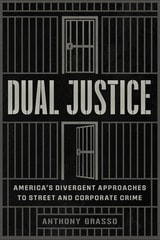
Dual Justice
America’s Divergent Approaches to Street and Corporate CrimeAnthony Grasso
University of Chicago Press, 2024
A far-reaching examination of how America came to treat street and corporate crime so differently.
While America incarcerates its most marginalized citizens at an unparalleled rate, the nation has never developed the capacity to consistently prosecute corporate wrongdoing. Dual Justice unearths the intertwined histories of these two phenomena and reveals that they constitute more than just modern hypocrisy.
By examining the carceral and regulatory states’ evolutions from 1870 through today, Anthony Grasso shows that America’s divergent approaches to street and corporate crime share common, self-reinforcing origins. During the Progressive Era, scholars and lawmakers championed naturalized theories of human difference to justify instituting punitive measures for poor offenders and regulatory controls for corporate lawbreakers. These ideas laid the foundation for dual justice systems: criminal justice institutions harshly governing street crime and regulatory institutions governing corporate misconduct.
Since then, criminal justice and regulatory institutions have developed in tandem to reinforce politically constructed understandings about who counts as a criminal. Grasso analyzes the intellectual history, policy debates, and state and federal institutional reforms that consolidated these ideas, along with their racial and class biases, into America’s legal system.