Results by title
60 books match the query 'Critique' and 4 start with d
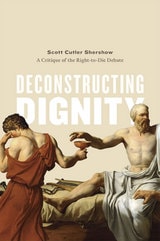
Deconstructing Dignity
A Critique of the Right-to-Die DebateScott Cutler Shershow
University of Chicago Press, 2013
Shershow examines texts from Cicero’s De Officiis to Kant’s Groundwork of the Metaphysics of Morals to court decisions and religious declarations. Through them he reveals how arguments both supporting and denying the right to die undermine their own unconditional concepts of human dignity and the sanctity of life with a hidden conditional logic, one often tied to practical economic concerns and the scarcity or unequal distribution of medical resources. He goes on to examine the exceptional case of self-sacrifice, closing with a vision of a society—one whose conditions we are far from meeting—in which the debate can finally be resolved. A sophisticated analysis of a heated topic, Deconstructing Dignity is also a masterful example of deconstructionist methods at work.
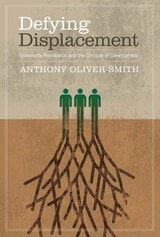
Defying Displacement
Grassroots Resistance and the Critique of DevelopmentBy Anthony Oliver-Smith
University of Texas Press, 2010
The uprooting and displacement of people has long been among the hardships associated with development and modernity. Indeed, the circulation of commodities, currency, and labor in modern society necessitates both social and spatial mobility. However, the displacement and resettlement of millions of people each year by large-scale infrastructural projects raises serious questions about the democratic character of the development process.
Although designed to spur economic growth, many of these projects leave local people struggling against serious impoverishment and gross violations of human rights. Working from a political-ecological perspective, Anthony Oliver-Smith offers the first book to document the fight against involuntary displacement and resettlement being waged by people and communities around the world.
Increasingly over the last twenty-five years, the voices of people at the grass roots are being heard. People from many societies and cultures are taking action against development-forced displacement and resettlement (DFDR) and articulating alternatives. Taking the promise of democracy seriously, they are fighting not only for their place in the world, but also for their place at the negotiating table, where decisions affecting their well-being are made.

Dossier
Étienne Balibar on Althusser's Dramaturgy and the Critique of IdeologyElizabeth Weed and Ellen Rooney, special issue editors
Duke University Press, 0
Most readers of Louis Althusser first enter his work through his writings on ideology. In an important new essay Étienne Balibar, friend and colleague of Althusser, offers an original reading of Althusser’s idea of ideology, drawing on both recently published posthumous writing and Althusser's work on the Piccolo Teatro di Milano. Balibar’s essay uncovers the intricate workings of interpellation through Althusser’s essays on the theater. If debates on dialectical materialism belong to a distant history, Balibar suggests, the question of ideology remains crucial for thinking the present.
The issue includes commentaries on Balibar’s essay from five influential scholars who engage critically with Althusser’s philosophy: Judith Butler, Banu Bargu, Adi Ophir, Warren Montag, and Bruce Robbins. This issue reanimates Althusser’s concept of ideology as an analytic tool for contemporary cultural and political critique.

Double Jeopardy
A Critique of Seven Yüan Courtroom DramasChing-Hsi Perng
University of Michigan Press, 1978