Results by title
160 books match the query 'Cross-cultural studies' and 9 start with d

Dance, Sex, and Gender
Signs of Identity, Dominance, Defiance, and DesireJudith Lynne Hanna
University of Chicago Press, 1988
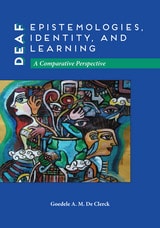
Deaf Epistemologies, Identity, and Learning
A Comparative PerspectiveGoedele A. M. De Clerck
Gallaudet University Press, 2016
Deaf Epistemologies, Identity, and Learning argues for an inclusive approach to the intrinsic human diversity in society, education, and scholarship, and shows how emotions of hope, frustration, and humiliation contribute to the construction of identity and community. De Clerck also considers global to local dynamics in deaf identity, deaf culture, deaf education, and deaf empowerment. She presents empirical research through case studies of the emancipation processes for deaf people in Flanders (a region of Belgium), the United States (specifically, at Gallaudet University in Washington, DC), and the West African nation of Cameroon. These three settings illuminate different phases of emancipation in different contexts, and the research findings are integrated into a broader literature review and subjected to theoretical reflection.
De Clerck’s anthropology of deaf flourishing draws from her critical application of the empowerment paradigm in settings of daily life, research, leadership, and community work, as she explores identity and well-being through an interdisciplinary lens. This work is centered around practices of signed storytelling and posits learning as the primary access and pathway to culture, identity, values, and change. Change driven by the learning process is considered an awakening—and through this awakening, the deaf community can gain hope, empowerment, and full citizenship. In this way, deaf people are allowed to shape their histories, and the result is the elevation of all aspects of deaf lives around the world.

Dear Science and Other Stories
Katherine McKittrick
Duke University Press, 2021
Development and Crisis of the Welfare State
Parties and Policies in Global MarketsEvelyne Huber and John D. Stephens
University of Chicago Press, 2001
Building on their previous research, Huber and Stephens show how high wages and generous welfare states are still possible in an age of globalization and trade competition.
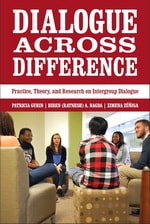
Dialogue Across Difference
Practice, Theory, and Research on Intergroup DialoguePatricia Gurin
Russell Sage Foundation, 2013
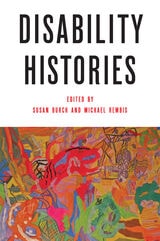
Disability Histories
Edited by Susan Burch and Michael Rembis
University of Illinois Press, 2014
Contributors delve into four critical areas of study within disability history: family, community, and daily life; cultural histories; the relationship between disabled people and the medical field; and issues of citizenship, belonging, and normalcy. As the first collection of its kind in over a decade, Disability Histories not only brings readers up to date on scholarship within the field but fosters the process of moving it beyond the U.S. and Western Europe by offering work on Africa, South America, and Asia. The result is a broad range of readings that open new vistas for investigation and study while encouraging scholars at all levels to redraw the boundaries that delineate who and what is considered of historical value.
Informed and accessible, Disability Histories is essential for classrooms engaged in all facets of disability studies within and across disciplines.
Disease Prevention as Social Change
The State, Society, and Public Health in the United States, France, Great Britain, and CanadaConstance A. Nathanson
Russell Sage Foundation, 2007

Doctors and the State
The Politics of Health Care in France and the United StatesDavid Wilsford
Duke University Press, 1991
In France, Wilsford shows, the state is strong in the health policy domain, while organized medicine is weak and divided. Consequently, physicians exercise little influence over health care policymaking. By contrast, in the United States the state is weak, the employers and insurers who pay for health care are fragmented, and organized medicine is strong and well financed. As a result, medical professionals are able to exert a greater influence on policymaking, thus making cost control more difficult.
Wilsford extends his comparison to health care systems in the United Kingdom, West Germany, Italy, Canada, and Japan. Whether the private or public sector finances health care, he discovers, there is now an important trend in all of the advanced industrial countries toward controlling escalating costs by curbing both the medical profession’s clinical autonomy and physicians’ incomes.
Drugs, Labor and Colonial Expansion
William Jankowiak
University of Arizona Press, 2003
This book explores how Europeans introduced and used drugs in colonial contexts for the exploitation and placation of indigenous labor. Combining history and anthropology, it examines the role of drugs in trade and labor during the age of western colonial expansion. From considering the introduction of alcohol in the West African slave trade to the use of coca as a labor enhancer in the Andes, these original contributions examine both the encouragement of drug use by colonial powers and the extent to which local peoples' previous experience with psychoactive substances shaped their use of drugs introduced by Europeans.
The authors show that drugs possessed characteristics that made them a particularly effective means for propagating trade or increasing the extent and intensity of labor. In the early stages of European expansion, drugs were introduced to draw people, quite literally, into relations of dependency with European trade partners. Over time, the drugs used to intensify the amount and duration of labor shifted from alcohol, opium, and marijuana—which were used to overcome the drudgery and discomfort of physical labor—to caffeine-based stimulants, which provided a more alert workforce.
Valuable not only for its ethnographic detail but also for its broader insight into the nature of capitalist expansion, this collection reveals the surprising consistency of drug use in the colonial process. Drugs, Labor and Colonial Expansion is a book rich with cross-cultural insights that ranges widely across disciplines to provide a new and needed look at the colonial experience.