Results by title
65 books match the query 'Czech Republic' and 4 start with d

Defending Nazis in Postwar Czechoslovakia
Life of K. Resler, Defense Councel Ex Officio of K. H. FrankJakub Drápal
Karolinum Press, 2018

Democratizing Communist Militaries
The Cases of the Czech and Russian Armed ForcesMarybeth Peterson Ulrich
University of Michigan Press, 2000
In a groundbreaking study, Marybeth Peterson Ulrich explores the attitudes of the leaders of the armed forces in Russia and the Czech Republic toward the new democratic governments and suggests ways in which we might encourage the development of politically neutral militaries in these states. Building on the work of Samuel Huntington and others on the relationship between the military and the state, the author suggests that norms of military professionalism must change if the armies in countries making a transition from communist rule are to become strong supporters of the democratic state. The Czech Republic and Russia are interesting cases, because they have had very different experiences in the transition; they have different geopolitical goals; and they experienced different military-civilian relationships during the Soviet period. The author also explores American and NATO programs to promote democratization in these militaries and suggests changes in the programs.
Marybeth Peterson Ulrich is Associate Professor of Government, U.S. Army War College.

Demographic Avant-Garde
Jews in Bohemia between the Enlightenment and the ShoahJana Vobecká
Central European University Press, 2013
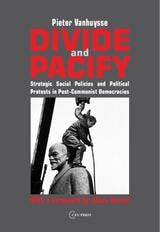
Divide and Pacify
Strategic Social Policies and Political Protests in Post-Communist DemocraciesPieter Vanhuysse
Central European University Press, 2006
Despite dramatic increases in poverty, unemployment, and social inequalities, the Central and Eastern European transitions from communism to market democracy in the 1990s have been remarkably peaceful. This book proposes a new explanation for this unexpected political quiescence. It shows how reforming governments in Poland, Hungary and the Czech Republic have been able to prevent massive waves of strikes and protests by the strategic use of welfare state programs such as pensions and unemployment benefits.
Divide and Pacify explains how social policies were used to prevent massive job losses with softening labor market policies, or to split up highly aggrieved groups of workers in precarious jobs by sending some of them onto unemployment benefits and many others onto early retirement and disability pensions. From a narrow economic viewpoint, these policies often appeared to be immensely costly or irresponsibly populist. Yet a more inclusive social-scientific perspective can shed new light on these seemingly irrational policies by pointing to deeper political motives and wider sociological consequences.