Results by title
58 books match the query 'Dead' and 9 start with d
Dancing with the Dead
Memory, Performance, and Everyday Life in Postwar OkinawaChristopher T. Nelson
Duke University Press, 2008
Nelson analyzes the practices of specific performers, showing how memories are recalled, bodies remade, and actions rethought as Okinawans work through fragments of the past in order to reconstruct the fabric of everyday life. Artists such as the popular Okinawan actor and storyteller Fujiki Hayato weave together genres including Japanese stand-up comedy, Okinawan celebratory rituals, and ethnographic studies of war memory, encouraging their audiences to imagine other ways to live in the modern world. Nelson looks at the efforts of performers and activists to wrest the Okinawan past from romantic representations of idyllic rural life in the Japanese media and reactionary appropriations of traditional values by conservative politicians. In his consideration of eisā, the traditional dance for the dead, Nelson finds a practice that reaches beyond the expected boundaries of mourning and commemoration, as the living and the dead come together to create a moment in which a new world might be built from the ruins of the old.
Day of the Dead in the USA, Second Edition
The Migration and Transformation of a Cultural PhenomenonRegina M Marchi
Rutgers University Press, 2022
Focusing on the power of public ritual to serve as a communication medium, this revised and updated edition combines a mix of ethnography, historical research, oral history, and critical cultural analysis to explore the manifold and unexpected transformations that occur when the tradition is embraced by the mainstream. A testament to the complex role of media and commercial forces in constructions of ethnic identity, Day of the Dead in the USA provides insight into the power of art and ritual to create community, transmit oppositional messages, and advance educational, political, and economic goals.
Today Chicano-style Day of the Dead events take place in all fifty states. This revised edition provides new information about:
- The increase in events across the US, incorporating media coverage and financial aspects,
- Recent political movements expressed in contemporary Day of the Dead celebrations, including #BlackLivesMatter and #MeToo
- Greater media coverage and online presence of the celebration in blogs, websites, and streaming video
- Día de los Muertos themes and iconography in video games and films
- The proliferation of commercialized merchandise such as home goods, apparel, face paints and jewelry at mainstream big box and web retailers, as well as the widespread proliferation of calavera-themed decorations and costumes for Halloween
- 24 new full color illustrations
Day of the Dead in the USA
The Migration and Transformation of a Cultural PhenomenonMarchi, Regina M
Rutgers University Press, 2009
Focusing on the power of ritual to serve as a communication medium, Regina M. Marchi combines a mix of ethnography, historical research, oral history, and critical cultural analysis to explore the manifold and unexpected transformations that occur when the tradition is embraced by the mainstream. A testament to the complex nature of ethnic identity, Day of the Dead in the USA provides insight into the power of ritual to create community, transmit oppositional messages, and advance educational, political, and economic goals.

Dead in Their Tracks
Crossing America’s Desert Borderlands in the New EraJohn Annerino
University of Arizona Press, 2009
During the Sonoran Desert’s glorious and brutal summer season Annerino, a photojournalist, author, and explorer, watched four border crossers step off a bus and nonchalantly head into the American no-man’s land. On assignment for Newsweek, Annerino did more than just watch on that blistering August day. He joined them on their ultramarathon, life-or-death quest to find work to feed their families, amid temperatures so hot your parched throat burns from breathing and drinking water is the ultimate treasure.
As their water dwindled and the heat punished them, Annerino and the desperate men continued marching fifty miles in twenty-four hours and managed to survive their harrowing journey across the deadliest migrant trail in North America, El Camino del Diablo, “The Road of the Devil.” Driven by the mounting death toll, John returned again and again to the sun-scorched despoblado (uninhabited lands)—where hidden bighorn sheep water tanks glowed like diamonds—to document the lives, struggles, and heartbreaking remains of those who continue to disappear and perish in a region that’s claimed the lives of more than 9,700 men, women, and children.
Following the historic paths of indigenous Hia Ced O’odham (People of the Sand), Spanish missionary explorer Padre Eusebio Francisco Kino, and California-bound Forty-Niners, Annerino’s journeys on foot, crisscrossed the alluring yet treacherous desert trails of the El Camino del Diablo, Hohokam shell trail, and O’odham salt trails where hundreds of gambusinos (Mexican miners) and Euro-American pioneers succumbed during the 1850s.
As the migrants kept coming, the deaths kept mounting, and Annerino kept returning. He crossed celebrated Sonoran Desert sanctuaries—Organ Pipe Cactus National Monument, a UNESCO Biosphere Reserve, Cabeza Prieta National Wildlife Refuge, Barry M. Goldwater Range, sacred ancestral lands of the Tohono O’odham—that had become lost horizons, killing grounds, graveyards, and deadly smuggling corridors that also claimed the lives of National Park rangers and Border Patrol agents. John Annerino’s mission was to save someone, anyone, everyone—when he could find them.
Dead in Their Tracks is the saga of a merciless despoblado in the Great Southwest, of desperate yet hopeful migrants and refugees who keep staggering north. It is the story of ranchers, locals, and Border Patrol trackers who’ve saved countless lives, and heavily armed smugglers who haunt an inhospitable, if beautiful, wilderness that remains off the radar for journalists and news organizations that dare not set foot in the American desert waiting to welcome them on its terms.
Dead in the Water
Global Lessons from the World Bank's Model Hydropower Project in LaosEdited by Bruce Shoemaker and William Robichaud; foreword by Yos Santasombat; afterword by Philip Hirsch
University of Wisconsin Press, 2019
In the 2000s, as the World Bank was reeling from revelations of past hydropower failures, it nonetheless promoted the enormous Nam Theun 2 project. NT2, the Bank believed, offered a new, wiser model of dam development that would alleviate poverty, protect the environment, engage locally affected people in a transparent fashion, and stimulate political transformation. This was a tall order. For the first time, this book shows in detail why, despite assertions of success from the World Bank and other agencies involved in the project, the dam's true story has been one of substantial loss for affected villagers and the regional environment. Nam Theun 2 is an important case study that illustrates much broader problems of global development policy.
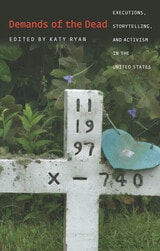
Demands of the Dead
Executions, Storytelling, and Activism in the United StatesKaty Ryan
University of Iowa Press, 2012
The first work to combine literary criticism with other forms of death penalty–abolitionist writing, Demands of the Dead demonstrates the active importance of literature and literary criticism to the struggle for greater justice in the United States. Gathering personal essays, scholarly articles, and creative writings on the death penalty in American culture, this striking collection brings human voices and literary perspectives to a subject that is often overburdened by statistics and angry polemics. Contributors include death-row prisoners, playwrights, poets, activists, and literary scholars.
Highlighting collaborations between writers inside and outside prison, all within the context of the history of state killing laws and foundational concepts that perpetuate a culture of violent death, Demands of the Dead opens with a pamphlet dictated by Willie Francis, a teenager who survived a first execution attempt in Louisiana’s electric chair before he was subsequently killed by the state in 1947.
Writers are a conspicuous part of U.S. death-penalty history, composing a vibrant literary record of resistance to state killing. This multigenre collection both recalls and contributes to this tradition through discussions of such writers as Walt Whitman, Herman Melville, Gertrude Atherton, Ernest Gaines, Sonia Sanchez, Kia Corthron, and Sherman Alexie. A major contribution to literary studies and American prison studies, Demands of the Dead asserts the relevance of storytelling to ethical questions and matters of public policy.
Digging The Days Of The Dead
Juanita Garciagodo
University Press of Colorado, 1998
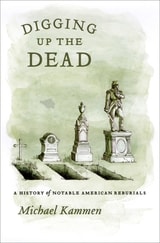
Digging Up the Dead
A History of Notable American ReburialsMichael Kammen
University of Chicago Press, 2010
With Digging Up the Dead, Pulitzer Prize–winning historian Michael Kammen reveals a treasure trove of fascinating, surprising, and occasionally gruesome stories of exhumation and reburial throughout American history. Taking us to the contested grave sites of such figures as Sitting Bull, John Paul Jones, Frank Lloyd Wright, Daniel Boone, Jefferson Davis, and even Abraham Lincoln, Kammen explores how complicated interactions of regional pride, shifting reputations, and evolving burial practices led to public and often emotional battles over the final resting places of famous figures. Grave-robbing, skull-fondling, cases of mistaken identity, and the financial lures of cemetery tourism all come into play as Kammen delves deeply into this little-known—yet surprisingly persistent—aspect of American history.
Simultaneously insightful and interesting, masterly and macabre, Digging Up the Dead reminds us that the stories of American history don’t always end when the key players pass on. Rather, the battle—over reputations, interpretations, and, last but far from least, possession of the remains themselves—is often just beginning.
Directions to the Beach of the Dead
Richard Blanco
University of Arizona Press, 2005
The words are redolent with his Cuban heritage: Marina making mole sauce; Tía Ida bitter over the revolution, missing the sisters who fled to Miami; his father, especially, “his hair once as black as the black of his oxfords…” Yet this is a volume for all who have longed for enveloping arms and words, and for that sanctuary called home. “So much of my life spent like this-suspended, moving toward unknown places and names or returning to those I know, corresponding with the paradox of crossing, being nowhere yet here.” Blanco embraces juxtaposition. There is the Cuban Blanco, the American Richard, the engineer by day, the poet by heart, the rhythms of Spanish, the percussion of English, the first-world professional, the immigrant, the gay man, the straight world. There is the ennui behind the question: why cannot I not just live where I live? Too, there is the precious, fleeting relief when he can write "…I am, for a moment, not afraid of being no more than what I hear and see, no more than this:..." It is what we all hope for, too.