Results by title
126 books match the query 'Decolonization' and 12 start with d
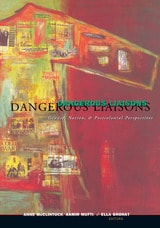
Dangerous Liaisons
Gender, Nation, and Postcolonial PerspectivesAnne Mcclintock
University of Minnesota Press, 1997
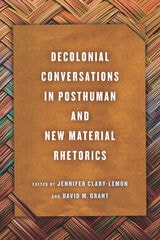
Decolonial Conversations in Posthuman and New Material Rhetorics
Edited by Jennifer Clary-Lemon and David M. Grant
The Ohio State University Press, 2022
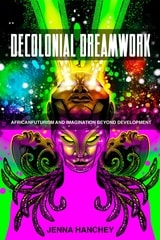
Decolonial Dreamwork
Africanfuturism and Imagination Beyond DevelopmentJenna Hanchey
The Ohio State University Press, 2027
Incorporates creative writing and analysis of contemporary African speculative fiction to center dreams as a tool for liberation.
In Decolonial Dreamwork, Jenna Hanchey centers dreaming, both waking and sleeping, to examine how Africanfuturism enables futures beyond the “reality” of what developmental imperatives deem possible. Engaging with the speculative fiction of Tade Thompson, Shingai Njeri Kagunda, Yvette Lisa Ndlovu, Tlotlo Tsamaase, Suyi Davies Okungbowa, Sofia Samatar, Moses Ose Utomi, and the Sauúti Collective, Hanchey demonstrates how these works provide a roadmap for decolonial dreaming—imagining beyond the conceptual limits Western paradigms impose. Connecting African and Indigenous thought, Decolonial Dreamwork shows how the labor of imagining beyond coloniality is nonlinear, embodied, emplaced, liquid, and reliant on multiplicities of stories.
As both a scholar and speculative fiction writer, Hanchey blends analysis with examples of her own creative work to demonstrate the importance of not only reading African speculative fiction but joining in and dreaming alongside it. Punctuated with exercises and prompts, Decolonial Dreamwork functions as a participatory workbook for liberation that will be as generative for classrooms and book clubs as it is for theory development. We can all tell stories, Hanchey exhorts readers, that break colonial realities and create space for better worlds.
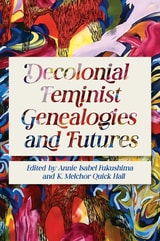
Decolonial Feminist Genealogies and Futures
Edited by Annie Isabel Fukushima and K. Melchor Quick Hall
University of Illinois Press, 2025
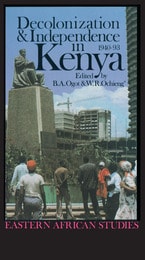
Decolonization and Independence in Kenya, 1940–1993
B. A. Ogot
Ohio University Press, 1995
This is a sharply observed assessment of the history of the last half century by a distinguished group of historians of Kenya. At the same time the book is a courageous reflection in the dilemmas of African nationhood.
Professor B. A. Ogot says:
“The main purpose of the book is to show that decolonization does not only mean the transfer of alien power to sovereign nationhood; it must also entail the liberation of the worlds of spirit and culture, as well as economics and politics.
“The book also raises a more fundamental question, that is: How much independence is available to any state, national economy or culture in today’s world? It asks how far are Africa’s miseries linked to the colonial past and to the process of decolonization?
“In particular the book raises the basic question of how far Kenya is avoidably neo-colonial? And what does neo-colonial dependence mean? The book answers these questions by discussing the dynamic between the politics of decolonization, the social history of class formation and the economics of dependence. The book ends with a provocative epilogue discussing the transformation of the post-colonial state from a single-party to a multi-party system.”

Decolonization and World Peace
By Brian Urquhart
University of Texas Press, 1989
Brian Urquhart's remarkable career in the United Nations began when the UN was founded in 1945 and ended in 1986 after a twelve-year tenure as Under Secretary-General for Special Political Affairs—the equivalent of commander of UN peacekeeping operations. Among the many revolutions he observed during that period was the process of decolonization, which completely changed the geopolitical map of the world and the conditions under which governments seek to assure world peace. In Decolonization and World Peace, he charts the rapid progress of decolonization in Africa, the Middle East, and other areas of the Third World and describes some of its repercussions.
One of the most serious repercussions has been the chain of regional conflicts arising from the creation of postcolonial power vacuums in various parts of the world. Attributing the difficulty in resolving many of these conflicts—including the Palestine conflict and the Iran-Iraq War—to the climate of Cold War that paralyzed UN authority from the 1960s through the early 1980s, Urquhart is encouraged by what he calls a "new summer of international relations" brought on by the warming of relations between the US and the USSR.
The four chapters of Decolonization and World Peace are based on the Tom Slick World Peace lectures that Urquhart delivered at the Lyndon B. Johnson School of Public Affairs of the University of Texas at Austin in 1988. The appendices offer further insights into the peacekeeping potential of the UN. Included are his remarks at the Nobel Prize Banquet in Norway, on the occasion of the award of the 1988 Nobel Peace Prize to UN peacekeeping forces.
Decolonization and the Decolonized
Albert Memmi
University of Minnesota Press, 2006
Decolonizing Ethnography
Undocumented Immigrants and New Directions in Social ScienceCarolina Alonso-Bejarano, Lucia López Juárez, Mirian A. Mijangos García, and Daniel M. Goldstein
Duke University Press, 2019
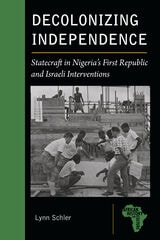
Decolonizing Independence
Statecraft in Nigeria’s First Republic and Israeli InterventionsLynn Schler
Michigan State University Press, 2022
Decolonizing Israel, Liberating Palestine
Zionism, Settler Colonialism, and the Case for One Democratic StateJeff Halper
Pluto Press, 2021
For decades we have spoken of the 'Israel-Palestine conflict', but what if our understanding of the issue has been wrong all along? This book explores how the concept of settler colonialism provides a clearer understanding of the Zionist movement's project to establish a Jewish state in Palestine, displacing the Palestinian Arab population and marginalizing its cultural presence.
Jeff Halper argues that the only way out of a colonial situation is decolonization: the dismantling of Zionist structures of domination and control and their replacement by a single democratic state, in which Palestinians and Israeli Jews forge a new civil society and a shared political community.
To show how this can be done, Halper uses the 10-point program of the One Democratic State Campaign as a guide for thinking through the process of decolonization to its post-colonial conclusion. Halper's unflinching reframing will empower activists fighting for the rights of the Palestinians and democracy for all.
Decolonizing the Map
Cartography from Colony to NationEdited by James R. Akerman
University of Chicago Press, 2017
These essays, originally delivered as the 2010 Kenneth Nebenzahl, Jr., Lectures in the History of Cartography at the Newberry Library, encompass more than two centuries and three continents—Latin America, Africa, and Asia. Ranging from the late eighteenth century through the mid-twentieth, contributors study topics from mapping and national identity in late colonial Mexico to the enduring complications created by the partition of British India and the racialized organization of space in apartheid and post-apartheid South Africa. A vital contribution to studies of both colonization and cartography, Decolonizing the Map is the first book to systematically and comprehensively examine the engagement of mapping in the long—and clearly unfinished—parallel processes of decolonization and nation building in the modern world.
Diné Perspectives
Revitalizing and Reclaiming Navajo ThoughtEdited by Lloyd L. Lee; Foreword by Gregory Cajete
University of Arizona Press, 2014
All of the contributors are coming to personal terms with a phrase that underpins the matrix of Diné culture: Sa’ah Naagháí Bik’eh Hózhóón. Often referred to simply as SNBH, the phrase can be translated in many ways but is generally understood to mean “one’s journey of striving to live a long, harmonious life.” The book offers a variety of perspectives of Diné men and women on the Diné cultural paradigm that is embedded in SNBH. Their writings represent embodied knowledge grounded in a way of knowing that connects thought, speech, experience, history, tradition, and land. Some of the contributors are scholars. Some are Diné who are fighting for justice and prosperity for the Navajo Nation. Some are poets and artists. They are united in working to preserve both intellectual and cultural sovereignty for Diné peoples. And their contributions exemplify how Indigenous peoples are creatively applying tools of decolonization and critical research to re-create Indigenous thought and culture in a present day that rarely resembles the days of their ancestors.
More than 300,000 people self-identify as Diné today. Every one must grapple with how to make a life that acknowledges Sa’ah Naagháí Bik’eh Hózhóón. Diné Perspectives is unique in bringing such personal journeys to the public eye.