Results by title
78 books match the query 'Developmental' and 2 start with d

Decisions for Tomorrow
Plans of High School Seniors for after GraduationRalph Berdie
University of Minnesota Press, 1965
Decisions for Tomorrow was first published in 1965.The authors surveyed almost the entire population of high school seniors in the state of Minnesota in 1961, some 45,000 young people, in order to study post-high-school plans. The findings of the study are reported here and are compared with findings of a similar survey made a decade earlier. The students were asked during their senior year to provide information about their plans for after graduation, and the eventual behavior of the students was compared with their prediction. Numerous correlations were observed between the students’ plans and such factors as ability, school achievement, socio-economic status, and personality. In addition, comparisons were made between the 1950 and 1961 studies to determine whether any observable trends might be attributable to factors as diverse as the orbiting of Sputnik or the increase in number and quality of school counselors.Special emphasis is given to the examination of the college-bound students. Their achievements, aptitudes, and personalities are compared with the same characteristics in youngsters not planning to go to college. However, the authors point out that whether concern is centered on college preparation or on larger questions of manpower, the plans and goals of high school students are of crucial importance in a society which is based on mass education of the highest possible quality.Volume 9 in the Minnesota Library on Student Personnel Work
[more]
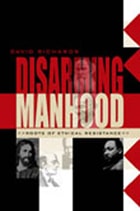
Disarming Manhood
Roots of Ethical ResistanceDavid A.J. Richards
Ohio University Press, 2005
Masculine codes of honor and dominance often are expressed in acts of violence, including war and terrorism. In Disarming Manhood: Roots of Ethical Resistance, David A.J. Richards examines the lives of five famous men—great leaders and crusaders—who actively resisted violence and presented their causes with more humane alternatives.Richards argues that Winston Churchill, William Lloyd Garrison, Mohandas Gandhi, Martin Luther King, and Leo Tolstoy shared a psychology whose nonviolent roots were deeply influenced by a loving, maternalistic ethos deeply influenced by the teachings of Jesus of Nazareth. Drawing upon psychology, history, political theory, and literature, Richards threads a connection between these leaders and the maternal figures who profoundly shaped their responses to conflict. Their lives and work underscore how the outlook of maternal care givers and women enables some men to resist the violent responses characteristic of traditional manhood. The voice of nonviolent masculinity has empowered important democratic movements of ethical transformation, including civil disobedience in South Africa, India, and the United States. Disarming Manhood demonstrates that as Churchill, Garrison, Gandhi, King, and Tolstoy carried out their various missions they were galvanized by teachings whose ethical foundations rejected unjust violence and favored peaceful alternatives. Accessibly written and free of jargon, Disarming Manhood's exploration of human nature and maternal bonds will interest a wide audience as it furthers the understanding of human nature itself and contributes to the fields of developmental psychology and feminist scholarship.
[more]