Results by title
71 books match the query 'Digital' and 10 start with d
D-Passage
The Digital WayTrinh T. Minh-ha
Duke University Press, 2013
Database Aesthetics
Art in the Age of Information OverflowVictoria Vesna
University of Minnesota Press, 2007
Database Aesthetics examines the database as cultural and aesthetic form, explaining how artists have participated in network culture by creating data art. The essays in this collection look at how an aesthetic emerges when artists use the vast amounts of available information as their medium. Here, the ways information is ordered and organized become artistic choices, and artists have an essential role in influencing and critiquing the digitization of daily life.
Contributors: Sharon Daniel, U of California, Santa Cruz; Steve Deitz, Carleton College; Lynn Hershman Leeson, U of California, Davis; George Legrady, U of California, Santa Barbara; Eduardo Kac, School of the Art Institute of Chicago; Norman Klein, California Institute of the Arts; John Klima; Lev Manovich, U of California, San Diego; Robert F. Nideffer, U of California, Irvine; Nancy Paterson, Ontario College of Art and Design; Christiane Paul, School of Visual Arts in New York; Marko Peljhan, U of California, Santa Barbara; Warren Sack, U of California, Santa Cruz; Bill Seaman, Rhode Island School of Design; Grahame Weinbren, School of Visual Arts, New York.
Victoria Vesna is a media artist, and professor and chair of the Department of Design and Media Arts at the University of California, Los Angeles.

Describing Electronic, Digital, and Other Media Using AACR2 and RDA
Fay Angela Austin
American Library Association, 2010
Dialectic
A scholarly journal of thought leadership, education and practice in the discipline of visual communication design - Volume II, Issue I - Summer 2018Michael R. Gibson
Michigan Publishing Services, 2018
Dialectic seeks to publish scholarship, analytical study and criticism that will enlighten and inform a diverse audience of design educators engaged not only in classroom teaching experiences but also in differing forms of research and professional practice. The journal's advisory and editorial boards recognize that design education, along with design research and professional practice, exist in relationships that are now broadly informed by theoretical frameworks and applications of knowledge derived from the social and applied sciences, the humanities, and other professions such as business, education, information technology and media studies. The outcomes of these synergies often result in the invention, discovery, understanding, and dissemination of new knowledge, innovation, and best practices.
Digital Art and Meaning
Reading Kinetic Poetry, Text Machines, Mapping Art, and Interactive InstallationsRoberto Simanowski
University of Minnesota Press, 2010
Digital Art and Meaning offers close readings of varied examples from genres of digital art such as kinetic concrete poetry, computer-generated text, interactive installation, mapping art, and information sculpture. For instance, Simanowski deciphers the complex meaning of words that not only form an image on a screen but also react to the viewer’s behavior; images that are progressively destroyed by the human gaze; text machines generating nonsense sentences out of a Kafka story; and a light show above Mexico City’s historic square, created by Internet users all over the world.
Simanowski combines these illuminating explanations with a theoretical discussion that employs art philosophy and history to achieve a deeper understanding of each particular example of digital art and, ultimately, of the genre as a whole.
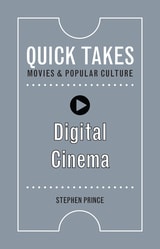
Digital Cinema
Stephen Prince
Rutgers University Press, 2019
Stephen Prince offers a clear, concise account of how digital cinema both extends longstanding traditions of filmmaking and challenges some fundamental assumptions about film. It is essential reading for anyone interested in understanding how movies are shot, produced, distributed, and consumed in the twenty-first century.

Digital Repertoires
Embedded and Everyday Technologies in Later LifeEdited by Riitta Hänninen, Sakari Taipale, and Laura Haapio-Kirk
University College London, 2025
As digital technologies further embed themselves in everyday life, how do older adults navigate and adapt to these tools? Digital Repertoires introduces the concept of the “digital repertoire” to investigate the evolving ways older people engage with technology across cultural and social contexts. Based on global research, this work confronts typical stereotypes of aging and digital exclusion and emphasizes the agency, creativity, and new challenges older adults experience in their digital interactions.
Including voices of scholars from anthropology, sociology, gerontology, communication studies, and design, this book offers theoretical depth as well as empirical breadth, making it essential reading for researchers, practitioners, and policymakers working at the intersection of aging and technology.
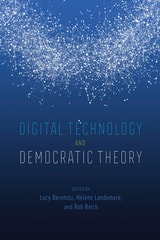
Digital Technology and Democratic Theory
Edited by Lucy Bernholz, Hélène Landemore, and Rob Reich
University of Chicago Press, 2021
To understand these transformations, this book brings together contributions by scholars from multiple disciplines to wrestle with the question of how digital technologies shape, reshape, and affect fundamental questions about democracy and democratic theory. As expectations have whiplashed—from Twitter optimism in the wake of the Arab Spring to Facebook pessimism in the wake of the 2016 US election—the time is ripe for a more sober and long-term assessment. How should we take stock of digital technologies and their promise and peril for reshaping democratic societies and institutions? To answer, this volume broaches the most pressing technological changes and issues facing democracy as a philosophy and an institution.
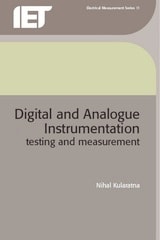
Digital and Analogue Instrumentation
Testing and measurementNihal Kularatna
The Institution of Engineering and Technology, 2003
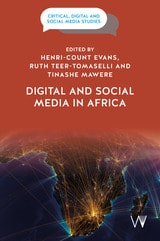
Digital and Social Media in Africa
Edited by Henri-Count Evans, Ruth Teer-Tomaselli, and Tinashe Mawere
University of Westminster Press, 2025
Further, the book examines the human rights challenges posed by state control and monitoring of digital and social media forms of communication. In the context of a digital surveillance state, it questions how digital and social media can possibly enhance the democratisation of both the communicative and political spaces.
The book focuses on questions of censorship and control of digital and social media in ‘supposedly’ democratic societies. It discusses regulation and how governments have imposed their state power by ‘switching off’ the internet and blocking social media sites under the guise of national security and order maintenance.