Results by title
281 books match the query 'Disease & Health Issues' and 12 start with d

Dancing with Parkinson's
Sara Houston
Intellect Books, 2019
Presenting personal narratives from a study that investigates the experience of people with Parkinson’s who dance, intertwined with the social and political contexts in which the dancers live, this volume examines the personal and systemic issues as well as the attitudes and identities that shape people’s relationship to dance. Taking this new primary research as a starting point, Dancing with Parkinson’s builds an argument for how dance becomes a way of helping people live well with Parkinson’s.
Deadly Biocultures
The Ethics of Life-makingNadine Ehlers
University of Minnesota Press, 2019
A trenchant analysis of the dark side of regulatory life-making today
In their seemingly relentless pursuit of life, do contemporary U.S. “biocultures”—where biomedicine extends beyond the formal institutions of the clinic, hospital, and lab to everyday cultural practices—also engage in a deadly endeavor? Challenging us to question their implications, Deadly Biocultures shows that efforts to “make live” are accompanied by the twin operation of “let die”: they validate and enhance lives seen as economically viable, self-sustaining, productive, and oriented toward the future and optimism while reinforcing inequitable distributions of life based on race, class, gender, and dis/ability. Affirming life can obscure death, create deadly conditions, and even kill.
Deadly Biocultures examines the affirmation to hope, target, thrive, secure, and green in the respective biocultures of cancer, race-based health, fatness, aging, and the afterlife. Its chapters focus on specific practices, technologies, or techniques that ostensibly affirm life and suggest life’s inextricable links to capital but that also engender a politics of death and erasure. The authors ultimately ask: what alternative social forms and individual practices might be mapped onto or intersect with biomedicine for more equitable biofutures?
Decentering Epistemologies and Challenging Privilege
Critical Care Ethics PerspectivesSophie Bourgault
Rutgers University Press, 2024
This book advances this project by discussing the ways care ethics contributes to the decentering of dominant epistemologies and to the challenging of privilege and by considering how to decenter care ethics itself via an encounter with non-Western philosophical traditions and alternative epistemologies. Written by scholars from different countries, disciplines, and intellectual traditions, the volume offers original care ethics contributions on epistemic injustice, privileged irresponsibility, ecofeminism, settler colonialism, social movements such as BLM, and various racialized and gendered inequities tied to care work.

Decolonial Care
Reimagining Caregiving in the French CaribbeanJennifer Boum Make
Rutgers University Press, 2025
Delivering Health
Midwifery and Development in MexicoLydia Z. Dixon
Vanderbilt University Press, 2020
Maternal health outcomes are a key focus of global health initiatives. In Delivering Health, author Lydia Z. Dixon uncovers the ways such outcomes have been shaped by broader historical, political, and social factors in Mexico, through the perspectives of those who are at the front lines fighting for change: midwives.
Midwives have long been marginalized in Mexico as remnants of the country's precolonial past, yet Dixon shows how they are now strategically positioning themselves as agents of modernity and development. Midwifery education programs have popped up across Mexico, each with their own critique of the health care system and vision for how midwifery can help. Delivering Health ethnographically examines three such schools with very different educational approaches and professional goals. From San Miguel de Allende to Oaxaca to Michoacán and points between, Dixon takes us into the classrooms, clinics, and conferences where questions of what it means to provide good reproductive health care are being taught, challenged, and implemented. Through interviews, observational data, and even student artwork, we are shown how underlying inequality manifests in poor care for many Mexican women. The midwives in this book argue that they can improve care while also addressing this inequality. Ultimately, Delivering Health asks us to consider the possibility that marginalized actors like midwives may hold the solution to widespread concerns in health.
Democracy in a Pandemic
Participation in Response to CrisisGraham Smith, Tim Hughes, Lizzie Adams and Charlotte Obijiaku
University of Westminster Press, 2021
Covid-19 has highlighted limitations in our democratic politics – but also lessons for how to deepen our democracy and more effectively respond to future crises. In the face of an emergency, the working assumption all too often is that only a centralised, top-down response is possible. This book exposes the weakness of this assumption, making the case for deeper participation and deliberation in times of crises. During the pandemic, mutual aid and self-help groups have realised unmet needs. And forward-thinking organisations have shown that listening to and working with diverse social groups leads to more inclusive outcomes.
Participation and deliberation are not just possible in an emergency. They are valuable, perhaps even indispensable.
This book draws together a diverse range of voices of activists, practitioners, policy makers, researchers and writers. Together they make visible the critical role played by participation and deliberation during the pandemic and make the case for enhanced engagement during and beyond emergency contexts.
Another, more democratic world can be realised in the face of a crisis. The contributors to this book offer us meaningful insights into what this could look like.
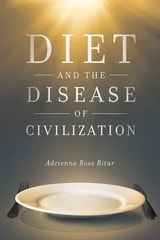
Diet and the Disease of Civilization
Adrienne Rose Bitar
Rutgers University Press, 2017
Diet books contribute to a $60-billion industry as they speak to the 45 million Americans who diet every year. Yet these books don’t just tell readers what to eat: they offer complete philosophies about who Americans are and how we should live. Diet and the Disease of Civilization interrupts the predictable debate about eating right to ask a hard question: what if it’s not calories—but concepts—that should be counted?
Cultural critic Adrienne Rose Bitar reveals how four popular diets retell the “Fall of Man” as the narrative backbone for our national consciousness. Intensifying the moral panic of the obesity epidemic, they depict civilization itself as a disease and offer diet as the one true cure.
Bitar reads each diet—the Paleo Diet, the Garden of Eden Diet, the Pacific Island Diet, the detoxification or detox diet—as both myth and manual, a story with side effects shaping social movements, driving industry, and constructing fundamental ideas about sickness and health. Diet and the Disease of Civilization unearths the ways in which diet books are actually utopian manifestos not just for better bodies, but also for a healthier society and a more perfect world.
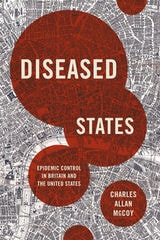
Diseased States
Epidemic Control in Britain and the United StatesCharles Allan McCoy
University of Massachusetts Press, 2020
To understand why these two nations have handled contemporary disease threats in such different ways, Charles Allan McCoy examines when and how disease control measures were adopted in each country from the nineteenth century onward, which medical theory of disease was dominant at the time, and where disease control was located within the state apparatus. Particular starting conditions put Britain and the United States on distinct trajectories of institutionalization that led to their respective systems of disease control. As McCoy shows, even the seemingly objective matter of contagion is deeply enmeshed in social and political realities, and by developing unique systems of biopower to control the spread of disease, Britain and the United States have established different approaches of exerting political control over citizens' lives and bodies.
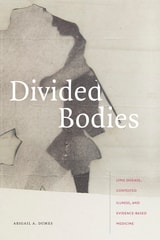
Divided Bodies
Lyme Disease, Contested Illness, and Evidence-Based MedicineAbigail A. Dumes
Duke University Press, 2020
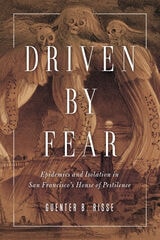
Driven by Fear
Epidemics and Isolation in San Francisco's House of PestilenceGuenter B. Risse
University of Illinois Press, 2015
Filling a significant gap in contemporary scholarship, Driven by Fear looks at the past to offer critical lessons for our age of bioterror threats and emerging infectious diseases.
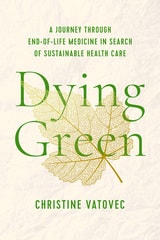
Dying Green
A Journey through End-of-Life Medicine in Search of Sustainable Health CareChristine Vatovec
Rutgers University Press, 2023
In Dying Green, award-winning educator Christine Vatovec offers an engaging study that asks us to consider the broader environmental sustainability of health care. Through a comparative analysis of the care provided to terminally ill patients in a conventional cancer ward, a palliative care unit, and an acute-care hospice facility, she shows how decisions made at a patient’s bedside govern the environmental footprint of the healthcare industry. Likewise, Dying Green offers insights on the many opportunities that exist for reducing the ecological impacts of medical practices in general, while also enhancing care for the dying in particular. By envisioning a more sustainable approach to care, this book offers a way forward that is better for both patients and the planet.
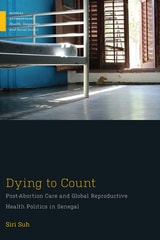
Dying to Count
Post-Abortion Care and Global Reproductive Health Politics in SenegalSiri Suh
Rutgers University Press, 2021