Results by title
78 books match the query 'Diseases' and 9 start with d
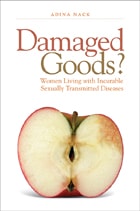
Damaged Goods?
Women Living With Incurable Sexually Transmitted DiseasesAdina Nack
Temple University Press, 2008
How do women living with genital herpes and/or HPV (human papilloma virus) infections see themselves as sexual beings, and what choices do they make about sexual health issues? Adina Nack, a medical sociologist who specializes in sexual health and social psychology, conducted in-depth interviews with 43 women about their identities and sexuality in regards to chronic illness. The result is a fascinating book about an issue that affects over 15 million Americans, but is all too little discussed.
Damaged Goods adds to our knowledge of how women are affected by living with chronic STDs and reveals the stages of their sexual- self transformation. From the anxiety of being diagnosed with an STD to issues of blame and shame, Nack-herself diagnosed with a cervical HPV infection-shows why these women feeling that they are "damaged goods," question future relationships, marriage, and their ability to have healthy children.

Death Stalks the Yakama
Epidemiological Transitions and Mortality on the Yakama Indian Reservation, 1888-1964Clifford E. Trafzer
Michigan State University Press, 1997
Clifford Trafzer's disturbing new work, Death Stalks the Yakama, examines life, death, and the shockingly high mortality rates that have persisted among the fourteen tribes and bands living on the Yakama Reservation in the state of Washington. The work contains a valuable discussion of Indian beliefs about spirits, traditional causes of death, mourning ceremonies, and memorials. More significant, however, is Trafzer's research into heretofore unused parturition and death records from 1888-1964. In these documents, he discovers critical evidence to demonstrate how and why many reservation people died in "epidemics" of pneumonia, tuberculosis, and heart disease.
Death Stalks the Yakama, takes into account many variables, including age, gender, listed causes of death, residence, and blood quantum. In addition, analyses of fetal and infant mortality rates as well as crude death rates arising from tuberculosis, pneumonia, heart disease, accidents, and other causes are presented. Trafzer argues that Native Americans living on the Yakama Reservation were, in fact, in jeopardy as a result of the "reservation system" itself. Not only did this alien and artificial culture radically alter traditional ways of life, but sanitation methods, housing, hospitals, public education, medicine, and medical personnel affiliated with the reservation system all proved inadequate, and each in its own way contributed significantly to high Yakama death rates.
Diabetes among the Pima
Stories of SurvivalCarolyn Smith-Morris
University of Arizona Press, 2006
Click here for a Facilitator’s Guide to Diabetes among the Pima
Diagnosing the Legacy
The Discovery, Research, and Treatment of Type 2 Diabetes in Indigenous YouthLarry Krotz
University of Manitoba Press, 2018

Digestion, Diet, and Disease
Irritable Bowel Syndrome and Gastrointestinal FunctionJoneja, Janice Vickerstaff
Rutgers University Press, 2004
Malfunction in the digestive tract can arise from a variety of causes, and it requires the sciences of immunology, physiology, biochemistry, microbiology, and nutrition to fully explain the basis of the dysfunction as well as effective treatment options. Now Dr. Janice Vickerstaff Joneja has written the first book that:
- Applies current research data in all of the relevant sciences into a practical resource for the management of gastrointestinal disease, in particular irritable bowel syndrome (IBS).
- Supplies complete scientific references for the research scientist, the clinician, and the student.
- Provides specific dietary management strategies for IBS and related dysfunction in the gastrointestinal tract, based on scientific data.
- Includes meal plans, recipes, and dietary advice for balanced nutrition, while avoiding the foods most likely to trigger or exacerbate IBS.
These unique qualities make Digestion, Diet, and Disease the ideal choice for practitioners, educators, and researchers in the field of nutritional medicine, as well as nurses, alternative medicine professionals, and the educated general public suffering from IBS.

Disease in the History of Modern Latin America
From Malaria to AIDSDiego Armus, ed.
Duke University Press, 2003
Based on the idea that the meanings of sickness—and health—are contestable and subject to controversy, Disease in the History of Modern Latin America displays the richness of an interdisciplinary approach to social and cultural history. Examining diseases in Mexico, Brazil, Argentina, Colombia, Peru, and Bolivia, the contributors explore the production of scientific knowledge, literary metaphors for illness, domestic public health efforts, and initiatives shaped by the agendas of international agencies. They also analyze the connections between ideas of sexuality, disease, nation, and modernity; the instrumental role of certain illnesses in state-building processes; welfare efforts sponsored by the state and led by the medical professions; and the boundaries between individual and state responsibilities regarding sickness and health. Diego Armus’s introduction contextualizes the essays within the history of medicine, the history of public health, and the sociocultural history of disease.
Contributors. Diego Armus, Anne-Emanuelle Birn, Kathleen Elaine Bliss, Ann S. Blum, Marilia Coutinho, Marcus Cueto, Patrick Larvie, Gabriela Nouzeilles, Diana Obregón, Nancy Lays Stepan, Ann Zulawski

Disease, War, and the Imperial State
The Welfare of the British Armed Forces during the Seven Years' WarErica Charters
University of Chicago Press, 2014
In Disease, War, and the Imperial State, Erica Charters demonstrates how disease played a vital role in shaping strategy and campaigning, British state policy, and imperial relations during the Seven Years’ War. Military medicine was a crucial component of the British war effort; it was central to both eighteenth-century scientific innovation and the moral authority of the British state. Looking beyond the traditional focus of the British state as a fiscal war-making machine, Charters uncovers an imperial state conspicuously attending to the welfare of its armed forces, investing in medical research, and responding to local public opinion. Charters shows military medicine to be a credible scientific endeavor that was similarly responsive to local conditions and demands.
Disease, War, and the Imperial State is an engaging study of early modern warfare and statecraft, one focused on the endless and laborious task of managing manpower in the face of virulent disease in the field, political opposition at home, and the clamor of public opinion in both Britain and its colonies.
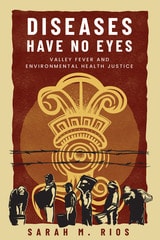
Diseases Have No Eyes
Valley Fever and Environmental Health JusticeSarah M. Rios
Temple University Press, 2026
Diseases Have No Eyes investigates how communities in Central Valley, California deal with Valley Fever, a painful illness caused by a soil fungus. The airborne disease’s symptoms can last from two months to a patient’s lifetime and may be fatal. Nearly a third of the national cases are reported in California, where those infected are disproportionately farmworkers and people incarcerated in the region. Poverty, pollution, and prison expose these groups to cumulative environmental and health risks that deny Valley Fever patients adequate medical treatment.
Sarah M. Rios examines how these populations face racial health disparities and develop strategies of care. She connects environmental justice activists as well as prison advocates and abolitionists who mobilize protests and issue calls to action to the past and ongoing efforts for medical autonomy and healthy communities. Diseases Have No Eyes emphasizes that vulnerable groups have developed an expertise and understanding of Valley Fever out of necessity. In the process, these community members offer an alternative public health response that extends beyond the individual body.
In the series Insubordinate Spaces
Diseases of Poverty
Epidemiology, Infectious Diseases, and Modern PlaguesLisa V. Adams and John R. Butterly
Dartmouth College Press, 2015