56 books match the query 'Diversity' and 8 start with d
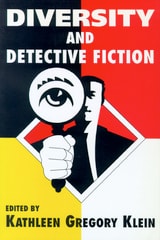
cover of Diversity and Detective Fiction

Diversity and Detective Fiction

Kathleen Gregory Klein

University of Wisconsin Press, 1999

The first collection to articulate the pedagogical strategies of using detective fiction to investigate the politics of difference. The volume examines the many ways in which diversity is posited by contemporary writers exploring distinctive American subcultures. The distinguishing characteristic of the book is its mix of essays focusing on teaching cultural diversity in the classroom and illustrating diversity through fiction to the general reader.
    Among the issues addressed are definitions of diversity; what constitutes ethnicity or race, especially in terms of multiple subjectivities; how race, gender, and ethnicity are culturally constructed; and what part is played by identity politics.
[more]
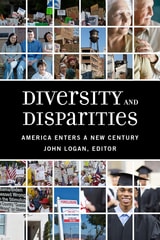
cover of Diversity and Disparities: America Enters a New Century

Diversity and Disparities

America Enters a New Century

John Logan is professor of sociology and director of the Research Initiative on Spatial Structures in the Social Sciences at Brown University and editor of Diversity and Disparities: America Enters a New Century.

Russell Sage Foundation, 2014
The United States is more diverse than ever before. Increased immigration has added to a vibrant cultural fabric, and women and minorities have made significant strides in overcoming overt discrimination. At the same time, economic inequality has increased significantly in recent decades, and the Great Recession substantially weakened the economic standing not only of the poor but also of the middle class. Diversity and Disparities, edited by sociologist John Logan, assembles impressive new studies that interpret the social and economic changes in the United States over the last decade. The authors, leading social scientists from many disciplines, analyze changes in the labor market, family structure, immigration, and race. They find that while America has grown more diverse, the opportunities available to disadvantaged groups have become more unequal. Drawing on detailed data from the decennial census, the American Community Survey, and other sources, the authors chart the growing diversity and the deepening disparities among different groups in the United States Harry J. Holzer and Marek Hlavac document that although the economy always rises and falls over the business cycle, the Great Recession of 2007–2009 was a catastrophic event that saw record levels of unemployment, especially among less-educated workers, young people, and minorities. Emily Rosenbaum shows how the Great Recession amplified disparities in access to home ownership, and demonstrates that young adults, especially African Americans, are falling behind previous cohorts not only in home ownership and wealth but even in starting their own families and households. Sean F. Reardon and Kendra Bischoff explore the rise of class segregation as higher-income Americans are moving away from others into separate and privileged neighborhoods and communities. Immigration has also seen class polarization, with an increase in both highly skilled workers and undocumented immigrants. As Frank D. Bean and his colleagues show, the lack of a path to legal status for undocumented immigrants inhibits the educational and economic opportunities for their children and grandchildren. Barrett Lee and colleagues demonstrate that the nation and most cities and towns are becoming more diverse by race and ethnicity. However, while black-white segregation is slowly falling, Hispanics and Asians remain as segregated today as they were in 1980. Diversity and Disparities raises concerns about the extent of socioeconomic immobility in the United States today. This volume provides valuable information for policymakers, journalists, and researchers seeking to understand the current state of the nation.
[more]
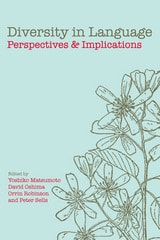
cover of Diversity in Language: Perspectives and Implications

Diversity in Language

Perspectives and Implications

Edited by Yoshiko Matsumoto, David Oshima, Orrin Robinson, and Peter Sells

CSLI, 2007
What does linguistic diversity tell us about the human mind? In the comprehensive volume Diversity in Language, a renowned team of contributorsassess the intricacies of linguistic variation. From historical perspectives on Indonesian to apparent time change in Smith Island verbs, from unplanned spoken Russian to argument structure in the Pacific Northwest, these essays render the full spectrum of linguistic possibility.


[more]
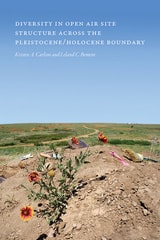
cover of Diversity in Open-Air Site Structure across the Pleistocene/Holocene Boundary

Diversity in Open-Air Site Structure across the Pleistocene/Holocene Boundary

Kristen A. Carlson

University Press of Colorado, 2021

Archaeological research on the late Pleistocene and early Holocene periods has tended to focus on rock shelters, caves, large game kills, and occasionally butchery sites. Diversity in Open-Air Site Structure across the Pleistocene/Holocene Boundary examines a diverse range of open-air sites—bounded both naturally and culturally—in Siberia and Germany and throughout North America.
 
Open-air sites are difficult for researchers to locate and, because of depositional processes, often more difficult to interpret; they contain many superimposed events but often show evidence of only the most recent. Working to overcome the limitations of data and poor preservation, using decades of prior research and new analytical tools, and diverging from a one-size-fits-all mode of interpretation, the contributors to this volume offer fresh insight into the formation and taphonomy of open-air sites.
 
Contributors: Douglas B. Bamforth, Ian Buvit, Brian J. Carter, Robin Cordero, Robert Dello-Russo, George C. Frison, Kelly E. Graf, Bruce B. Huckell, Michael A. Jochim, Joshua D. Kapp, Robert L. Kelly, Aleksander V. Konstantinov, Banks Leonard, Madeline E. Mackie, Christopher W. Merriman, Matthew J. O’Brien, Spencer Pelton, Neil N. Puckett, Beth Shapiro, Todd A. Surovell, Karisa Terry, Steve Teteak, Robert Yohe
 
[more]
cover of Diversity in Youth Literature: Opening Doors through Reading

Diversity in Youth Literature

Opening Doors through Reading

Jamie Campbell Naidoo

American Library Association, 2013
[more]
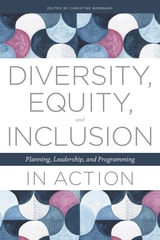
cover of Diversity, Equity, and Inclusion in Action: Planning, Leadership, and Programming

Diversity, Equity, and Inclusion in Action

Planning, Leadership, and Programming

Christine Bombaro

American Library Association, 2020

All too often, in a hurried attempt to “catch up,” diversity training can create division among staff or place undue burdens on a handful of employees. Instead, academic libraries need approaches to diversity, equity, and inclusion (DEI) that position these priorities as ongoing institutional and professional goals. This book’s model programs will help academic libraries do exactly that, sharing a variety of initiatives that possess clear goals, demonstrable outcomes, and reproducible strategies. Librarians, administrators, and directors will all benefit from the programs detailed inside, which include such topics as

  • a university library’s community of practice for interactions and learning around DEI;
  • cultural competency training to create more welcoming instruction spaces;
  • student workshops on literature searches that mitigate bias;
  • overcoming the historic tendency to marginalize LGBTQ+ representation in archives;
  • a curriculum and design workshop that moved from discussing social values to embedding them in actions;
  • the founding of a library-led LGBT club for students at a rural community college;
  • a liberal arts college’s retention-boosting program for first-generation students;
  • tailoring a collection and library services to the unique needs of student veterans; and
  • a framework for moving from diversity to equity and inclusion, toward a goal of social justice.
[more]
cover of Diversity: Gender, Color, and Culture

Diversity

Gender, Color, and Culture

Philomena Essed

University of Massachusetts Press, 1996

Contemporary discussions of race, gender, and cultural identity often seem to presuppose an exclusively American context. Yet as Philomena Essed points out in this forcefully argued book, continuing migration has given rise to ever more diverse societies. At the same time, the erosion of traditional national identities has sparked a backlash against racial and ethnic minorities.

Essed examines these problems in a series of interrelated essays, urging us throughout the book to create a society in which diversity is accepted, encouraged, and made central to everyday life.
[more]
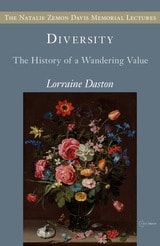
cover of Diversity: The History of a Wandering Value

Diversity

The History of a Wandering Value

Lorraine Daston

Central European University Press, 2026

It is startling to realize how quickly and thoroughly the value of diversity, until a few decades ago a value largely confined to the aesthetic and organic realms, has acquired deep political and moral significance. Universities, corporations, and governments are now judged by the degree to which they achieve diversity among their leaders and recognize diversity among their publics. Older values of the liberal polity, for example that of honoring merit without regard to creed, race, sex, or ethnicity, have been increasingly eclipsed by values that closely attend to these and other differentiating traits (which traits matter is contentious). How did this sea change in value come about, and come about so swiftly? And what kind of value is diversity? The long history of diversity as an aesthetic and economic value helps explain the recent rapid rise of diversity as a moral and political value.
[more]