Results by title
55 books match the query 'Documentary films' and 5 start with d
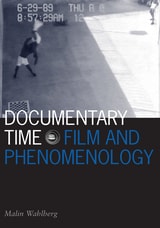
Documentary Time
Film and PhenomenologyMalin Wahlberg
University of Minnesota Press, 2008
Finding the theoretical space where cinema and philosophy meet, Malin Wahlberg’s sophisticated approach to the experience of documentary film aligns with attempts to reconsider the premises of existential phenomenology. The configuration of time is crucial in organizing the sensory affects of film in general but, as Wahlberg adroitly demonstrates, in nonfiction films the problem of managing time is writ large by the moving image’s interaction with social memory and historical figures.
Wahlberg discusses a thought-provoking corpus of classical and recent experiments in film and video (including Andy Warhol’s films) in which creative approaches to the time of the image and the potential archive memory of filmic representation illuminates meanings of temporality and time experience. She also offers a methodological account of film and brings Deleuze and Ricoeur into dialogue with Bazin and Mitry on the subject of cinema and phenomenology.
Drawing attention to the cultural significance of the images’ imprint as a trace of the past, Documentary Time brings to bear phenomenological inquiry on nonfiction film while at the same time reconsidering the existential dimensions of time that have always puzzled humans.
Malin Wahlberg is a research fellow in cinema studies at Stockholm University.
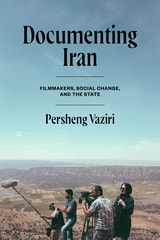
Documenting Iran
Filmmakers and Social ChangePersheng Vaziri
University of Texas Press, 2026
An ethnographic study of how Iranian documentary filmmakers navigate censorship and creativity to shape civic discourse.
Iranian filmmakers have overcome significant obstacles to create a distinctive, globally renowned cinema. Filmmaker and educator Persheng Vaziri explores how documentarians, in particular, have developed a dynamic and creative environment by negotiating limited resources and official constraints. Through their films, they share hard truths—and artful narratives—with fellow Iranians and viewers the world over.
Documenting Iran introduces key historical foundations of documentary filmmaking amid generations of political change—first under the shah and later the Islamic government—with a focus on contemporary filmmakers between 2000 and 2022. Drawing on interviews and ethnographic encounters, Vaziri describes the creative practices and pragmatic choices that provide documentarians relative independence from state censorship and other restrictions on artistic production. Relying on poetic aesthetics, observational filmmaking, international connections, and the accumulated knowledge of a tight-knit local community, filmmakers engage with controversial topics like women’s rights, marriage and divorce laws, environmental degradation, and encounters with Western culture. Documentarians have thus created an activist cinema both subtle and persuasive enough to challenge dogmatic rule and uphold progressive elements of Iranian society.
Double Exposure
How Social Psychology Fell in Love with the MoviesKathryn Millard
Rutgers University Press, 2022
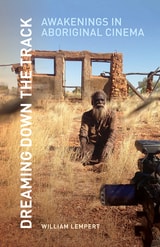
Dreaming Down the Track
Awakenings in Aboriginal CinemaWilliam Lempert
University of Minnesota Press, 2025
What can Aboriginal filmmaking reveal about Indigenous presence and futures?
The product of years of embedded fieldwork within Indigenous film crews in Northwestern Australia, Dreaming Down the Track delves deeply into Aboriginal cinema as a transformative community process. It follows the social lives of projects throughout their production cycles, from planning and editing to screening, broadcasting, and after-images. Across its narrative sweep, this ethnography engages the film career of Kukatja elder Mark Moora to demonstrate the impact of filmmaking on how Aboriginal futures are collectively imagined and called forth.
William Lempert highlights a series of awakenings through which Moora ultimately came to view cinema as a process for catalyzing his family’s return to their home country of Mangkayi. This biographical media journey paints an intimate portrait of the inspiring possibilities and sobering limitations of Indigenous envisioning within settler states. Lempert traces how Moora’s life and films convey a multiplicity of Aboriginal experiences across time and space, from colonial contact to contemporary life in communities like Balgo, including the continued governmental attempts to undermine them.
Amid ongoing negotiations to establish the first treaties between Indigenous nations and Australian states, Dreaming Down the Track illustrates what is at stake in how Aboriginal–State relations are represented and understood, both within communities and for the broader public. Lempert stays true to Moora’s insight that film can preserve community stories for generations to come, toward the aim of enacting sovereign futures.
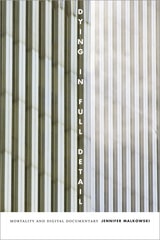
Dying in Full Detail
Mortality and Digital DocumentaryJennifer Malkowski
Duke University Press, 2017