Results by title
198 books match the query 'Educational Policy & Reform' and 14 start with d

Dare the School Build a New Social Order?
George S. Counts. Preface by Wayne J. Urban
Southern Illinois University Press, 1978
George S. Counts was amajor figure in American education for almost fifty years. Republication of this early (1932) work draws special attention to Counts’s role as a social and political activist. Three particular themes make the book noteworthy because of their importance in Counts’s plan for change as well as for their continuing contemporary importance: (1)Counts’s criticism of child-centered progressives; (2) the role Counts assigns to teachers in achieving educational and social reform; and (3) Counts’s idea for the reform of the American economy.

Dark Academia
How Universities DiePeter Fleming
Pluto Press, 2021
“Fleming's books are sparklingly sardonic and hilariously angry”—Guardian
“An excellent and important book''—Journal of Education, Innovation, and Communication
To Professor Peter Fleming, there is a strong link between the neo-liberalization of higher education over the last 20 years and the psychological hell now endured by its staff and students. He believes that impersonal and unforgiving management hierarchies have supplanted academic judgement, collegiality, and professional common sense. He bemoans the modern system of higher education and shines a spotlight on what’s gone wrong and why.
While academia was once thought of as the best job in the world, one that fosters autonomy, craft, intrinsic job satisfaction, and vocational zeal, you would be hard-pressed to find a lecturer who believes that now.
Fleming delves into this new metrics-obsessed, overly hierarchical world to bring out the hidden underbelly of what he terms the 'zombie university'. He examines:
*Commercialization
*Mental illness and self-harm
*The rise of managerialism
*Students as consumers and evaluators
*The competitive individualism which casts a dark sheen of alienation over departments
*And much more!
Arguing that time has almost run out to reverse this decline, this book shows how academics and students need to act now if they are to begin to fix this broken system.
Deaf Students and the Qualitative Similarity Hypothesis
Understanding Language and Literacy DevelopmentPeter V. Paul
Gallaudet University Press, 2013
The difficulty that deaf and hard of hearing students have in attaining language and literacy skills has led to postulations that attribute their struggle to a developmental deficit. Recent research reveals, however, that deaf students acquire language structures, produce errors, and employ strategies in the same fashion as younger hearing students, though at later ages. The ability of all students to learn language and literacy skills in a similar manner at different stages forms the foundation of the Qualitative Similarity Hypothesis (QSH).
This volume describes the theoretical underpinnings and research findings of the QSH. It presents the educational implications for deaf and hard of hearing children and offers reason-based practices for improving their English language and literacy development. This collection also stresses the critical importance of exposing educators to the larger fields of literacy and second-language learning. Providing this background information expands the possibility of differentiating instruction to meet the needs of deaf students. Deaf Students and the Qualitative Similarity Hypothesis includes commentary on the QSH for both first- and second-language English learners and reflects on how the QSH can effect a better future for all language students.
Deaf and Disability Studies
Interdisciplinary PerspectivesSusan Burch
Gallaudet University Press, 2010
This collection presents 14 essays by renowned scholars on Deaf people, Deafhood, Deaf histories, and Deaf identity, but from different points of view on the Deaf/Disability compass. Editors Susan Burch and Alison Kafer have divided these works around three themes. The first, Identities and Locations, explores Deaf identity in different contexts. Topics range from a history of activism shaped by the ableism of Deaf elites in the United States from 1880–1920, to a discussion of the roles that economics, location, race, and culture play in the experiences of a Deaf woman from northern Nigeria now living in Washington, D.C.
Alliances and Activism showcases activism organized across differences. Studies include a feminist analysis of how deaf and hearing women working together share responsibility, and an examination of how intra-cultural variations in New York City and Quebec affect deaf-focus HIV/AIDS programs. The third theme, Boundaries and Overlaps, explicitly addresses the relationships between Deaf Studies and Disability Studies. Interviews with scholars from both disciplines help define these relationships. Another contributor calls for hearing/not-deaf people with disabilities to support their Deaf peers in gaining langue access to the United Nations. Deaf and Disability Studies: Interdisciplinary Perspectives reveals that different questions often lead to contrary conclusions among their authors, who still recognize that they all have a stake in this partnership.
Debates in the Digital Humanities
Matthew K. Gold
University of Minnesota Press, 2012
Encompassing new technologies, research methods, and opportunities for collaborative scholarship and open-source peer review, as well as innovative ways of sharing knowledge and teaching, the digital humanities promises to transform the liberal arts—and perhaps the university itself. Indeed, at a time when many academic institutions are facing austerity budgets, digital humanities programs have been able to hire new faculty, establish new centers and initiatives, and attract multimillion-dollar grants.
Clearly the digital humanities has reached a significant moment in its brief history. But what sort of moment is it? Debates in the Digital Humanities brings together leading figures in the field to explore its theories, methods, and practices and to clarify its multiple possibilities and tensions. From defining what a digital humanist is and determining whether the field has (or needs) theoretical grounding, to discussions of coding as scholarship and trends in data-driven research, this cutting-edge volume delineates the current state of the digital humanities and envisions potential futures and challenges. At the same time, several essays aim pointed critiques at the field for its lack of attention to race, gender, class, and sexuality; the inadequate level of diversity among its practitioners; its absence of political commitment; and its preference for research over teaching.
Together, the essays in Debates in the Digital Humanities—which will be published both as a printed book and later as an ongoing, open-access website—suggest that the digital humanities is uniquely positioned to contribute to the revival of the humanities and academic life.
Contributors: Bryan Alexander, National Institute for Technology in Liberal Education; Rafael Alvarado, U of Virginia; Jamie “Skye” Bianco, U of Pittsburgh; Ian Bogost, Georgia Institute of Technology; Stephen Brier, CUNY Graduate Center; Daniel J. Cohen, George Mason U; Cathy N. Davidson, Duke U; Rebecca Frost Davis, National Institute for Technology in Liberal Education; Johanna Drucker, U of California, Los Angeles; Amy E. Earhart, Texas A&M U; Charlie Edwards; Kathleen Fitzpatrick, Pomona College; Julia Flanders, Brown U; Neil Fraistat, U of Maryland; Paul Fyfe, Florida State U; Michael Gavin, Rice U; David Greetham, CUNY Graduate Center; Jim Groom, U of Mary Washington; Gary Hall, Coventry U, UK; Mills Kelly, George Mason U; Matthew Kirschenbaum, U of Maryland; Alan Liu, U of California, Santa Barbara; Elizabeth Losh, U of California, San Diego; Lev Manovich, U of California, San Diego; Willard McCarty, King’s College London; Tara McPherson, U of Southern California; Bethany Nowviskie, U of Virginia; Trevor Owens, Library of Congress; William Pannapacker, Hope College; Dave Parry, U of Texas at Dallas; Stephen Ramsay, U of Nebraska, Lincoln; Alexander Reid, SUNY at Buffalo; Geoffrey Rockwell, Canadian Institute for Research Computing in the Arts; Mark L. Sample, George Mason U; Tom Scheinfeldt, George Mason U; Kathleen Marie Smith; Lisa Spiro, National Institute for Technology in Liberal Education; Patrik Svensson, Umeå U; Luke Waltzer, Baruch College; Matthew Wilkens, U of Notre Dame; George H. Williams, U of South Carolina Upstate; Michael Witmore, Folger Shakespeare Library.
Degrees of Risk
Navigating Insecurity and Inequality in Public Higher EducationBlake R. Silver
University of Chicago Press, 2024
Institutions of higher education are often described as “ivory towers,” places of privilege where students exist in a “campus bubble,” insulated from the trials of the outside world. These metaphors reveal a widespread belief that college provides young people with stability and keeps insecurity at bay. But for many students, that’s simply not the case.
Degrees of Risk reveals how insecurity permeates every facet of college life for students at public universities. Sociologist Blake Silver dissects how these institutions play a direct role in perpetuating uncertainty, instability, individualism, and anxiety about the future. Silver examined interviews with more than one hundred students who described the risks that surrounded every decision: which major to choose, whether to take online classes, and how to find funding. He expertly identified the ways the college experience played out differently for students from different backgrounds. For students from financially secure families with knowledge of how college works, all the choices and flexibility of college felt like an adventure or a wealth of opportunities. But for many others, especially low-income, first-generation students, their personal and family circumstances meant that that flexibility felt like murkiness and precarity. In addition, he discovered that students managed insecurity in very different ways, intensifying inequality at the intersections of socioeconomic status, race, gender, and other sociodemographic dimensions. Drawing from these firsthand accounts, Degrees of Risk presents a model for a better university, one that fosters success and confidence for a diverse range of students.
Degrees of Risk
Navigating Insecurity and Inequality in Public Higher EducationBlake R. Silver
University of Chicago Press, 2024
An ethnographic analysis of how insecurity is at the heart of contemporary higher education.
Institutions of higher education are often described as “ivory towers,” places of privilege where students exist in a “campus bubble,” insulated from the trials of the outside world. These metaphors reveal a widespread belief that college provides young people with stability and keeps insecurity at bay. But for many students, that’s simply not the case.
Degrees of Risk reveals how insecurity permeates every facet of college life for students at public universities. Sociologist Blake Silver dissects how these institutions play a direct role in perpetuating uncertainty, instability, individualism, and anxiety about the future. Silver examined interviews with more than one hundred students who described the risks that surrounded every decision: which major to choose, whether to take online classes, and how to find funding. He expertly identified the ways the college experience played out differently for students from different backgrounds. For students from financially secure families with knowledge of how college works, all the choices and flexibility of college felt like an adventure or a wealth of opportunities. But for many others, especially low-income, first-generation students, their personal and family circumstances meant that that flexibility felt like murkiness and precarity. In addition, he discovered that students managed insecurity in very different ways, intensifying inequality at the intersections of socioeconomic status, race, gender, and other sociodemographic dimensions. Drawing from these firsthand accounts, Degrees of Risk presents a model for a better university, one that fosters success and confidence for a diverse range of students.
Democracy's Education
Public Work, Citizenship, and the Future of Colleges and UniversitiesHarry C. Boyte
Vanderbilt University Press, 2015
Democracy's Education grows from the American Commonwealth Partnership, a year-long project to revitalize the democratic narrative of higher education that began with an invitation to Harry Boyte from the White House to put together a coalition aimed at strengthening higher education as a public good. The project was launched at the beginning of 2012 to mark the 150th anniversary of the Morrill Act, which created land grant colleges.
Beginning with an essay by Harry C. Boyte, "Reinventing Citizenship as Public Work," which challenges educators and their partners to claim their power to shape the story of higher education and the civic careers of students, the collection brings world-famous scholars, senior government officials, and university presidents together with faculty, students, staff, community organizers, and intellectuals from across the United States and South Africa and Japan. Contributors describe many constructive responses to change already taking place in different kinds of institutions, and present cutting-edge ideas like "civic science," "civic studies," "citizen professionalism," and "citizen alumni." Authors detail practical approaches to making change, from new faculty and student roles to changes in curriculum and student life and strategies for everyday citizen empowerment. Overall, the work develops a democratic story of education urgently needed to address today's challenges, from climate change to growing inequality.
Designed to Fail
Why Racial Equity in School Funding Is So Hard to AchieveRoseann Liu
University of Chicago Press, 2024
For people who care about urban school districts like Philadelphia’s, addressing the challenges that these schools face often boils down to the need for more money. But why are urban districts that serve Black and Brown students still so perennially underfunded compared to majority-white ones? Why is racial equity in school funding so hard to achieve?
In Designed to Fail, Roseann Liu provides an inside look at the Pennsylvania state legislature and campaigns for fair funding to show how those responsible for the distribution of school funding work to maintain the privileges of majority-white school districts. Liu analyzes how colorblind policies, political structures, and the maintenance of the status quo by people in power perpetuate wide and deepening racial disparities in education funding. Taking a lesson from community organizers fighting for a racially equitable school funding system, Liu’s work is a bold call to address structural racism at the root and organize from a place of abundant justice.
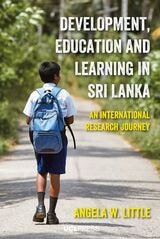
Development, Education and Learning in Sri Lanka
An International Research JourneyAngela W. Little
University College London, 2024
Sri Lanka’s early achievements in education and literacy became well-known among the international development community in the middle of the last century and were often used to benchmark progress elsewhere. Development, Education and Learning in Sri Lanka presents an illuminating narrative of changing education fortunes and inequalities, based on half a century of research conducted by Angela W. Little. This journey was undertaken in collaboration with Sri Lankan researchers island-wide in myriad communities, schools, classrooms, and education offices, through conversations with countless parents, teachers, students, community members, trade union officers, politicians, and members of local, national, and international development agencies, as well as through extensive documentary analysis.
The book delineates the distinctive and changing features of the Sri Lankan education system and compares it with systems elsewhere, to offer in-depth analyses of myriad issues and challenges in a single country over an extended period, framed by shifting international discourses and comparisons with education systems elsewhere. These analyses are framed by themes in the international development discourse on education and development–some of which have been influenced by the Sri Lankan story–ranging from modernization to basic needs to sustainable development. The book promotes a message about the need to understand education and development on a country’s own terms and to place learning at the heart of education policy, situating it within broader conceptions of the purpose, values, and means of development.
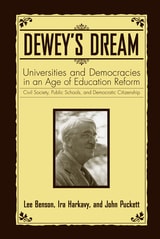
Dewey's Dream
Universities and Democracies in an Age of Education ReformLee Benson
Temple University Press, 2007
This timely, persuasive, and hopeful book reexamines John Dewey's idea of schools, specifically community schools, as the best places to grow a democratic society that is based on racial, social, and economic justice. The authors assert that American colleges and universities bear a responsibility for-and would benefit substantially from-working with schools to develop democratic schools and communities.
Dewey's Dream opens with a reappraisal of Dewey's philosophy and an argument for its continued relevance today. The authors-all well-known in education circles-use illustrations from over 20 years of experience working with public schools in the University of Pennsylvania's local ecological community of West Philadelphia, to demonstrate how their ideas can be put into action. By emphasizing problem-solving as the foundation of education, their work has awakened university students to their social responsibilities. And while the project is still young, it demonstrates that Dewey's "Utopian ends" of creating optimally participatory democratic societies can lead to practical, constructive school, higher education and community change, development, and improvement.
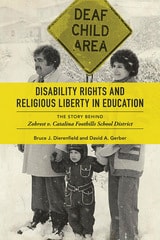
Disability Rights and Religious Liberty in Education
The Story behind Zobrest v. Catalina Foothills School DistrictBruce J. Dierenfield and David A. Gerber
University of Illinois Press, 2020
Bruce J. Dierenfield and David A. Gerber use the Zobrests' story to examine the complex history and jurisprudence of disability accommodation and educational mainstreaming. They look at the family's effort to acquire educational resources for their son starting in early childhood and the choices the Zobrests made to prepare him for life in the hearing world rather than the deaf community. Dierenfield and Gerber also analyze the thorny church-state issues and legal controversies that informed the case, its journey to the U.S. Supreme Court, and the impact of the high court's ruling on the course of disability accommodation and religious liberty.
Disabling Pedagogy
Power, Politics, and Deaf EducationLinda Komesaroff
Gallaudet University Press, 2008
Traditionally, deaf education has been treated as the domain of special educators who strive to overcome the difficulties associated with hearing loss. Recently, the sociocultural view of deafness has prompted research and academic study of Deaf culture, sign language linguistics, and bilingual education. Linda Komesaroff exposes the power of the entrenched dominant groups and their influence on the politics of educational policy and practice in Disabling Pedagogy: Power, Politics, and Deaf Education.
Komesaroff suggests a reconstruction of deaf education based on educational and social theory. First, she establishes a deep and situated account of deaf education in Australia through interviews with teachers, Deaf leaders, parents, and other stakeholders. Komesaroff then documents a shift to bilingual education by one school community as part of her ethnographic study of language practices in deaf education. She also reports on the experiences of deaf students in teacher education. Her study provides an analytical account of legal cases and discrimination suits brought by deaf parents for lack of access to native sign language in the classroom. Komesaroff confronts the issue of cochlear implantation, locating it within the broader context of gene technology and bioethics, and advocates linguistic rights and self-determination for deaf people on the international level. Disabling Pedagogy concludes with a realistic assessment of the political challenge and the potential of the “Deaf Resurgence” movement to enfranchise deaf people in the politics of their own education.

Dr. David Murray
Superintendent of Education in the Empire of Japan, 1873-1879Duke, Benjamin
Rutgers University Press, 2018
Benjamin Duke has compiled this comprehensive biography of David Murray to showcase Murray’s work, both in assisting around 100 samurai students in their studies at Rutgers, and in his unprecedented role in early Japanese-American relations. This fascinating story uncovers a little-known link between Rutgers University and Japan, and it is the only book to conclude that Rutgers made a greater contribution to the development of modern education in the early Meiji Era than any other non-Japanese college or university in the world.