Results by title
130 books match the query 'Educators' and 3 start with d
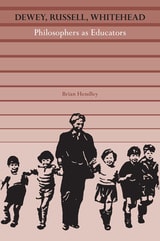
Dewey, Russell, Whitehead
Philosophers as EducatorsBrian Patrick Hendley
Southern Illinois University Press, 1986
In Philosophers as Educators Brian Patrick Hendley argues that philosophers of education should reject their preoccupation with defining terms and analyzing concepts and embrace the philosophical task of constructing general theories of education. Hendley discusses in detail the educational philosophies of John Dewey, Bertrand Russell, and Alfred North Whitehead. He sees in these men excellent role models that contemporary philosophers might well follow. Hendley believes that, like these mentors, philosophers should take a more active, practical role in education. Dewey and Russell ran their own schools, and Whitehead served as a university administrator and as a member of many committees created to study education.
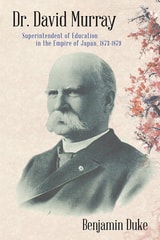
Dr. David Murray
Superintendent of Education in the Empire of Japan, 1873-1879Duke, Benjamin
Rutgers University Press, 2018
Benjamin Duke has compiled this comprehensive biography of David Murray to showcase Murray’s work, both in assisting around 100 samurai students in their studies at Rutgers, and in his unprecedented role in early Japanese-American relations. This fascinating story uncovers a little-known link between Rutgers University and Japan, and it is the only book to conclude that Rutgers made a greater contribution to the development of modern education in the early Meiji Era than any other non-Japanese college or university in the world.
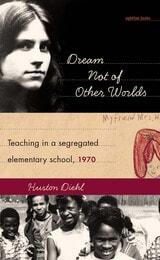
Dream Not of Other Worlds
Teaching in a Segregated Elementary School, 1970Huston Diehl
University of Iowa Press, 2007
When Huston Diehl began teaching a fourth-grade class in a "Negro" elementary school in rural Louisa County, Virginia, the school's white superintendent assured her that he didn't expect her to teach "those children" anything. She soon discovered how these low expectations, widely shared by the white community, impeded her students' ability to learn. With its overcrowded classrooms, poorly trained teachers, empty bookshelves, and meager supplies, her segregated school was vastly inferior to the county's white elementary schools, and the message it sent her students was clear: "dream not of other worlds."
In her often lyrical memoir, Diehl reveals how, in the intimacy of the classroom, her students reached out to her, a young white northerner, and shared their fears, anxieties, and personal beliefs. Repeatedly surprised and challenged by her students, Diehl questions her long-standing middle-class assumptions and confronts her own prejudices. In doing so, she eloquently reflects on what the students taught her about the hurt of bigotry and the humiliation of poverty as well as dignity, courage, and resiliency.
Set in the waning days of the Jim Crow South, Dream Not of Other Worlds chronicles an important moment in American history. Diehl examines the history of black education in the South and narrates the dramatic struggle to integrate Virginia's public schools. Meeting with some of her former students and colleagues and visiting the school where she once taught, she considers what has—and has not—changed after more than thirty years of integrated schooling. This provocative book raises many issues that are of urgent concern today: the continuing social consequences of segregated schools, the role of public education in American society, and the challenges of educating minority and poor children.