Results by title
153 books match the query 'Egypt' and 4 start with d
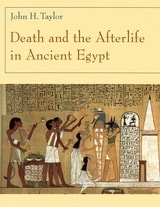
Death and the Afterlife in Ancient Egypt
John H. Taylor
University of Chicago Press, 2001
Of all the ancient peoples, the Egyptians are perhaps best known for the fascinating ways in which they grappled with the mysteries of death and the afterlife. This beautifully illustrated book draws on the British Museum's world-famous collection of mummies and other funerary evidence to offer an accessible account of Egyptian beliefs in an afterlife and examine the ways in which Egyptian society responded materially to the challenges these beliefs imposed.
The author describes in detail the numerous provisions made for the dead and the intricate rituals carried out on their behalf. He considers embalming, coffins and sarcophagi, shabti figures, magic and ritual, and amulets and papyri, as well as the mummification of sacred animals, which were buried by the millions in vast labyrinthine catacombs.
The text also reflects recent developments in the interpretation of Egyptian burial practices, and incorporates the results of much new scientific research. Newly acquired information derives from a range of sophisticated applications, such as the use of noninvasive imaging techniques to look inside the wrappings of a mummy, and the chemical analysis of materials used in the embalming process. Authoritative, concise, and lucidly written, Death and the Afterlife in Ancient Egypt illuminates aspects of this complex, vibrant culture that still perplex us more than 3,000 years later.
[more]
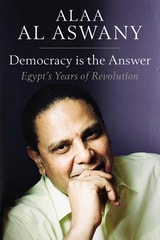
Democracy is the Answer
Egypt's Years of RevolutionAlaa Al Aswany
Gingko, 2014
As the Egyptian revolution unfolded throughout 2011 and the ensuing years, no one was better positioned to comment on it—and try to push it in productive directions—than best-selling novelist and political commentator Alaa Al-Aswany. For years a leading critic of the Mubarak regime, Al-Aswany used his weekly newspaper column for Al-Masry Al-Youm to propound the revolution’s ideals and to confront the increasingly troubled politics of its aftermath.
This book presents, for the first time in English, all of Al-Aswany’s columns from the period, a comprehensive account of the turmoil of the post-revolutionary years, and a portrait of a country and a people in flux. Each column is presented along with a context-setting introduction, as well as notes and a glossary, all designed to give non-Egyptian readers the background they need to understand the events and figures that Al-Aswany chronicles. The result is a definitive portrait of Egypt today—how it got here, and where it might be headed.
This book presents, for the first time in English, all of Al-Aswany’s columns from the period, a comprehensive account of the turmoil of the post-revolutionary years, and a portrait of a country and a people in flux. Each column is presented along with a context-setting introduction, as well as notes and a glossary, all designed to give non-Egyptian readers the background they need to understand the events and figures that Al-Aswany chronicles. The result is a definitive portrait of Egypt today—how it got here, and where it might be headed.
[more]
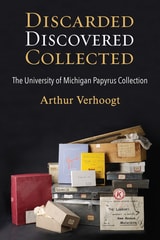
Discarded, Discovered, Collected
The University of Michigan Papyrus CollectionArthur Verhoogt
University of Michigan Press, 2017
The first-ever history of Michigan’s celebrated collection of papyri offers nonspecialists an inviting encounter with the ancient world
[more]
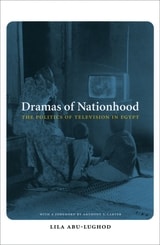
Dramas of Nationhood
The Politics of Television in EgyptLila Abu-Lughod
University of Chicago Press, 2004
How do people come to think of themselves as part of a nation? Dramas of Nationhood identifies a fantastic cultural form that binds together the Egyptian nation—television serials. These melodramatic programs—like soap operas but more closely tied to political and social issues than their Western counterparts—have been shown on television in Egypt for more than thirty years. In this book, Lila Abu-Lughod examines the shifting politics of these serials and the way their contents both reflect and seek to direct the changing course of Islam, gender relations, and everyday life in this Middle Eastern nation.
Representing a decade's worth of research, Dramas of Nationhood makes a case for the importance of studying television to answer larger questions about culture, power, and modern self-fashionings. Abu-Lughod explores the elements of developmentalist ideology and the visions of national progress that once dominated Egyptian television—now experiencing a crisis. She discusses the broadcasts in rich detail, from the generic emotional qualities of TV serials and the depictions of authentic national culture, to the debates inflamed by their deliberate strategies for combating religious extremism.
Representing a decade's worth of research, Dramas of Nationhood makes a case for the importance of studying television to answer larger questions about culture, power, and modern self-fashionings. Abu-Lughod explores the elements of developmentalist ideology and the visions of national progress that once dominated Egyptian television—now experiencing a crisis. She discusses the broadcasts in rich detail, from the generic emotional qualities of TV serials and the depictions of authentic national culture, to the debates inflamed by their deliberate strategies for combating religious extremism.
[more]