Results by title
542 books match the query 'Emigration and immigration' and 26 start with d
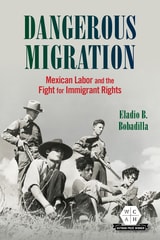
Dangerous Migration
Mexican Labor and the Fight for Immigrant RightsEladio B. Bobadilla
University of Illinois Press, 2026
Beginning with Mexican American opposition to the Bracero Program, Eladio Bobadilla traces the movement’s fault lines that formed around the issue of undocumented workers. Bobadilla reveals how internationalist and human rights discourse influenced the rise of the Chicano movement and its defense of Mexican undocumented immigrants. As time passed, anti-Mexican social, political, and legislative forces produced a nativist backlash that put immigration at the center of the United States’ culture wars and created the fantasy of undocumented workers as an existential threat.
Engaging and vivid, Dangerous Migration illuminates the history of debates over Mexican labor, the emergence of the immigrant rights activism, and the nativist movements that united Latinos with right-wing white Americans.
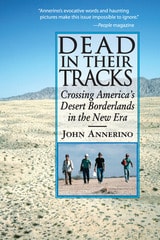
Dead in Their Tracks
Crossing America’s Desert Borderlands in the New EraJohn Annerino
University of Arizona Press, 2009
During the Sonoran Desert’s glorious and brutal summer season Annerino, a photojournalist, author, and explorer, watched four border crossers step off a bus and nonchalantly head into the American no-man’s land. On assignment for Newsweek, Annerino did more than just watch on that blistering August day. He joined them on their ultramarathon, life-or-death quest to find work to feed their families, amid temperatures so hot your parched throat burns from breathing and drinking water is the ultimate treasure.
As their water dwindled and the heat punished them, Annerino and the desperate men continued marching fifty miles in twenty-four hours and managed to survive their harrowing journey across the deadliest migrant trail in North America, El Camino del Diablo, “The Road of the Devil.” Driven by the mounting death toll, John returned again and again to the sun-scorched despoblado (uninhabited lands)—where hidden bighorn sheep water tanks glowed like diamonds—to document the lives, struggles, and heartbreaking remains of those who continue to disappear and perish in a region that’s claimed the lives of more than 9,700 men, women, and children.
Following the historic paths of indigenous Hia Ced O’odham (People of the Sand), Spanish missionary explorer Padre Eusebio Francisco Kino, and California-bound Forty-Niners, Annerino’s journeys on foot, crisscrossed the alluring yet treacherous desert trails of the El Camino del Diablo, Hohokam shell trail, and O’odham salt trails where hundreds of gambusinos (Mexican miners) and Euro-American pioneers succumbed during the 1850s.
As the migrants kept coming, the deaths kept mounting, and Annerino kept returning. He crossed celebrated Sonoran Desert sanctuaries—Organ Pipe Cactus National Monument, a UNESCO Biosphere Reserve, Cabeza Prieta National Wildlife Refuge, Barry M. Goldwater Range, sacred ancestral lands of the Tohono O’odham—that had become lost horizons, killing grounds, graveyards, and deadly smuggling corridors that also claimed the lives of National Park rangers and Border Patrol agents. John Annerino’s mission was to save someone, anyone, everyone—when he could find them.
Dead in Their Tracks is the saga of a merciless despoblado in the Great Southwest, of desperate yet hopeful migrants and refugees who keep staggering north. It is the story of ranchers, locals, and Border Patrol trackers who’ve saved countless lives, and heavily armed smugglers who haunt an inhospitable, if beautiful, wilderness that remains off the radar for journalists and news organizations that dare not set foot in the American desert waiting to welcome them on its terms.
Debating American Identity
Southwestern Statehood and Mexican ImmigrationLinda C. Noel
University of Arizona Press, 2014
In Debating American Identity, Linda C. Noel examines several nation-defining events—the proposed statehood of Arizona and New Mexico, the creation of a temporary worker program during the First World War, immigration restriction in the 1920s, and the repatriation of immigrants in the early 1930s. Noel uncovers the differing ways in which Americans argued about how newcomers could fit within the nation-state, in terms of assimilation, pluralism, or marginalization, and the significance of class status, race, and culture in determining American identity.
Noel shows not only how the definition of American was contested, but also how the economic and political power of people of Mexican descent, their desire to incorporate as Americans or not, and the demand for their territory or labor by other Americans played an important part in shaping decisions about statehood and national immigration policies. Debating American Identity skillfully shows how early twentieth century debates over statehood influenced later ones concerning immigration; in doing so, it resonates with current discussions, resulting in a well-timed look at twentieth century citizenship.

Deciding To Be Legal
A Maya Community in HoustonJacqueline Hagan
Temple University Press, 1994
Decolonization and the Decolonized
Albert Memmi
University of Minnesota Press, 2006
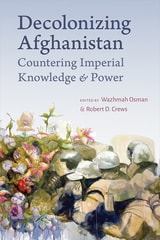
Decolonizing Afghanistan
Countering Imperial Knowledge and PowerWazhmah Osman and Robert D. Crews, editors
Duke University Press, 2025
Contributors. Matthieu Aikins, Dawood Azami, Purnima Bose, Paula Chakravartty, Robert D. Crews, Marya Hannun, Ali Karimi, Nivi Manchanda, Sabauon Nasseri, Tausif Noor, Wazhmah Osman, Hosai Qasmi, Zohra Saed, Gazelle Samizay, Morwari Zafar, Helena Zeweri
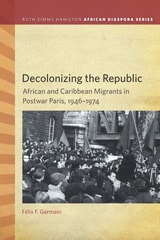
Decolonizing the Republic
African and Caribbean Migrants in Postwar Paris, 1946–1974Félix F. Germain
Michigan State University Press, 2016
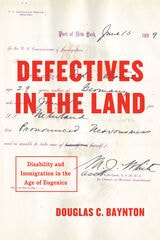
Defectives in the Land
Disability and Immigration in the Age of EugenicsDouglas C. Baynton
University of Chicago Press, 2016
In the late nineteenth and early twentieth centuries, Baynton explains, immigration restriction in the United States was primarily intended to keep people with disabilities—known as “defectives”—out of the country. The list of those included is long: the deaf, blind, epileptic, and mobility impaired; people with curved spines, hernias, flat or club feet, missing limbs, and short limbs; those unusually short or tall; people with intellectual or psychiatric disabilities; intersexuals; men of “poor physique” and men diagnosed with “feminism.” Not only were disabled individuals excluded, but particular races and nationalities were also identified as undesirable based on their supposed susceptibility to mental, moral, and physical defects.
In this transformative book, Baynton argues that early immigration laws were a cohesive whole—a decades-long effort to find an effective method of excluding people considered to be defective. This effort was one aspect of a national culture that was increasingly fixated on competition and efficiency, anxious about physical appearance and difference, and haunted by a fear of hereditary defect and the degeneration of the American race.
Defining America
Through Immigration PolicyBill Ong Hing
Temple University Press, 2003
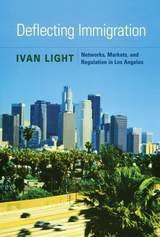
Deflecting Immigration
Networks, Markets, and Regulation in Los AngelesIvan Light
Russell Sage Foundation, 2006
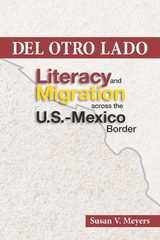
Del Otro Lado
Literacy and Migration across the U.S.-Mexico BorderSusan V. Meyers
Southern Illinois University Press, 2014
In Del OtroLado: Literacy and Migration across the U.S.-Mexico Border, author Susan V. Meyers draws on her year-long ethnographic study in Mexico and the United States to analyze the literacy practices of Mexican-origin students on both sides of the border.
Meyers begins by taking readers through the historical development of the rural Mexican town of Villachuato. Through a series of case studies spanning the decades between the Mexican Revolution and the modern-day village, Meyers explores the ever-widening gulf between the priorities of students and the ideals of the public education system. As more and more of Villachuato’s families migrate in an effort to find work in the wake of shifting transnational economic policies like NAFTA, the town’s public school teachers find themselves frustrated by spiraling drop-out rates. Meyers discovers that students often consider the current curriculum irrelevant and reject the established value systems of Mexico’s public schools. Meyers debunks the longstanding myth that literacy is tied to economic development, arguing that a “literacy contract” model, in which students participate in public education in exchange for access to increased earning potential, better illustrates the situation in rural Mexico.
Meyers next explores literacy on the other side of the border, traveling to Marshalltown, Iowa, where many former citizens of Villachuato have come to reside because of the availability of jobs for unskilled workers at the huge Swift meat-packing plant there. Here she discovers that Mexican-origin families in the United States often consider education a desirable end in itself rather than a means to an end. She argues that migration has a catalyzing effect on literacy, particularly as Mexican migrant families tend to view education as a desirable form of prestige.
Meyers reveals the history and policies that have shaped the literacy practices of Mexican-origin students, and she raises important questions about not only the obligation of the United States to educate migrant students, but also those students’ educational struggles and ways in which these difficulties can be overcome. This transnational study is essential reading for scholars, students, educators and lawmakers interested in shaping the future of educational policy.
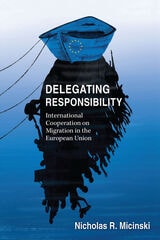
Delegating Responsibility
International Cooperation on Migration in the European UnionNicholas R. Micinski
University of Michigan Press, 2022
Delegating Responsibility explores the politics of migration in the European Union and explains how the EU responded to the 2015–17 refugee crisis. Based on 86 interviews and fieldwork in Greece and Italy, Nicholas R. Micinski proposes a new theory of international cooperation on international migration. States approach migration policies in many ways—such as coordination, collaboration, subcontracting, and unilateralism—but which policy they choose is based on capacity and on credible partners on the ground. Micinski traces the fifty-year evolution of EU migration management, like border security and asylum policies, and shows how EU officials used “crises” as political leverage to further Europeanize migration governance. In two in-depth case studies, he explains how Italy and Greece responded to the most recent refugee crisis. He concludes with a discussion of policy recommendations regarding contemporary as well as long-term aspirations for migration management in the EU.
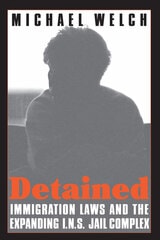
Detained
Immigration Laws & Expanding Ins Jail ComplexMichael Welch
Temple University Press, 2002
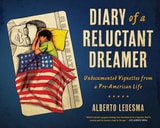
Diary of a Reluctant Dreamer
Undocumented Vignettes from a Pre-American LifeAlberto Ledesma
The Ohio State University Press, 2017
Exploring Ledesma’s experiences from immigrant to student to academic, Diary of a Reluctant Dreamer presents a humorous, gritty, and multilayered portrait of undocumented immigrant life in urban America. Ledesma’s vignettes about life in the midst of ongoing social trauma give voice to a generation that has long been silent about its struggles. Delving into the key moments of cultural transition throughout his childhood and adulthood—police at the back door waiting to deport his family, the ex-girlfriend who threatens to call INS and report him, and the interactions with law enforcement even after he is no longer undocumented—Ledesma, through his art and his words, provides a glimpse into the psychological and philosophical concerns of undocumented immigrant youth who struggle to pinpoint their identity and community.
Diaspora Identities
Exile, Nationalism and Cosmopolitanism in Past and PresentEdited by Susanne Lachenicht and Kirsten Heinsohn
Campus Verlag, 2009
Historical work on the late nineteenth and early twentieth centuries suggests that as nation-states were solidifying throughout Western Europe, exiled groups tended to develop rival national identities—an occurrence that had been fairly uncommon in the two preceding centuries. Diaspora Identities draws on eight case studies, ranging from the early modern period through the twentieth century, to explore the interconnectedness of exile, nationalism, and cosmopolitanism as concepts, ideals, attitudes, and strategies among diasporic groups.
Diaspora's Homeland
Modern China in the Age of Global MigrationShelly Chan
Duke University Press, 2018
Diasporas in the New Media Age
Identity, Politics, and CommunityAndoni Alonso
University of Nevada Press, 2010
The explosion of digital information and communication technologies has influenced almost every aspect of contemporary life. Diasporas in the New Media Age is the first book-length examination of the social use of these technologies by emigrants and diasporas around the world. The eighteen original essays in the book explore the personal, familial, and social impact of modern communication technology on populations of European, Asian, African, Caribbean, Middle Eastern, and Latin American emigrants. It also looks at the role and transformation of such concepts as identity, nation, culture, and community in the era of information technology and economic globalization. The contributors, who represent a number of disciplines and national origins, also take a range of approaches—empirical, theoretical, and rhetorical—and combine case studies with thoughtful analysis. Diasporas in the New Media Age is both a discussion of the use of communication technologies by various emigrant groups and an engaging account of the immigrant experience in the contemporary world. It offers important insights into the ways that dispersed populations are using digital media to maintain ties with their families and homeland, and to create new communities that preserve their culture and reinforce their sense of identity. In addition, the book is a significant contribution to our understanding of the impact of technology on society in general.
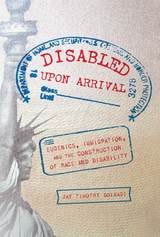
Disabled Upon Arrival
Eugenics, Immigration, and the Construction of Race and DisabilityJay Timothy Dolmage
The Ohio State University Press, 2018
Through careful archival research and consideration of the larger ideologies of racialization and xenophobia, Disabled Upon Arrival links anti-immigration rhetoric to eugenics—the flawed “science” of controlling human population based on racist and ableist ideas about bodily values. Dolmage casts an enlightening perspective on immigration restriction, showing how eugenic ideas about the value of bodies have never really gone away and revealing how such ideas and attitudes continue to cast groups and individuals as disabled upon arrival.
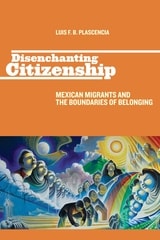
Disenchanting Citizenship
Mexican Migrants and the Boundaries of BelongingLuis F. B. Plascencia
Rutgers University Press, 2012
The book explores the meaning of U.S. citizenship through the experience of a unique group of Mexican migrants who were granted Temporary Status under the “legalization” provisions of the 1986 IRCA, attained Lawful Permanent Residency, and later became U.S. citizens. Plascencia integrates an extensive and multifaceted collection of interviews, ethnographic fieldwork, ethno-historical research, and public policy analysis in examining efforts that promote the acquisition of citizenship, the teaching of citizenship classes, and naturalization ceremonies. Ultimately, he unearths citizenship’s root as a Janus-faced construct that encompasses a simultaneous process of inclusion and exclusion. This notion of citizenship is mapped on to the migrant experience, arguing that the acquisition of citizenship can lead to disenchantment with the very status desired. In the end, Plascencia expands our understanding of the dynamics of U.S. citizenship as a form of membership and belonging.
Displacements and Diasporas
Asians in the AmericasAnderson, Wanni W.
Rutgers University Press, 2005
With an emphasis on anthropological and historical contexts, the essays show how the experiences of Asians across the Americas have been shaped by the social dynamics and politics of settlement locations as much as by transnational connections and the economic forces of globalization. Contributors bring new insights to the unique situations of Asian communities previously overlooked by scholars, such as Vietnamese Canadians and the Lao living in Rhode Island. Other topics include Chinese laborers and merchants in Latin America and the Caribbean, Japanese immigrants and their descendants in Brazil, Afro-Amerasians in America, and the politics of second-generation Indian American youth culture.
Together the essays provide a valuable comparative portrait of Asians across the Americas. Engaging issues of diaspora, transnational social practice and community building, gender, identity, institutionalized racism, and deterritoriality, this volume presents fresh perspectives on displacement, opening the topic up to a wider, more interdisciplinary terrain of inquiry and teaching.

Distant Islands
The Japanese American Community in New York City, 1876-1930sDaniel H. Inouye
University Press of Colorado, 2018
The New York Japanese American community was a composite of several micro communities divided along status, class, geographic, and religious lines. Using a wealth of primary sources—oral histories, memoirs, newspapers, government documents, photographs, and more—Daniel H. Inouye tells the stories of the business and professional elites, mid-sized merchants, small business owners, working-class families, menial laborers, and students that made up these communities. The book presents new knowledge about the history of Japanese immigrants in the United States and makes a novel and persuasive argument about the primacy of class and status stratification and relatively weak ethnic cohesion and solidarity in New York City, compared to the pervading understanding of nikkei on the West Coast. While a few prior studies have identified social stratification in other nikkei communities, this book presents the first full exploration of the subject and additionally draws parallels to divisions in German American communities.
Distant Islands is a unique and nuanced historical account of an American ethnic community that reveals the common humanity of pioneering Japanese New Yorkers despite diverse socioeconomic backgrounds and life stories. It will be of interest to general readers, students, and scholars interested in Asian American studies, immigration and ethnic studies, sociology, and history.
Winner- Honorable Mention, 2018 Immigration and Ethnic History Society First Book Award
Diverse Pathways
Race and the Incorporation of Black, White, and Arab-Origin Africans in the United StatesKevin J. A. Thomas
Michigan State University Press, 2014
Dollar, Dove, and Eagle
One Hundred Years of Palestinian Migration to HondurasNancie L. Gonzalez
University of Michigan Press, 1993
Domestic Disturbances
Re-Imagining Narratives of Gender, Labor, and ImmigrationBy Irene Mata
University of Texas Press, 2014
The issue of immigration is one of the most hotly debated topics in the national arena, with everyone from right-wing pundits like Sarah Palin to alternative rockers like Zack de la Rocha offering their opinion. The traditional immigrant narrative that gained popularity in the nineteenth and twentieth centuries continues to be used today in describing the process of the “Americanization” of immigrants. Yet rather than acting as an accurate representation of immigrant experiences, this common narrative of the “American Dream” attempts to ideologically contain those experiences within a story line that promotes the idea of achieving success through hard work and perseverance.
In Domestic Disturbances, Irene Mata dispels the myth of the “shining city on the hill” and reveals the central truth of hidden exploitation that underlies the great majority of Chicana/Latina immigrant stories. Influenced by the works of Latina cultural producers and the growing interdisciplinary field of scholarship on gender, immigration, and labor, Domestic Disturbances suggests a new framework for looking at these immigrant and migrant stories, not as a continuation of a literary tradition, but instead as a specific Latina genealogy of immigrant narratives that more closely engage with the contemporary conditions of immigration. Through examination of multiple genres including film, theatre, and art, as well as current civil rights movements such as the mobilization around the DREAM Act, Mata illustrates the prevalence of the immigrant narrative in popular culture and the oppositional possibilities of alternative stories.
Double Passage
The Lives of Caribbean Migrants Abroad and Back HomeGeorge Gmelch
University of Michigan Press, 1993
Dreams Derailed
Undocumented Youths in the Trump EraWilliam A. Schwab
University of Arkansas Press, 2018
During the 2016 presidential campaign millions of voters, concerned about the economic impact of illegal immigration, rallied behind the notion of a border wall between the United States and Mexico. Well into the Trump presidency, immigration endures as a hotly contested issue in United States politics.
In Dreams Derailed sociologist William A. Schwab shares the stories of immigration reform advocates and follows up on stories told in his 2013 book Right to DREAM, which argued in favor of the DREAM Act that would have provided conditional residency for undocumented youth brought to the United States as children, a version of which was later enacted by executive order and referred to as DACA (Deferred Action for Childhood Arrivals).
Taking as its focal point the Trump administration’s decision to rescind Obama-era DACA protection, Dreams Derailed delves into the economic, political, and social factors that inform the public conversation about immigration, making a clear case for the many benefits of inclusive policies and the protection of undocumented youths. Schwab also takes a close look at the factors that carried Donald Trump to the White House, demonstrates how economic upheaval and the issue of immigration influenced the 2016 presidential election, analyzes current immigration laws, and suggests next steps for reform.