Results by title
72 books match the query 'English drama' and 2 start with d
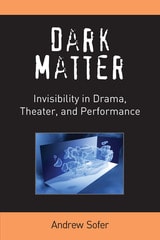
Dark Matter
Invisibility in Drama, Theater, and PerformanceAndrew Sofer
University of Michigan Press, 2013
Dark Mattermaps the invisible dimension of theater whose effects are felt everywhere in performance. Examining phenomena such as hallucination, offstage character, offstage action, sexuality, masking, technology, and trauma, Andrew Sofer engagingly illuminates the invisible in different periods of postclassical western theater and drama. He reveals how the invisible continually structures and focuses an audience’s theatrical experience, whether it’s black magic in Doctor Faustus, offstage sex in A Midsummer Night’s Dream, masked women in The Rover, self-consuming bodies in Suddenly Last Summer, or surveillance technology in The Archbishop’s Ceiling. Each discussion pinpoints new and striking facets of drama and performance that escape sight. Taken together, Sofer’s lively case studies illuminate how dark matter is woven into the very fabric of theatrical representation. Written in an accessible style and grounded in theater studies but interdisciplinary by design, Dark Matter will appeal to theater and performance scholars, literary critics, students, and theater practitioners, particularly playwrights and directors.
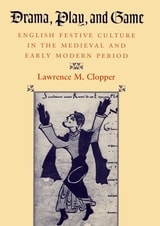
Drama, Play, and Game
English Festive Culture in the Medieval and Early Modern PeriodLawrence M. Clopper
University of Chicago Press, 2001
Drama, Play, and Game demonstrates that the theatrum repudiated by medieval clerics was not "theater" as we understand the term today. Clopper contends that critics have misrepresented Western stage history because they have assumed that theatrum designates a place where drama is performed. While theatrum was thought of as a site of spectacle during the Middle Ages, the term was more closely connected with immodest behavior and lurid forms of festive culture. Clerics were not opposed to liturgical representations in churches, but they strove ardently to suppress May games, ludi, festivals, and liturgical parodies. Medieval drama, then, stemmed from a more vernacular tradition than previously acknowledged-one developed by England's laity outside the boundaries of clerical rule.