Results by title
67 books match the query 'Environmental protection' and 5 start with d
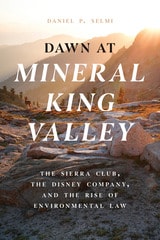
Dawn at Mineral King Valley
The Sierra Club, the Disney Company, and the Rise of Environmental LawDaniel P. Selmi
University of Chicago Press, 2022
In our current age of climate change–induced panic, it’s hard to imagine a time when private groups were not actively enforcing environmental protection laws in the courts. It wasn’t until 1972, however, that a David and Goliath–esque Supreme Court showdown involving the Sierra Club and Disney set a revolutionary legal precedent for the era of environmental activism we live in today.
Set against the backdrop of the environmental movement that swept the country in the late 1960s and early 1970s, Dawn at Mineral King Valley tells the surprising story of how the US Forest Service, the Disney company, and the Sierra Club each struggled to adapt to the new, rapidly changing political landscape of environmental consciousness in postwar America. Proposed in 1965 and approved by the federal government in 1969, Disney’s vast development plan would have irreversibly altered the practically untouched Mineral King Valley, a magnificently beautiful alpine area in the Sierra Nevada mountains. At first, the plan met with unanimous approval from elected officials, government administrators, and the press—it seemed inevitable that this expanse of wild natural land would be radically changed and turned over to a private corporation. Then the scrappy Sierra Club forcefully pushed back with a lawsuit that ultimately propelled the modern environmental era by allowing interest groups to bring litigation against environmentally destructive projects.
An expert on environmental law and appellate advocacy, Daniel P. Selmi uses his authoritative narrative voice to recount the complete history of this revolutionary legal battle and the ramifications that continue today, almost 50 years later.
DeVoto’s West
History, Conservation, and the Public GoodBernard DeVoto
Ohio University Press, 2005
Defending the Land of the Jaguar
A History of Conservation in MexicoBy Lane Simonian
University of Texas Press, 1995
Mexican conservationists have sometimes observed that it is difficult to find a country less interested in the conservation of its natural resources than is Mexico. Yet, despite a long history dedicated to the pursuit of development regardless of its environmental consequences, Mexico has an equally long, though much less developed and appreciated, tradition of environmental conservation.
Lane Simonian here offers the first panoramic history of conservation in Mexico from pre-contact times to the current Mexican environmental movement. He explores the origins of conservation and environmental concerns in Mexico, the philosophies and endeavors of Mexican conservationists, and the enactment of important conservation laws and programs. This heretofore untold story, drawn from interviews with leading Mexican conservationists as well as archival research, will be important reading throughout the international community of activists, researchers, and concerned citizens interested in the intertwined issues of conservation and development.

Do It Yourself
A Handbook For Changing Our WorldEdited by Trapese Trapese
Pluto Press, 2007
Ethical consumerism is now big business. But leading a sustainable and truly radical life encompasses a whole variety of things that challenge the mainstream. This book shows how we can make real changes to the way we live. In simple steps, it describes how you can create sustainable and equitable ways of living that can help transform not just your own life, but the culture around you.
The book weaves together analysis, stories and experiences. It combines in-depth analytical chapters followed by easy to follow 'How to Guides' with practical ideas for change. Taken together, these small steps can move us towards taking back control of our lives from governments and corporations.
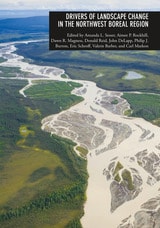
Drivers of Landscape Change in the Northwest Boreal Region
Edited by Carl Markon, Amanda L. Sesser, Aimee P. Rockhill, Dawn R. Magness, Don Reid, John DeLapp, Phil Burton, Eric Schroff, and Valerie Barber
University of Alaska Press, 2019
The NWB is a data-poor region, and the intention of the NWB Landscape Conservation Cooperative is to determine what data are not available and what data are available. For instance, historical baseline data describing the economic and social relationships in association with the ecological condition of the NWB landscape are often lacking. Likewise, the size and remoteness of this region make it challenging to measure basic biological information, such as species population sizes or trends. The paucity of weather and climate monitoring stations also compound the ability to model future climate trends and impacts, which is part of the nature of working in the north. The purpose of this volume is to create a resource for regional land and resource managers and researchers by synthesizing the latest research on the historical and current status of landscape-scale drivers (including anthropogenic activities) and ecosystem processes, future projected changes of each, and the effects of changes on important resources. Generally, each chapter is coauthored by researchers and land and natural resource managers from the United States and Canada.