Results by title
187 books match the query 'Essays & Travelogues' and 11 start with d
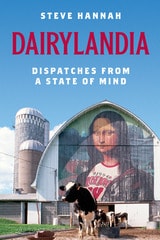
Dairylandia
Dispatches from a State of MindSteve Hannah
University of Wisconsin Press, 2022
Dairylandia recounts Steve Hannah’s burgeoning love for his adopted state through the writings of his long-lived column, “State of Mind.” He profiles the lives of the seemingly ordinary, yet quite (and quietly) extraordinary folks he met and befriended on his travels. From Norwegian farmers to rattlesnake hunters to a woman who kept her favorite dead bird in the freezer, Hannah was charmed and fascinated by practically everyone he met. These captivating vignettes are by turns humorous, tragic, and remarkable—and remind us of our shared humanity.
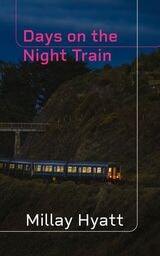
Days on the Night Train
Millay Hyatt
Haus Publishing, 2026
A paean to traveling by train, to the variety of Europe’s landscape, and to an immersive way of approaching and seeing the world.
For Millay Hyatt, it is the charm of “uncushioned encounters with the world” that makes her, whenever possible, choose to travel by train.
Days on the Night Train is a story of serendipities and missed connections, of sluggish border crossings, of embracing unpredictability and shunning the stifling regimentation of contemporary travel. In her accounts of her journeys across Europe and beyond, ranging from Edinburgh to Tunis, from Valencia to Tbilisi, Hyatt shows us that it is in movement that our perspective changes, and that this is never truer than when traveling by train, at half speed, with wide carriage windows framing a slowly shifting world. Inside, surrounded by strangers, she becomes intrigued by the intimate habits of her fellow passengers, listens in on arguing couples and bantering teenagers, and gives her imagination free rein to speculate about their lives. Later, in a couchette, even sleep takes on an unfamiliar quality, echoing Proust’s comment that people on trains sleep like fish in the sea, gently rocked by the waves and currents.
Traveling by rail brings Hyatt into contact with the world in a way that disturbs and upends her certainties. Perception slows and widens. Experiencing the excitement of departure and arrival—and in between the bittersweet joy of being in limbo, of looking inward—she notices how long train journeys, like books, can still alter us in a way jet travel has all but extinguished. Days on the Night Train is itself a journey, abundant with reflection, poetic observation, revealing encounter, and literary excursions.
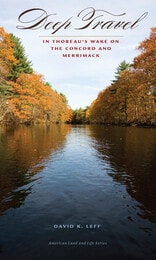
Deep Travel
In Thoreau's Wake on the Concord and MerrimackDavid K. Leff
University of Iowa Press, 2009
How we see depends on where we are in our lives and with whom we travel. Leff chose his companions wisely. In consecutive journeys his neighbor and friend Alan, a veteran city planner; his son Josh, an energetic eleven-year-old; and his sweetheart Pamela, a compassionate professional caregiver, added their perspectives to Leff’s own experiences as a government official in natural resources policy. Not so much sight seeing as sight seeking, together they explored a geography of the imagination as well as the rich natural and human histories of the rivers and their communities.
The heightened awareness of deep travel demands that we immerse ourselves fully in places and realize that they exist in time as well as space. Its mindfulness enriches the experience and makes the voyager worthy of the journey. Leff’s intriguing, contemplative deep travel along these historic rivers presents a methodology for exploration that will enrich any trip.
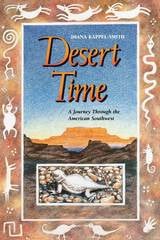
Desert Time
Diana Kappel-Smith
University of Arizona Press, 1992
"You come to trust her company and to savor her observations: she is the sort of guide who gestures at what you would otherwise step across—or on—without noticing. She calls her collection 'an introduction to particulars.' These she infuses with radiance." —Los Angeles Times Book Review
"With prose that is both lyrical and down-to-earth, Kappel-Smith makes readers aware of the fragility of the desert and the necessity to preserve these wonderful, alien and mysterious places." —San Francisco Chronicle
"We glimpse moments of experience, rendered both in words and in conscientious line drawings. The book has a gentle, meandering tone. It consciously refuses to manufacture dramatic events." —Christian Science Monitor
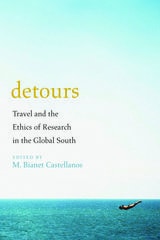
Detours
Travel and the Ethics of Research in the Global SouthEdited by M. Bianet Castellanos
University of Arizona Press, 2019
Influenced by the works of anthropologists Ruth Behar and Renato Rosaldo, the scholars and journalists in this volume consider how first encounters—those initial, awkward attempts to learn about a culture and a people—evolved into enduring and critical engagements. Contemplating the ethics and racial politics of traveling and doing research abroad, they call attention to the power and privilege that permit researchers to enter people’s lives, ask intimate questions, and publish those disclosures. Focusing on Latin America and the Caribbean, they ask, Why this place? What keeps us coming back? And what role do we play in producing narratives of inequality, uneven development, and global spectacle?
The book examines the “politics of return”—the experiences made possible by revisiting a field site over extended periods of time—of scholars and journalists who have spent decades working in and writing about Latin America and the Caribbean. Contributors aren’t telling a story of enlightenment and goodwill; they focus instead on the slippages and conundrums that marked them and raised questions of their own intentions and intellectual commitments.
Speaking from the intersection of race, class, and gender, the contributors explore the hubris and nostalgia that motivate returning again and again to a particular place. Through personal stories, they examine their changing ideas of Latin America and the Caribbean and how those places have shaped the people they’ve become, as writers, as teachers, and as activists.

Dickens's London
Peter Clark
Haus Publishing, 2012
In five walks through central London, Peter Clark explores “The First Suburbs”—Camden Town, Chelsea, Greenwich, Hampstead, Highgate and Limehouse—as they feature in Dickens’s writing and illuminates the settings of Dickens’s life and his greatest works of journalism and fiction. Describing these storied spaces of today’s central London in intimate detail, Clark invites us to experience the city as it was known to Dickens and his characters. These walks take us through the locations and buildings that he interacted with and wrote about, creating an imaginative reconstruction of the Dickensian world that has been lost to time.
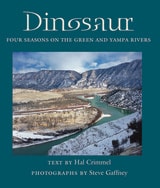
Dinosaur
Four Seasons on the Green and Yampa RiversHal Crimmel
University of Arizona Press, 2007
Gaffney’s reflective photographs emphasize the rough perfection of the landscape; Crimmel’s pensive meditations and his river expertise combine to create a rare point of view, one that ventures into places the guidebooks don’t go. But this narrative is more than tribute—it is a reminder of the fragile nature of desert places. Crimmel lyrically combines his descriptions with an examination of the complex issues relevant to managing public lands—invasive species, tourism, dams, endangered flora and fauna—to address the contradictions inherent in “managed wilderness.” Over four seasons and multiple trips, Crimmel and Gaffney have captured the rivers’ sense of place, creating a portrait of a dazzling high desert landscape that needs to be appreciated and protected.
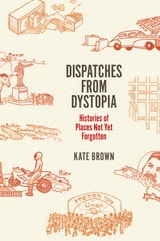
Dispatches from Dystopia
Histories of Places Not Yet ForgottenKate Brown
University of Chicago Press, 2015
In Dispatches from Dystopia, Brown wanders the Chernobyl Zone of Alienation, first on the Internet and then in person, to figure out which version—the real or the virtual—is the actual forgery. She also takes us to the basement of a hotel in Seattle to examine the personal possessions left in storage by Japanese-Americans on their way to internment camps in 1942. In Uman, Ukraine, we hide with Brown in a tree in order to witness the annual male-only Rosh Hashanah celebration of Hasidic Jews. In the Russian southern Urals, she speaks with the citizens of the small city of Kyshtym, where invisible radioactive pollutants have mysteriously blighted lives. Finally, Brown returns home to Elgin, Illinois, in the midwestern industrial rust belt to investigate the rise of “rustalgia” and the ways her formative experiences have inspired her obsession with modernist wastelands.
Dispatches from Dystopia powerfully and movingly narrates the histories of locales that have been silenced, broken, or contaminated. In telling these previously unknown stories, Brown examines the making and unmaking of place, and the lives of the people who remain in the fragile landscapes that are left behind.
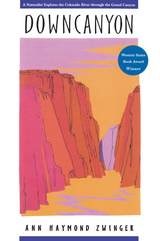
Downcanyon
A Naturalist Explores the Colorado River through the Grand CanyonAnn Haymond Zwinger
University of Arizona Press, 1995
Teamed with scientists and other volunteer naturalists, Zwinger was part of an ongoing study of change along the Colorado. In all seasons and all weathers, in almost every kind of craft that goes down the waves, she returned to the Grand Canyon again and again to explore, look, and listen. From the thrill of running the rapids to the wonder in a grain of sand, her words take the reader down 280 miles of the "ever-flowing, energetic, whooping and hollering, galloping" river.
Zwinger's book begins with a bald eagle count at Nankoweap Creek in January and ends with a subzero, snowy walk out of the canyon at winter solstice. Between are the delights of spring in side canyons, the benediction of rain on a summer beach, and the chill that comes off limestone walls in November.
Her eye for detail catches the enchantment of small things played against the immensity of the river: the gatling-gun love song of tree frogs; the fragile beauty of an evening primrose; ravens "always in close attendance, like lugubrious, sharp-eyed, nineteenth-century undertakers"; and a golden eagle chasing a trout "with wings akimbo like a cleaning lady after a cockroach."
As she travels downstream, Zwinger follows others in history who have risked—and occasionally lost—their lives on the Colorado. Hiking in narrow canyons, she finds cliff dwellings and broken pottery of prehistoric Indians. Rounding a bend or running a rapid, she remembers the triumphs and tragedies of early explorers and pioneers. She describes the changes that have come with putting a big dam on a big river and how the dam has affected the riverine flora and fauna as well as the rapids and their future.
Science in the hands of a poet, this captivating book is for armchair travelers who may never see the grandiose Colorado and for those who have run it wisely and well. Like the author, readers will find themselves bewitched by the color and flow of the river, and enticed by what's around the next bend. With her, they will find its rhythms still in the mind, long after the splash and spray and pound are gone.
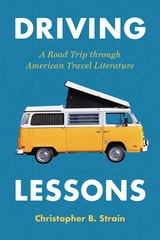
Driving Lessons
A Road Trip through American Travel LiteratureChristopher B. Strain
University of Alabama Press, 2025
Weaves the author’s own four-month cross-country sojourn in a VW van with thoughts on travel narratives across the history of American literature
In Driving Lessons, Christopher B. Strain sets out on a quintessential American road trip, exploring not just the roads and byways of the country but the road trip’s place in American culture. Strain dives into the well of American travel writing, illuminating fascinating aspects of the road trip, such as how race, class, and gender shape the experiences of road trippers.
In the summer of 1998, amid a professional crisis of confidence, Strain settled on a plan to reconnect with both himself and the country he studies. He purchased a 1972 Volkswagen Westfalia van and set off on his own cross-country odyssey. In the weeks that followed, he ruminated on his own ongoing journey alongside great journeys from the past and how they reveal the heart of the traveler as well as the landscape of the nation.
Visiting archives and landmarks across the United States, Strain's journey became a parallel to the stories he studied—an opportunity to see and experience the cities, national parks, and monuments that define US history. Driving Lessons is a compelling blend of literary analysis and memoir, offering readers an insightful and heartfelt reflection on the enduring power of the American road trip.
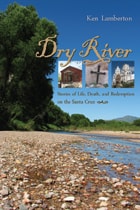
Dry River
Stories of Life, Death, and Redemption on the Santa CruzKen Lamberton
University of Arizona Press, 2011
Here, Ken Lamberton finds his way through a lifetime of exploring southern Arizona’s Santa Cruz River. This river—dry, still, and silent one moment, a thundering torrent of mud the next—serves as a reflection of the desert around it: a hint of water on parched sand, a path to redemption across a thirsty landscape.
With his latest book, Lamberton takes us on a trek across the land of three nations—the United States, Mexico, and the Tohono O’odham Nation—as he hikes the river’s path from its source and introduces us to people who draw identity from the river—dedicated professionals, hardworking locals, and the author’s own family. These people each have their own stories of the river and its effect on their lives, and their narratives add immeasurable richness and depth to Lamberton’s own astute observations and picturesque descriptions.
Unlike books that detail only the Santa Cruz’s decline, Dry River offers a more balanced, at times even optimistic, view of the river that ignites hope for reclamation and offers a call to action rather than indulging in despair and resignation. At once a fascinating cultural history lesson and an important reminder that learning from the past can help us fix what we have damaged, Dry River is both a story about the amazing complexity of this troubled desert waterway and a celebration of one man’s lifelong journey with the people and places touched by it.