Results by title
421 books match the query 'Evolution' and 21 start with d
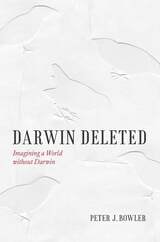
Darwin Deleted
Imagining a World without DarwinPeter J. Bowler
University of Chicago Press, 2013
In Darwin Deleted, Bowler argues that no one else, not even Wallace, was in a position to duplicate Darwin’s complete theory of evolution by natural selection. Evolutionary biology would almost certainly have emerged, but through alternative theories, which were frequently promoted by scientists, religious thinkers, and moralists who feared the implications of natural selection. Because non-Darwinian elements of evolutionism flourished for a time in the real world, it is possible to plausibly imagine how they might have developed, particularly if the theory of natural selection had not emerged until decades after the acceptance of the basic idea of evolution. Bowler’s unique approach enables him to clearly explain the non-Darwinian tradition—and in doing so, he reveals how the reception of Darwinism was historically contingent. By taking Darwin out of the equation, Bowler is able to fully elucidate the ideas of other scientists, such as Richard Owen and Thomas Huxley, whose work has often been misunderstood because of their distinctive responses to Darwin.
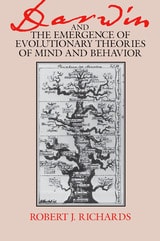
Darwin and the Emergence of Evolutionary Theories of Mind and Behavior
Robert J. Richards
University of Chicago Press, 1987
"Richards's book is now the obvious introduction to the history of ideas about mind and behavior in the nineteenth century."—Mark Ridley, Times Literary Supplement
"Not since the publication of Michael Ghiselin's The Triumph of the Darwinian Method has there been such an ambitious, challenging, and methodologically self-conscious interpretation of the rise and development and evolutionary theories and Darwin's role therein."—John C. Greene, Science
"His book . . . triumphantly achieves the goal of all great scholarship: it not only informs us, but shows us why becoming thus informed is essential to understanding our own issues and projects."—Daniel C. Dennett, Philosophy of Science
Darwin and the General Reader
The Reception of Darwin's Theory of Evolution in the British Periodical Press, 1859-1872Alvar Ellegård
University of Chicago Press, 1990
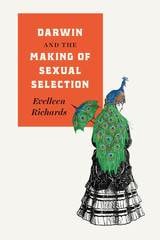
Darwin and the Making of Sexual Selection
Evelleen Richards
University of Chicago Press, 2017
Only now, with Darwin and the Making of Sexual Selection, do we have a comprehensive and meticulously researched account of Darwin’s path to its formulation—one that shows the man, rather than the myth, and examines both the social and intellectual roots of Darwin’s theory. Drawing on the minutiae of his unpublished notes, annotations in his personal library, and his extensive correspondence, Evelleen Richards offers a richly detailed, multilayered history. Her fine-grained analysis comprehends the extraordinarily wide range of Darwin’s sources and disentangles the complexity of theory, practice, and analogy that went into the making of sexual selection. Richards deftly explores the narrative strands of this history and vividly brings to life the chief characters involved. A true milestone in the history of science, Darwin and the Making of Sexual Selection illuminates the social and cultural contingencies of the shaping of an important—if controversial—biological concept that is back in play in current evolutionary theory.
Darwin and the Novelists
Patterns of Science in Victorian FictionGeorge Levine
University of Chicago Press, 1991
Darwin's Cathedral
Evolution, Religion, and the Nature of SocietyDavid Sloan Wilson
University of Chicago Press, 2003
The key, argues Wilson, is to think of society as an organism, an old idea that has received new life based on recent developments in evolutionary biology. If society is an organism, can we then think of morality and religion as biologically and culturally evolved adaptations that enable human groups to function as single units rather than mere collections of individuals? Wilson brings a variety of evidence to bear on this question, from both the biological and social sciences. From Calvinism in sixteenth-century Geneva to Balinese water temples, from hunter-gatherer societies to urban America, Wilson demonstrates how religions have enabled people to achieve by collective action what they never could do alone. He also includes a chapter considering forgiveness from an evolutionary perspective and concludes by discussing how all social organizations, including science, could benefit by incorporating elements of religion.
Religious believers often compare their communities to single organisms and even to insect colonies. Astoundingly, Wilson shows that they might be literally correct. Intended for any educated reader, Darwin's Cathedral will change forever the way we view the relations among evolution, religion, and human society.
Darwin's Evolving Identity
Adventure, Ambition, and the Sin of SpeculationAlistair Sponsel
University of Chicago Press, 2018
Drawing on his own ambitious research in Darwin’s manuscripts and at the Beagle’s remotest ports of call, Sponsel takes us from the ocean to the Origin and beyond. He provides a vivid new picture of Darwin’s career as a voyaging naturalist and metropolitan author, and in doing so makes a bold argument about how we should understand the history of scientific theories.
Darwin's Finches
Readings in the Evolution of a Scientific ParadigmEdited, with Commentary, by Kathleen Donohue
University of Chicago Press, 2011
Two species come to mind when one thinks of the Galapagos Islands—the giant tortoises and Darwin’s fabled finches. While not as immediately captivating as the tortoises, these little brown songbirds and their beaks have become one of the most familiar and charismatic research systems in biology, providing generations of natural historians and scientists a lens through which to view the evolutionary process and its role in morphological differentiation.
In Darwin’s Finches, Kathleen Donohue excerpts and collects the most illuminating and scientifically significant writings on the finches of the Galapagos to teach the fundamental principles of evolutionary theory and to provide a historical record of scientific debate. Beginning with fragments of Darwin’s Galapagos field notes and subsequent correspondence, and moving through the writings of such famed field biologists as David Lack and Peter and Rosemary Grant, the collection demonstrates how scientific processes have changed over time, how different branches of biology relate to one another, and how they all relate to evolution. As Donohue notes, practicing science today is like entering a conversation that has been in progress for a long, long time. Her book provides the history of that conversation and an invitation to join in. Students of both evolutionary biology and history of science will appreciate this compilation of historical and contemporary readings and will especially value Donohue’s enlightening commentary.
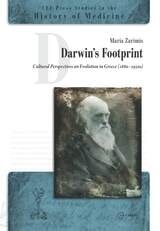
Darwin's Footprint
Cultural Perspectives on Evolution in Greece (1880–1930s)Maria Zarimis
Central European University Press, 2015
Darwin’s Footprint examines the impact of Darwinism in Greece, investigating how it has shaped Greece in terms of its cultural and intellectual history, and in particular its literature.
The book demonstrates that in the late 19th to early 20th centuries Darwinism and associated science strongly influenced celebrated Greek literary writers and other influential intellectuals, which fueled debate in various areas such as ‘man’s place in nature’, eugenics, the nature-nurture controversy, religion, as well as class, race and gender.
In addition, the study reveals that many of these individuals were also considering alternative approaches to these issues based on Darwinian and associated biological post-Darwinian ideas. Their concerns included the Greek “race” or nation, its culture, language and identity; also politics and gender equality.
Zarimis’s monograph devotes considerable space to Xenopoulos (1867-1951), notable novelist, journalist and playwright.
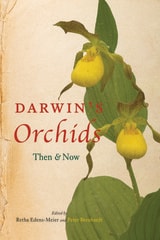
Darwin's Orchids
Then and NowEdited by Retha Edens-Meier and Peter Bernhardt
University of Chicago Press, 2014
Mirroring the structure of Fertilisation of Orchids, Darwin’s Orchids investigates flowers from Darwin’s home in England, through the southern hemisphere, and on to North America and China as it seeks to address a set of questions first put forward by Darwin himself: What pollinates this particular type of orchid? How does its pollination mechanism work? Will an orchid self-pollinate or is an insect or other animal vector required? And how has this orchid’s lineage changed over time? Diverse in their colors, forms, aromas, and pollination schemes, orchids have long been considered ideal models for the study of plant evolution and conservation. Looking to the past, present, and future of botany, Darwin’s Orchids will be a vital addition to this tradition.
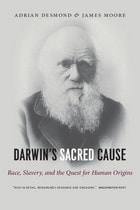
Darwin's Sacred Cause
Race, Slavery and the Quest for Human OriginsAdrian Desmond and James Moore
University of Chicago Press, 2011
There has always been a mystery surrounding Darwin: How did this quiet, respectable gentleman come to beget one of the most radical ideas in the history of human thought? It is difficult to overstate what Darwin was risking in publishing his theory of evolution. So it must have been something very powerful—a moral fire, as Desmond and Moore put it—that helped propel him. That moral fire, they argue, was a passionate hatred of slavery.
In opposition to the apologists for slavery who argued that blacks and whites had originated as separate species, Darwin believed the races belonged to the same human family. Slavery was a “sin,” and abolishing it became his “sacred cause.” By extending the abolitionists’ idea of human brotherhood to all life, Darwin developed our modern view of evolution.
Drawing on a wealth of fresh manuscripts, family letters, diaries, and even ships’ logs, Desmond and Moore argue that only by acknowledging Darwin’s abolitionist heritage can we fully understand the development of his groundbreaking ideas.
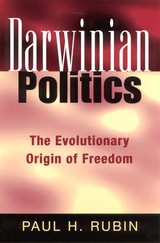
Darwinian Politics
The Evolutionary Origin of FreedomRubin, Paul H.
Rutgers University Press, 2002
Darwinian Politics is the first book to examine political behavior from a modern evolutionary perspective. Here, Paul H. Rubin discusses group or social behavior, including ethnic and racial conflict; altruism and cooperation; envy; political power; and the role of religion in politics ¾ issues that have formed the hallmark of human social behavior.
Adopting a Darwinian perspective, Rubin demonstrates why certain political-moral philosophies succeed or fail in modern Western culture. He begins by showing relationships between biology and natural selection and the history of political philosophy and explains why desirable policies must treat each person as an individual. He considers the notion of group identity and conflict, observing a human propensity to form in-groups, a behavior that does not necessitate but often leads to deviancies such as racism. In discussing altruism, Rubin shows that people are willing to aid the poor if they are convinced that the recipients are not shirkers or free loaders. This explains why recent welfare reforms are widely viewed as successful. Envy, a trait that is often counterproductive in today’s world, is also addressed. In comparing major moral philosophical systems, Rubin contends that utilitarianism is broadly consistent with our evolved preferences. He illustrates evolutionary premises for religious belief and for desires to regulate the behavior of others, and how in today’s world such regulation may not serve any useful purpose.
Ultimately, Rubin argues that humans naturally seek political freedom, and modern Western society provides more freedom than any previous one. In light of his analysis, the author extrapolates that, while there are still areas for improvements, humans have done a remarkably good job of satisfying their evolved political preferences.
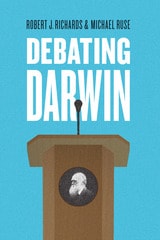
Debating Darwin
Robert J. Richards and Michael Ruse
University of Chicago Press, 2016
Examining key disagreements about Darwin that continue to confound even committed Darwinists, Richards and Ruse offer divergent views on the origins and nature of Darwin and his ideas. Ruse argues that Darwin was quintessentially British and that the roots of his thought can be traced back to the eighteenth century, particularly to the Industrial Revolution and thinkers such as Adam Smith and Thomas Robert Malthus. Ruse argues that when these influences are appreciated, we can see how Darwin’s work in biology is an extension of their theories. In contrast, Richards presents Darwin as a more cosmopolitan, self-educated man, influenced as much by French and particularly German thinkers. Above all, argues Richards, it was Alexander von Humboldt who both inspired Darwin and gave him the conceptual tools that he needed to find and formulate his evolutionary hypotheses. Together, the authors show how the reverberations of the contrasting views on Darwin’s influences can be felt in theories about the nature of natural selection, the role of metaphor in science, and the place of God in Darwin’s thought.
Revealing how much there still is to investigate and interrogate about Darwin’s ideas, Debating Darwin contributes to our understanding of evolution itself. The book concludes with a jointly authored chapter that brings this debate into the present, focusing on human evolution, consciousness, religion, and morality. This will be powerful, essential reading for anyone seeking a comprehensive understanding of modern-day evolutionary science and philosophy.
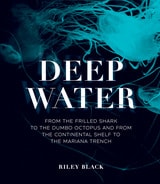
Deep Water
From the Frilled Shark to the Dumbo Octopus and from the Continental Shelf to the Mariana TrenchRiley Black
University of Chicago Press, 2023
What lies beneath the surface of the ocean has mystified humankind for millennia. Today, we have explored more of the surface of the Moon than we have the deep sea. What thrives in these mysterious depths, how did these life-forms evolve from ancient life, and how has this environment changed over time as our planet has developed?
Introducing us to the ancient, complex, and fascinating life-forms that have evolved into the marine life we recognize today—from stromatolites, structures created by some of the earliest life billions of years ago and still found today, to yeti crabs, bioluminescent firefly squid, and giant jellyfish—Deep Water is an eye-opening journey into the world far beneath the waves. Our guide, brilliant science communicator and self-described “fossil fanatic” Riley Black, has studied marine biology and paleontology, and she brings her vast knowledge and inimitable voice to our voyage. Through text and image, Black leads us further and further into the depths to reveal how this unique and largely unexplored habitat came into being, what lives there and why, how it has evolved, and what the future will bring in this dark and mysterious environment.
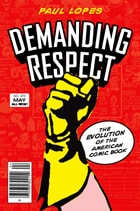
Demanding Respect
The Evolution of the American Comic BookPaul Lopes
Temple University Press, 2009
How is it that comic books—the once-reviled form of lowbrow popular culture—are now the rage for Hollywood blockbusters, the basis for bestselling video games, and the inspiration for literary graphic novels? In Demanding Respect, Paul Lopes immerses himself in the discourse and practices of this art and subculture to provide a social history of the American comic book over the last 75 years.
Lopes analyzes the cultural production, reception, and consumption of American comic books throughout history. He charts the rise of superheroes, the proliferation of serials, and the emergence of graphic novels. Demanding Respect explores how comic books born in the 1930s were perceived as a "menace" in the 1950s, only to later become collectors’ items and eventually "hip" fiction in the 1980s through today.
Using a theoretical framework to examine the construction of comic book culture—the artists, publishers, readers and fans— Lopes explains how and why comic books have captured the public's imagination and gained a fanatic cult following.
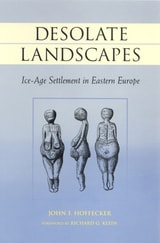
Desolate Landscapes
Ice-Age Settlement in Eastern EuropeJohn F. Hoffecker
Rutgers University Press, 2002
Ice-Age Eastern Europe was an inhospitable place, isolated from the moderating influence of oceans. Unlike Western Europe, which was settled over half a million years ago, Eastern Europe remained largely unoccupied until the appearance of the cold-adapted Neanderthals. When modern humans arrived from southern latitudes, they were anatomically less suited to colder climates, but successfully colonized Eastern Europe with the aid of innovative technologies that their Neanderthal predecessors lacked.
John F. Hoffecker provides an overview of Pleistocene or Ice-Age settlement in Eastern Europe with a heavy focus on the adaptations of Neanderthals and modern humans to this harsh environmental setting. Hoffecker argues that the Eastern European record reveals a stark contrast between Neanderthals and modern humans with respect to technology and social organization, both of which are tied to the development of language and the use of symbols. Desolate Landscapes will bring readers up to date with the rich archaeological record in this significant region and its contribution to our understanding of one of our most important events in human evolution - the rise of modern humans and the extinction of the Neanderthals.
The book is divided into seven chapters. The first discusses general anthropological principles and theories pertaining to human adaptation and development in cold environments. The second outlines the environmental conditions of the specific area under study in the book.
The next two chapters focus on Neanderthal finds in the area. The following two chapters discuss the replacement of the local Neanderthal population by the Cro-magnons, and the development of their way of life in the cold Loess Steppe environment. The final chapter summarizes the discussion and is followed by an extremely valuable and extensive bibliography, more than half of which consists of non-English (primarily Russian) sources.
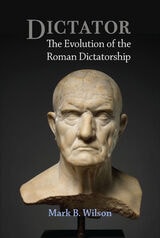
Dictator
The Evolution of the Roman DictatorshipMark B. Wilson
University of Michigan Press, 2021
Roman consuls were routinely trained by background and experience to handle the usual problems of a twelve-month turn in office. But what if a crisis arose that wasn’t best met by whoever happened to be in office that year? The Romans had a mechanism for that: the dictatorship, an alternative emergency executive post that granted total, unanswerable power to that man who was best suited to resolve the crisis and then stand down, restoring normality. This office was so useful and effective that it was invoked at least 85 times across three centuries against every kind of serious problem, from conspiracies and insurgencies to the repelling of invaders to propitiation of the gods.
In Dictator: The Evolution of the Roman Dictatorship, Mark B. Wilson makes the first detailed and comprehensive examination of the role and evolution of the dictatorship as an integral element of the Roman Republic. Each stage of a dictatorship—need, call, choice, invocation, mandate, imperium, answerability, colleague, and renunciation—is explored, with examples and case studies illustrating the dictators’ rigorous adherence to a set of core principles, or, in rare cases of deviation, showing how exceptions tended to demonstrate the rule as vividly as instances. Wilson also charts the flexibility of the dictatorship as it adapted to the needs of the Republic, reshaping its role in relation to the consuls, the senate, and the people.
The routine use of the dictatorship is only part of the story. The abandonment and disuse of the dictatorship for 120 years, its revival under Sulla, and its appropriation and transformation under Caesar are all examined in detail, with attention paid to what the dictatorship meant to the Romans of the late Republic, alternative means of crisis resolution in contrast with the dictatorship, and the groundwork laid in those last two centuries for that which was to come. Dictator provides a new basis for discussion and debate relating to the Roman dictatorship, Roman crisis management, and the systems and institutions of the Roman Republic.
Dinner with Darwin
Food, Drink, and EvolutionJonathan Silvertown
University of Chicago Press, 2017
A delectable concoction of coevolution and cookery, gut microbiomes and microherbs, and both the chicken and its egg, Dinner with Darwin reveals that our shopping lists, recipe cards, and restaurant menus don’t just contain the ingredients for culinary delight. They also tell a fascinating story about natural selection and its influence on our plates—and palates. Digging deeper, Silvertown’s repast includes entrées into GMOs and hybrids, and looks at the science of our sensory interactions with foods and cooking—the sights, aromas, and tastes we experience in our kitchens and dining rooms. As is the wont of any true chef, Silvertown packs his menu with eclectic components, dishing on everything from Charles Darwin’s intestinal maladies to taste bud anatomy and turducken.
Our evolutionary relationship with food and drink stretches from the days of cooking cave dwellers to contemporary crêperies and beyond, and Dinner with Darwin serves up scintillating insight into the entire, awesome span. This feast of soup, science, and human society is one to savor. With a wit as dry as a fine pinot noir and a cache of evolutionary knowledge as vast as the most discerning connoisseur’s wine cellar, Silvertown whets our appetites—and leaves us hungry for more.

Dogs
A New Understanding of Canine Origin, Behavior and EvolutionRaymond Coppinger and Lorna Coppinger
University of Chicago Press, 2002
For both dogs and humans to get the most out of each other, we need to understand and adapt to the biological needs and dispositions of our canine companions, just as they have to ours.

Don't Look, Don't Touch, Don't Eat
The Science Behind RevulsionValerie Curtis
University of Chicago Press, 2013

Duane Jeffery
A Mormon EvolutionistSteven L. Peck
University of Illinois Press, 2026
An overdue look at a singular figure, Duane Jeffery tells the story of the scientist whose work reshaped how many Church members understand evolution.