50 books match the query 'Experiments' and 5 start with d
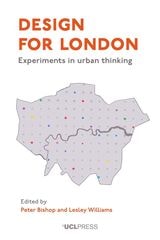
cover of Design for London: Experiments in Urban Thinking

Design for London

Experiments in Urban Thinking

Edited by Peter Bishop and Lesley Williams

University College London, 2020
Design for London is the product of a unique experiment in urban planning, design and strategic thinking. Set up in 2006 by then-Mayor Ken Livingstone and his Architectural Advisor Richard Rogers, the brief for the team was “to think about London, what made London unique and how it could be made better.” At the time, large-scale state investment was often not an option, and political consensus was fragmented. In addition, cities, by their nature, are fashioned through complex negotiation and deal making that involves many different stakeholders with different agendas. All of these factors complicated the assignment—and made the resulting projects and ideas more interesting. This book aims to provide an engaging account of the strategic approaches and work of Design for London. It outlines how key projects such as the London Olympics, public space programmes, high street regeneration and greening programs were managed.
 
[more]
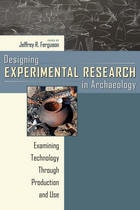
cover of Designing Experimental Research in Archaeology: Examining Technology through Production and Use

Designing Experimental Research in Archaeology

Examining Technology through Production and Use

Jeffrey R. Ferguson

University Press of Colorado, 2010

Designing Experimental Research in Archaeology is a guide for the design of archaeological experiments for both students and scholars. Experimental archaeology provides a unique opportunity to corroborate conclusions with multiple trials of repeatable experiments and can provide data otherwise unavailable to archaeologists without damaging sites, remains, or artifacts.

Each chapter addresses a particular classification of material culture-ceramics, stone tools, perishable materials, composite hunting technology, butchering practices and bone tools, and experimental zooarchaeology-detailing issues that must be considered in the development of experimental archaeology projects and discussing potential pitfalls. The experiments follow coherent and consistent research designs and procedures and are placed in a theoretical context, and contributors outline methods that will serve as a guide in future experiments. This degree of standardization is uncommon in traditional archaeological research but is essential to experimental archaeology.

The field has long been in need of a guide that focuses on methodology and design. This book fills that need not only for undergraduate and graduate students but for any archaeologist looking to begin an experimental research project.
[more]
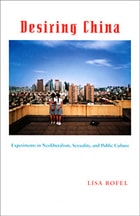
cover of Desiring China: Experiments in Neoliberalism, Sexuality, and Public Culture

Desiring China

Experiments in Neoliberalism, Sexuality, and Public Culture

Lisa Rofel

Duke University Press, 2007

Through window displays, newspapers, soap operas, gay bars, and other public culture venues, Chinese citizens are negotiating what it means to be cosmopolitan citizens of the world, with appropriate needs, aspirations, and longings. Lisa Rofel argues that the creation of such “desiring subjects” is at the core of China’s contingent, piece-by-piece reconfiguration of its relationship to a post-socialist world. In a study at once ethnographic, historical, and theoretical, she contends that neoliberal subjectivities are created through the production of various desires—material, sexual, and affective—and that it is largely through their engagements with public culture that people in China are imagining and practicing appropriate desires for the post-Mao era.

Drawing on her research over the past two decades among urban residents and rural migrants in Hangzhou and Beijing, Rofel analyzes the meanings that individuals attach to various public cultural phenomena and what their interpretations say about their understandings of post-socialist China and their roles within it. She locates the first broad-based public debate about post-Mao social changes in the passionate dialogues about the popular 1991 television soap opera Yearnings. She describes how the emergence of gay identities and practices in China reveals connections to a transnational network of lesbians and gay men at the same time that it brings urban/rural and class divisions to the fore. The 1999–2001 negotiations over China’s entry into the World Trade Organization; a controversial women’s museum; the ways that young single women portray their longings in relation to the privations they imagine their mothers experienced; adjudications of the limits of self-interest in court cases related to homoerotic desire, intellectual property, and consumer fraud—Rofel reveals all of these as sites where desiring subjects come into being.
[more]
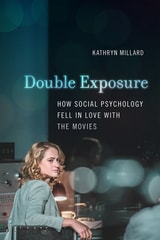
cover of Double Exposure: How Social Psychology Fell in Love with the Movies

Double Exposure

How Social Psychology Fell in Love with the Movies

Kathryn Millard

Rutgers University Press, 2022
Double Exposure examines the role of film in shaping social psychology’s landmark postwar experiments. We are told that most of us will inflict electric shocks on a fellow citizen when ordered to do so. Act as a brutal prison guard when we put on a uniform. Walk on by when we see a stranger in need. But there is more to the story. Documentaries that investigators claimed as evidence were central to capturing the public imagination. Did they provide an alibi for twentieth century humanity? Examining the dramaturgy, staging and filming of these experiments, including Milgram's Obedience Experiments, the Stanford Prison Experiment and many more, Double Exposure recovers a new set of narratives.
[more]
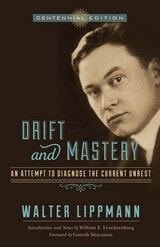
cover of Drift and Mastery: An Attempt to Diagnose the Current Unrest

Drift and Mastery

An Attempt to Diagnose the Current Unrest

Walter Lippmann, Introduction and notes by William E. Leuchtenburg, Foreword by Ganesh Sitaraman

University of Wisconsin Press, 2015

In 1914, a brilliant young political journalist published a book arguing that the United States had entered a period of “drift”—a lack of control over rapidly changing forces in society. He highlighted the tensions between expansion and consolidation, traditionalism and progressivism, and emotion and rationality. He wrote to convince readers that they could balance these tensions: they could be organized, efficient, and functional without sacrificing impulse, choice, or liberty. Mastery over drift is attainable, Walter Lippmann argued, through diligent attention to facts and making active choices. Democracy, Lippman wrote, is “a use of freedom, an embrace of opportunity.”
            Lippman’s Drift and Mastery became one of the most important and influential documents of the Progressive Movement. It remains a valuable text for understanding the political thought of early twentieth-century America and a lucid exploration of timeless themes in American government and politics. Distinguished historian Walter Leuchtenberg’s 1986 introduction and notes are retained in this edition.
            Ganesh Sitaraman, who has provided a foreword for this centennial edition, suggests that Lippmann’s classic still has much to say to twenty-first-century progressives. The underlying solutions for our time, he believes, are similar to those of Lippman’s era. Sitaraman contends that American society can regain mastery over drift by reforming finance and reducing inequality, by rethinking the relationship between corporations and workers, and by embracing changes in social life.
[more]