Results by title
55 books match the query 'Exploring' and 2 start with d
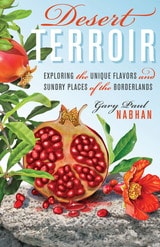
Desert Terroir
Exploring the Unique Flavors and Sundry Places of the BorderlandsBy Gary Paul Nabhan
University of Texas Press, 2012
Why does food taste better when you know where it comes from? Because history—ecological, cultural, even personal—flavors every bite we eat. Whether it’s the volatile chemical compounds that a plant absorbs from the soil or the stories and memories of places that are evoked by taste, layers of flavor await those willing to delve into the roots of real food. In this landmark book, Gary Paul Nabhan takes us on a personal trip into the southwestern borderlands to discover the terroir—the “taste of the place”—that makes this desert so delicious.
To savor the terroir of the borderlands, Nabhan presents a cornucopia of local foods—Mexican oregano, mesquite-flour tortillas, grass-fed beef, the popular Mexican dessert capirotada, and corvina (croaker or drum fish) among them—as well as food experiences that range from the foraging of Cabeza de Vaca and his shipwrecked companions to a modern-day camping expedition on the Rio Grande. Nabhan explores everything from the biochemical agents that create taste in these foods to their history and dispersion around the world. Through his field adventures and humorous stories, we learn why Mexican oregano is most potent when gathered at the most arid margins of its range—and why foods found in the remote regions of the borderlands have surprising connections to foods found by his ancestors in the deserts of the Mediterranean and the Middle East. By the end of his movable feast, Nabhan convinces us that the roots of this fascinating terroir must be anchored in our imaginations as well as in our shifting soils.
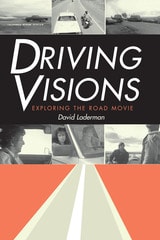
Driving Visions
Exploring the Road MovieBy David Laderman
University of Texas Press, 2002
From the visionary rebellion of Easy Rider to the reinvention of home in The Straight Story, the road movie has emerged as a significant film genre since the late 1960s, able to cut across a wide variety of film styles and contexts. Yet, within the variety, a certain generic core remains constant: the journey as cultural critique, as exploration beyond society and within oneself.
This book traces the generic evolution of the road movie with respect to its diverse presentations, emphasizing it as an "independent genre" that attempts to incorporate marginality and subversion on many levels. David Laderman begins by identifying the road movie's defining features and by establishing the literary, classical Hollywood, and 1950s highway culture antecedents that formatively influenced it. He then traces the historical and aesthetic evolution of the road movie decade by decade through detailed and lively discussions of key films. Laderman concludes with a look at the European road movie, from the late 1950s auteurs through Godard and Wenders, and at compelling feminist road movies of the 1980s and 1990s.